Opening remarks and product keynote
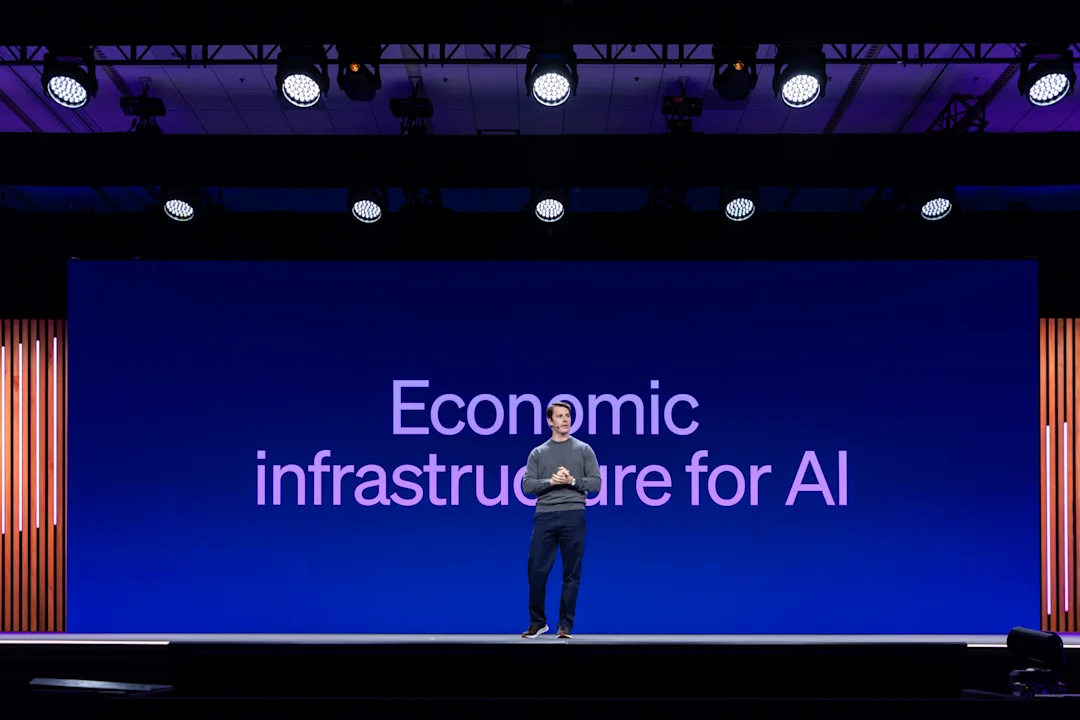
Stripe CEO Patrick Collison opens the show before President of Product and Business Will Gaybrick takes you through the latest products designed for revenue growth.
Stripe CEO Patrick Collison opens the show before President of Product and Business Will Gaybrick takes you through the latest products designed for revenue growth.
Stripe CEO Patrick Collison opens the show before President of Product and Business Will Gaybrick takes you through the latest products designed for revenue growth.
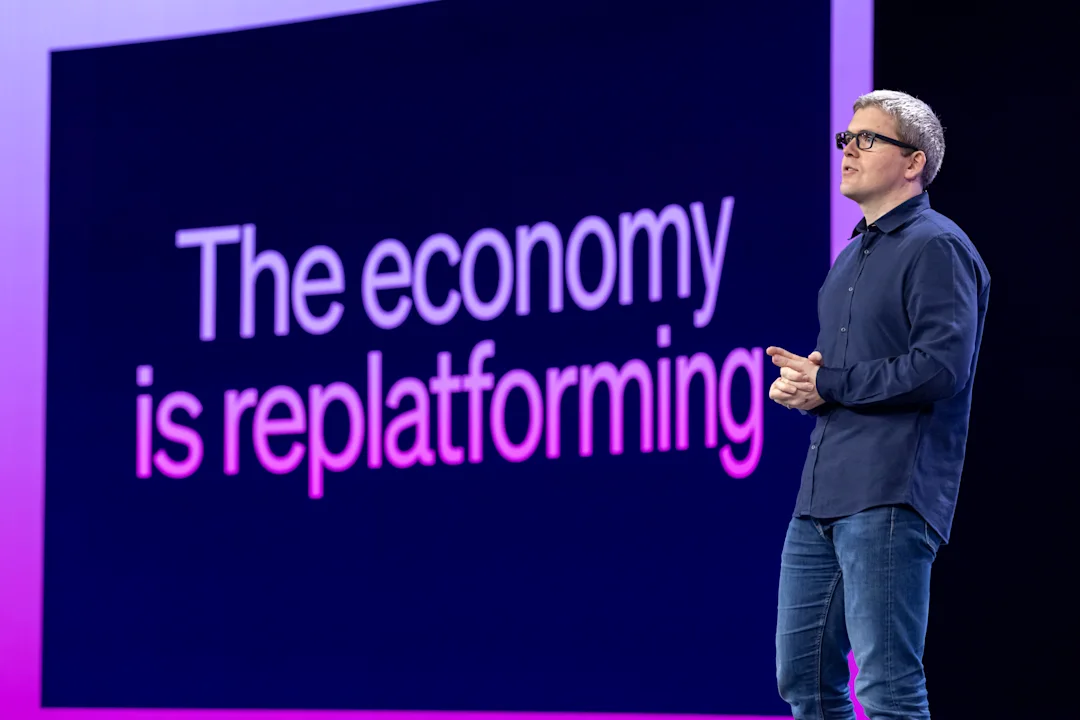
Stripe cofounder John Collison shares a data-driven look at the state of the global economy—what’s happening today, how it’s shifting, and what it means for different business models and markets.
John Collison, Cofounder and President, Stripe

Sam Altman cofounded OpenAI in 2015 and became its CEO in 2019. He joins Patrick Collison to talk about what’s next for AI and the internet economy.

Two of tech's most active AI investors join John and Patrick Collison to discuss how frontier technologies are reshaping the global economy.
Charting the future of payments
Agentic commerce is an entirely new type of sales channel—one where algorithms evaluate your products, initiate transactions, and return as customers. Learn about the production challenges in making catalogs legible to agents, embedding customer context into agent-mediated flows, and re-architecting fraud and pricing models for autonomous buyers. You’ll see concrete patterns from teams already shipping with Stripe—and the trade-offs they’ve experienced.
Charting the future of payments

Join Soha Hohnecker, global head of sales and marketing at Amazon Agentic Payments, and Kalyani Koppisetti, Principal Partner Solution Architect at AWS, for a look at how agentic commerce is reshaping payments. As agents begin purchasing on behalf of consumers, the infrastructure around them needs to catch up—from new authorization models and agent authentication to merchant APIs and fraud detection. This session covers what needs to change and what merchants and payments leaders should be building toward now.
Designing adaptive revenue models

Learn what it takes to build finance systems at scale and automate your revenue operations—including tax, compliance, accounting, and data—and why it’s worth it. See the implementation choices that matter and the ongoing benefits in day-to-day operations.
Charting the future of payments

Stripe is building the financial rails for agents, but rails need guardrails. Most agents today are still authenticated with static API keys and shared credentials built for humans. As agents begin to transact autonomously on behalf of users, the identity layer needs to keep pace. In this session, Clerk CEO Colin Sidoti explores what agent-native authentication looks like: how delegated identity and scoped permissions need to evolve, so agents can act securely without inheriting human credential models.
Reaching global markets with stablecoins and crypto
Cross-border payments and banking often require trade-offs: speed or cost, reach or reliability. Learn how fintech companies are combining Stripe’s fiat infrastructure with the speed and efficiency of stablecoins to reach users in more markets, move money faster across borders, and optimize yield and foreign exchange, often powering these gains with their own custom stablecoin.
Charting the future of payments

Biometric identity is moving commerce from authentication to recognition—enabling faster checkout, stronger security, and more personalized experiences. In this session, Verifone explores how identity-based experiences are reshaping checkout, and what it takes to support them at scale—from enrollment to device-level security to consent, governance, and regulatory considerations such as age verification.
Charting the future of payments

Most agentic commerce discussions start at checkout. But the structural shift begins earlier, in how agents discover products, evaluate options, and act on behalf of consumers. In this session, Klarna will examine what full-journey agentic commerce requires, from structured discovery data and payment credentials to returns and refunds. Explore emerging architectural and commercial questions as agents move from checkout tool to end-to-end buyer.
Advancing developer craft

This session covers the most common security pitfalls when building Stripe integrations—exposed keys, misconfigured webhooks, authentication gaps—and how to design with a secure-by-default approach using Stripe’s latest primitives.
Charting the future of payments

As agents move from discovery to decision‑making and execution, trust becomes the foundation of agent‑driven commerce. In this fireside conversation, Mastercard explores how financial ecosystems can enable secure, scalable agent payments without sacrificing choice, transparency, or control.
See how trust is established when a consumer delegates purchasing authority to an agent and get a clearer understanding of the trust infrastructure required for agentic commerce.
Optimizing the economics of risk

For SaaS platforms, risk management is often thought of as a brake on growth. It doesn’t have to be. Learn how a new approach to risk can help you onboard users faster, enter markets with confidence, and automate decisions. Explore how to match friction to actual risk, tier access based on risk signals, and build systems that scale without scaling your exposure.
Charting the future of payments

Businesses across the Stripe ecosystem are using buy now, pay later (BNPL) payment methods to increase conversion, unify online and in-store checkout, and expand globally with flexible financing. In this session, Affirm shares what’s working and why, drawing on examples from Stripe. You’ll also see how agents are changing the way purchase decisions happen, and why real-time, transaction-based financing is becoming central to the future of checkout.
Advancing developer craft

Many developers now start an integration with an AI editor, not a docs page. When there’s an agent between you and the API, everything changes: how products are discovered, behavior is verified, and trust is enforced. Learn how Stripe is making products legible to agents, building deterministic tools so agent actions are predictable and auditable, and designing auth and safety patterns that keep humans in control.
Reaching global markets with stablecoins and crypto

Whether your users are in Lagos or Los Angeles, digital wallets enable you to offer a full financial experience directly inside your product—balances, yield, payouts, cards. And it’s all powered by open rails and stablecoin infrastructure that don’t require users to know a thing about crypto. Learn how to integrate these capabilities to expand product value, create new revenue streams, and grow your addressable market globally.
Charting the future of payments

AI is already reshaping how companies operate, but the bigger shifts are macroeconomic—changes to labor markets, financial systems, and how entire industries are structured. Stripe’s Ernie Tedeschi hosts a conversation with leading economists on what the transformation looks like and what it means for the businesses building through it.
Advancing developer craft
Scripts and Workflows let you build inside Stripe, not just on top of it. See how to program custom logic—from discount models to event-driven automations—with live demos and debugging strategies. Learn when to reach for each tool, when to code, when to configure, and how to extend Stripe’s capabilities.
Designing adaptive revenue models
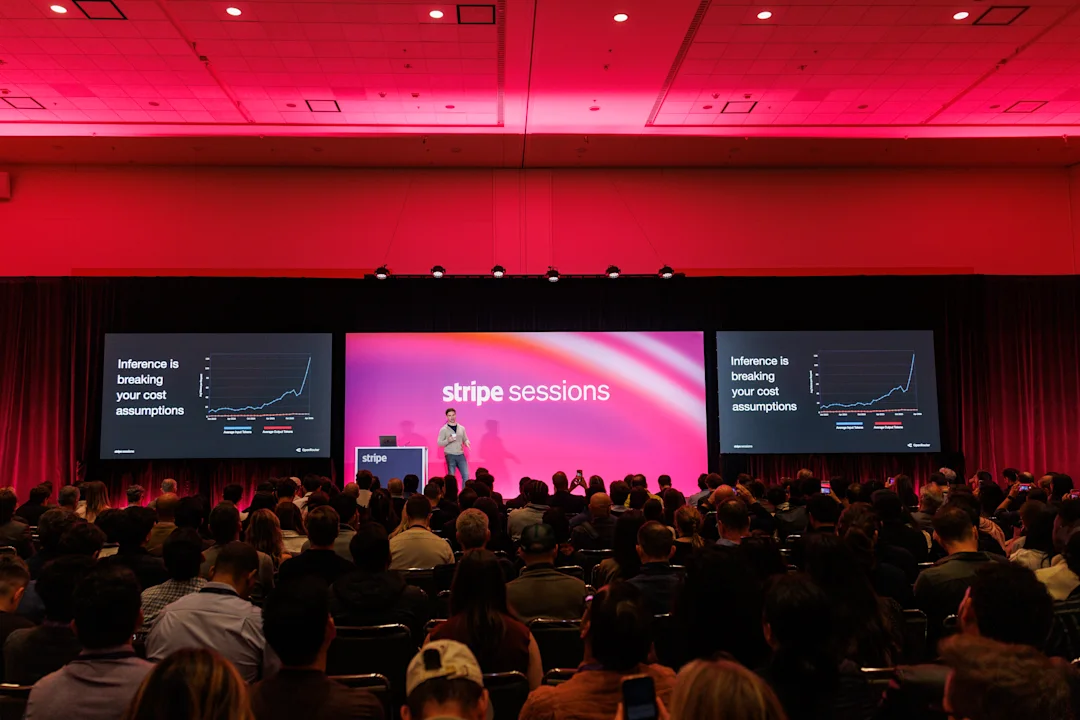
AI compute costs can complicate seat-based pricing. This session covers how SaaS companies are moving to hybrid models—when to charge per seat, based on usage, or both—and the operational trade-offs that come with each. Plus, hear lessons from OpenRouter’s own AI pricing story.
Growing platform economies

A payment flow that’s costing more than it should. An authorization rate that could be higher. A feature that’s been sitting unused. Businesses on Stripe that work with their technical account managers (TAMs) often find optimizations hiding in plain sight. Hear from a panel of users and a TAM about fixes that made measurable differences—and how they found them.
Growing platform economies
How you price payments can shape how your SaaS platform grows. Learn about designing pricing strategies across customer segments, testing new models without breaking what’s working, and iterating as you scale. See industry benchmarking data and a real-world case study from a platform putting these tactics to work.
Charting the future of payments
Building a global business from the outset requires managing localized checkout experiences, cross-border payments, and tax compliance across multiple jurisdictions. Learn from companies that launched internationally from the start—their expansion strategies, the challenges they faced, and the lessons that shaped their growth.
Optimizing the economics of risk

As AI evolves, so does fraud. Companies face new threats, from free trial abuse to risks associated with agentic commerce. Learn about emerging fraud patterns, how to defend against them, and how AI-driven fraud tools can help you safeguard your business without blocking legitimate customers.
Designing adaptive revenue models
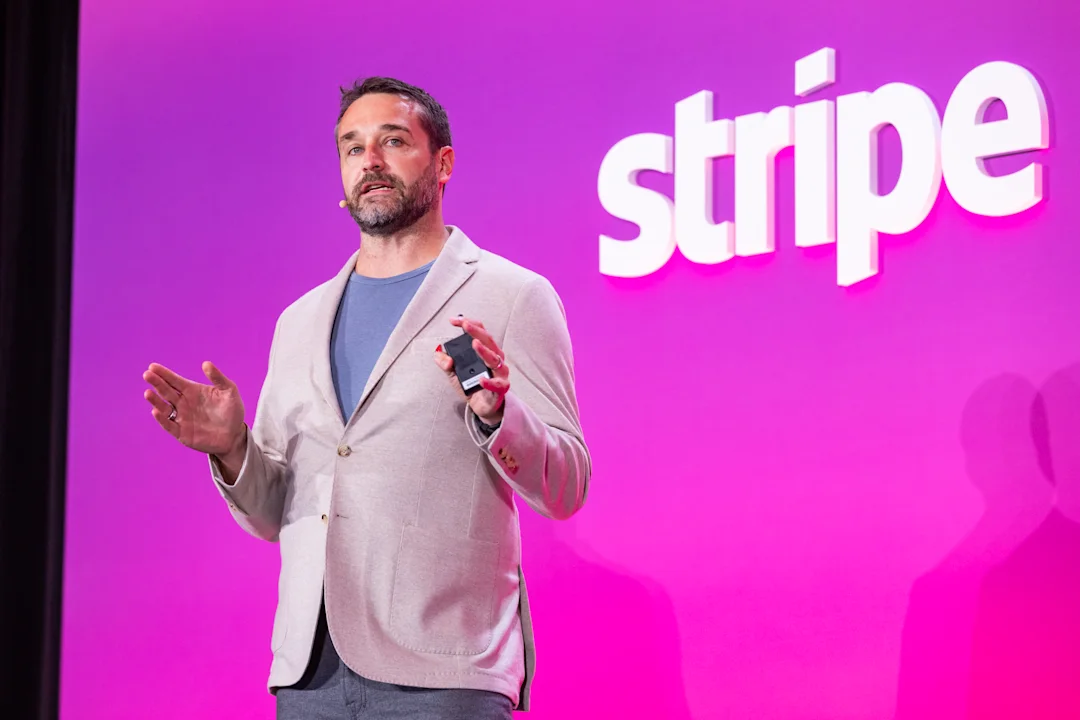
AI is reshaping how companies monetize. Usage-based pricing makes spend and value inseparable, and customers expect real-time visibility, predictability, and control. Hear how Anthropic and PwC are approaching this shift—and what it takes to build monetization infrastructure that keeps pace with product innovation.
Designing adaptive revenue models

Lovable, one of the fastest-growing AI companies, adjusted their pricing ten times in one year. Elena Verna, Head of Growth, explains why—and how. From adopting usage-based billing to building and testing entirely new pricing models with live customers, Lovable treats pricing as a core part of their growth strategy, not something to set and forget. Learn how they align pricing to customer value, run experiments without eroding trust, and build the flexible billing infrastructure to move at the speed their market demands.
Charting the future of payments

Home service businesses juggle booking, dispatch, and field payments across disconnected systems. Transformco is pulling those pieces together—collecting payment at booking, giving technicians mobile payment tools on-site, and turning a fragmented cost center into a revenue driver. Learn how the company is rethinking the payment flow, from scheduling to front door.
Charting the future of payments

AI companies are growing faster, selling globally by default, and monetizing earlier. See the data behind the growth: how AI has collapsed the cost of launching, how the fastest-growing companies are adapting their pricing, and the role agents are starting to play in commerce. Guillermo Rauch, CEO of Vercel, shares what he’s seeing as AI companies scale on his platform.
Growing platform economies

Learn how to add financing to your platform and scale it effectively—from choosing the right integration approach to identifying which user segments drive the best results to optimizing your program over time. Get industry benchmarks, learn expected outcomes at each scaling stage, and hear from platform leaders who’ve done it well.
Charting the future of payments

The distance between an idea and a first charge is shrinking fast, and that has implications for the entire economy. Experienced engineers are shipping in hours what used to take weeks. First-time builders with no coding background are turning ideas into businesses. Hear from both, and see what's possible with Replit—from natural language prompt, to working storefront, to real transaction, in minutes.
Advancing developer craft

Agents are already economic actors. They consume tokens, call paid APIs, and transact on behalf of customers. A new type of agentic infrastructure is emerging to support them, from protocols such as MCP for tool discovery and UCP for checkout to MPP and x402 for machine payments. This session breaks down how these protocols fit together and goes deep on the mechanics of machine payments.
Growing platform economies

Managing money across borders, currencies, and providers is complex. And the landscape keeps shifting—from stablecoins and new rails to multicurrency demands. Stripe’s treasurer discusses how to accept, manage, and move money globally across currencies and stablecoins, and what the infrastructure behind this process actually looks like.
Growing platform economies

The success of an embedded payments business depends on adoption, but many of the most effective tactics are underused. Learn how leading platforms are driving attach rates with new features, strategic pricing, and marketing that converts—and how to apply these approaches to your own business.
Growing platform economies

More businesses are adopting a marketplace model to reach new customers. But the model itself is changing. Marketplaces aren’t just connecting buyers and sellers anymore; they’re becoming financial ecosystems by embedding wallets, lending, and cards. Hear from Depop, DoorDash, and SeatGeek on how they’re expanding and building loyalty with monetization, and get an inside look at Stripe’s emerging products built to power marketplaces.
Charting the future of payments

Adding a second processor seems like an easy path to savings, but integration costs, reliability risks, and operational overhead often follow. Building products like Stripe Orchestration has meant working closely with businesses running multiprocessor setups. This session shares the trade-offs that companies need to assess, the decisions that matter most, and what separates setups that pay off from ones that don’t.
Growing platform economies
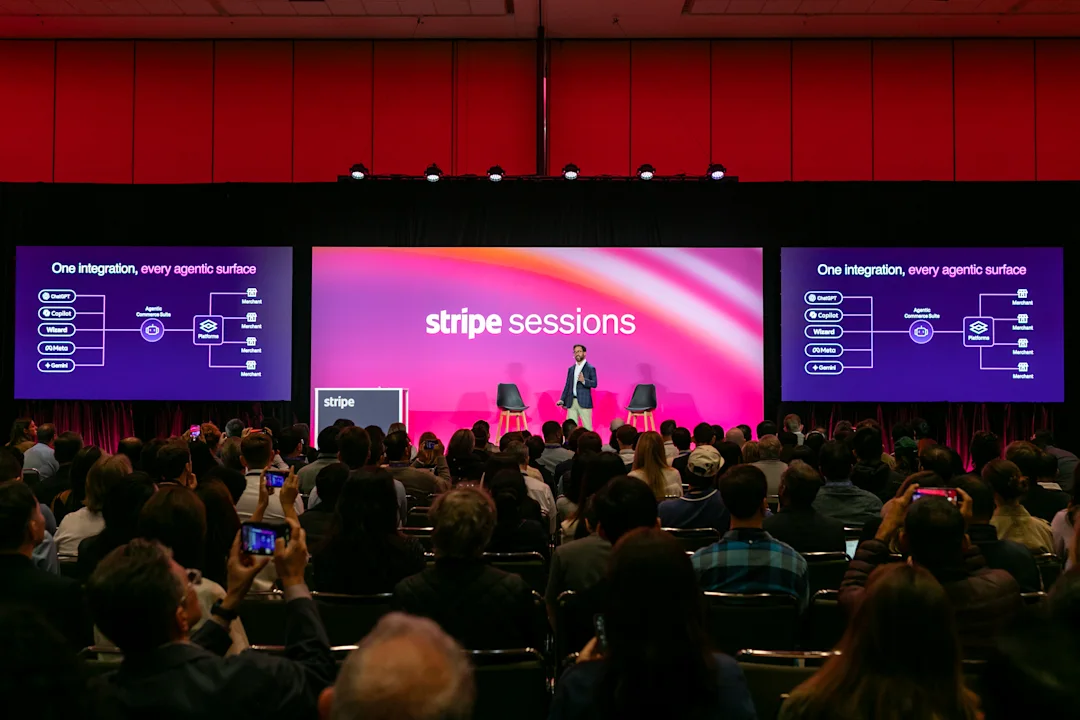
Hear perspectives from leading platforms in the agentic commerce space on how they’re reshaping product discovery, branding, and checkout experiences.
Charting the future of payments

Your next website visitor might not scroll, click menus, or read your content. They might be an agent parsing your catalog and attempting to check out, or a customer expecting to converse in natural language. This session shows what agent-ready ecommerce looks like in practice—with live demos and real things you can do today to make your stack agent-ready. We also introduce the emergence of "commerce runtimes" that let merchants expose policies, business logic, and intelligent surfaces for both humans and AI.
Charting the future of payments
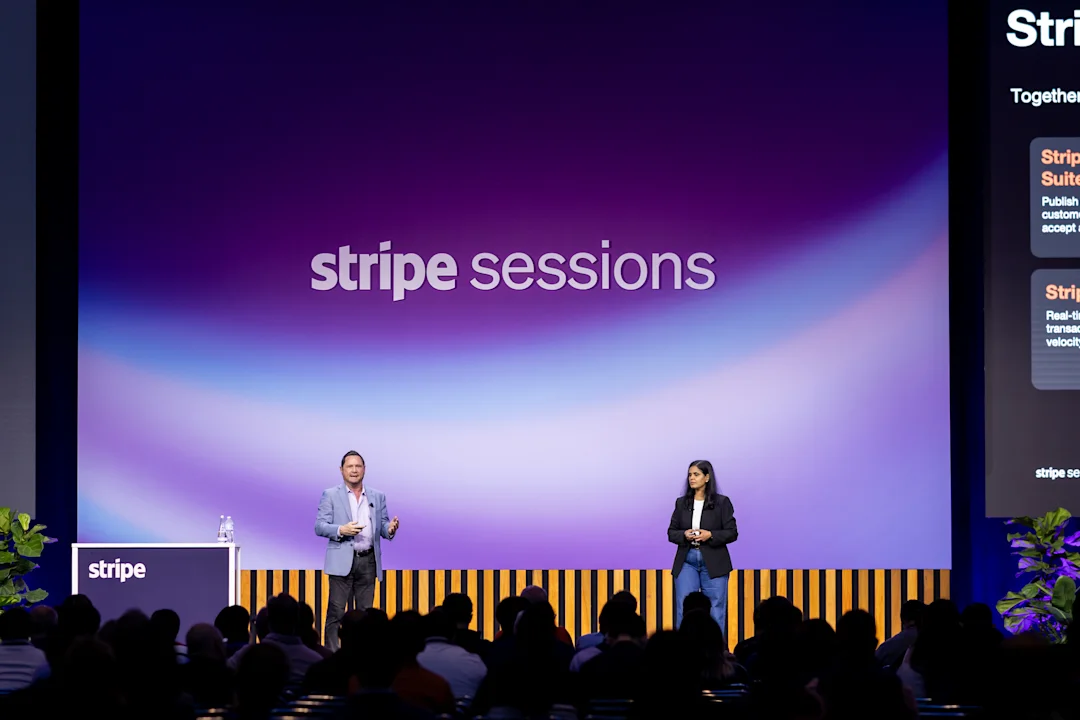
Today, agents help people shop. Soon, they’ll buy from other agents, negotiating, comparing, and completing purchases autonomously. See use cases emerging across industries and learn how to ready your business for agent-driven commerce.
Designing adaptive revenue models

Learn how media companies are staying agile as they face the shift to direct-to-consumer models, increased pressure for profitability, and the fight against churn. Plus, get a behind-the-scenes look at how FOX One built a new streaming platform from scratch with Stripe.
Charting the future of payments

Hear about the latest updates to Stripe’s payments and fraud products—new capabilities to help you sell everywhere, maximize revenue, and reduce fraud and risk.
Designing adaptive revenue models

Get a first look at what’s next for our billing, invoicing, tax, revenue recognition and reporting products. Discover how we’re building the Stripe Revenue suite for the AI economy—supporting flexible usage-based pricing and any go-to-market motion, from self-serve to sales-led. We’ll also cover how a unified revenue platform can help you monetize new products, simplify global expansion, and reduce compliance overhead.
Growing platform economies