AWS Architecture Blog

Field Notes: Building an Autonomous Driving and ADAS Data Lake on AWS
Customers developing self-driving car technology are continuously challenged by the amount of data captured and created during the development lifecycle. This is accelerated by the need to design and launch incremental feature improvements on advanced driver-assistance systems (ADAS). Efforts to advance ADAS functionality have led to new approaches for storing, cataloging, and analyzing driving data […]
Read More
Field Notes: Implementing Hardware-in-the-Loop for Autonomous Driving Development on AWS
Automotive customers use AWS as their platform for advanced driving assistance systems (ADAS) and autonomous driving (AD) development to accelerate their development cycles and experience faster time-to-market. In the blog post, Autonomous Vehicle and ADAS development on AWS Part 1: Achieving Scale, we illustrated how software in the loop (SiL) and hardware in the loop […]
Read More
Architecture Monthly Magazine: AWS Solutions
For October’s issue of AWS Architecture Monthly Magazine, we decided to do a deep dive into the AWS Solutions Library, a virtual treasure trove of cloud-based solutions for dozens of technical and business problems. Whether you want to combine pre-built, well-architected multi-service patterns to create your own solution, deploy vetted architecture directly into your AWS […]
Read More
Nielsen: Processing 55TB of Data Per Day with AWS Lambda
Earlier this year, I went into the studio with Opher Dubrovsky from Nielsen Marketing Cloud (a data management platform) to record an episode of This is My Architecture about Big Data architecture. In preparation for the recording and during my initial conversations with Opher, I realized that there is an amazing story here that can […]
Read More
New Whitepaper: Selecting & Designing Your Hybrid Connectivity Model
Introduction Many organizations need to connect their on-premises data centers, remote sites, and the cloud. A hybrid network connects these different environments. A modern organization uses an extensive array of IT resources. In the past, it was common to host these resources in an on-premises data center or a colocation facility. With the increased adoption […]
Read More
Field Notes: Powering the Connected Vehicle with Amazon Alexa
Alexa has improved the in-home experience and has potential to greatly enhance the in-car experience. This blog is a continuation of my previous blog: Field Notes: Implementing a Digital Shadow of a Connected Vehicle with AWS IoT. Multiple OEMs (Original Equipment Manufacturers) have showcased this capability during CES 2020. Use cases include; a person seating at […]
Read More
Field Notes: Implementing a Digital Shadow of a Connected Vehicle with AWS IoT
Innovations in connected vehicle technology are expected to improve the quality and speed of vehicle communications and create a safer driving experience. As connected vehicles are becoming part of the mainstream, OEMs (Original Equipment Manufacturers) are broadening the capabilities of their products and dramatically improving the in-vehicle experience for customers. An important feature in a […]
Read More
Field Notes: Gaining Insights into Labeling Jobs for Machine Learning
In an era where more and more data is generated, it becomes critical for businesses to derive value from it. With the help of supervised learning, it is possible to generate models to automatically make predictions or decisions by leveraging historical data. For example, image recognition for self-driving cars, predicting anomalies on X-rays, fraud detection […]
Read More
Why Deployment Requirements are Important When Making Architectural Choices
Introduction Too often, architects fall into the trap of thinking the architecture of an application is restricted to just the runtime part of the architecture. By doing this we focus on only a single customer (such as the application’s users and how they interact with the system) and we forget about other important customers like […]
Read More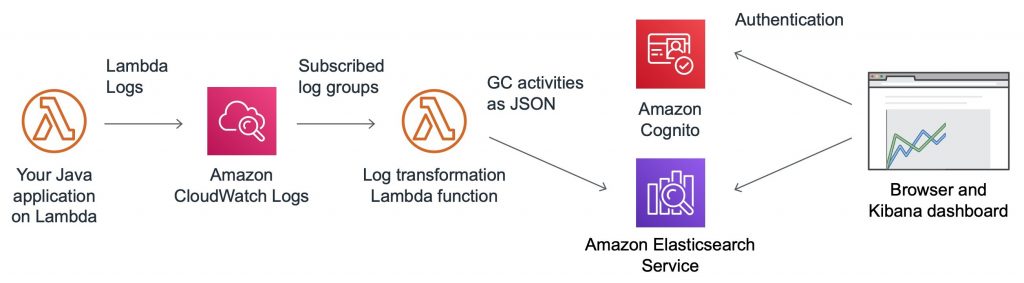
Field Notes: Monitoring the Java Virtual Machine Garbage Collection on AWS Lambda
When you want to optimize your Java application on AWS Lambda for performance and cost the general steps are: Build, measure, then optimize! To accomplish this, you need a solid monitoring mechanism. Amazon CloudWatch and AWS X-Ray are well suited for this task since they already provide lots of data about your AWS Lambda function. […]
Read More