Academia.eduAcademia.edu

Algorithm Complexity

description24 papers
group3 followers
lightbulbAbout this topic
Algorithm complexity refers to the quantitative measure of the resources required by an algorithm to solve a problem, typically expressed in terms of time (time complexity) and space (space complexity) as a function of the input size. It provides insights into the efficiency and scalability of algorithms.
lightbulbAbout this topic
Algorithm complexity refers to the quantitative measure of the resources required by an algorithm to solve a problem, typically expressed in terms of time (time complexity) and space (space complexity) as a function of the input size. It provides insights into the efficiency and scalability of algorithms.

Key research themes

1. How can formal methods verify time complexity properties of classical algorithms?

This research area explores the use of formal verification tools and specification languages to rigorously prove both functional correctness and explicit complexity bounds (such as worst-case time complexity) of well-known classical algorithms. The motivation lies in moving beyond informal or pen-and-paper proofs to automated, machine-checked guarantees suitable for educational purposes and higher assurance in software systems.

Key finding: The authors successfully specified and formally proved in Dafny the worst-case time complexity of binary search to belong to O(log n), alongside functional correctness. Their methodology involved introducing a formal... Read more

2. What are effective empirical and statistical methods to analyze the computational complexity of algorithms in practical scenarios?

This thread investigates approaches that combine experimental timing measurements with statistical modeling (e.g., regression analysis) to derive empirical complexity characterizations of algorithms. By doing so, it provides a practical complement to classical asymptotic complexity theory, especially relevant for complex or cryptographic algorithms where theoretical analysis is hard and runtime behavior is critical.

Key finding: The authors empirically measured the runtime of AES-128 encryption with varying input sizes and performed regression-based statistical analysis to fit the observed timings to asymptotic complexity models. They established a... Read more

3. How do algorithmic analysis methods account for realistic costs of operations such as symbol comparisons in sorting/searching algorithms?

This theme focuses on extending algorithm complexity analysis to incorporate realistic cost measures reflecting actual operation costs—particularly the cost of symbol-by-symbol comparisons rather than abstract key comparisons. By modeling keys as words generated by probabilistic sources and analyzing symbol-level operations, this approach bridges theoretical analysis with practical performance evaluation of sorting and searching algorithms.

Key finding: The authors devised a general analytical framework based on the probabilistic modeling of sources generating keys to estimate average-case complexity in terms of symbol comparisons instead of traditional key comparisons.... Read more

4. What insights emerge from complexity considerations in human and quantum computation, especially in error resilience and group decision-making?

This interdisciplinary theme studies how computational complexity concepts (e.g., NP-completeness, PSPACE-completeness) inform the ability of human groups to verify solutions and the robustness of quantum algorithms to noise. It integrates complexity theory with cognitive science and quantum information to understand practical limitations and efficiencies.

Key finding: The study empirically showed that human groups have greater ability to recognize correct solutions to problems from easy-to-verify complexity classes (NP-Complete) compared to hard-to-verify classes (PSPACE-Complete),... Read more
Key finding: The authors analyzed Grover’s quantum search algorithm under the influence of quantum noise modeled by completely positive trace-preserving maps and determined thresholds on noise levels below which the quantum advantage over... Read more

5. How can polynomial methods from circuit complexity guide algorithmic design and complexity lower bounds?

This emerging approach applies polynomial representations of Boolean functions—originally developed for circuit lower bounds—to design efficient algorithms, linking algebraic structure to computational complexity. The polynomial method transforms circuit complexity insights into concrete algorithmic tools, showing new pathways to both lower bounds and constructive algorithms.

Key finding: The paper surveys how representing circuits by low-complexity polynomials enables proving impossibility (lower bounds) results but, more recently, has also informed the design of faster algorithms for fundamental... Read more

All papers in Algorithm Complexity

We analyse the resilience of the quantum search algorithm in the presence of quantum noise modelled as trace preserving completely positive maps. We study the influence of noise on the computational complexity of the quantum search... more
New efficient algorithms for the line clipping by the given rectangle in E 2 are presented. The first algorithm is based on the line direction evaluation, the second one is based on a new coding technique of clipping rectangle's vertices.... more
Práca ja zameraná na aplikácie teórie grafov do leteckej dopravy – aké sú možnosti využitia a aplikácie grafov v leteckej doprave. Zaoberá sa analýzou, skúmaním a následne  riešením aplikácie teórie grafov do leteckej dopravy pri... more
by 4B SUP
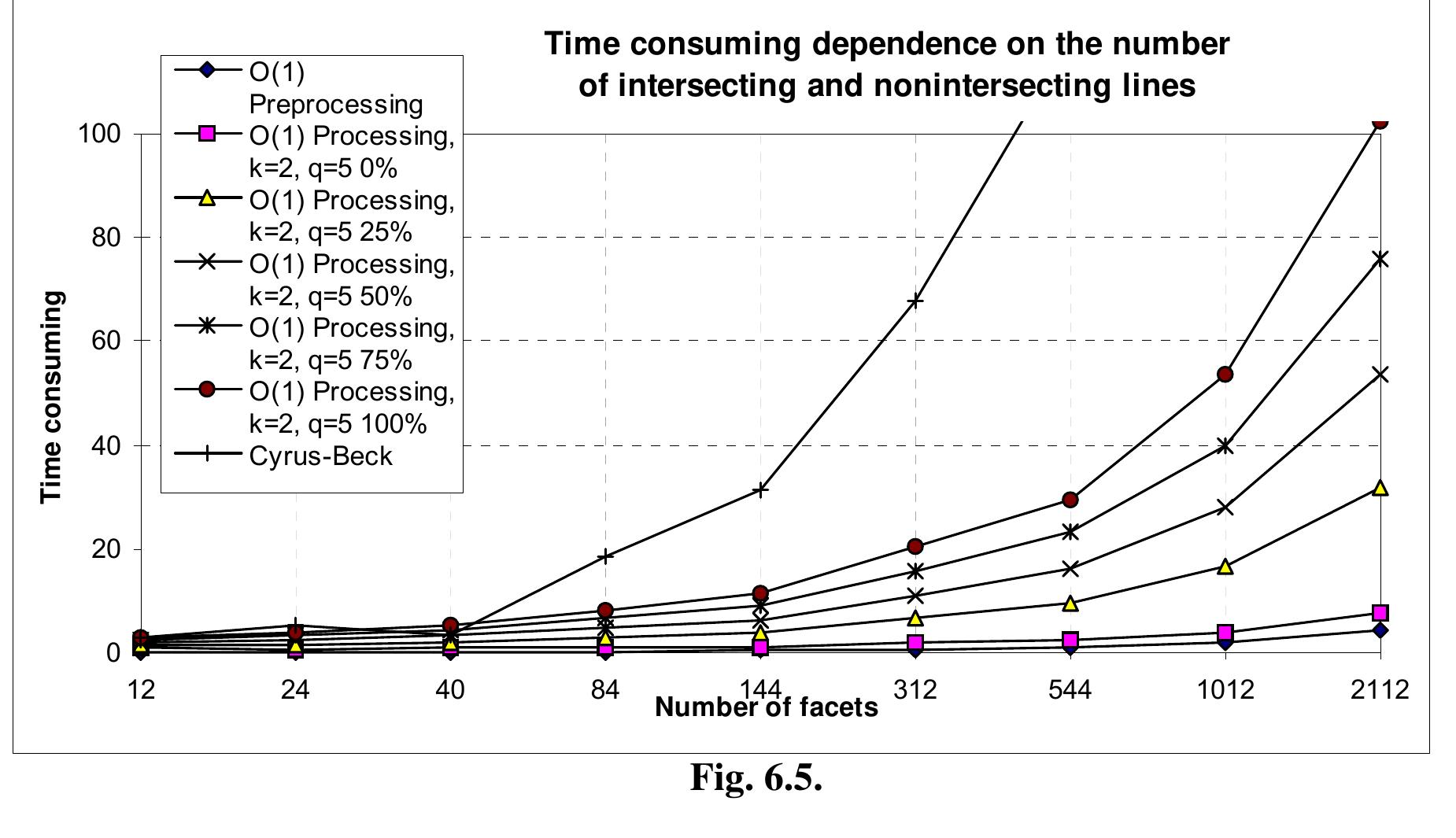
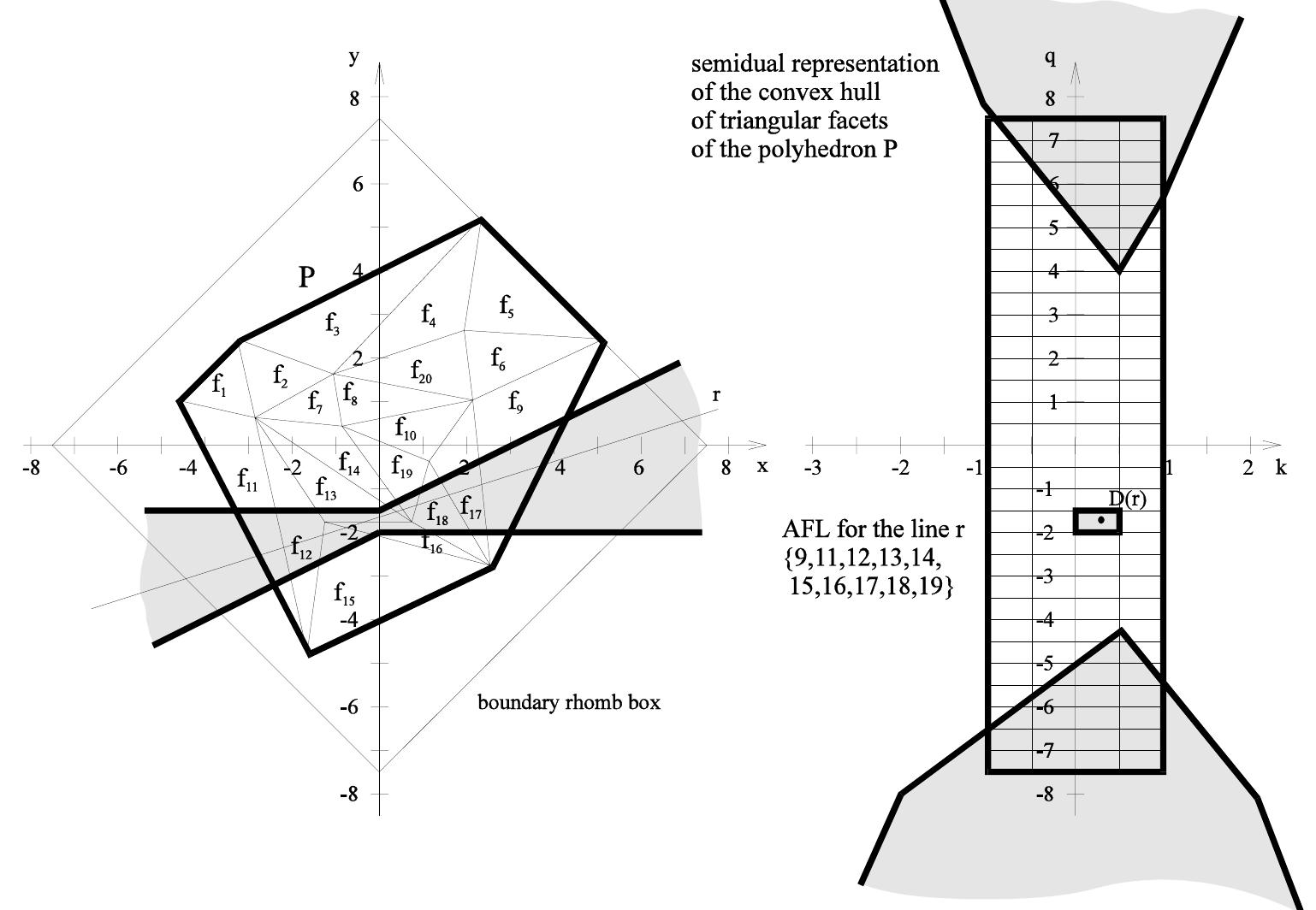
A comparison of a new algorithm for line clipping in E 2 and E 3 by convex polygon and/or polyhedron with O(1) processing complexity and Cyrus-Beck algorithm is presented. The new algorithm in E 2 is based on dual space representation and... more
The diploma thesis deals with the use of a simulation model for the development of an automatic algorithm for the creation of a routing table and route evaluation in a transport system. It includes a search of modeling and simulation... more
This is a PDF file of an unedited manuscript that has been accepted for publication. As a service to our customers we are providing this early version of the manuscript. The manuscript will undergo copyediting, typesetting, and review of... more
Abstract. There are many applications where data structures use a hash function. The hash data structures are widely used across all fields of computer science. Nevertheless the design or selection of hash function for data sets with... more
The visualization of large and complex models is required frequently. This is followed by number of operations which must be done before visualization itself, whether it is an analysis of input data or a model simplification. One of the... more
Generally the expression "visualization" means data processing so that a human being can imagine the physical or other phenomena represented by the given data sets. Although the visual understanding is nearly understood... more
A new algorithm for clipping lines against convex polyhedron with O N ( ) complexity is given with modification for nonconvex polyhedron. The suggested algorithm is faster for higher number of facets of the given polyhedron than the... more
There are many applications where data structures use a hash function. The hash data structures are widely used across all fields of computer science. Nevertheless the design or selection of hash function for data sets with unknown... more
A comparison of a new algorithm for line clipping in E 2 and E 3 by convex polygon and/or polyhedron with O(1) processing complexity and CyrusBeck algorithm is presented. The new algorithm in E 2 is based on dual space representation and... more
A comparison of a new algorithm for line clipping in E 2 and E 3 by convex polygon and/or polyhedron with O(1) processing complexity and Cyrus-Beck algorithm is presented. The new algorithm in E 2 is based on dual space representation and... more
A comparison of a new algorithm for line clipping in E 2 for convex polygons with O(1) processing complexity and the Cyrus-Beck algorithm is presented. The algorithm is based on the dual space representation and a space subdivision... more
A new algorithm for line clipping by convex polygon with O() 1 processing complexity is presented. It is based on dual space representation and space subdivision technique. The suggested algorithm also demonstrates that pre-processing can... more
Algorithm complexity is very often used for comparison of different algorithms in order to assess theirs properties. Nevertheless there are some other factors like actual speed for the expected applications, memory needed and others that... more
There are many applications that are not naturally based on the orthogonal coordinate systems, like ultrasound imaging, astronomy, mechanical computations etc. In many cases it is necessary to transform the problem formulation to the... more
Download research papers for free!