Academia.eduAcademia.edu

Maori Studies

description175 papers
group2,163 followers
lightbulbAbout this topic
Māori Studies is an interdisciplinary academic field that focuses on the language, culture, history, and contemporary issues of the Māori people of New Zealand. It encompasses the exploration of Māori traditions, social structures, and their interactions with colonial and global influences, aiming to promote understanding and appreciation of Māori perspectives.
lightbulbAbout this topic
Māori Studies is an interdisciplinary academic field that focuses on the language, culture, history, and contemporary issues of the Māori people of New Zealand. It encompasses the exploration of Māori traditions, social structures, and their interactions with colonial and global influences, aiming to promote understanding and appreciation of Māori perspectives.

Key research themes

1. How does mātauranga Māori integrate traditional knowledge systems with scientific epistemologies and support Indigenous sovereignty in knowledge production?

This theme explores the conceptualization of mātauranga Māori as a comprehensive Indigenous knowledge system encompassing Māori values, epistemologies, and worldviews, and its engagement with Western scientific paradigms. Research investigates how mātauranga Māori, through forms like pūrākau and maramataka, both complements and challenges mainstream science while asserting Indigenous sovereignty and culturally grounded knowledge production.

Key finding: This paper elucidates mātauranga Māori as a systematic knowledge framework incorporating culture, values, and worldview, notably through pūrākau (narratives) and maramataka (calendar) which are empirical, continually updated,... Read more
Key finding: This research presents the negotiated space conceptual model that facilitates dialogue and knowledge exchange between mātauranga Māori and scientific epistemologies, emphasizing empowerment and cultural dignity. It identifies... Read more
Key finding: This paper advances a set of Māori and Te Tiriti o Waitangi–based ethical principles tailored to artificial intelligence, embedding Māori leadership, data sovereignty, and equity within AI life cycles. It exemplifies the... Read more

2. What are the experiences and methodological considerations for Māori and Indigenous researchers engaging in Kaupapa Māori research methodologies and academic career pathways?

This research theme investigates the application of Kaupapa Māori as an Indigenous research methodology reflective of Māori worldviews and epistemologies, including embodied experiences of Māori researchers. It also addresses systemic barriers, institutional challenges, and career pathways within academia for Māori and Pasifika early career scholars, highlighting strategies for culturally sustaining approaches and capacity building in university contexts.

Key finding: The author provides an autoethnographic account demonstrating Kaupapa Māori as an Indigenous methodology deeply intertwined with researcher identity and political positioning. The paper highlights Kaupapa Māori’s fluidity... Read more
Key finding: This study critically reframes the academic 'pipeline' metaphor as ‘pakaru’ (broken) for Māori and Pasifika, revealing structural inequities in progression to permanent academic positions in New Zealand universities. Through... Read more
Key finding: Using collective autoethnographic narratives, this article reveals the complex challenges faced by Māori and Pasifika early career academics within New Zealand universities, including cultural taxation, identity negotiation,... Read more
Key finding: This article assesses the effectiveness of MAI Te Kupenga, a Māori and Indigenous doctoral support program, in mitigating systemic racism and monoculturalism within New Zealand higher education. It identifies the program's... Read more
Key finding: Through reflective narratives of Pākehā educational researchers, this paper highlights the challenges and transformations occurring when non-Indigenous researchers engage authentically with Kaupapa Māori methodologies. It... Read more

3. In what ways do Māori cultural values, community engagement, and Indigenous knowledge systems influence educational and social wellbeing outcomes for Māori learners?

This theme explores the relevance of Māori cultural perspectives, including whānau (family) engagement, language revitalization, food knowledge, and Indigenous pedagogies, in shaping educational success, health, and social wellbeing. Research here informs culturally responsive practices and policy, emphasizing the integration of mātauranga Māori and Indigenous worldviews to support Māori aspirations and address systemic inequities.

Key finding: This iwi case study identifies cultural attributes modeled by ancestral figures as key indicators for Māori student success, highlighting the importance of tribal history, community values, and cultural identity in... Read more
Key finding: Drawing on survey data from Māori and non-Māori whānau, this study reveals high parental expectations for relational, culturally sustaining teaching practices, challenging stereotypes of low engagement among Indigenous... Read more
Key finding: Through principal interviews, this study reveals that schools embedding mātauranga Māori around kai (food) and environmental sustainability foster holistic wellbeing and cultural connectedness for Māori children. However,... Read more
Key finding: This article articulates a mātauranga Māori conceptualization of literacy emphasizing biliteracy, embodied practices, and cultural and relational understandings divergent from Western functionalist models. It identifies... Read more
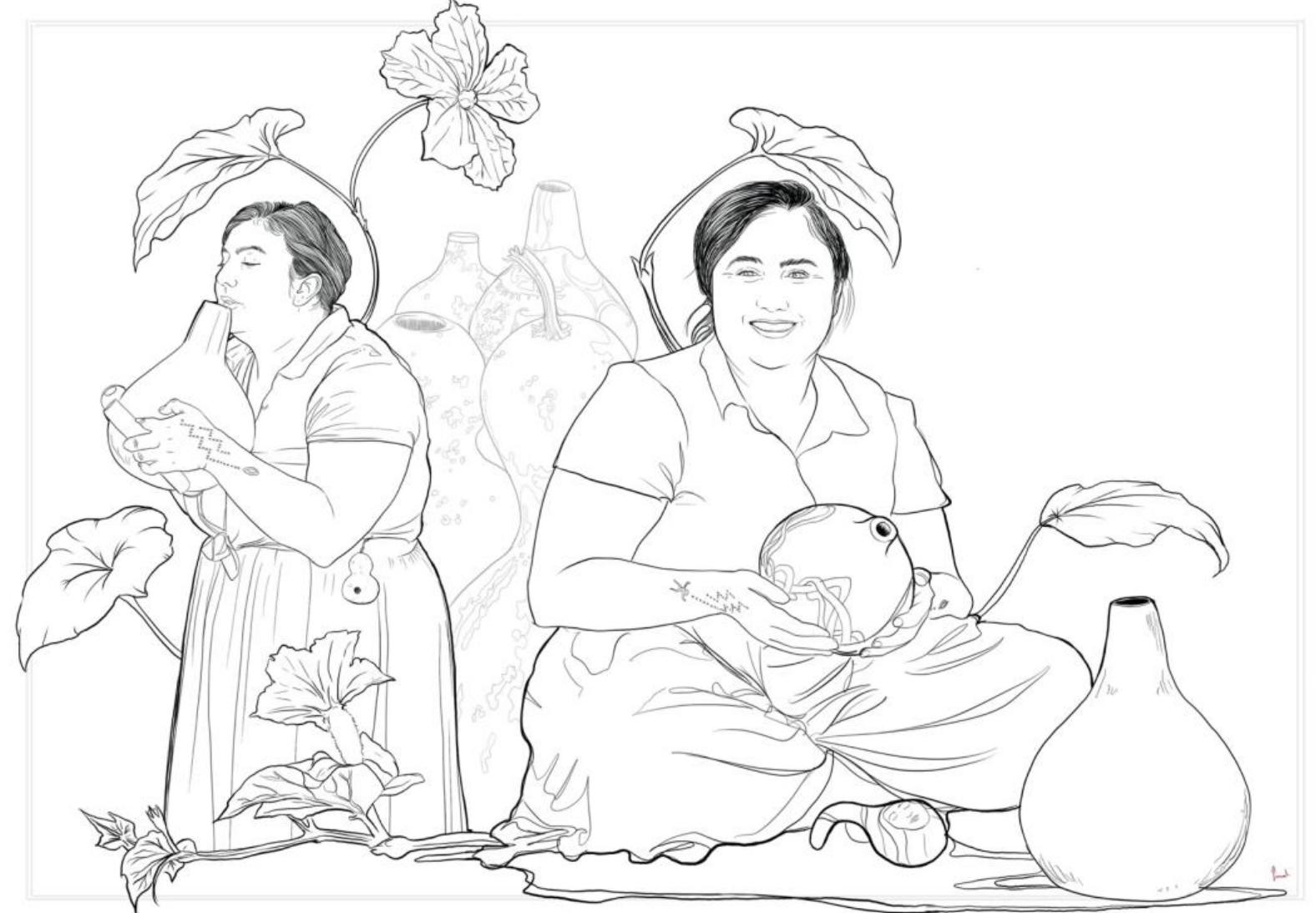
Key finding: This research develops a kaupapa Māori framework (‘He Hauora! He Hauoro!’) centering taonga pūoro (traditional musical instruments) within Māori health practices, emphasizing mana wāhine (women's authority), whakapapa, and... Read more

All papers in Maori Studies

Professor Moolya Vijayalakshmi's contribution to language studies extends beyond her own research endeavors. By motivating her children to engage in linguistic research, she exemplified her profound commitment to and passion for language.... more
The classical method of loci has long served as a foundational technique for organizing information through imagined spatial environments. Although historically associated with mnemonic performance, its underlying principle-structuring... more
There are many known factors that can help or hinder Indigenous students undertaking tertiary study, but little is known about how Māori students experience Māori studies courses specifically. Against the backdrop of low Māori student... more
Tulisan ini akan lebih banyak bicara tentang upaya-upaya yang selama ini dilakukan untuk mendapatkan bangun pendidikan kehumasan yang ideal. Tulisan diawali dengan perlunya pendidikan kehumasan, dilanjutkan dengan paparan elemen... more
Memahami public relations bukanlah hal yang mudah dan sederhana. Public relations mengalami perkembangan yang cukup dinamis. Banyak faktor yang mempengaruhi perubahan tersebut, dan nantinya akan mempengaruhi masa depan public relations.... more
La historia de Te Nohoaka o Tukiauau o Sinclair Wetlands nos revela diferentes modalidades de vivir su naturaleza desde el establecimiento del ser humano. Estos humedales se sitúan cerca de la ciudad de Dunedin, en la región de Otago al... more
Operationalising Indigenous rights and resistance involves strategic growth, emphasising collective empowerment and innovative knowledge dissemination within Indigenous communities. This paper will focus on the balance between... more
The previously formulated model for the evolution of the genetic code was shown to clarify why base triplets of some precursor amino acids differ by a single base from product amino acid codons, while others show less homology. First, the... more
In comparing legal deglobalization and illegal globalization, one can confidently state that legal deglobalization is largely an artificially-induced process, driven by policies such as trade tariffs, whereas illegal globalization emerges... more
Scholarship in Pacific and Indigenous studies has made decisive contributions to understanding how colonial governance depends upon cartographic practices that miniaturize islands, abstract oceanic worlds, and render Indigenous homelands... more
The decision of the New Zealand government at the end of September not to join its traditional allies, Australia, Canada and the UK, in belatedly recognising a Palestine state surprised many people at home and abroad. It may have been... more
The 1886 eruption of Mount Tarawera was the most lethal volcanic event in New Zealand colonial history, destroying Māori settlements and burying the famed Pink and White Terraces in ash. The traditional landowners were forced from their... more
Over the past 190 years there have been at least eight specific attempts by national groupings of Maori leaders to achieve a collective and representative governance voice based on the promises of He Whakaputanga (The Declaration of... more
Aotearoa Art Fair - Following her editorial debut of Collecting: Living with Art,
Kym Elphinstone visited the Aotearoa Art Fair and selected three impressive artists to follow.
Presenting Method Example 1 Active amplification with Māori terms The tuatara, the ancient lizard with its third eye 2 Annotation after Māori terms Chapter 1 -Kahutia Te Rangi Chapter 4 -Not only was Kahutia Te Rangi a man's name but it... more
Los karakia son cantos o rezos tradicionales de la cultura maorí que cumplen una función espiritual y social muy importante. 🌿 Se usan para invocar protección, bendiciones, guía y buena fortuna, así como para marcar momentos... more
Te Rauparaha y la creación del haka Ka Mate: traducción y análisis histórico Esta traducción ofrece un acercamiento histórico y cultural a la vida de Te Rauparaha, líder de Ngāti Toa, y la creación del famoso haka Ka Mate. Basada en... more
Traducción del texto histórico y cultural sobre el hongi, el saludo tradicional maorí, del inglés al español. El trabajo incluye la explicación de su significado, origen mítico ligado a Hineahuone, y la guía práctica sobre cómo realizarlo... more
For Māori, the indigenous people of Aotearoa New Zealand, pain is not only physical or psychological, but relational: it is embedded in family, spirituality, and land.
Extractivism is an extension of settler colonialism designed to exploit the lands and waters by removing material resources, labor, foods, data, and even cultural practices, in order to benefit economically and politically from their... more
The 1886 eruption of Mount Tarawera was the most lethal volcanic event in New Zealand colonial history, destroying Māori settlements and burying the famed Pink and White Terraces in ash. The traditional landowners were forced from their... more
Given Nigeria‘s structural barriers to industrialisation and dependence on imported raw materials, the Raw Materials Research and Development Council (RMRDC) was established in 1987 to promote sustainable industrial growth through local... more
These spoken words open worlds, and universes, they are beginnings with neverendings. These are the vibrations tīpuna Māori chanted, under moons, through winds, with trees and birds, to the beat of Papatūānuku -mother earth. As they... more
Initial Teacher Education (ITE) in Aotearoa New Zealand has undergone significant reforms and scrutiny over recent decades, with a growing body of research examining its effectiveness, challenges, and evolution. This systematic review... more
A powerful mix of tohunga, skilled agriculturalists, fisherman and warrior ancestors from the legendary ocean-going waka Kurahaupo and Takitimu landed along the Hawke's Bay coastline from Mahia to Waimarama at least 800 years ago.
Why does a universe governed by the seemingly deterministic laws of General Relativity (GR) also present us with the fundamental optionality of Quantum Mechanics (QM)? This paper posits that this is not a contradiction to be resolved, but... more
Nous réunissons ici deux billets de traductions de notre blog, car il se trouve aussi des poètes maoris contemporains de Nouvelle-Zélande (I) dans le second billet sur la Polynésie anglophone (II), la Nouvelle-Zélande faisant partie de la... more
published poem
This Introduction makes the case for a more critical engagement with oceans and the maritime within critical heritage theory. We lay out a research agenda that more consciously foregrounds aquatic domains in debates about conservation,... more
This study explores the nature of the Fedarb sheet of the Treaty of Waitangi. The author argues that it conflicts with the conventional argument for the necessity of Treaty principles. She argues that the Treaty principles are a device of... more
Taonga pūoro, often referred to as the traditional musical instruments of the Māori, hold a deeper significance beyond their musicality. Before colonisation, taonga pūoro were integral to Māori wellbeing and health practices. However,... more
A submission to the Parliament's Justice Committee regarding the Principles of the Treaty of Waitangi Bill, aka the Treaty Principles Bill (TPB). This submission is from an Indigenous person from the Oceti Sakowin Oyate, a setter-ocuppied... more
© 2016 by the Contemporary Science Association, New York. In this article we investigate strategies for authentically engaging Indigenous knowledges in the epistemologically Western "uni-versity" using data from... more
This thesis paper explores the concept of "Tidalectics" as introduced by Edward Kamau Brathwaite in his work, The Arrivants: A new world trilogy. It will try to investigate the significance of this unique concept, which Brathwaite... more
classification, suggesting that not all Europeans desired these printed and display objects for the same reasons. Indeed, this is an area I would have liked him to develop further. He picks up on the fact that class and education... more
Williams, S. A., et al. (2024). "Prioritized strategies to improve diagnosis and early management of cerebral palsy for both Māori and non-Māori families." Developmental medicine and child neurology. Aim: To identify prioritized... more
This Kaupapa Māori Research writing inquiry explores the (mis)appropriation of haka and the social media video-sharing platform YouTube in that (mis)appro-priation. The article examines the specific case of a group of Latter-day Saint... more
In Chap. 2, we documented a range of international studies into the intercultural dimension in language education, with a particular focus on young learners of an additional language (L2). The review of the international literature... more
This article addresses a gap in the historical literature concerning Māori urbanisation and economic development by exploring intellectual exchanges surrounding these developments. It argues that a series of key figures transmitted a... more
The health reforms of the 1990's were in part implemented to develop a more effective, efficient and responsive health system. The reforms were to see major changes introduced into public sector management with a growing emphasis on... more
Робоча програма з навчальної (пропедевтичної) практики для студентів за напрямом підготовки 6.020204 «Музичне мистецтво», 2017 р. – 20 с
Contemporary media, politics, and culture are saturated by figures of the global and globalization. This Introduction emphasizes how many of these figures rest on a particular conception of the global. The editors term this “modern... more
In Chap. 2, we documented a range of international studies into the intercultural dimension in language education, with a particular focus on young learners of an additional language (L2). The review of the international literature... more
Addressing Indigenous rights and interests in genetic resources has become increasingly challenging in an open science environment that promotes unrestricted access to genomic data. Although Indigenous experiences with genetic research... more
Download research papers for free!