Academia.eduAcademia.edu

Proportional-fair

description14 papers
group0 followers
lightbulbAbout this topic
Proportional-fair refers to a resource allocation strategy in network systems that aims to maximize overall utility while ensuring fairness among users. It balances the trade-off between maximizing throughput and providing equitable access, allowing users to receive resources proportional to their demands or needs, thereby optimizing performance in shared environments.
lightbulbAbout this topic
Proportional-fair refers to a resource allocation strategy in network systems that aims to maximize overall utility while ensuring fairness among users. It balances the trade-off between maximizing throughput and providing equitable access, allowing users to receive resources proportional to their demands or needs, thereby optimizing performance in shared environments.
This paper proposes a new QoS control method for the ad hoc Wireless LAN (W-LAN), which adjusts the Contention Window (CW) size dynamically based on the required and achieved bit rate. By the proposed method, a node with higher bit rates... more
The fifth-generation wireless communication is expected to provide a huge amount of capacity to cater to the need of an increasing number of mobile consumers, which can be satisfied by device-to-device (D2D) communication. Reusing the... more
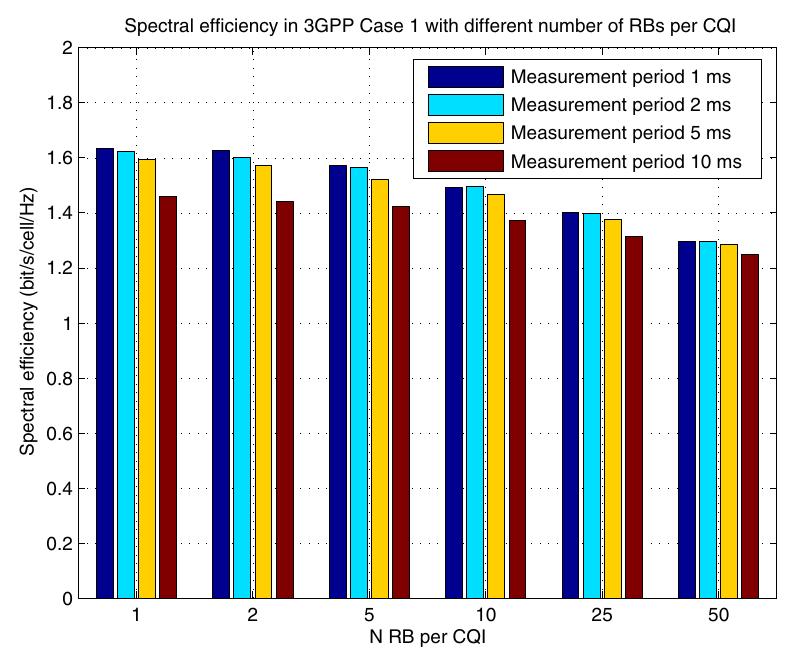
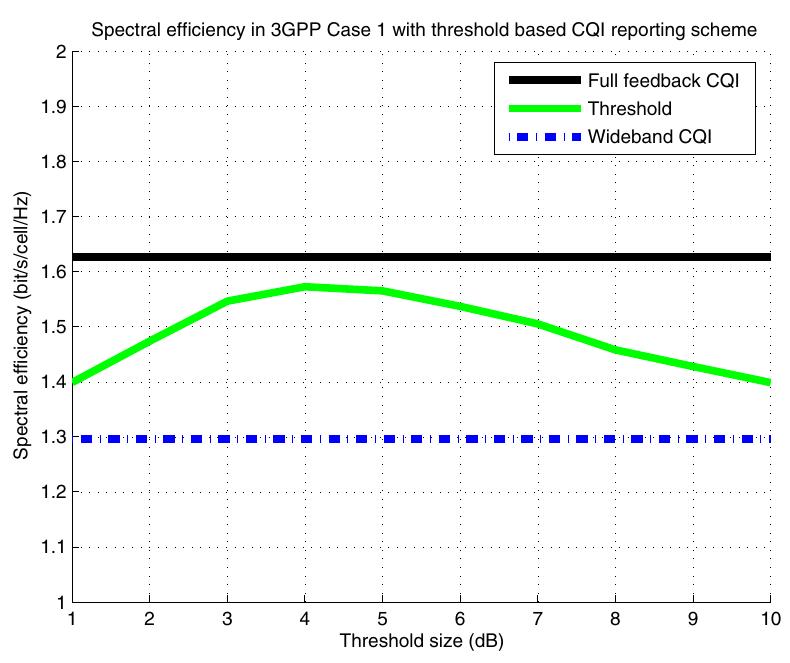
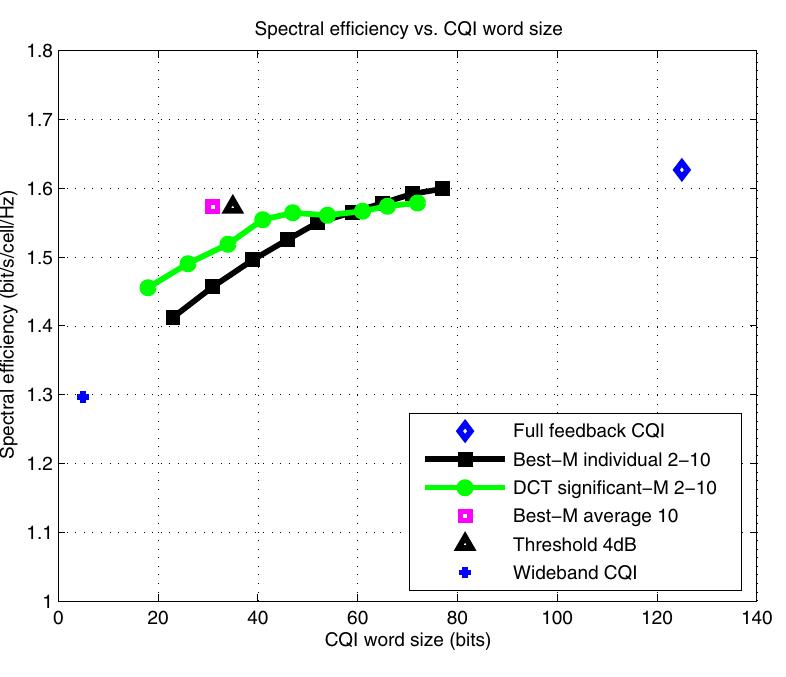
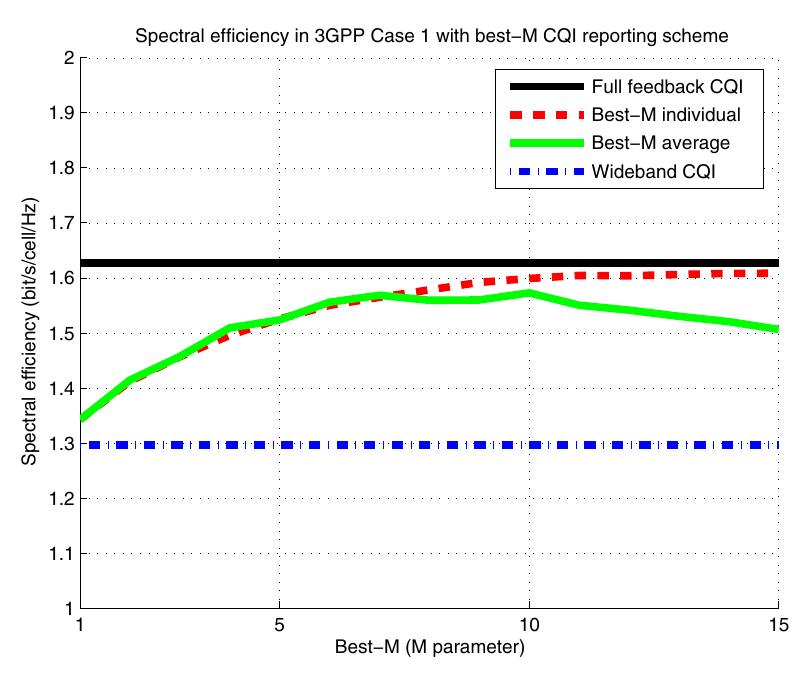
A key feature of LTE system is that the packet scheduler can make use of the Channel Quality Information (CQI), which is periodically reported by user equipments either in an aggregate form for the whole downlink channel, or distinguished... more
Long Term Evolution (LTE) is well known as a cellular network that can support very high data rates in diverse traffic conditions. One way of achieving it is through packet scheduling which is the key scheme of Radio Resource Management... more
The development of new wireless cellular network technologies is always in progress. As 3G has been considered the foundation of mobile broadband, the latest generation of cellular mobile communications, that is, 5G New Radio, is expected... more
The proposal of LTE in the standardization of cellular network systems has received considerable attention in the research domain, and most subscribers widely use it. Despite the enormous acceptance of the system, academia as an industry... more
In this paper, we present initial results on how the ns-3 LTE LENA stack is used to build a LTE testbed in an indoor lab network. We have extended the ns-3 MAC/PHY layer architecture to interface with a LabVIEW implementation of the LTE... more
A key feature of LTE system is that the packet scheduler can make use of the Channel Quality Information (CQI), which is periodically reported by user equipments either in an aggregate form for the whole downlink channel, or distinguished... more
Long Term Evolution is standardized by the 3rd Generation Partnership Project to provide a high data rate up to 100 Mbps and 50 Mbps for downlink and uplink transmission respectively and can operate in different bandwidths ranging from... more
Long Term Evolution (LTE) Carrier Aggregation (CA) was introduced by the Release-10 3GPP specifications. CA allows aggregation of up to 5 cells for a terminal; both downlink (DL) CA and uplink (UL) CA are supported by the 3GPP... more
In this paper, we consider the operational impact that VoLTE will have on the performance of mobile broadband data in the real world from a throughput perspective when the two service types are mixed on the same channel. We begin by... more
In order to provide an increased capacity, throughput and QoS guarantee for terrestrial users in emergency scenarios, a low-medium-altitude aerial platform based time-division-duplex long term evolution (TD-LTE) system referred to as... more
Managing radio resources in Long Term Evolution (LTE) networks is considered as one of the essential design factors for enhancing the overall system performance. Common approaches are introduced to either achieve fairness between network... more
Long Term Evolution is standardized by the 3rd Generation Partnership Project to provide a high data rate up to 100 Mbps and 50 Mbps for downlink and uplink transmission respectively and can operate in different bandwidths ranging from... more
We have proposed a high-speed fluid-flow rate allocation scheme. We show that this method is well suited for ephemeral web-like traffic which is proliferating as network speed is increasing. We look at the flow level properties and packet... more
We investigate the optimal selection of minimum contention window values to achieve proportional fairness in a multirate IEEE 802.11e test-bed. Unlike other approaches, the proposed model accounts for the contention-based nature of... more
In LTE, resource scheduling algorithm is one of the key parameters that determine the overall system and UE performances in terms of throughput and fairness respectively. Multiple scheduling techniques are available that emphasizes on... more
Distributed Opportunistic Scheduling (DOS) techniques have been recently proposed to improve the throughput performance of wireless networks. With DOS, each station contends for the channel with a certain access probability. If a... more
The performance evaluation of wireless networks is severely complicated by the specific features of radio communication, such as highly variable channel conditions, interference issues, and possible hand-offs among base stations. The... more
—The heterogeneous cellular network (HCN) is a promising approach to the deployment of 5G cellular networks. This paper comprehensively studies physical layer security in a multi-tier HCN where base stations (BSs), authorized users and... more
OFDM is an attractive technique to implement multiuser diversity for the downlink. This paper deals with the problem of combining the increased cell throughput of multiuser diversity schemes with a fair distribution of resources among the... more
—A multi-level soft frequency reuse (ML-SFR) scheme and a resource allocation methodology are proposed for wireless communication systems in this letter. In the proposed ML-SFR scheme, there are 2N power density limit levels, achieving... more
The Long Term Evolution Advanced (LTE-Advanced) transmission bandwidth can be expanded by Carrier Aggregation (CA), where CA technology expands effective bandwidth supported to User Equipment (UE) by utilizing of radio resources across... more
LA are essential techniques in improving the LTE performance, giving e.g. both cell throughput and coverage gain of around 40 % over a distributed multiplexing scheme. However, there is a tradeoff with signaling overhead related to the... more
In this paper, we propose a distributed adaptive interference coordination algorithm for a practical orthogonal frequency division multiple access (OFDMA)-based mobile cellular systems. The designed algorithm can achieve an efficient... more
Multi-User MIMO (MU-MIMO) is a useful technique to enhance uplink capacity in LTE because the base stations employ multiple receive antennas whereas the user equipments transmit with only a single antenna. In this paper we investigate... more
The planning of Physical Cell Identities (PCI) has a strong impact on the performance of Long Term Evolution cellular networks. Although several PCI planning schemes have been proposed in the literature, no study has quantified the... more
This paper provides a unified framework to study the performance of successive interference cancellation (SIC) in wireless networks with arbitrary fading distribution and power-law path loss.
Abstract Self-organizing networks (SON) is currently seen as a key lever to improve network performance and simplify its management. This paper considers α-fair schedulers in an Orthogonal Frequency-Division Multiple Access (OFDMA)... more
Download research papers for free!