Academia.eduAcademia.edu

Transport Poverty

description27 papers
group2 followers
lightbulbAbout this topic
Transport poverty refers to the inability of individuals or communities to access adequate transportation options, which limits their mobility and access to essential services, employment, and social opportunities. It is often linked to socioeconomic factors, geographic location, and the availability of public transport infrastructure.
lightbulbAbout this topic
Transport poverty refers to the inability of individuals or communities to access adequate transportation options, which limits their mobility and access to essential services, employment, and social opportunities. It is often linked to socioeconomic factors, geographic location, and the availability of public transport infrastructure.

Key research themes

1. How is transport poverty conceptualized and what are its key social consequences?

This research theme focuses on defining transport poverty, understanding its conceptual frameworks, and outlining its adverse social impacts, especially on economically disadvantaged populations. It is fundamental to establish clear definitions and conceptualizations to guide measurement methods and develop effective policy responses. This theme matters because without consensus and clarity on what constitutes transport poverty, interventions may remain fragmented or tokenistic, failing to address the true breadth and depth of the problem.

Key finding: The paper identifies that transport poverty is inconsistently defined across academic and policy literatures, leading to inadequate and fragmented responses worldwide. It highlights that transport poverty is not merely about... Read more
Key finding: This study systematically reviews 62 papers on transport poverty in China and identifies that transport poverty stems from complex interactions among institutional, economic, spatial, and individual factors, notably... Read more
Key finding: The book advances the conceptualization of mobility poverty by integrating socio-spatial factors and different user groups’ capabilities and needs, emphasizing that transport poverty is socially constructed rather than merely... Read more

2. What are the spatial and demographic dimensions of transport poverty and how do they shape accessibility inequalities?

Research under this theme investigates how spatial factors—such as peripheral urban location, suburbanization, and rurality—intersect with demographic variables like income, age, ethnicity, and disability to produce differentiated experiences of transport poverty. Understanding these spatial-demographic dynamics is crucial for recognizing systemic mobility disadvantages and informing spatially and socially targeted policy measures. This theme is significant because transport poverty is not uniform but varies according to geography and social group membership, influencing access to essential opportunities.

Key finding: This empirical study reveals significant disparities in access to public transport across different population groups in Ibadan, Nigeria, demonstrating that equity of accessibility is statistically sensitive to the specific... Read more
Key finding: The paper identifies pervasive transport barriers for people with disabilities in African countries, emphasizing how poor or non-existent universally accessible infrastructure, lack of inclusive policy frameworks, and minimal... Read more
Key finding: This research synthesizes European and international literature on migrants' and ethnic minorities' mobility patterns, revealing that these populations face multifaceted barriers including language, affordability,... Read more
Key finding: Focusing on Europe, the chapter analyzes how spatial processes like suburbanisation, peri-urbanisation, and urban-rural gradients produce mobility disadvantage by increasing travel distances and reliance on private vehicles.... Read more

3. Which policy interventions and data approaches effectively address transport poverty in diverse contexts?

This theme synthesizes the evidence on policy measures, evaluation frameworks, and data resources that can help ameliorate transport poverty while ensuring social justice in transportation planning. It highlights the role of integrated and participatory policy-making, the challenges of transport justice evaluation, and the interplay of energy and transport poverty. The inclusion of data-centric studies reflects the importance of accurate and comprehensive data collection to monitor poverty trends and to inform equitable transport policies. Understanding effective interventions is essential for policy design that genuinely enhances accessibility and reduces social exclusion.
Key finding: Using qualitative data from focus groups and expert interviews, this study identifies politically and socially acceptable policy measures to alleviate combined energy and transport poverty. It finds that mandatory energy... Read more
Key finding: This comprehensive review underscores the critical role of diverse data sources—including national surveys, administrative records, and social indicators—in informing poverty research and policy in Ireland. It identifies data... Read more
Key finding: The paper conducts a systematic review and multi-criteria analysis showing that Intelligent Transportation Systems (ITS) are unevenly adopted across African countries, with infrastructural deficits, poverty, and governance... Read more

All papers in Transport Poverty

A B S T R A C T Invisible minorities, including some Indigenous groups, face an almost constant struggle against exclusion, restricted access to services and patterns of institutional racism against them, and inequities in democratic... more
This chapter examines regional income disparities in Slovakia through the lens of living costs, arguing that conventional income-based comparisons fail to capture real differences in living standards. Using a combined perspective of wages... more
Why are we mobile? How do we choose to move around in order to accomplish our daily activities? Are there alternatives to the use of the private car outside the city centers in Switzerland? To answer these questions, a research project... more
About 17 % of the EU population is "energy poor" according to expenditure-based indicators, doubling the rate from subjective-based indicators. • Overlap is very small: using four well-known indicators available for all EU-27 countries,... more
The widening income gap in post-reform China has given rise to social inequality. Among those, transport poverty and inequality have significantly affected the daily life of low-income groups. While important, this is an under-researched... more
This paper summarises preliminary results of a study to extend knowledge associated with social exclusion and transport by quantifying social and behavioural implications of lack of public transport and the nature of the social well-being... more
Department of Methodology of Behavioural Sciences of the (SPAIN) This report constitutes the summary report workpackage 2 report on mobility patterns in the ageing European societs of the EU project CONSOL, "CONcerns and SOLutions -Road... more
This report offers a comprehensive analysis of the persistence of energy poverty in the European Union (EU). The primary objective is to analyse the duration and magnitude of energy poverty over time and to identify the socioeconomic and... more
More than 10.5% of the population of the European Union (EU) struggled with inadequate home heating in 2023. This is a worrying escalation on previous years (+3.7 percentage points since 2021), with some countries reaching as high as 20%.... more
The present thesis seeks to explore the bases of social inequality, particularly how it is reproduced and can potentially be counteracted. The aim is to describe and explain how structural factors-first and foremost class and young... more
With the hike of global energy prices of 2022-2023 and the fairness challenges of the green transition, energy poverty is again back to the forefront of economic policy debates in Europe. However, the absence of consensus on energy... more
This document is a publication by the Joint Research Centre (JRC), the European Commission's science and knowledge service. It aims to provide evidence-based scientific support to the European policymaking process. The contents of this... more
Digital Technologies are changing societal, personal and organisational lives. Access to some technologies becomes essential to fully participate in social interactions. Lack of access to necessary Information Technologies (Digital... more
Tens of millions of households across Europe struggle to afford adequate electricity and heating services and reliable transportation, while recent high fuel prices could lead to an increase in excess winter deaths. Tackling energy and... more
Introduction Transportation is one of the most complex and hazardous challenges faced by older people and disabled individuals that can limit their opportunities for meaningful participation in society. These vulnerable groups are also at... more
Car miles per person stabilising • Fall in young adults holding a driving licence Declining mobility Applying an 'equalities' lens Choice? Constraint? • Technological change • 'Urban renaissance' • Lifestyle/ consumer preference issues... more
Den här rapporten ger en sammanfattning av de seminarier som organiserades under våren 2021 av PHEDKommissionen för framtiden för hälso- och sjukvården efter covid-19, som bjöd in till vittnesmål från hälso- och sjukvårdspersonal,... more
In this article, we argue that similarly to the literature on urban neighbourhood effects, the idea of disadvantaging residential environment can be used to explain the socioeconomic disadvantage of residents in rural peripheries. We... more
This study estimates housing quality and features explaining energy poverty in Spain and its regions. By using the EU-SILC dataset for 2008-2019, it calculates the hidden links between energy poverty indicators and housing features,... more
The paper presents a study to explore the relationship between travel poverty and social disadvantage at the local geographical level. The main aim of the research was to identify the extent to which the revealed travel behavioural... more
The Policy Research Working Paper Series disseminates the findings of work in progress to encourage the exchange of ideas about development issues. An objective of the series is to get the findings out quickly, even if the presentations... more
Energy and mobility poverty limits people's choices and opportunities and negatively impinges upon structural economic and social welfare patterns. It also hampers the ability of planners to implement more equitable and just... more
The spatial arrangement of a metropolis is of utmost importance to carry out daily activities, which are constrained by space and time. Accessibility is not only shaped by the spatial and temporal dimension, but it is also defined by... more
We are still far from achieving the ambitions of ensuring independent living and providing equal opportunities to enjoy seamless, accessible, and independent trave1 for persons with special access needs. The goal of the project TRIPS... more
Workplace relocation can have a significant impact on commuting trips as well as on the location and number of activities scheduled within the home-work tour. This often exogenous, non-voluntary event affects the entire activity-travel... more
This Special Issue focuses on exploring the relationship between urban form, mobility, and social well-being across neighbourhoods, cities, and regions [...]
In the context of dealing with mobility poverty, it is relevant to consider how personal choices and (changes in) one's personal situation affect behaviour and, possibly, lead to behavioural change. A growing number of studies have... more
This study aims to analyze the relationships between degree of green infrastructure, walkability and perceived social safety in a given geographical location. Previous research has shown how the presence of green urban elements-in... more
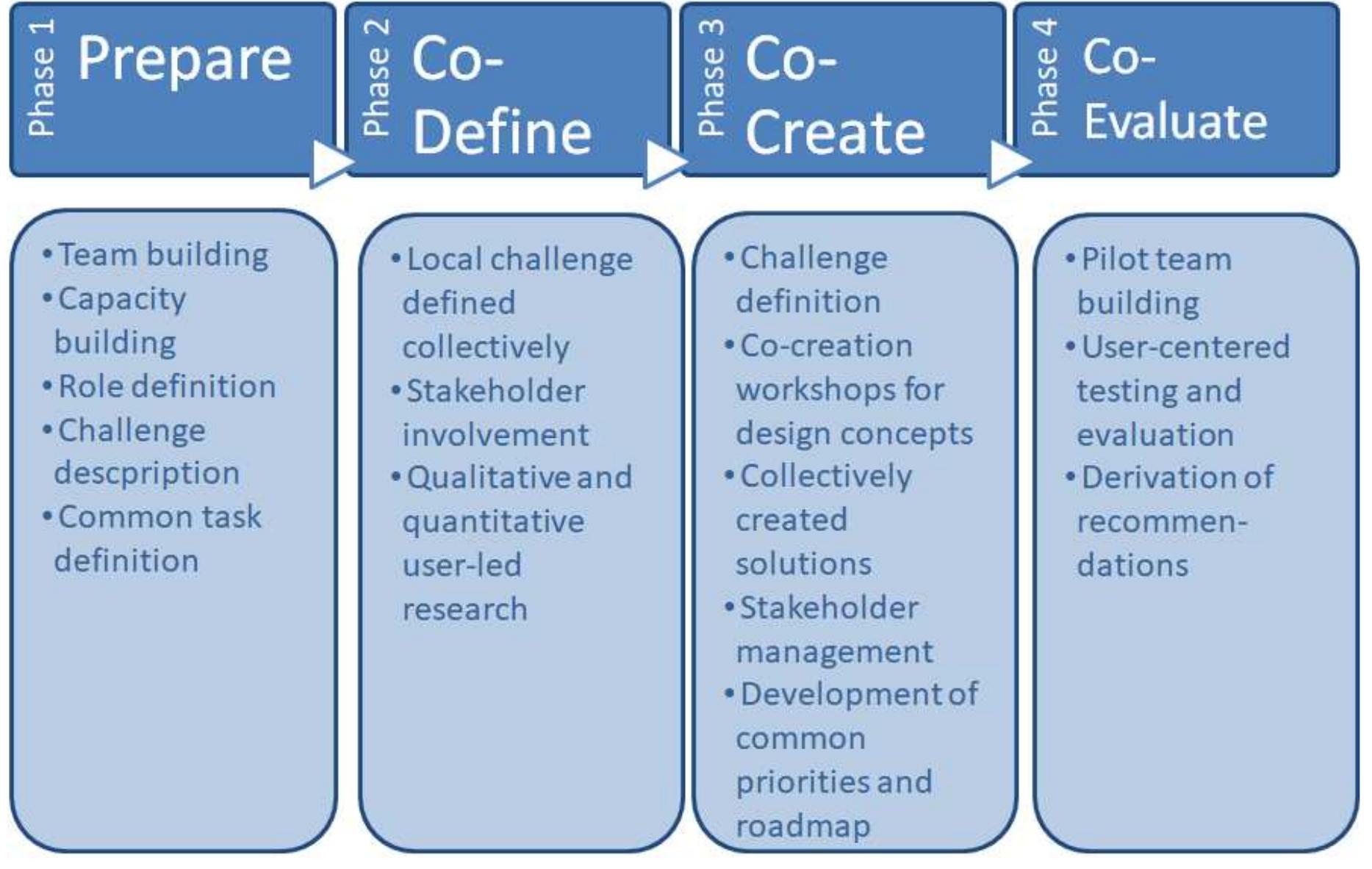
This paper demonstrates the co-creation process of digital mobility and delivery services applied in the Inclusive Digital Mobility Solutions (INDIMO) project mainly based on the local Communities of Practice (CoP) drawing on the... more
Every day, many women struggle to access essential opportunities such as jobs, education, shops and friends. Failing to provide them with adequate transport services can eventually lead to an undesirable situation of social disadvantage... more
China’s internal migrants suffer from marginalised housing conditions, poor neighbourhood environments and residential segregation, which may have significant implications on health and well-being. Echoing recent calls for... more
The paper presents a study to explore the relationship between travel poverty and social disadvantage at the local geographical level. The main aim of the research was to identify the extent to which the revealed travel behavioural... more
In addition to the summary report a longer version (CONSOL-WP2 Technical report), including all steps of analysis for all used data sets, data description and Annexes including graphs and tables, is available. Data analysis was based on... more
The paper presents a study to explore the relationship between travel poverty and social disadvantage at the local geographical level. The main aim of the research was to identify the extent to which the revealed travel behavioural... more
Inequalities not only exist in the field of economics in relation to income and wealth, but also in other areas, such as the transport sector, where access to and use of different transport modes varies markedly across population groups,... more
Background: Architectural barriers have a significant impact on the daily activities of people with reduced mobility. Objectives: To understand the weaknesses and/or opportunities in the responses of local authorities to eliminate the... more
In addition to the summary report a longer version (CONSOL-WP2 Technical report), including all steps of analysis for all used data sets, data description and Annexes including graphs and tables, is available. Data analysis was based on... more
Inequality is a problem facing the world community, especially in developing countries, that affects urban transport and vice versa. Which possible urban transportation mode will cause the least inequality? This is a vital question. The... more
Background: This paper presents the development of a multi-dimensional mobility divide index (MDI) for assessing the accessibility of public transport developed using a co-design approach, directly involving end-users in the index design... more
Migration within Europe and between Europe and other parts of the world is a major driver of population change and has far reaching effects on land use. The theory, historical trends and actual patterns of migration were reviewed and from... more
Large-scale population mobility has an important impact on the spatial layout of China’s urban systems. Compared with traditional census data, mobile-phone-based travel big data can describe the mobility patterns of a population in a... more
Inequality is a problem facing the world community, especially in developing countries, that affects urban transport and vice versa. Which possible urban transportation mode will cause the least inequality? This is a vital question. The... more
People are likely to adapt their everyday travel behavior when faced with adverse weather conditions like flooding. Variations in their usual travel routine often manifest in changes made in departure time, transport mode use or route... more
Download research papers for free!