



580 California St., Suite 400
San Francisco, CA, 94104
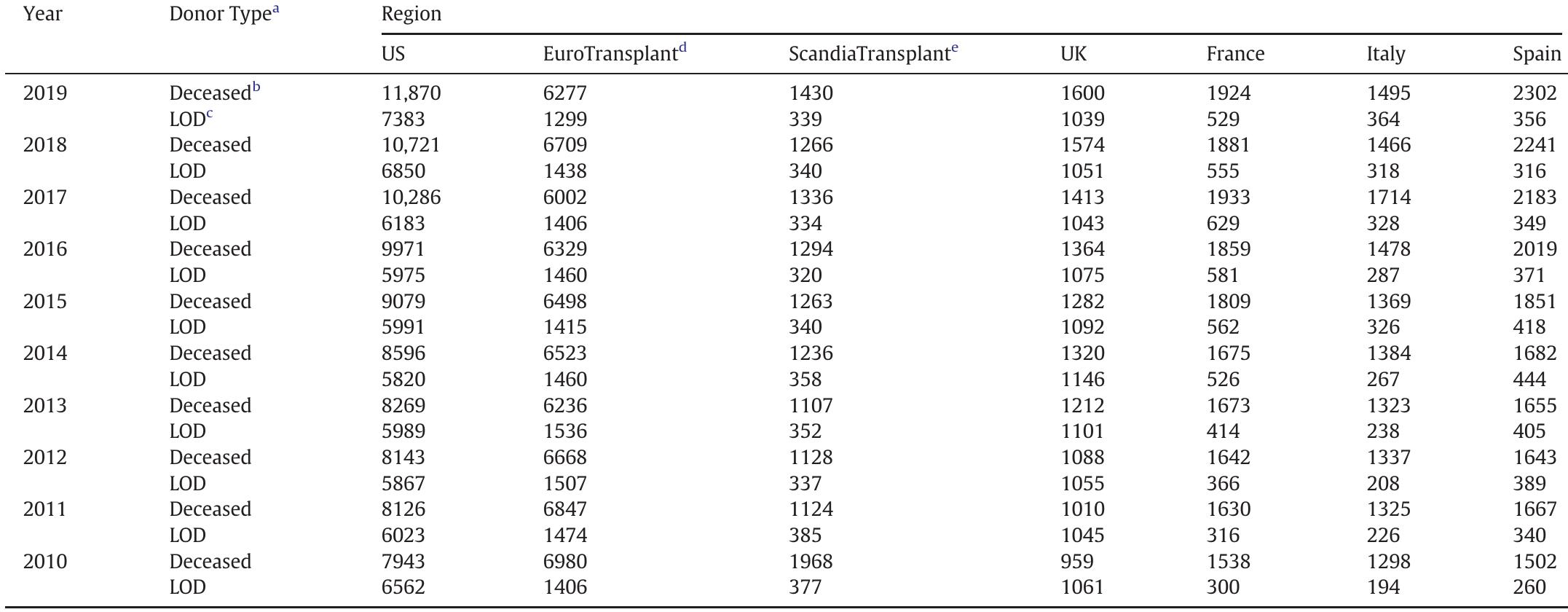
Sources: https://www.organdonor.gov/statistics-stories/statistics/data.html; https://statistics.eurotransplant.org/; https://www.odt.nhs.uk/statistics-and-reports/annual-activity-report http://www.scandiatransplant.org/data; https: //optn.transplant.hrsa.gov/data/view-data-reports/national-data/#. * Deceased Donor Type Organs for EuroTransplant include: Heart, Kidney, Lung, Liver (plus split liver), Pancreas (plus pancreatic islets). Living Donor Type Organs for Eurotransplat include: Heart, Kidney, Lung, Liver (plus split liver). For ScandiaTransplant only kidney and liver deceased and living donor data are included. US and UK data include: Kidney, Heart, Lun, Liver, and Pancreas both for deceased and living donors. > Deceased Donors include: DCD and DBD donors. © Living Organ Donors (LOD) for France, Italy, and Spain include kidney and liver transplants only. 4 EuroTransplant is an international collaboration between the following countries: Austria, Belgium, Croatia, Germany, Hungary, Luxembourg, the Netherlands, and Slovenia. © ScandiaTransplant is an international collaboration between the following countries: Denmark, Finland, Iceland, Norway, Sweden, and Estonia. Total donor type count by year and region. Table 2
Figure source:
Abstract: a r t i c l e i n f o Available online xxxx Keywords: Organ donation Organ donor Organ transplant Donation after brain death Donation after circulatory death Organ shortage Organ donation and transplantation remain the best and most cost-effective clinical solution for end-stage organ failure. Several agencies across the US and Europe provide legislative, regulatory, and humanitarian services to generate smoother applications in all transplantation processes and donor-recipient relationships. US and European statistics present nine types of grafts, with kidneys being the most transplanted organ worldwide. However, organ shortage, religion, underrepresented minority groups, difficulties in obtaining consent, lack of understanding, and general ethical concerns present challenging barriers to organ donation, reflecting the complexity of graft procurement and allocation. Breaking down these barriers to reduce the organ-supply imbalance requires an appropriate multifaceted approach. Some of the key areas include increasing the potential donor pool and consent rates, apt organ allocation, and improving organ health. Additionally, suitable policies and standardized guidelines for both donors and recipients, alongside educational initiatives, are needed to ensure patient safety and global awareness. Looking forward, novel and effective research plans and initiatives are needed if we are to avoid a colossal supply-demand gap.
