
Official blog of the AMA Manual of Style
AMA Style Insider is the official blog of the AMA Manual of Style and features quizzes, interviews, and ruminations on style, usage, and punctuation. Brought to you by the JAMA Network.

Can JAMA Network Authors Use Generative Artificial Intelligence to Create Content?
The short answer is yes, but with a caveat: transparency is key.
It's All About Access
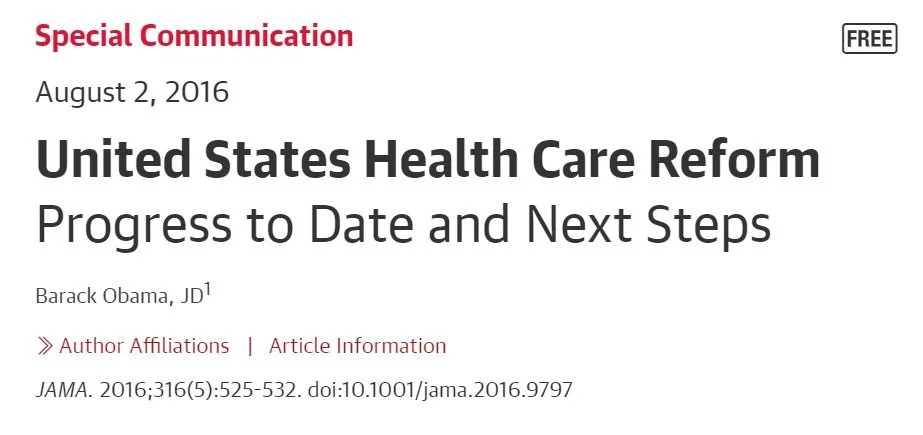
Let's take a little jaunt through time to before the pandemic days (remember those?) and look at one of the most downloaded and cited articles in the history of the JAMA Network. Perhaps you'll recognize the title (or, more likely, the author).
Citing Online Journal Articles and Data from Repositories
The new edition of the AMA Manual of Style is here, and it has nearly 200 more pages on everything from reference citations to the ethical and legal issues associated with medical publishing.
Preprints in the Time of COVID
Fans of the 1985 Gabriel García Márquez novel Love in the Time of Cholera are all too familiar with the concept of pining over something long desired, but luckily for medical editors, the 11th edition of the AMA Manual of Style has been quick to provide necessary and accessible updates for editors to use during the time of coronavirus disease 2019 (COVID-19).

Where in the World Is the Publisher's Location?
If you’re into vintage video games or, like me, came of age watching copious amounts of PBS programming, you may be familiar with a certain raven-haired, scarlet-bedecked, UNESCO World Heritage Site--stealing woman of mystery.
Resources for References
Sometimes editing requires a little detective work, especially when the manuscript you’re working on has several incomplete references. You could query the author for the missing information, but with minimal time and effort, you may be able to the find the information you need using 2 free resources: PubMed and Worldcat. Both of these resources have extensive features, and editors can use the basic search interface to find missing reference information.
Looking Forward to the 11th Edition
At the most recent annual conference of the American Medical Writers Association, we received a sneak peek at some of the changes to come with the AMA Manual of Style 11th edition.
Pharmaceutical Company Names
The pharmaceutical industry is ever-changing, and it’s hard to keep up with new ownership and branding. When editing sections of manuscripts with a lot of pharmaceutical company names, such as the conflict of interest disclosures, I typically find all sorts of spellings of the names, even for the same company within the same paragraph.
Questions From Users of the Manual
I am writing a manuscript in which I want to include the dates that a list of products were first marketed. The database from which I got the information is a subscriber-only database. This seems to be the only place that has the information I want to use. Are such subscriber-only databases allowable to include in a reference list?
URLs Gone Bad: Fixing Broken Links
Link rot is a term that describes the tendency of URLs to fail over time because the page has been deleted or moved. Because of the lag between writing and publication, link rot can be a problem even before content is posted, so all URLs should be checked for dead links.
Questions From Users of the Manual
How can a user of your online manual tell if use of a particular word (such as namely) is discouraged?
Questions From Users of the Manual
Does your style require parenthetical page numbers after the superscript citation of the reference number on all references or just direct quotations?
Citing Electronic Editions: or, Getting on the Same Page
Copyediting.com recently offered a tip on how to cite a book read on a Kindle or similar e-reader, noting that the lack of page numbers in such electronic editions presents a "peculiarity" for editors seeking guidance.
Digital Object Identifiers (DOIs) for Electronic References
Electronic references are widely used in scientific publications. Most people are familiar with the URL (uniform resource locator), the address for a page on the Internet. A serious problem with URLs is described by the slang term link rot, the tendency of URLs to fail over time because the content has been deleted or moved.