Videos by Chandima Gunasena
Human Paradigm Shift is needed to heal the planet
5 views
Today we are discussing the prosperity we achieved as human beings. This short film is trying to ... more Today we are discussing the prosperity we achieved as human beings. This short film is trying to highlight some facts about ecological mismatches occured during the heman development process due to lack of appropriate definitions for Future Human Habitat etc. 2 views
Papers by Chandima Gunasena

1. Introduction
Sri Lanka is increasingly exposed to climate-related risks associated with drough... more 1. Introduction
Sri Lanka is increasingly exposed to climate-related risks associated with droughts, changing rainfall patterns, groundwater depletion, and rising sea levels. Among these challenges, salinity intrusion into rivers, estuaries, wetlands, and coastal aquifers represents one of the most significant yet under-recognized threats to national water security.
During prolonged droughts and El Niño events, river flows decline substantially. As freshwater flows weaken, seawater can migrate upstream through river channels and coastal aquifers. This process threatens drinking water supplies, agricultural production, ecosystems, and industrial water users.
The risk is particularly important for river basins supporting major urban populations, including the Kelani River Basin, which provides a substantial portion of the drinking water supply for the Colombo Metropolitan Region.
The proposed National Salinity Intrusion Preparedness and Freshwater Buffering Programme (NSIFBP) seeks to address this challenge through proactive freshwater storage, groundwater buffering, wetland recharge, salinity monitoring, and community-based groundwater intelligence systems.

1. Executive Summary
Sri Lanka faces increasing climate-related risks including prolonged drought... more 1. Executive Summary
Sri Lanka faces increasing climate-related risks including prolonged droughts, extreme rainfall events, groundwater depletion, salinity intrusion, and growing uncertainty associated with future El Niño conditions. While substantial investments have been made in reservoirs, irrigation infrastructure, and flood management systems, relatively limited attention has been directed toward strategic groundwater buffering as a national climate adaptation measure.
The National Strategic Groundwater Buffering Programme (NSGBP) proposes the utilization of abandoned paddy lands, underutilized paddy fields, floodplains, marshlands, seasonal wetlands, and low-lying depressions as distributed groundwater recharge zones capable of storing excess water during wet periods and improving groundwater availability during droughts.
The programme seeks to transform excess runoff and floodwater into strategic groundwater reserves by using existing irrigation infrastructure, natural landscapes, and community participation mechanisms. The programme further introduces a National Community Groundwater Monitoring and Intelligence Programme to establish Sri Lanka's first large-scale citizen-based groundwater observation network.
The programme is designed to improve drought preparedness, water security, ecosystem resilience, climate adaptation capacity, and long-term economic sustainability.
Core Principle
Capture before discharge.
Recharge before drought.
Store before scarcity.
Prepare before disaster.

Abstract
Climate change is increasing the frequency, severity, and uncertainty of hydroclimatic e... more Abstract
Climate change is increasing the frequency, severity, and uncertainty of hydroclimatic extremes worldwide, creating significant challenges for water security, ecosystem sustainability, and disaster preparedness. Small island nations such as Sri Lanka are particularly vulnerable to climate variability associated with the El Niño–Southern Oscillation (ENSO), which has historically contributed to prolonged droughts, reduced river flows, groundwater depletion, agricultural losses, and ecosystem degradation. Conventional water resource management approaches remain heavily dependent on surface reservoirs and reactive drought response measures, which are increasingly challenged by evaporation losses, sedimentation, and growing climate uncertainty.
This paper proposes the National Strategic Pre-Drought Groundwater Buffering Programme (NSPGP), a nature-based climate adaptation framework designed to proactively enhance groundwater storage before anticipated drought conditions develop. The framework is based on the controlled diversion of surplus river flows into strategically selected floodplains, low-lying recharge areas, riverbank filtration corridors, and managed aquifer recharge systems across Sri Lanka's major river basins.
The central hypothesis of the framework is that proactive groundwater buffering can increase basin-scale hydrological resilience, sustain river baseflows, reduce drought impacts, improve water security, strengthen ecosystem stability, and mitigate salinity intrusion risks during future El Niño events. The framework integrates climate forecasting, groundwater monitoring, managed aquifer recharge, river basin planning, and nature-based solutions within a unified disaster preparedness approach.
The paper presents the conceptual architecture of NSPGP, reviews relevant literature, discusses its potential application across Sri Lanka's wet, intermediate, and dry zones, and evaluates its contribution to climate adaptation and disaster risk reduction.
Keywords: Groundwater buffering, climate adaptation, El Niño, groundwater resilience, managed aquifer recharge, nature-based solutions, drought preparedness, Sri Lanka.

New Year celebrations are among the oldest and most universal cultural traditions practiced by hu... more New Year celebrations are among the oldest and most universal cultural traditions practiced by human civilizations. Across continents and religions, societies celebrate the transition into a new year through rituals symbolizing renewal, prosperity, hope, purification, and collective identity. However, despite their diversity, most New Year celebrations remain predominantly human-centered, focusing primarily on human welfare, human relationships, and human prosperity. In contrast, the broader ecological community of living beings-including animals, birds, insects, forests, and ecosystems-often remains excluded from these celebrations. This report proposes the establishment of a "World New Year Humanity Day," a new global observance intended to expand New Year celebrations beyond humanity to include all living beings sharing Planet Earth. Inspired partly by Sri Lankan cultural traditions such as Dansal and "Balu Kaputu Danaya," the proposal seeks to create a global coexistence celebration based on compassion, ecological responsibility, interspecies coexistence, and planetary consciousness. The report examines existing global New Year traditions, discusses the environmental and philosophical limitations of anthropocentric celebrations, and presents a conceptual framework for a worldwide observance promoting responsible food sharing, biodiversity awareness, ecological ethics, and coexistence with non-human life forms. The proposal is positioned within broader global discussions concerning sustainability, biodiversity conservation, environmental ethics, and ecological citizenship.
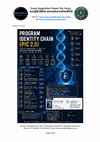
The rapid evolution of cyber threats-including polymorphic malware, fileless attacks, and softwar... more The rapid evolution of cyber threats-including polymorphic malware, fileless attacks, and software supply chain compromises-has exposed a fundamental limitation in modern cybersecurity: the absence of a persistent identity mechanism for software systems. Traditional approaches such as cryptographic hashing, behavioral analysis, and network-based attribution operate independently and fail to provide a unified lifecycle-based identity framework. This paper introduces the Program Identity Chain (PIC 2.0), a dynamic, multi-layered framework that establishes a continuous and evolving identity for software systems from creation through execution and mutation. Drawing inspiration from biological DNA and industrial traceability systems, PIC 2.0 integrates cryptographic hashing, distributed ledger technologies, hardware-based trust anchors, lineage-based identity tracking, and privacy-preserving verification mechanisms. The proposed architecture formalizes a lifecycle identity pathway that spans code creation, build processes, distribution, execution monitoring, mutation tracking, and forensic reconstruction. By transforming software identity into a cumulative and multi-dimensional construct, PIC 2.0 enhances traceability, resilience, and attribution capabilities. While acknowledging that absolute attribution in cyberspace remains theoretically unattainable, this framework significantly advances the state of cybersecurity by enabling near-continuous identity tracking and forensic reconstruction.

Groundwater constitutes the world’s largest source of accessible freshwater, supporting nearly ha... more Groundwater constitutes the world’s largest source of accessible freshwater, supporting nearly half of global irrigation and providing drinking water to billions of people. Over recent decades, however, groundwater extraction has accelerated far beyond natural recharge rates in many regions due to population growth, agricultural intensification, and climate variability. Major aquifer systems across North America, South Asia, the Middle East, and parts of Africa are experiencing persistent declines in water tables, land subsidence, reduced river baseflows, and deteriorating water quality. Unlike surface water systems, groundwater depletion often progresses invisibly, delaying societal response until economic and ecological thresholds are crossed. This has transformed groundwater scarcity into a silent but systemic global crisis with long-term implications for food security, ecosystem resilience, and climate adaptation.
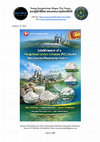
The purpose of this proposal is to seek the approval of the Chairman and Board of Lanka Phosphate... more The purpose of this proposal is to seek the approval of the Chairman and Board of Lanka Phosphate Ltd to establish a Precipitated Calcium Carbonate (PCC) manufacturing facility utilizing calcium–magnesium rich by-products generated from the Eppawala phosphate processing operations.
The proposal presents a comprehensive technical, financial, environmental, and strategic case demonstrating that these by-products—currently managed as low-value residues—can be converted into a high-value industrial mineral with strong domestic demand and export potential. The initiative aims to transform an environmental management obligation into a profitable, nationally strategic business line, while strengthening the long-term sustainability of Lanka Phosphate Ltd.
1.2 Strategic Rationale for Lanka Phosphate Ltd
Lanka Phosphate Ltd occupies a critical position in Sri Lanka’s agricultural input supply chain. However, exclusive reliance on fertilizer products exposes the company to policy-driven pricing controls, demand volatility, and fiscal risk. The proposed PCC project addresses these challenges by diversifying the company’s revenue base into the industrial minerals and chemicals sector, using a resource already under its control.
Strategically, the project:
Converts an unavoidable by-product of phosphate processing into a premium industrial input
Reduces national dependence on imported PCC used by paint, plastic, rubber, and specialty manufacturers
Positions Eppawala as a multi-mineral industrial hub rather than a single-commodity operation
Aligns the company with national priorities on circular economy, import substitution, and green industrialization
This diversification enhances both financial resilience and institutional relevance of Lanka Phosphate Ltd over the long term.
A Functional, Verifiable, and Contemporary Framework for Buddhist Practice
The Dhammacakkappavatt... more A Functional, Verifiable, and Contemporary Framework for Buddhist Practice
The Dhammacakkappavattana Sutta, the Buddha’s first discourse, stands at the foundation of all Buddhist philosophy and practice. It introduces the Four Noble Truths not as metaphysical claims or theological beliefs, but as a lawful description of human suffering, its causal origin, its cessation, and a path of disciplined practice leading to freedom.
Despite its centrality, the Sutta is often encountered today in ways that obscure its original pragmatic intent. In traditional contexts, it may be treated as a doctrinal formula to be memorized. In academic contexts, it may be reduced to a historical or textual artifact. In modern secular adaptations, it may be simplified into therapeutic techniques divorced from ethics and liberation.
This Awakening System is developed to address that gap.
Ayurveda has always been a sophisticated system of knowledge based on observation, logic, and exp... more Ayurveda has always been a sophisticated system of knowledge based on observation, logic, and experiential wisdom. While classical texts such as the Charaka Saṃhitā, Suśruta Saṃhitā, and Aṣṭāṅga Hṛdaya demonstrate remarkable diagnostic brilliance, the modern Ayurvedic practitioner faces new challenges: complex chronic diseases, mental health burdens, lifestyle disorders, environmental toxins, digital lifestyles, and the increasing need for integrative, innovative clinical solutions.
This research explores CeyJas and Helicso, two innovative Sri Lankan fusion expressions performed... more This research explores CeyJas and Helicso, two innovative Sri Lankan fusion expressions performed using the same six-piece ensemble comprising Daula, Yak Béra, Udekkiya, Cymbals, Rhythm Guitar, and Saxophone. These two musical dimensions, though structurally identical, represent opposing yet complementary emotional and philosophical directions: CeyJas embodies serenity and meditative stillness, while Helicso expresses dynamism, energy, and rhythmic vitality. This paper situates both within the evolving context of Sri Lanka's creative economy, analyzing their cultural symbolism, acoustic design, performance methodology, and potential for global recognition. The study argues that both projects together form a new artistic paradigm-a modern sound identity emerging from Sri Lanka's ancient rhythmic heritage.

Sri Lanka’s rainfall-dependent agriculture, hydropower generation, and disaster preparedness syst... more Sri Lanka’s rainfall-dependent agriculture, hydropower generation, and disaster preparedness systems demand high precision in daily and seasonal rainfall forecasts. However, challenges persist—especially during inter-monsoonal periods (e.g., October)—when convective rainfall systems become difficult to predict due to non-linear and multi-scale atmospheric interactions. Traditional forecasting methods often fall short, failing to capture critical atmospheric indicators that influence rainfall occurrence and distribution.
The Rainfall Risk Index (RRI) was conceptualized as a response to this forecasting gap. It is built on the understanding that mid-tropospheric westerly wind anomalies, particularly above +3 m/s, exhibit a statistically significant negative correlation with rainfall. This relationship has been validated through a synthetic 30-year dataset and real-time case analysis (e.g., 25 October 2025 in Kurunegala), prompting the proposal of an integrated, wind-anomaly-modulated forecasting framework for Sri Lanka Figure 1.

Creativity and contemplative awareness have traditionally been treated as separate domains-one be... more Creativity and contemplative awareness have traditionally been treated as separate domains-one belonging to cognitive neuroscience and the other to spiritual philosophy. This paper proposes the Universal Mind Pathway (UMP), an interdisciplinary framework uniting the physiology of brain networks with the phenomenology of prāṇa (life-force) and kuṇḍalinī (latent transformative energy). Drawing upon Buddhist, Yogic, and Taoist models of consciousness, as well as findings from cognitive neuroscience on the Default Mode Network (DMN) and Executive Control Network (ECN), the UMP describes nine interacting "units": the Energy Interface, Sensory Unit, Idea Unit, Design Unit, Control Unit, Memory Unit, Power Unit, Creativity Processor, and Output Gateway. Each unit corresponds to identifiable neural, physiological, and experiential processes. The model argues that mindful regulation of breath and attention enables coherent coupling between energetic and neural subsystems, facilitating both creative insight and self-transcendence. Conceptual analysis and comparative literature review suggest that the UMP may serve as a bridge between contemplative traditions and contemporary theories of embodied cognition. Future empirical work could employ neuroimaging, heart-brain coherence measures, and phenomenological reporting to test the proposed correspondences.

Sri Lanka is at a crossroads in its development trajectory—confronting the escalating threats of ... more Sri Lanka is at a crossroads in its development trajectory—confronting the escalating threats of climate change while simultaneously striving to unlock its economic and technological potential. This National Climate Strategy outlines a comprehensive, multi-sectoral vision to transform Sri Lanka into a climate-resilient, low-carbon nation by 2050. The approach is rooted in the wisdom of traditional systems, enriched by digital innovation, and driven by the imagination and energy of the country’s youth as a community responisbility.
The strategy combines globally aligned frameworks—such as the Sustainable Development Goals (SDGs), Nationally Determined Contributions (NDCs), and ADAPT4R principles—with uniquely Sri Lankan innovations. It emphasizes revival of the Ellanga tank cascade system, incorporation of Ayurvedic knowledge (including Ahara-Vihara dietary and behavioral models), and restoration of edible biodiversity through agroecological farming and natural climate solutions. These time-tested systems are blended with new tools: mobile dashboards, Green Hydrogen innovation hubs, vocational climate skill training, and Smart Climate Schools started in 2019 that place youth at the heart of transformation.
In recognizing the country’s developmental priorities and the forecasted industrial growth over the next two decades, this strategy proposes a phased approach to decarbonization. It includes specific timelines for renewable energy transition, public sector emissions reduction, and nature-based carbon removal, supported by climate finance and MRV-compliant carbon markets. A strong institutional ecosystem—featuring the National Institute of Education (NIE), Tertiary and Vocational Education Commission (TVEC), and Sri Lanka Climate Smart Agriculture Approach (SLCSA)—is positioned to deliver this transformation through clear mandates and coordinated governance.
A critical pillar of the strategy is youth empowerment through education reform, community engagement, and green skilling. The Smart Climate Schools initiative started will ensure that every student becomes a data collector, problem solver, and change leader within their community. A nationwide Monitoring, Evaluation, and Learning (MEL) framework, with digitally integrated indexes and citizen science models, ensures the adaptive management of all interventions.
This report serves not just as a blueprint for Sri Lanka, but also as a global reference for countries seeking to integrate heritage, innovation, and human capital in their climate response. By blending ancient resilience with future-facing systems, Sri Lanka can become a model for sustainable, inclusive, and locally-rooted climate transformation.
Creativity has long been regarded as a mysterious force, often described as an unpredictable gift... more Creativity has long been regarded as a mysterious force, often described as an unpredictable gift available to only a select few. Yet, scientific progress in neuroscience challenges this notion, positioning creativity as a skill deeply rooted in the brain’s neuroplastic capacity—the ability to reconfigure and form new connections. In a world undergoing rapid transformations due to climate change, social upheavals, and technological disruption, creativity is no longer a luxury; it is a survival mechanism and a competitive advantage.
Traditional models of creativity have provided partial insights into how ideas are formed, nurtured, and implemented. Frameworks such as Wallas’ four-stage model, Guilford’s divergent and convergent thinking, dual-process theories, and design thinking have all contributed valuable perspectives. However, these approaches often lack grounding in neuroscience or fail to provide a concrete trigger mechanism for creativity. They describe what happens but not why or where creativity begins.
This report positions burden identification as the central novelty—a precise and explanatory gateway to creativity that links problem framing with brain pathways. It asserts that the accuracy of burden identification determines whether the brain will generate effective, innovative solutions or waste cognitive resources on irrelevant directions. This perspective fills a gap in existing literature, offering a neurocognitive model that makes creativity both explainable and actionable.
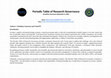
In today’s rapidly evolving knowledge economy, research governance plays a vital role in ensuring... more In today’s rapidly evolving knowledge economy, research governance plays a vital role in ensuring that scientific inquiry is not only creative but also accountable, ethical, and impactful. Good governance transforms research from isolated experiments into reliable, transparent, and socially responsible contributions that drive innovation and sustainable development. Without clear structures for oversight, validation, and alignment with societal goals, even the most promising ideas risk fragmentation, duplication, or failure to reach their true potential.
The Periodic Table of Research Governance provides a systematic framework with 14 main gates to address this challenge. Just as the chemical periodic table organizes elements into a coherent structure, this table organizes the essential “gates” of research oversight—ranging from project intake and quality control to risk management, ethics, transparency, and collaboration. Each gate represents a checkpoint where decisions, validations, and improvements can be made to strengthen the integrity, efficiency, and relevance of research.
By making governance visible, measurable, and actionable, this framework empowers researchers, institutions, and policymakers to move beyond ad hoc approaches and adopt a holistic system of accountability and innovation management. It ensures that creativity is nurtured responsibly, resources are used effectively, and outcomes are aligned with both national priorities and global agendas such as the SDGs, NDCs, and climate commitments.
Ultimately, research governance is not about restriction but about enabling excellence. The Periodic Table of Research Governance is therefore a living toolkit—one that balances freedom of inquiry with responsibility, turning knowledge into a trusted driver of progress for society, industry, and the environment.

The Pathway of Creativity is a dynamic cognitive and experiential process through which an indivi... more The Pathway of Creativity is a dynamic cognitive and experiential process through which an individual moves from the recognition of a burden, inefficiency, or problem toward the generation and capture of novel ideas. It begins with the identification of a triggering problem, burden, or a gap, followed by an immersive mental state based on the knowledge, experience, skills and motivations, where external awareness diminishes and spontaneous ideas emerge. This pathway is inherently fragile, subject to disruption by both external and internal disturbances (such as interruptions or environmental distractions) and internal disturbances (such as fatigue, hunger, or emotional shifts). The critical feature of the pathway is the necessity of harvesting ideas-through logbooks, sketch pads, or other recording tools-before disturbances terminate the process. Unlike stage-based models of creativity, the Pathway of Creativity emphasizes the temporal vulnerability, dual nature of disturbances, and the centrality of idea capture as defining characteristics of the inventive process. Simple Definition of the Pathway of Creativity The Pathway of Creativity is the journey an individual enters after recognizing a problem or burden, where they become deeply absorbed in thinking and new ideas begin to emerge in relation to their knowledge, experience and skills. During this state, the person often loses awareness of the outside world, but the process can be easily disturbed by external interruptions or internal needs. To protect these ideas from being lost, it is important to record them quickly in a logbook or sketch pad.

The generation of novel ideas often begins when an individual perceives a burden, problem, or ine... more The generation of novel ideas often begins when an individual perceives a burden, problem, or inefficiency, entering a mental "path of creativity" characterized by immersion, internal ideation, and vulnerability to disturbances. This paper proposes and elaborates that concept, situating it within existing creativity theory such as problem-finding, flow, divergent/convergent thinking, and Honing Theory. Key are the stages: burden recognition → entry into immersive idea mode → internal and external disturbance → idea harvesting (logbook/sketch pad). We highlight the uniqueness of this framework, especially its explicit focus on disturbances and the necessity of capturing fleeting creativity. Implications for inventors, educators, and organizations are discussed, including recommended practices and future research directions.
Definition of the Pathway of Creativity
The Pathway of Creativity is a dynamic cognitive and experiential process through which an individual moves from the recognition of a burden, inefficiency, or problem toward the generation and capture of novel ideas. It begins with the identification of a triggering problem, followed by an immersive mental state where external awareness diminishes and spontaneous ideas emerge. This pathway is inherently fragile, subject to disruption by both external disturbances (such as interruptions or environmental distractions) and internal disturbances (such as fatigue, hunger, or emotional shifts). The critical feature of the pathway is the necessity of harvesting ideas—through logbooks, sketch pads, or other recording tools—before disturbances terminate the process. Unlike stage-based models of creativity, the Pathway of Creativity emphasizes the temporal vulnerability, dual nature of disturbances, and the centrality of idea capture as defining characteristics of the inventive process.


Uploads
Videos by Chandima Gunasena
Papers by Chandima Gunasena
Sri Lanka is increasingly exposed to climate-related risks associated with droughts, changing rainfall patterns, groundwater depletion, and rising sea levels. Among these challenges, salinity intrusion into rivers, estuaries, wetlands, and coastal aquifers represents one of the most significant yet under-recognized threats to national water security.
During prolonged droughts and El Niño events, river flows decline substantially. As freshwater flows weaken, seawater can migrate upstream through river channels and coastal aquifers. This process threatens drinking water supplies, agricultural production, ecosystems, and industrial water users.
The risk is particularly important for river basins supporting major urban populations, including the Kelani River Basin, which provides a substantial portion of the drinking water supply for the Colombo Metropolitan Region.
The proposed National Salinity Intrusion Preparedness and Freshwater Buffering Programme (NSIFBP) seeks to address this challenge through proactive freshwater storage, groundwater buffering, wetland recharge, salinity monitoring, and community-based groundwater intelligence systems.
Sri Lanka faces increasing climate-related risks including prolonged droughts, extreme rainfall events, groundwater depletion, salinity intrusion, and growing uncertainty associated with future El Niño conditions. While substantial investments have been made in reservoirs, irrigation infrastructure, and flood management systems, relatively limited attention has been directed toward strategic groundwater buffering as a national climate adaptation measure.
The National Strategic Groundwater Buffering Programme (NSGBP) proposes the utilization of abandoned paddy lands, underutilized paddy fields, floodplains, marshlands, seasonal wetlands, and low-lying depressions as distributed groundwater recharge zones capable of storing excess water during wet periods and improving groundwater availability during droughts.
The programme seeks to transform excess runoff and floodwater into strategic groundwater reserves by using existing irrigation infrastructure, natural landscapes, and community participation mechanisms. The programme further introduces a National Community Groundwater Monitoring and Intelligence Programme to establish Sri Lanka's first large-scale citizen-based groundwater observation network.
The programme is designed to improve drought preparedness, water security, ecosystem resilience, climate adaptation capacity, and long-term economic sustainability.
Core Principle
Capture before discharge.
Recharge before drought.
Store before scarcity.
Prepare before disaster.
Climate change is increasing the frequency, severity, and uncertainty of hydroclimatic extremes worldwide, creating significant challenges for water security, ecosystem sustainability, and disaster preparedness. Small island nations such as Sri Lanka are particularly vulnerable to climate variability associated with the El Niño–Southern Oscillation (ENSO), which has historically contributed to prolonged droughts, reduced river flows, groundwater depletion, agricultural losses, and ecosystem degradation. Conventional water resource management approaches remain heavily dependent on surface reservoirs and reactive drought response measures, which are increasingly challenged by evaporation losses, sedimentation, and growing climate uncertainty.
This paper proposes the National Strategic Pre-Drought Groundwater Buffering Programme (NSPGP), a nature-based climate adaptation framework designed to proactively enhance groundwater storage before anticipated drought conditions develop. The framework is based on the controlled diversion of surplus river flows into strategically selected floodplains, low-lying recharge areas, riverbank filtration corridors, and managed aquifer recharge systems across Sri Lanka's major river basins.
The central hypothesis of the framework is that proactive groundwater buffering can increase basin-scale hydrological resilience, sustain river baseflows, reduce drought impacts, improve water security, strengthen ecosystem stability, and mitigate salinity intrusion risks during future El Niño events. The framework integrates climate forecasting, groundwater monitoring, managed aquifer recharge, river basin planning, and nature-based solutions within a unified disaster preparedness approach.
The paper presents the conceptual architecture of NSPGP, reviews relevant literature, discusses its potential application across Sri Lanka's wet, intermediate, and dry zones, and evaluates its contribution to climate adaptation and disaster risk reduction.
Keywords: Groundwater buffering, climate adaptation, El Niño, groundwater resilience, managed aquifer recharge, nature-based solutions, drought preparedness, Sri Lanka.
The proposal presents a comprehensive technical, financial, environmental, and strategic case demonstrating that these by-products—currently managed as low-value residues—can be converted into a high-value industrial mineral with strong domestic demand and export potential. The initiative aims to transform an environmental management obligation into a profitable, nationally strategic business line, while strengthening the long-term sustainability of Lanka Phosphate Ltd.
1.2 Strategic Rationale for Lanka Phosphate Ltd
Lanka Phosphate Ltd occupies a critical position in Sri Lanka’s agricultural input supply chain. However, exclusive reliance on fertilizer products exposes the company to policy-driven pricing controls, demand volatility, and fiscal risk. The proposed PCC project addresses these challenges by diversifying the company’s revenue base into the industrial minerals and chemicals sector, using a resource already under its control.
Strategically, the project:
Converts an unavoidable by-product of phosphate processing into a premium industrial input
Reduces national dependence on imported PCC used by paint, plastic, rubber, and specialty manufacturers
Positions Eppawala as a multi-mineral industrial hub rather than a single-commodity operation
Aligns the company with national priorities on circular economy, import substitution, and green industrialization
This diversification enhances both financial resilience and institutional relevance of Lanka Phosphate Ltd over the long term.
The Dhammacakkappavattana Sutta, the Buddha’s first discourse, stands at the foundation of all Buddhist philosophy and practice. It introduces the Four Noble Truths not as metaphysical claims or theological beliefs, but as a lawful description of human suffering, its causal origin, its cessation, and a path of disciplined practice leading to freedom.
Despite its centrality, the Sutta is often encountered today in ways that obscure its original pragmatic intent. In traditional contexts, it may be treated as a doctrinal formula to be memorized. In academic contexts, it may be reduced to a historical or textual artifact. In modern secular adaptations, it may be simplified into therapeutic techniques divorced from ethics and liberation.
This Awakening System is developed to address that gap.
The Rainfall Risk Index (RRI) was conceptualized as a response to this forecasting gap. It is built on the understanding that mid-tropospheric westerly wind anomalies, particularly above +3 m/s, exhibit a statistically significant negative correlation with rainfall. This relationship has been validated through a synthetic 30-year dataset and real-time case analysis (e.g., 25 October 2025 in Kurunegala), prompting the proposal of an integrated, wind-anomaly-modulated forecasting framework for Sri Lanka Figure 1.
The strategy combines globally aligned frameworks—such as the Sustainable Development Goals (SDGs), Nationally Determined Contributions (NDCs), and ADAPT4R principles—with uniquely Sri Lankan innovations. It emphasizes revival of the Ellanga tank cascade system, incorporation of Ayurvedic knowledge (including Ahara-Vihara dietary and behavioral models), and restoration of edible biodiversity through agroecological farming and natural climate solutions. These time-tested systems are blended with new tools: mobile dashboards, Green Hydrogen innovation hubs, vocational climate skill training, and Smart Climate Schools started in 2019 that place youth at the heart of transformation.
In recognizing the country’s developmental priorities and the forecasted industrial growth over the next two decades, this strategy proposes a phased approach to decarbonization. It includes specific timelines for renewable energy transition, public sector emissions reduction, and nature-based carbon removal, supported by climate finance and MRV-compliant carbon markets. A strong institutional ecosystem—featuring the National Institute of Education (NIE), Tertiary and Vocational Education Commission (TVEC), and Sri Lanka Climate Smart Agriculture Approach (SLCSA)—is positioned to deliver this transformation through clear mandates and coordinated governance.
A critical pillar of the strategy is youth empowerment through education reform, community engagement, and green skilling. The Smart Climate Schools initiative started will ensure that every student becomes a data collector, problem solver, and change leader within their community. A nationwide Monitoring, Evaluation, and Learning (MEL) framework, with digitally integrated indexes and citizen science models, ensures the adaptive management of all interventions.
This report serves not just as a blueprint for Sri Lanka, but also as a global reference for countries seeking to integrate heritage, innovation, and human capital in their climate response. By blending ancient resilience with future-facing systems, Sri Lanka can become a model for sustainable, inclusive, and locally-rooted climate transformation.
Traditional models of creativity have provided partial insights into how ideas are formed, nurtured, and implemented. Frameworks such as Wallas’ four-stage model, Guilford’s divergent and convergent thinking, dual-process theories, and design thinking have all contributed valuable perspectives. However, these approaches often lack grounding in neuroscience or fail to provide a concrete trigger mechanism for creativity. They describe what happens but not why or where creativity begins.
This report positions burden identification as the central novelty—a precise and explanatory gateway to creativity that links problem framing with brain pathways. It asserts that the accuracy of burden identification determines whether the brain will generate effective, innovative solutions or waste cognitive resources on irrelevant directions. This perspective fills a gap in existing literature, offering a neurocognitive model that makes creativity both explainable and actionable.
The Periodic Table of Research Governance provides a systematic framework with 14 main gates to address this challenge. Just as the chemical periodic table organizes elements into a coherent structure, this table organizes the essential “gates” of research oversight—ranging from project intake and quality control to risk management, ethics, transparency, and collaboration. Each gate represents a checkpoint where decisions, validations, and improvements can be made to strengthen the integrity, efficiency, and relevance of research.
By making governance visible, measurable, and actionable, this framework empowers researchers, institutions, and policymakers to move beyond ad hoc approaches and adopt a holistic system of accountability and innovation management. It ensures that creativity is nurtured responsibly, resources are used effectively, and outcomes are aligned with both national priorities and global agendas such as the SDGs, NDCs, and climate commitments.
Ultimately, research governance is not about restriction but about enabling excellence. The Periodic Table of Research Governance is therefore a living toolkit—one that balances freedom of inquiry with responsibility, turning knowledge into a trusted driver of progress for society, industry, and the environment.
Definition of the Pathway of Creativity
The Pathway of Creativity is a dynamic cognitive and experiential process through which an individual moves from the recognition of a burden, inefficiency, or problem toward the generation and capture of novel ideas. It begins with the identification of a triggering problem, followed by an immersive mental state where external awareness diminishes and spontaneous ideas emerge. This pathway is inherently fragile, subject to disruption by both external disturbances (such as interruptions or environmental distractions) and internal disturbances (such as fatigue, hunger, or emotional shifts). The critical feature of the pathway is the necessity of harvesting ideas—through logbooks, sketch pads, or other recording tools—before disturbances terminate the process. Unlike stage-based models of creativity, the Pathway of Creativity emphasizes the temporal vulnerability, dual nature of disturbances, and the centrality of idea capture as defining characteristics of the inventive process.