Monographs by Mathias Schneider
Beiträge zu einer Theologie der Religionen 26, 2023
Wie wird Jesus Christus im Buddhismus wahrgenommen? Dieser Frage geht Mathias Schneider in einer ... more Wie wird Jesus Christus im Buddhismus wahrgenommen? Dieser Frage geht Mathias Schneider in einer umfassenden Studie nach. Er analysiert die ganze Bandbreite buddhistischer Interpretationen Jesu, die von der Dämonisierung bis zur Einordnung als Buddha reicht. Seine religionshistorische Untersuchung umfasst die globale buddhistisch-christliche Begegnungsgeschichte – vom 16. Jahrhundert bis in die Gegenwart und von Sri Lanka über Thailand, Japan, China, Vietnam, Tibet und Deutschland bis in die USA. Im Anschluss daran untersucht der Autor die theologischen Rückwirkungen für die christliche Theologie, wenn diese sich auf buddhistische Jesusdeutungen einlässt oder sie ablehnt. Am Ende steht die Frage nach den Möglichkeiten einer interreligiösen, buddhistisch-christlichen Christologie.
Edited Books by Mathias Schneider

Beyond Boundaries: Essays on Theology, Dialogue, and Religion in Honor of Perry Schmidt-Leukel. Religions in Dialogue 22 (Münster/New York: Waxmann, 2024).
Perry Schmidt-Leukel has made significant contributions to the academic study of religion and rel... more Perry Schmidt-Leukel has made significant contributions to the academic study of religion and religious diversity through his innovative work in Theology and Religious Studies. In his publications, he has not only overcome apologetic barriers between Buddhism and Christianity and demonstrated the potential for mutual enrichment of various religious traditions in dialogue, but also championed a pluralist Theology of Religions. On this pluralist basis, Schmidt-Leukel has developed the vision of a theology beyond boundaries, which takes the form of interreligious discourse and draws on the rich resources and insights of the global history of religions.
This Festschrift in honor of Perry Schmidt-Leukel on the occasion of his seventieth birthday brings together essays that constructively engage with his erudite and wide-ranging contributions to the fields of Theology of Religions, Interreligious Theology, Philosophy of Religion, Buddhist and Religious Studies, Buddhist-Christian Relations, and Interreligious Dialogue.
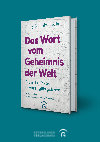
Schmidt-Leukel, Perry: Das Wort vom Geheimnis der Welt. Biblische Texte interreligiös gelesen. Eds. Achim Riggert and Mathias Schneider (Gütersloh: Gütersloher Verlagshaus, 2025).
Perry Schmidt-Leukels Ansatz einer interreligiösen Theologie hat das theologische Gespräch der Re... more Perry Schmidt-Leukels Ansatz einer interreligiösen Theologie hat das theologische Gespräch der Religionen auf eine neue Grundlage gestellt. In diesem Buch macht er sichtbar, welche spirituelle Haltung aus diesem Zugang entstehen kann. Es geht darum, sich nicht gegen, sondern mit den anderen religiösen Traditionen der Menschheit vom Geheimnis der Welt rufen zu lassen. Wie das aus christlicher Perspektive gelingen kann, erschließt dieses Buch anhand des Grundtextes des Christentums - der Bibel. Schmidt-Leukel nimmt biblische Themen und Texte zum Ausgangspunkt und deutet sie im Horizont der Religionen.
Ein Buch, das auf besondere Weise das himmlische Geflecht des Glaubens sichtbar macht, das Menschen aus unterschiedlichen Religionen miteinander verbindet.
Articles & Book Chapters by Mathias Schneider

Handbuch der Religionen, 2024
Im Laufe der buddhistisch-christlichen Begegnungsgeschichte ist ein breites Spektrum buddhistisch... more Im Laufe der buddhistisch-christlichen Begegnungsgeschichte ist ein breites Spektrum buddhistischer Interpretationen Jesu entstanden, das von seiner Dämonisierung als Sohn Māras, der Einordnung als Bodhisattva auf dem Weg zur Buddhaschaft bis hin zur Anerkennung als Buddha reicht. Dieses Deutungsspektrum entstand jedoch nicht in einem Vakuum: Buddhistische Jesusbilder werden nicht nur von doktrinären Grundvoraussetzungen der buddhistischen Traditionen beeinflusst, in denen sie entstehen, sondern sind auch in die historischen, politischen und soziokulturellen Kontexte der jeweiligen Interpretinnen und Interpreten eingebettet. So hat die lange und teils traumatische Kolonial-und Missionsgeschichte Asiens vielfach zu negativen Jesusbildern geführt, während Annäherungen im Zuge von Modernisierungsprozessen oder Dialogöffnungen oftmals wertschätzende Darstellungen Jesu begünstigt haben.

in: Race, Alan/Clatworthy, Jonathan (eds.): What Christ? Whose Christ? New Options for Old Theories (Durham: Sacristy Press, 2024).
This chapter presents a brief survey of Buddhist interpretations of Jesus. During the history of ... more This chapter presents a brief survey of Buddhist interpretations of Jesus. During the history of Buddhist-Christian encounter, Buddhists from all major strands of their tradition have used different strategies either to polemicise against Jesus or to integrate him into their own doctrinal framework. The result is a broad spectrum of interpretations ranging from his demonisation to his appreciation as a Bodhisattva or a Buddha. However, I will argue that this plurality of views was significantly shaped by external influences, most importantly the quality of historical Buddhist-Christian encounter and the interpreters’ sociocultural and political contexts. Finally, I will discuss Christian responses to Christological challenges raised by Buddhist interpretations, reflecting on further avenues for a Buddhist-Christian Christology.

Buddhist-Christian Studies, 2021
The Vietnamese monk Thich Nhat Hanh is one of the most influential contemporary Buddhist protagon... more The Vietnamese monk Thich Nhat Hanh is one of the most influential contemporary Buddhist protagonists, and also a famous interpreter of Christianity. In this paper, I will focus on Thich Nhat Hanh’s reading of the Holy Spirit. Nhat Hanh’s Buddhist pneumatology is mainly informed by the cornerstone of his teaching, mindfulness, which in turn closely connects with the doctrine of Buddha Nature. The doctrinal framework of Nhat Hanh’s conception of mindfulness is grounded in the psychology of the Yogācāra school, particularly in its eight aspects of consciousness and the notion of seeds. According to Nhat Hanh, the transformation of unwholesome and the nourishing of wholesome seeds via mindfulness practice is crucial to overcome the hindrances to enlightenment. This is possible because the seed of awakening or Buddha Nature is already ingrained in sentient beings. Nhat Hanh discerns the Holy Spirit as a functional equivalent to the Buddha Nature. I will argue that his reading of the Spirit can be described by three mutually interconnected main characteristics: as an innate, salvific potential, an all-embracing, dynamic force, and further as a foundation for ethical conduct. Finally, Nhat Hanh recognizes the actualization of the Holy Spirit/Buddha Nature in the person of Jesus, providing a paradigm of enlightenment for every human being.
in: Barbato, Melanie/Schneider, Mathias/Völker, Fabian (eds.): Beyond Boundaries. Essays on Theology, Dialogue, and Religion in Honor of Perry Schmidt-Leukel (Münster/New York: Waxmann, 2024), 87-97., 2024

in: Merian, Katharina (ed.): Repräsentation. Ein neues christologisches Modell im Kontext der Religionen. Beiträge zu einer Theologie der Religionen 29 (Zurich: TVZ, 2025)., 2025
Der Beitrag bringt Reinhold Bernhardts Repräsentationschristologie ins Gespräch mit Buddhologien.... more Der Beitrag bringt Reinhold Bernhardts Repräsentationschristologie ins Gespräch mit Buddhologien. Dabei zeigt er zunächst, wie Vertreter des christlich-buddhistischen Dialogs sowohl den Christus als auch den Buddha als Mittler letzter Wirklichkeit verstehen, die beide für das Unbedingte transparent sind und es so anderen vermitteln. Im Anschluss geht der Beitrag auf das Problem der Verhältnisbestimmung von göttlicher und menschlicher Natur Christi aus Sicht einer buddhistisch-christlichen Christologie ein. Dabei weist er u.a. nach, wie mit Hilfe der buddhistischen Drei-Körper-Lehre und der Lehre der zwei Wahrheiten die traditionelle Zwei-Naturen-Lehre zu einer Zwei-Naturen-Lehre der gesamten Wirklichkeit ausgeweitet werden kann. Schliesslich parallelisiert er die pneumatologische Fundierung der Repräsentationschristologie und die Vorstellung des "Erleuchtungsgeistes" (bodhicitta) eines Bodhisattva als Grundlagen für eine pluralitätsfähige Soteriologie. Diese Beispiele zeigen, dass buddhistische Überlegungen zur Repräsentation letzter Wirklichkeit wichtige Impulse für ein vertieftes Verständnis von Christologie liefern.

Buddhist-Christian Studies, 2019
There is a broad spectrum of different Theravāda Buddhist views on Jesus. At the one end of the s... more There is a broad spectrum of different Theravāda Buddhist views on Jesus. At the one end of the spectrum is the demonization of Jesus as an anti-Buddhist evil being. This depiction was largely informed by the Buddhist experience of Western colonial rule and Christian mission as can be seen in Sri Lankan accounts like the Carpenter-Heretic folktale, the nineteenth century Buddhist-Christian debates as well as the writings of the Buddhist reformer Anagārika Dharmapāla and the scholar Gunapala Dharmasiri. At the other end of the spectrum, Theravādins portray Jesus as an ethical teacher, a great spiritual master, or even a Buddha. The positive appraisals testify to a more unbiased or friendly encounter with Christianity, as can be seen in the work of Lily de Silva, the Thai reformer Bhikkhu Buddhadāsa or the German born nun Ayya Khema. The article will argue that the interpreters’ own doctrinal and soteriological frameworks as well as their political, socio-cultural, and biographical situations are crucial for the development of their respective portrayals of Jesus.

Interreligious Insight, 2022
The paper is concerned with the question of hermeneutical ownership in Christology from the persp... more The paper is concerned with the question of hermeneutical ownership in Christology from the perspective of Buddhist-Christian dialogue: Does the right to interpret Jesus belong to Christians alone or also to members of the Buddhist tradition? Does an adequate understanding of Jesus depend on a Christian hermeneutical framework, or is it possible on the grounds of Buddhist categories as well? These questions become especially relevant in intercultural and interreligious settings: On the one hand, various Christian theologians from Asia draw on Buddhism and other religious traditions to formulate Christologies that are meaningful for their predominantly non-Christian contexts. On the other hand, Buddhists have also expressed an interest in Jesus and interpreted him in their own conceptual frameworks, depicting him, for example, as a Bodhisattva or a Buddha. While some Christian theologians (often from the “global north”) have perceived these contextual and interreligious approaches as a threat and therefore denied the theological value of non-Western and non-Christian views on Jesus, I will argue that hermeneutical ownership of Jesus cannot be limited to Christians alone. In this way, Christology is not conceived as an exclusively Christian, intra-confessional enterprise anymore, but as a global and dialogical discipline drawing on a wide range of religious data of Christian as well as of non-Christian origin.

Crossing the Threshold: John Hick’s Interreligious Eschatology and Its Hindu and Buddhist Influences
Studies in Interreligious Dialogue 33:2 , 2023
One of John Hick’s lasting contributions to theology, the philosophy of religion, and interreligi... more One of John Hick’s lasting contributions to theology, the philosophy of religion, and interreligious dialogue is his eschatology, elaborated in Death and Eternal Life. In this book, Hick drew on a wide range of Christian, Buddhist, and Hindu ideas of death and afterlife, culminating in a comprehensive “global theology of death”. In this article, I will analyze central aspects of Hick’s eschatology influenced by Hindu and Buddhist thought, that is, his interpretation of rebirth in the context of his “pareschatology” and his conception of humanity’s ultimate end in the context of his eschatology proper. I will also take into account decisive impulses from Buddhism that led Hick to radical modifications of his earlier positions throughout his later work. Finally, I will argue that Hick’s approach proves to be highly relevant for contemporary theology, because it provides a highly constructive vision to expand Christian theological thought on death and afterlife in an interreligious way.
in: Schmidt-Leukel, Perry: Das Wort vom Geheimnis der Welt. Biblische Texte interreligiös gelesen. Eds. Achim Riggert and Mathias Schneider (Gütersloh: Gütersloher Verlagshaus, 2025).
Interreligious Insight, 2024
He is currently completing a dissertation on the theology of religions and the concept of dialogu... more He is currently completing a dissertation on the theology of religions and the concept of dialogue of the American Catholic theologian and Buddhist-Christian dual-belonger, Paul F. Knitter.

in: Jahn, Sarah/Stander-Dulisch, Judith (eds.): Vielfalt der Religionen. Ein Praxishandbuch zur Regulierung von religiöser Pluralität in Nordhrein-Westfalen (Frankfurt: Wochenschau Verlag, 2020)., 2020
Die Geschichte des interreligiösen Dialogs hat an vielen Stellen gezeigt, dass die Wahrnehmung un... more Die Geschichte des interreligiösen Dialogs hat an vielen Stellen gezeigt, dass die Wahrnehmung und Deutung des religiös Anderen stark von den Rahmenbedingungen einer Religionsbegegnung abhängig sind. Sie hat auch gezeigt, dass dort, wo sich ein ernsthafter und auf beiderseitigem Verstehen bedachter Dialog entwickelt, die Wahrnehmung des Gegenübers tendenziell positiver ist. Darüber hinaus kann diese Wahrnehmung auch zu einer Bereicherung der eigenen Religion werden. Um günstige Voraussetzungen für einen solchen Dialog zu schaffen, ist ein gewisser Grad der Selbstregulierung der Beteiligten nötig. Das Buchkapitel beschreibt anhand von Beispielen aus der Geschichte buddhistisch-christlicher Begegnungen, wie der Dialog als ein solcher regulierender Faktor für die Beteiligten wirken kann und reflektiert konkrete Praxisvorschläge zur Regulierung des interreligiösen Dialogs.


Uploads
Monographs by Mathias Schneider
Edited Books by Mathias Schneider
This Festschrift in honor of Perry Schmidt-Leukel on the occasion of his seventieth birthday brings together essays that constructively engage with his erudite and wide-ranging contributions to the fields of Theology of Religions, Interreligious Theology, Philosophy of Religion, Buddhist and Religious Studies, Buddhist-Christian Relations, and Interreligious Dialogue.
Ein Buch, das auf besondere Weise das himmlische Geflecht des Glaubens sichtbar macht, das Menschen aus unterschiedlichen Religionen miteinander verbindet.
Articles & Book Chapters by Mathias Schneider