Papers by Robert Domzal
Kwartalnik Historii Kultury Materialnej 63 , 2015
The article is an effect of the Polish-Norwegian project “Polish and Norwegian maritime
heritage.... more The article is an effect of the Polish-Norwegian project “Polish and Norwegian maritime
heritage. The exchange of experiences and good practices. The project of preservation and
promotion of tangible and intangible cultural heritage associated with local boatbuilding”. The author discusses one of the methods used to document old boats, 3D laser scanning, pointing to its advantages and shortcomings. The article stresses that digital documentation encodes muchmore information than traditional drawings and is more precise. The method is also much more
effective in the quantitative sense, as it is faster and supplies more data, and in the qualitative
sense, as it does not affect the artifact, it is easy to use and it complies with current standards (raw data include more information and are not processed). Furthermore, it is highly relevant to renovating old boats and ships, and can be applied e.g. in producing replicas of boats for
experimental purposes.
Morskie dziedzictwo kulturowe w Stanach Zjednoczonych na tle wybranych problemów amerykańskiego muzealnictwa / Robert Domżał
Muzealnictwo, 2012
W Stronę Morza. Polityka Ochrony Morskiego Dziedzictwa Kulturowego W Krajach Rejonu Morza Bałtyckiego I Północnego
Muzealnictwo, Jun 3, 2015
Maritime Cultural Heritage in the United States Against the Background of the Selected Problems of American Museums
Muzealnictwo, 2012
Muzealnictwo Morskie I Ochrona Zabytków W Chinach
Muzealnictwo, Apr 20, 2016
Nowoczesne techniki dokumentacji zabytkowych łodzi i statków
Kwartalnik Historii Kultury Materialnej, 2015

Social Responsibility in Educational Projects of the National Maritime Museum in Gdansk
Muzealnictwo
Social responsibility in museums is not an entirely new domain. For many years now activities loc... more Social responsibility in museums is not an entirely new domain. For many years now activities locating museums among the institutions contributing to creating better social reality have been observed. This new paradigm overcomes the stereotypical perception of cultural institutions as organizations taking care only of tangible and intangible testimony to the past of mankind, at the same time imposing on them the responsibility versus society and the community. The National Maritime Museum (NMM) in Gdansk tries to face these challenges not only by implementing educational and conservation projects, but also by supporting the development of the very Museum and its branches, at the same time directing its activities towards engaging in important social issues, such as eradicating accessibility barriers to heritage facilities, care for the environment, and sustainable development. Among the most recent accomplishments described in the paper let us mention the projects implemented during...
Pływające zabytki : sposoby ekspozycji i ochrona historycznych statków w Polsce / Robert Domżał
Muzealnictwo, 2010
Sailing Monuments – Ways of Exhibiting and Protection of Historical Ships in Poland
Muzealnictwo, 2010
Zarządzanie Zbiorami Tradycyjnych Łodzi Ludowych W Polskich I Zagranicznych Muzeach Morskich
Museology, 2014
Betrachtungen zu Haffe- und Strandseen als Küstenlandschaften. Ein Projekt zur maritimen Inventarisation des Kurischen, Frischen und Stettiner Haffes
An International Pilot Project - Rearrangement of an Old Boatbuilding Place in the Vistula Lagoon Museum, Katy Rybackie, Poland
A Mobile Exhibition "Past and Present at the Baltic Lagoons" - A Competition and Cooperation of Municipalities around the Lagoons of the Southern Baltic Sea
An International Pilot Projekt - Rearrangement of an Old Boatbuilding Place in the Vistula Lagoon Museum
Die maritime Inventarisation zweier Haffgebiete: Kursiu Marios und Vistula Lagon
During the last postglacial period, the southern coast of the Baltic Sea was formed by the meltin... more During the last postglacial period, the southern coast of the Baltic Sea was formed by the melting ice sheet which created several lagoons. Most of these - because of the transgression process - were silted up and no longer exist. Two of the last surviving examples are the Curonian and the Vistula lagoons, which are situated close to each other. Since the Neolithic, this specific geographical setting - secure from the rough sea and yet close to it - created a very unique form of man's interaction with his geographic surroundings. The social aspects of this and their reflection in nature are the main subjects of our international research project. Since the first migrations into the area, both lagoons have provided an example of multinational interaction on the Baltic coast. This fact and the present multinational situation are the background of the international cooperation. Therefore, we are glad that Russian, Lithuanian, Polish and German researchers have joined this project. ...
Books by Robert Domzal
Zabytkowe statki w Polsce, 2020
In the book, the author describes and catalogs a variety of preserved historic vessels in Poland.... more In the book, the author describes and catalogs a variety of preserved historic vessels in Poland. In addition to the history of each vessel, the author collects basic technical data and photos related to historic objects such as barges, tugboats, and other vessels.
Baltic-seascapes, 2016
This booklet is not a comprehensive survey of all cultural features
found at the coast, but rathe... more This booklet is not a comprehensive survey of all cultural features
found at the coast, but rather a selection of Seascapes of those
topics the Working Group on Coastal Culture&Maritime Heritage has presented and highlighted so far from various different angles. The intention is to increase the knowledge and interest in Maritime and Coastal Heritage and to promote the valuable work of the MG as an Intergovernmental Working-group of the Council of the Baltic Sea States CBSS.
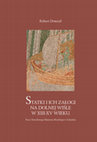
SHIPS AND THEIR CREW ON THE LOWER VISTULA RIVER IN THE 13TH AND THE 14TH CENTURY, 2014
In this publication, the author will analyze the types of boats and ships, which navigated on the... more In this publication, the author will analyze the types of boats and ships, which navigated on the lower course of the Vistula River in the late Middle Ages (13th- 15th centuries). Apart from an innovative approach to the typology of vessels mentioned in written sources, also other categories of source material are referred to in this study. Some archaeological findings connected with inland boat-building have
been discussed. The author also referred to iconographic sources, including seals, which depicted various types of inland vessels.
In the literature of the subject, boats and ships were classified according to the names that occurred in the written sources, and then the names were assigned to specific archaeological findings and iconographic sources. The attempts to determine the types of vessels were based exclusively on their utilitarian function: war, trade, or fishing. This division does not fully reflect the functional diversity. The characteristic feature of river and coastal vessels was their multi-functionality, which can be proven by the examples mentioned in the book.
Conference Presentations by Robert Domzal

1st Baltic Sea Museum`s Seminar ed. by R. Domzal , 2013
The programme of the seminar entitled The Future of Baltic Museums Ships included
several very i... more The programme of the seminar entitled The Future of Baltic Museums Ships included
several very interesting presentations, as well as a round table discussion about future cooperation between maritime museums in the Baltic and North Sea area. As a result of this discussion, the idea of creating a Baltic Sea Museums Network was fully recommendedand accepted.
The main subject of the presentations was the organisation of Maritime Museums and
the preservation of museum ships, be it on the water or in sheltered exhibition areas. The problems of museum management and the
maintenance and conservation of museum ships, as well as the search for new historical ships (one of the tasks of maritime archaeology), were presented and discussed. Summing up the seminar, it can be stated that it was a very valuable meeting of museum professionals actively involved in preserving the maritime heritage of North Europeancountries for future generations. The seminar
was recognised as an indispensable meeting in addressing the question of how to use and promote ships in the future.


Uploads
Papers by Robert Domzal
heritage. The exchange of experiences and good practices. The project of preservation and
promotion of tangible and intangible cultural heritage associated with local boatbuilding”. The author discusses one of the methods used to document old boats, 3D laser scanning, pointing to its advantages and shortcomings. The article stresses that digital documentation encodes muchmore information than traditional drawings and is more precise. The method is also much more
effective in the quantitative sense, as it is faster and supplies more data, and in the qualitative
sense, as it does not affect the artifact, it is easy to use and it complies with current standards (raw data include more information and are not processed). Furthermore, it is highly relevant to renovating old boats and ships, and can be applied e.g. in producing replicas of boats for
experimental purposes.
Books by Robert Domzal
found at the coast, but rather a selection of Seascapes of those
topics the Working Group on Coastal Culture&Maritime Heritage has presented and highlighted so far from various different angles. The intention is to increase the knowledge and interest in Maritime and Coastal Heritage and to promote the valuable work of the MG as an Intergovernmental Working-group of the Council of the Baltic Sea States CBSS.
been discussed. The author also referred to iconographic sources, including seals, which depicted various types of inland vessels.
In the literature of the subject, boats and ships were classified according to the names that occurred in the written sources, and then the names were assigned to specific archaeological findings and iconographic sources. The attempts to determine the types of vessels were based exclusively on their utilitarian function: war, trade, or fishing. This division does not fully reflect the functional diversity. The characteristic feature of river and coastal vessels was their multi-functionality, which can be proven by the examples mentioned in the book.
Conference Presentations by Robert Domzal
several very interesting presentations, as well as a round table discussion about future cooperation between maritime museums in the Baltic and North Sea area. As a result of this discussion, the idea of creating a Baltic Sea Museums Network was fully recommendedand accepted.
The main subject of the presentations was the organisation of Maritime Museums and
the preservation of museum ships, be it on the water or in sheltered exhibition areas. The problems of museum management and the
maintenance and conservation of museum ships, as well as the search for new historical ships (one of the tasks of maritime archaeology), were presented and discussed. Summing up the seminar, it can be stated that it was a very valuable meeting of museum professionals actively involved in preserving the maritime heritage of North Europeancountries for future generations. The seminar
was recognised as an indispensable meeting in addressing the question of how to use and promote ships in the future.