Books by monica boria
One of the first books to explore how translation needs to be redefined and reconfigured in conte... more One of the first books to explore how translation needs to be redefined and reconfigured in contexts where multiple modes of communication, such as writing, images, gesture, and music, occur simultaneously. Bringing together world-leading experts in translation theory and multimodality, each chapter explores important interconnections among these related, yet distinct, disciplines, with examples from literature, dance, music, TV, film, and the visual arts.
Laboratorio di nuova ricerca. Investigating Gender, Translation and Culture in Italian Studies (ed.)
Articles/Chapters by monica boria
Patterns of Practice, 2026
This article explores the benefits and challenges of studentstaff collaboration in an extracurric... more This article explores the benefits and challenges of studentstaff collaboration in an extracurricular project titled 'Translating Literary Texts for Publication', part of the Undergraduate Scholars Programme (USP) at the author's institution. The USP is a noncredit-bearing initiative, launched in 2018, that aligns with the '4 Cs' of 21st-century learning: creativity, communication, collaboration and critical thinking. Student feedback consistently highlights the benefits of working across disciplines and achieving concrete outcomes like publications, posts in institutional blogs and similar, which also boost their curriculum vitaes. The project allows students to take the lead in creating a special issue of the journal Il Pietrisco Translations by selecting themes and texts, formulating research questions, developing translation strategies and engaging in peer review. The creativity inherent in literary translation itself (O'Sullivan 2013; Rossi, 2018) is at the core of the project. However, through this 'hands on' experience, students develop creative and critical thinking, as well as valuable competences such as digital literacy, editorial experience and teamwork that enhance their employability and academic development.

Verdi brillanti: Riposizionare piante, giardini e foreste nella letteratura e nel cinema dell’Antropocene, Dellacasa, C. & Spunta, M. (eds.). Florence: Franco Cesati , 2026
Questo saggio, di impianto comparativo e transculturale, esplora l’impegno ecologico di due scrit... more Questo saggio, di impianto comparativo e transculturale, esplora l’impegno ecologico di due scrittrici contemporanee Madhur Anand (Thunder Bay, Ontario, 1971-) e Mariangela Gualtieri (Cesena, 1951-). Le poesie selezionate pongono al centro della riflessione il regno vegetale e sono tratte rispettivamente da A New Index for Predicting Catastrophes (McClelland & Stewart, 2015) e Le giovani parole (Einaudi, 2015).
La distanza geografica, anagrafica, linguistica e culturale tra Anand e Gualtieri si restringe sotto la lente di una “teoria” analitica che, partendo dall’etimologia stessa (θεωρία, ovvero “osservazione”) ci permette di illustrare il modus operandi delle autrici che proprio attraverso l’osservazione minuziosa, scientifica, e al contempo poetica delle piante, mettono in discussione il secolare antropocentrismo occidentale. Se ne ‘La polvere dell’impollinata’ di Gualtieri gli esseri umani appaiono come ignari veicoli del magico processo riproduttivo delle piante, in ‘Parle-G’ di Anand è la magia del polline del mais che ci rivela la presenza sotterranea di rovine archeologiche. Le piante, insomma, ci parlano, interagiscono attraverso di noi, ed è nostro compito osservarle, ascoltarle, interpretarle; non marginalizzarle, sottometterle o brutalizzarle.
Secondo l’ecofemminismo, il danno all’ambiente è generalmente attribuito alle tendenze patriarcali, capitaliste e imperialiste del maschio (bianco) occidentale (Braidotti 2013, Iovino 2015) contro le quali si posizionano – velatamente o meno - sia Gualtieri che Anand. È da questa prospettiva che discutiamo dell’impegno “politico” insito nello scrivere da una duplice marginalità: quella della scrittura femminile e quella della poesia, sempre più periferica nell’ecosistema letterario contemporaneo (Scaffai 2018, Ferrando 2023).

Tuttitalia, 2003
In the following contribution I discuss some uses of literary texts in the language classroom, em... more In the following contribution I discuss some uses of literary texts in the language classroom, emphasizing the value of literature in the study of language and culture from beginner's level. The focus is predominantly on practical approaches to literature in language teaching, although I have tried to provide some theoretical background, too. I have selected texts according to the traditional broad genre subdivision of narrative, verse and drama but I will not deal with each group separately, the reasons being that, for instance, different genres can be exploited for the same learning task or one single text that contains features of various genres, can be used for a variety of tasks. These 'overlaps' allow creative activities between and within texts, which can be dissected and pieced together in language exercises, group work, home assignments etc. The potential represented by TV or film adaptations of literary works would complement some of the activities suggested or prompt variations and extensions. Although I mention the cross-fertilization of traditional artistic fields, like literature, with the mass media, I do not explore this field; I only draw a few examples from advertising as cases in point. I have chosen extracts from both canonical and contemporary literary production providing details of publications or, when appropriate, Internet sites where the full text can be found.
F. Leinen, G. Rings (eds.), Bilderwelten, Textwelten – Comicwelten: Romanistische Begegnungen mit der “neunten” Kunst, Münich: Meidenbauer, 2007
1. Introduzione medium certi versi, a mio avviso paradossale. Da un lato troviamo infatti un util... more 1. Introduzione medium certi versi, a mio avviso paradossale. Da un lato troviamo infatti un utilizzo ironico e parodico di forme grafiche tradizionali quali la vignetta, la striscia e la storia a fumetti ai fini della controinformazione e della protesta.

‘Silenced humour on RAI TV: Daniele Luttazzi, Sabina Guzzanti, & Co.’
in D. Albertazzi, C. Brook, C. Ross and N. Rothenberg (eds.), Resisting the Tide: Cultures of Opposition under Berlusconi (2001-6), New York/London: Continuum, 2009
Sabina Guzzanti came to international attention following the cancellation by the Italian state b... more Sabina Guzzanti came to international attention following the cancellation by the Italian state broadcaster Rai of her satirical TV programme Raiot. Armi di distrazione di massa/Raiot. Weapons of Mass Distraction in 2003, which caused a stir amongst the Italian and international media alike (Boria 2009; Rothenberg 2009). Her documentary Viva Zapatero! (2005), based on her censorship case, became a box-office success and introduced her to an international audience. I discuss Guzzanti's one feature film and her three documentaries to date. I argue that the gradual radicalization of Guzzanti's recent work is only partly a consequence of the ostracism she faced. It is also part of a wider positioning of the artist's persona as an embodiment of anti-Berlusconian values, and her activity is organized and promoted as a militant act of counter-information. Guzzanti's films are quintessentially 'social texts' (Allen 1997) as they originate from an osmotic process between events, their representations and a 'politicised fandom' (O'Leary 2010). Their strong stance voices the ideas and the frustrations of a well-educated politicized audience, whose space in the public arena has been gradually eroded by the prevailing neocon discourse.
‘Translating humour. The case of Stefano Benni’
in A. Chantler, C. Dente (eds.), Translation Practices. Through Language to Culture, Amsterdam: Rodopi, 2009
Sabina Guzzanti: From TV satire to political documentary
Studies in European Cinema, 2011
Sabina Guzzanti came to international attention following the cancellation by the Italian state b... more Sabina Guzzanti came to international attention following the cancellation by the Italian state broadcaster Rai of her satirical TV programme Raiot. Armi di distrazione di massa/Raiot. Weapons of Mass Distraction in 2003, which caused a stir amongst the Italian and international media alike (Boria 2009; Rothenberg 2009). Her documentary Viva Zapatero! (2005), based on her censorship case, became a box-office success and introduced her to an international audience. I discuss Guzzanti's one feature film and her three documentaries to date. I argue that the gradual radicalization of Guzzanti's recent work is only partly a consequence of the ostracism she faced. It is also part of a wider positioning of the artist's persona as an embodiment of anti-Berlusconian values, and her activity is organized and promoted as a militant act of counter-information. Guzzanti's films are quintessentially ‘social texts’ (Allen 1997) as they originate from an osmotic process between events, their representations and a ‘politicised fandom’ (O'Leary 2010). Their strong stance voices the ideas and the frustrations of a well-educated politicized audience, whose space in the public arena has been gradually eroded by the prevailing neocon discourse.
Declinazioni del comico nei racconti di Stefano Benni
Italian Studies in Southern Africa, 2010
Stefano Benni’s work, a blend of biting social satire and fantasy, has won him the reputation of ... more Stefano Benni’s work, a blend of biting social satire and fantasy, has won him the reputation of Italy’s leading humorous writer. A prolific columnist and author of novels, short stories, poems, and plays, Benni has been playing with language and literary genres since his debut in the late 70s, becoming one of the early Italian writers to engage with post-modern humorous practices. In this article I discuss Benni’s short fiction as an instance of these practices and evaluate its place in the author’s wider oevre.
Arachnofiles: A Journal of European Languages and Cultures, 2004
Echoes of Counterculture in Stefano Benni's Humour
Romance Studies Journal, 2005
Stefano Benni’s first novel, Terra! (1983) - a sci-fi spoof and a satire of contemporary life - s... more Stefano Benni’s first novel, Terra! (1983) - a sci-fi spoof and a satire of contemporary life - set the trend for his subsequent fiction. Blending fantasy, pop culture, literary pastiche and current affairs, Benni’s political and social satires have been nationally and internationally successful. Less known yet crucial to the understanding of his fiction as well as to his use of humour are his earlier writings and their engagement with social and political issues. This study aims to show that the roots of Benni’s humour, with its coarse language, puns, pastiche and mocking tone, are to be found in the student spirit and political protest of the 1970s. Adopting an interdisciplinary approach which draws on social history as well as structuralist methods of literary analysis, it argues that the subtle rhetorical strategies employed, as well as the strong underlying political intent, militate against the dismissive label of ‘popular fiction writer’ attached to him by some critics.
Edited Journals by monica boria

Il Pietrisco Translations, 2025
Featured in this third issue are micronarratives by writers from Argentina (Ana María Shua), Braz... more Featured in this third issue are micronarratives by writers from Argentina (Ana María Shua), Brazil (Fabrício Corsaletti), Catalonia (M. Carme Marí, Marta Pérez Sierra), Italy (Massimo Gerardo Carrese, Cristina Pasqua), and Spain (Mayte Blasco, César Sánchez).
These stories blend the surreal and playful vein typical of the genre with serious themes – from domestic violence to prison life, from disability to introspection, via existential angst. These tales offer a flavour of the richness of contemporary microfiction, a narrative form that abounds in online literary magazines and blogs but is rarely available from traditional publishers.
We are thankful to the translators - both emerging and experienced - who have made these works available for the first time in English (Monica Boria and Marcus Tomalin, Rosabel Green, Maya Feile Tomes, Sophie Lewis, Isabel Neate, Rowan Stamp) or in another Romance language (Ángeles Carreres, Nicole Centofanti).
Il Pietrisco Translations , 2024
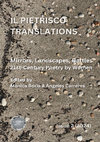
This second issue features contemporary women poets writing in a Romance language. It aims to giv... more This second issue features contemporary women poets writing in a Romance language. It aims to give women writers greater visibility, and to offer a taste of the linguistic and poetic richness of Romance cultures around the world. Both well-established and emerging writers are included: Maria Azenha (Portugal), María Eugenia Bravo-Calderara and Fernanda Martínez Varela (Chile), Chandra Livia Candiani, Laura Corraducci and Mariangela Gualtieri (Italy), Liria Evangelista (Argentina), EmaLúa Gcanchola (Mexico), Emilia Ivancu and Ofelia Prodan (Romania), Patrícia Lavelle and Cris Lira (Brasil).
The issue includes translations between Romance languages (Italian/French, Romanian/Italian, Spanish/Italian), as well as into English, crafted by both emerging and experienced translators: Arianna Autieri, Alain Bourdy, Elena Chiattelli, Iulia Cosma and her students, Kyler Johnson, Alice B. Osti Magalhães and Jenny Marshall Rodger, Teresiana Matarrese, Rima Mourabbi, Marcus Tomalin, and Giancarlo Tursi.
The translators' brief commentaries on the sorts of challenges they encountered and how they tackled them, offer fascinating insights into the process of translation in all its multifaceted richness.
Pietrisco Translations , 2023
This first issue was conceived during Covid-19, hence its title. It features predominantly Italia... more This first issue was conceived during Covid-19, hence its title. It features predominantly Italian and English poems by transnational writers and translators.
The poems by Luca Cinelli (translated by Patrizia
Piredda) are a poetic response, in the Roman vernacular, to life in Italy during the lockdown.
The bleak sense of entrapment of that experience is echoed by Franca Mancinelli’s poems (translated by John Taylor).
Paula Meehan’s poetic work (translated by Viviana
Fiorentino) takes readers into the homes of ordinary families, exploring their feelings, dreams, thoughts while exposing social and historical injustices.
Translations by monica boria
Il Pietrisco Translations, Microfiction, 2005
Two contemporary Italian microstories - 'finestre' (windows) and 's'arrossa l'aria' (the air redd... more Two contemporary Italian microstories - 'finestre' (windows) and 's'arrossa l'aria' (the air reddens) by Cristina Pasqua, are translated into English.

Edizioni ETS, 2020
I racconti di Dorothy Edwards (1903-1934) sono piccoli gioielli del modernismo letterario in ling... more I racconti di Dorothy Edwards (1903-1934) sono piccoli gioielli del modernismo letterario in lingua inglese e ottengono immediato successo. Cadono nel dimenticatoio in seguito alla morte prematura dell’autrice, riscoperta in Gran Bretagna solo di recente. La sua opera è inedita in Italia e i racconti qui proposti per la prima volta sono fra i più riusciti e rappresentativi dello stile e delle tematiche dell’autrice gallese. Sono storie popolate da personaggi della classe medio-alta, che si ritrovano in incontri fortuiti e in circostanze solo in apparenza bucoliche. Le ville di campagna, le passeggiate, le cene o i duetti al pianoforte nascondono un mondo claustrofobico, dove sommesse gelosie e sottili delusioni emergono fra le pieghe di una lingua tersa e uno stile asciutto. I rapporti umani, soprattutto le relazioni fra i sessi, sono esplorati in una prospettiva di genere condotta molto elegantemente attraverso l’assunzione del punto di vista maschile.
F. Marucci, History of English Literature, Vol. 6. From the Mid-Victorian Age to the Great War, 1870-1921, Peter Lang, 2019
P. Armienti, A.M. Venger, A Middle Age Qibla Finder and the secret code of Portolan maps, Journal of Cultural Heritage, (2017)


Uploads
Books by monica boria
Articles/Chapters by monica boria
La distanza geografica, anagrafica, linguistica e culturale tra Anand e Gualtieri si restringe sotto la lente di una “teoria” analitica che, partendo dall’etimologia stessa (θεωρία, ovvero “osservazione”) ci permette di illustrare il modus operandi delle autrici che proprio attraverso l’osservazione minuziosa, scientifica, e al contempo poetica delle piante, mettono in discussione il secolare antropocentrismo occidentale. Se ne ‘La polvere dell’impollinata’ di Gualtieri gli esseri umani appaiono come ignari veicoli del magico processo riproduttivo delle piante, in ‘Parle-G’ di Anand è la magia del polline del mais che ci rivela la presenza sotterranea di rovine archeologiche. Le piante, insomma, ci parlano, interagiscono attraverso di noi, ed è nostro compito osservarle, ascoltarle, interpretarle; non marginalizzarle, sottometterle o brutalizzarle.
Secondo l’ecofemminismo, il danno all’ambiente è generalmente attribuito alle tendenze patriarcali, capitaliste e imperialiste del maschio (bianco) occidentale (Braidotti 2013, Iovino 2015) contro le quali si posizionano – velatamente o meno - sia Gualtieri che Anand. È da questa prospettiva che discutiamo dell’impegno “politico” insito nello scrivere da una duplice marginalità: quella della scrittura femminile e quella della poesia, sempre più periferica nell’ecosistema letterario contemporaneo (Scaffai 2018, Ferrando 2023).
Edited Journals by monica boria
These stories blend the surreal and playful vein typical of the genre with serious themes – from domestic violence to prison life, from disability to introspection, via existential angst. These tales offer a flavour of the richness of contemporary microfiction, a narrative form that abounds in online literary magazines and blogs but is rarely available from traditional publishers.
We are thankful to the translators - both emerging and experienced - who have made these works available for the first time in English (Monica Boria and Marcus Tomalin, Rosabel Green, Maya Feile Tomes, Sophie Lewis, Isabel Neate, Rowan Stamp) or in another Romance language (Ángeles Carreres, Nicole Centofanti).
The issue includes translations between Romance languages (Italian/French, Romanian/Italian, Spanish/Italian), as well as into English, crafted by both emerging and experienced translators: Arianna Autieri, Alain Bourdy, Elena Chiattelli, Iulia Cosma and her students, Kyler Johnson, Alice B. Osti Magalhães and Jenny Marshall Rodger, Teresiana Matarrese, Rima Mourabbi, Marcus Tomalin, and Giancarlo Tursi.
The translators' brief commentaries on the sorts of challenges they encountered and how they tackled them, offer fascinating insights into the process of translation in all its multifaceted richness.
The poems by Luca Cinelli (translated by Patrizia
Piredda) are a poetic response, in the Roman vernacular, to life in Italy during the lockdown.
The bleak sense of entrapment of that experience is echoed by Franca Mancinelli’s poems (translated by John Taylor).
Paula Meehan’s poetic work (translated by Viviana
Fiorentino) takes readers into the homes of ordinary families, exploring their feelings, dreams, thoughts while exposing social and historical injustices.
Translations by monica boria