Papers by Abdelhamid M Ahmed

Corpus-based Studies across Humanities, 2023
The study presents the creation of the Qatari Corpus of Argumentative Writing (QCAW) as an annota... more The study presents the creation of the Qatari Corpus of Argumentative Writing (QCAW) as an annotated L1 Arabic and L2 English bilingual writer corpus. It comprises 200,000 tokens of argumentative writing by Qatari university students in L1 Arabic and L2 English. The corpus includes 195 essays written by 195 students, 159 females and 36 males. The students were native Arabic speakers proficient in English as a second language. The corpus is divided into Arabic and English sections, accompanied by part-of-speech annotated files in UTF-8 encoded text format. Metadata in CSV format contains information about the students (gender, major, first and second languages) and the essays (text serial numbers, word limits, genre, writing date, time spent, and location). The current study outlines the steps for collecting and analysing the corpus, including details on essay writers, topic selection, preanalysis text modifications, proficiency level, gender, and major ratings. Statistical analyses were applied to examine the corpus. The QCAW offers a valuable bilingual data source authored by the same students in Arabic and English, with implications for further research.
The use of general descriptive names, registered names, trademarks, service marks, etc. in this p... more The use of general descriptive names, registered names, trademarks, service marks, etc. in this publication does not imply, even in the absence of a specific statement, that such names are exempt from the relevant protective laws and regulations and therefore free for general use. The publisher, the authors and the editors are safe to assume that the advice and information in this book are believed to be true and accurate at the date of publication. Neither the publisher nor the authors or the editors give a warranty, express or implied, with respect to the material contained herein or for any errors or omissions that may have been made. The publisher remains neutral with regard to jurisdictional claims in published maps and institutional affiliations.
Writing Centers in Higher Education Institutions in Qatar: A Critical Review
This chapter critically reviews the writing centers (WCs) in ten higher education institutions in... more This chapter critically reviews the writing centers (WCs) in ten higher education institutions in Qatar: eight are American/Western branch campuses in Qatar and two are public higher education institutions. It compares the ten WCs in terms of their purpose of establishment and cost of services offered. On the other hand, it contrasts the same centers in terms of their naming, the timing and hours of service, the different venues for booking an appointment and the services offered at each center. The ten WCs are unique in their offered services and show a variety of flexible services aimed at enhancing students’ English writing based on their needs and levels.
The impact of the socio-cultural context on L2 English writing of Egyptian university students
Learning, Culture and Social Interaction, 2016
•Socio-cultural issues impact L2 writing development in Egypt.•Learning experiences, exam culture... more •Socio-cultural issues impact L2 writing development in Egypt.•Learning experiences, exam culture and lack of reading habit impede L2 writing.•Other factors include traditional topics, formulaic expressions and rote learning.•Lack of critical thinking is attributed to socio-cultural issues.•Competitive learning environment is counter-productive to L2 writing development.

EFL Writing Instruction in an Egyptian University Classroom: An Emic View
Teaching EFL Writing in the 21st Century Arab World, 2016
In Egypt, little research is done to explore how EFL writing is taught from the participants’ emi... more In Egypt, little research is done to explore how EFL writing is taught from the participants’ emic views. Based on empirical research, this chapter explores the focuses of EFL writing instruction at university and highlights how writing teachers and their students perceive current teaching practices. Drawing on a social constructionist theoretical framework, a systematic review of the literature, in-depth semi-structured interview, and semi-structured observation, the study sheds light on how EFL writing is taught within an Egyptian essay writing classroom in a pioneering faculty of education. The findings of the study reveal four main focuses: mechanics (grammar and punctuation); content (topics of writing, idioms, and model paragraphs); and structure (essay structure, essay types and coherence). Teachers and students voiced their concerns about the different teaching practices used and observed in class in terms of planning, teaching, feedback and assessment. Implications and suggestions are provided.

This study is part of a wider investigation that aims to explore Egyptian students' essay writing... more This study is part of a wider investigation that aims to explore Egyptian students' essay writing difficulties. The focus of this paper is to shed light on the different sociopolitical and socio-cultural challenges deemed to have substantial impact on Egyptian students' essay writing development. Within a social constructionist theoretical framework that informed my investigation, I conducted the current study using mixed methods; namely, questionnaires, in-depth semi-structured interviews and semi-structured classroom observation. Findings of the study suggest that Egyptian different contexts are forceful dimensions in students' realisations and reproductions of their writings; an indicative of writing challenges that Egyptian students encounter. Findings of the study revealed that Egyptian students encounter various writing difficulties in planning, coherence, cohesion, style, unity, mechanics and revision. Socio-political and socio-cultural challenges were two main challenges contributing to students' difficulties in essay writing. Findings of the current study indicated two socio-political challenges: namely, suppression of students' voice in writing and the lack of accountability. Moreover, some socio-cultural challenges have influenced students' writing development such as students' previous learning experiences, lack of reading habit, and L1 interference in L2. In reference to students' previous learning experiences, stereotyped writing topics, the use of written clichés, rote learning and memorization, lack of critical and creative thinking, competitive learning environment, and exam culture have been reported as factors affecting students' writing development.
Online Submission, 2007
Background: There is limited research on the FL/SL reading comprehension of Non-native speakers o... more Background: There is limited research on the FL/SL reading comprehension of Non-native speakers of English at the post-graduate level at university. Purpose: This study investigated the knowledge of and the attitude towards FL/SL reading comprehension through (1) the effect of (a) post-...
Literacy Information and Computer Education Journal, 2010
The current study focuses on the organisational problems that Egyptian student teachers of Englis... more The current study focuses on the organisational problems that Egyptian student teachers of English encounter when they write an English essay. In particular, the current study aims at investigating students' cohesion and coherence problems in EFL essay writing. A mixed method research design was used including a questionnaire and a semi-structured in-depth interview. Analysis of findings revealed that students encounter some problems in the cohesion and coherence of EFL essay writing. Discussion and implications of these findings are presented. 2.1. Definition of Writing Writing is defined as "a reflective activity that requires enough time to think about the specific topic and to analyse and classify any background knowledge [11]. Then, writers need a suitable
Online Submission, 2006
Background: There is limited research on the FL composition writing of Egyptian experimental seco... more Background: There is limited research on the FL composition writing of Egyptian experimental secondary students. Purpose: The purpose of the present study is to investigate the effect of the Whole Language Approach on developing the required composition writing skills in ...
General Philosophy of Science, 2007
Online Submission, 2009
EFL essay writing is considered one of the most important academic courses in the teacher educati... more EFL essay writing is considered one of the most important academic courses in the teacher education programmes that should help develop students' skills to write cohesively and coherently. Teachers' feedback plays a crucial role in improving and enhancing the quality of ...
Feedback in EFL Writing: Arab World Contexts, Issues, and Challenges
Feedback in foreign-language writing in most universities in the Arab world is a problematic and ... more Feedback in foreign-language writing in most universities in the Arab world is a problematic and context-specific issue. This chapter reviews the existing literature on feedback on L2 English writing in eighteen Arab countries. First, it introduces the main issues around feedback outlined by previous scholarship. Then, it critically reviews previous studies conducted in the following eighteen Arab countries: Algeria, Bahrain, Egypt, Iraq, Jordan, Kuwait, Lebanon, Libya, Morocco, Oman, Palestine, Qatar, Saudi Arabia, Sudan, Syria, Tunisia, UAE, and Yemen. Finally, the main findings of the critically reviewed studies are synthesised and discussed by focusing on the following crucial issues: lack of teachers’ feedback, effective and ineffective types of feedback, peer feedback, students’ reactions to feedback, and technological tools/applications used to give feedback.

Reflective Practice
ABSTRACT Reflective journals are used in the literature to promote students’ learning, develop wr... more ABSTRACT Reflective journals are used in the literature to promote students’ learning, develop writing skills, assess students’ reflection level, promote teachers’ professional development, and gather research data. However, the current research bridges the gap in the literature by exploring the impact of students’ reflective journals on informing instructional practices in an EFL writing context at a university in Qatar. Informed by Gibb’s reflective cycle (1988) (i.e. description, feelings, evaluation, conclusion and action) and social constructionism, the researcher developed a reflective journal to help students reflect on the instructional practices. Using a case study methodology, the researcher collected seventy-eight reflective journals, written by bilingual female university students in Qatar. Data was analysed qualitatively using thematic content analysis. Findings revealed that students preferred the following teaching strategies: gradual teaching, exemplification, discussion, comprehension checking, cooperative learning, and graphic organisers. Findings also showed students’ reported challenges such as strict classroom management, lack of teacher’s electronic feedback, teacher’s frequent questioning, recurrent turn-taking, time mismanagement, lack of handouts, cooperative learning problems, mocking students, ringing mobile phones, unpunctual students and dealing with disruptive students. Implications for instructional practices are provided.

This study is part of a wider investigation that aims to explore Egyptian students' essay writing... more This study is part of a wider investigation that aims to explore Egyptian students' essay writing difficulties. The focus of this paper is to shed light on the different sociopolitical and socio-cultural challenges deemed to have substantial impact on Egyptian students' essay writing development. Within a social constructionist theoretical framework that informed my investigation, I conducted the current study using mixed methods; namely, questionnaires, in-depth semi-structured interviews and semi-structured classroom observation. Findings of the study suggest that Egyptian different contexts are forceful dimensions in students' realisations and reproductions of their writings; an indicative of writing challenges that Egyptian students encounter. Findings of the study revealed that Egyptian students encounter various writing difficulties in planning, coherence, cohesion, style, unity, mechanics and revision. Socio-political and socio-cultural challenges were two main challenges contributing to students' difficulties in essay writing. Findings of the current study indicated two socio-political challenges: namely, suppression of students' voice in writing and the lack of accountability. Moreover, some socio-cultural challenges have influenced students' writing development such as students' previous learning experiences, lack of reading habit, and L1 interference in L2. In reference to students' previous learning experiences, stereotyped writing topics, the use of written clichés, rote learning and memorization, lack of critical and creative thinking, competitive learning environment, and exam culture have been reported as factors affecting students' writing development.

Reflective Practice
Reflective journals are used to develop students' writing skills, assess reflection level, gather... more Reflective journals are used to develop students' writing skills, assess reflection level, gather research data, promote teachers' professional development, promote instructional practices, and affect students' learning. However, little research explored the impact of reflective journals on undergraduate students' learning and its challenges in an English writing course. The current study fills the gap in the literature by exploring Qatari female undergraduate students' perspectives of reflective journals in an English writing course and identifying their challenges with using reflective journals. Social constructivism and Gibb's reflective cycle informed the theoretical framework of the study. Using a case study methodology, the researcher designed a reflective journal based on Gibbs' reflective cycle. Accordingly, reflective journals, written by 55 Qatari female undergraduate students, were collected and qualitatively analysed using thematic content analysis. Findings revealed that students experienced the following learning moments in their English writing course: engaging, invaluable, surprising, challenging, novel, perplexing, worrying, enlightening, and transferrable. Moreover, participants reported a number of benefits and challenges of using reflective journals that are peculiar to the Qatari context. Implications for using reflective journals in higher education are provided.

Background There is limited research on the FL/SL reading comprehension of Non-native speakers of... more Background There is limited research on the FL/SL reading comprehension of Non-native speakers of English at the postgraduate level at university. Aims This study investigated the knowledge of and the attitude towards FL/SL reading comprehension through (1) the effect of (a) postgraduate specialization, and (b) nationality, (2) the correlation between the FL/SL reading comprehension attitude and post graduate specialization. Sample A convenience sample of 30 postgraduate students at the University of Exeter participated in this study. All the respondents were speakers of English as a foreign/second language. Method The data collection method was the questionnaire which consisted of demographic data, a reading comprehension test, and an attitude scale. Results (1) There was no significant difference in scores for TESOL and Non-TESOL students in their knowledge of FL/SL reading comprehension, (2) There was a significant difference in the reading comprehension attitude scores of TESOL and Non-TESOL students, (3) there was not a significant difference in the reading comprehension knowledge scores for the Middle Eastern and Non-Middle Eastern groups, (4) , there is a significant difference in the reading comprehension attitude scores of Middle Eastern and Non-Middle Eastern groups, and (5) there was a medium correlation between the FL/SL reading comprehension attitude and postgraduate specialization.
This book empirically explores assessment of EFL (English as a Foreign Language) writing in diffe... more This book empirically explores assessment of EFL (English as a Foreign Language) writing in different Arab world contexts at the university level, which often presents a challenge for teachers and students alike. Analysing a number of different practices throughout the chapters including peer assessment, self-assessment, e-rubrics and writing coherence, the authors highlight different issues and challenges that affect the assessment of EFL writing in the Arab world, and provide valuable insights into how it can be improved. This book is sure to become an important practical resource for practitioners, researchers, professors and graduate students working on EFL writing in this region.
Citation:
Ahmed, A. & Abouabdelkader, H. (2017). Assessing EFL Writing in the 21st Century Arab World: Revealing the Unknown, Palgrave Macmillan, UK.

Learning, Culture & Social Interaction, 2016
The socio-cultural context within which L2 writing takes place is believed to affect students' wr... more The socio-cultural context within which L2 writing takes place is believed to affect students' writing development; however, little research has been carried out to explore the different contexts. Drawing on a social-constructionist theoretical framework, a systematic review of the literature, and data from an empirical study involving in-depth semi-structured interviews and semi-structured observations, this paper aims to investigate the impact of the socio-cultural context on L2 English writing of Egyptian university students at a leading College of Education. Findings of the study revealed that the Egyptian socio-cultural context has impacted the L2 writing of Egyptian university students as shown in the following issues: traditional topics of writing, prohibited topics of writing, directing students’ thinking, the impact of L1 Arabic style of composition, formulaic expressions, rote learning, lack of critical thinking, competitive learning, lack of reading, and exam culture. Implications for the teaching of writing in an L2 context are provided.
Citation:
Ahmed, A. & Myhill, D. (2016). The impact of the socio-cultural context on L2 English writing of Egyptian university students. Learning, Culture & Social Interaction, 11 (Pp. 117–129).
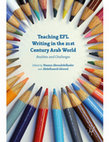
Teaching EFL Writing in the 21st Century Arab World addresses a range of issues related to resear... more Teaching EFL Writing in the 21st Century Arab World addresses a range of issues related to researching and teaching EFL writing in different countries in the Arab World including Egypt, Morocco, Oman, Palestine, Tunisia, UAE and Yemen. Both theoretically and practically grounded, chapters within discuss the different contexts in which EFL writing is taught, from primary school to university. The book sheds light on how EFL writing is learned and taught at each educational stage, exposing the different challenges encountered in the teaching and learning. The focus on EFL writing in the Arab World makes this a unique and long overdue contribution to the field of research around EFL writing and will be an invaluable resource for researchers, curriculum designers and students.
Citation:
Ahmed, A. & Abouabdelkader, H. (2016). Teaching EFL Writing in the 21st Century Arab World: Realities & Challenges, 1st edition, Palgrave Macmillan, UK.


Uploads
Papers by Abdelhamid M Ahmed
Citation:
Ahmed, A. & Abouabdelkader, H. (2017). Assessing EFL Writing in the 21st Century Arab World: Revealing the Unknown, Palgrave Macmillan, UK.
Citation:
Ahmed, A. & Myhill, D. (2016). The impact of the socio-cultural context on L2 English writing of Egyptian university students. Learning, Culture & Social Interaction, 11 (Pp. 117–129).
Citation:
Ahmed, A. & Abouabdelkader, H. (2016). Teaching EFL Writing in the 21st Century Arab World: Realities & Challenges, 1st edition, Palgrave Macmillan, UK.