Papers by Richard V Vallance Janke

More light on the role Mount Dikte and Mount Ida, Crete, play in Minoan Linear A Anatolian proto-Greek invocations, Apr 14, 2026
Allow us to shed more light on the role Mount Dikte and Mount Ida, Crete, play in Minoan Linear A... more Allow us to shed more light on the role Mount Dikte and Mount Ida, Crete, play in Minoan Linear A Anatolian proto-Greek invocations, expanding on the comments we made in our original monograph e-book, Are the Minoan Linear A PK Za 4-PK Za 18 libation invocations in Anatolian proto-Greek? (2025). Since then, we have been able to update our initial findings to encompass several more inscriptions not referenced in our original online monograph (e-book). Ever since the dawn of inscriptions bearing on our religious beliefs, humanity has inexorably been spiritually attracted by high places. Sanctuaries are placed high in mountainous terrain since there is precisely where the gods reside. It is quite clear from our new findings presented here that Diktaean Zeus played a key role in references to Mount Dikte, and that the mother goddess of Mount Ida, who is none other than Rhea, gave birth to Zeus either on Mount Ida or on Mount Dikte in Crete. In the Minoan Linear A libation invocations, Mount Ida is alluded to at least 13 times over, Mount Ida and Mount Dikte are mentioned in conjunction 5 times, and Mount Dikte alone, twice.
More light on the role Mount Dikte and Mount Ida, Crete, play in Minoan Linear A Anatolian proto-Greek invocations, 2026
Allow us to shed more light on the role Mount Dikte and Mount Ida, Crete, play in Minoan Linear A... more Allow us to shed more light on the role Mount Dikte and Mount Ida, Crete, play in Minoan Linear A Anatolian proto-Greek invocations, expanding on the comments we made in our original monograph e-book, Are the Minoan Linear A PK Za 4-PK Za 18 libation invocations in Anatolian proto-Greek? (2025). Since then, we have been able to update our initial findings to encompass several more inscriptions not referenced in our original online monograph (e-book). Ever since the dawn of inscriptions bearing on our religious beliefs, humanity has inexorably been spiritually attracted by high places. Sanctuaries are placed high in mountainous terrain since there is precisely where the gods reside. It is quite clear from our new findings presented here that Diktaean Zeus played a key role in references to Mount Dikte, and that the mother goddess of Mount Ida, who is none other than Rhea, gave birth to Zeus either on Mount Ida or on Mount Dikte in Crete. In the Minoan Linear A libation invocations, Mount Ida is alluded to at least 13 times over, Mount Ida and Mount Dikte are mentioned in conjunction 5 times, and Mount Dikte alone, twice.
Keyboard assignments for Minoan Linear A, Mycenaean Linear B and Arcado-Cypriot Linear C, 2026
This monograph serves to illustrate exactly how to precisely map accurate keyboard assignments fo... more This monograph serves to illustrate exactly how to precisely map accurate keyboard assignments for the following Aegean syllabaries, (a) Anatolian proto-Greek Minoan Linear A, (b) Mycenaean Linear B and (c) Arcado-Cypriot Linear C, with several examples demonstrating actual inscriptions or lemma/ lemmata/ lexemes in each of these syllabaries. NOTE! You must download the fonts for these three syllabaries, as well as the Greek SPIonic and Atene fonts to enable the proper display for all keyboard assignments for each of these three syllabaries.

This decipherment of KN Zc 6, conical cup inscribed in Linear A (HM 2630) is subject to the hypot... more This decipherment of KN Zc 6, conical cup inscribed in Linear A (HM 2630) is subject to the hypothesis that Minoan Linear A is Anatolian proto-Greek, the synchronous adstrate of cuneiform Hittite and Luwian. These findings are in line with those of our first publication, The influence of Hittite and digraphia on Minoan Linear A proto-Greek libation invocations, Preliminary Findings, previously published on this platform. Since then, we have revised our theory to encompass both Anatolian Hittite and Luwian. At least 3 of the 7 decoupled words in this inscription are Luwian. Moreover, our decipherment of this inscription is contingent on computer generated cluster analysis, which runs scores of lexicons of various ancient languages through a computer program that strips vowels from words to extract consonant clusters alone. This technique may well prove to be a ground-breaking game changer in the eventual decipherment of ancient languages, inclusive of Anatolian Linear A proto-Greek, which have long since defied multiple attempts at deciphering them. But since both Minoan Linear A and Mycenaean Linear B are subject to regressive spelling, it is imperative to adjust Linear A vocabulary to align with progressive spelling in its adstrates, Hittite and Luwian, to accurately correlate Linear A spelling with Hittite and Luwian. Mini lexicon of Linear A.

See Paper Title above, 2022
This decipherment of the the Silver Pin, Mavro Spelio KN Zf 31 (HM 540),
is subject to the hypoth... more This decipherment of the the Silver Pin, Mavro Spelio KN Zf 31 (HM 540),
is subject to the hypothesis that Minoan Linear A is Anatolian proto-Greek,
the synchronous adstrate of cuneiform Hittite and Luwian. These findings are in line with those of our first publication, The influence of Hittite and
digraphia on Minoan Linear A proto-Greek libation invocations, Preliminary
Findings, previously published on this platform. Since then, we have revised our theory to encompass Anatolian Hittite and Luwian. Furthermore, our decipherment of this inscription is subject to computer generated cluster analysis, which runs scores of lexicons of various ancient languages through a computer program that strips vowels from words to extract consonant clusters alone. Our research teamʾs entirely novel approach is under the auspices of Francesco Perono Cacciafoco and Manoj Pratham, Editorial Consultants. This technique may very well prove to be a ground-breaking game changer in the eventual decipherment of ancient languages which have long since defied multiple attempts at deciphering them.
Poetry by Richard V Vallance Janke
Le Dormeur du Val (2026)
Mon sonnet, Le Dormeur du Val 2026, est une nouvelle récréation du magnifiue sonnet, Le Dormeur ... more Mon sonnet, Le Dormeur du Val 2026, est une nouvelle récréation du magnifiue sonnet, Le Dormeur du Val (1870) d'Arthur Rimbaud, 1854-1891, sonnet q'il a composé quand il avait seulement seize ans ! C'est si précoce !
The Phoenix Rising from the Ashes = Le Phénix renaissant de ses cendres is the first ever interna... more The Phoenix Rising from the Ashes = Le Phénix renaissant de ses cendres is the first ever international multilingual anthology of sonnets ever published in any century, featuring 21st. century sonneteers, with over 250 sonnets in English, French, Spanish, German, Chinese and Persian, and additional poems in Latin. It is over 250 pp. long, with subject and author indexes. NOTE: you need to DOWNLOAD this book to read it in full FONT size = 12.
Drafts by Richard V Vallance Janke

Cluster Analysis of the Silver Pin, Mavro Spelio KN Zf 31 in Anatolian Proto-Greek, 2022
This decipherment of the the Silver Pin, Mavro Spelio KN Zf 31 (HM 540),
is subject to the hypoth... more This decipherment of the the Silver Pin, Mavro Spelio KN Zf 31 (HM 540),
is subject to the hypothesis that Minoan Linear A is Anatolian proto-Greek,
the synchronous adstrate of cuneiform Hittite and Luwian. These findings are in line with those of our first publication, The influence of Hittite and
digraphia on Minoan Linear A proto-Greek libation invocations, Preliminary
Findings, previously published on this platform. Since then, we have revised our theory to encompass Anatolian Hittite and Luwian. Furthermore, our decipherment of this inscription is subject to computer generated cluster analysis, which runs scores of lexicons of various ancient languages through a computer program that strips vowels from words to extract consonant clusters alone. Our research teamʾs entirely novel approach is under the auspices of Francesco Perono Cacciafoco and Manoj Pratham, Editorial Consultants. This technique may very well prove to be a ground-breaking game changer in the eventual decipherment of ancient languages which have long since defied multiple attempts at deciphering them.

Cluster Analysis of the Silver Pin, Mavro Spelio KN Zf 31 in Anatolian Proto-Greek, 2022
This decipherment of the the Silver Pin, Mavro Spelio KN Zf 31 (HM 540),
is subject to the hypoth... more This decipherment of the the Silver Pin, Mavro Spelio KN Zf 31 (HM 540),
is subject to the hypothesis that Minoan Linear A is Anatolian proto-Greek,
the synchronous adstrate of cuneiform Hittite and Luwian. These findings are in line with those of our first publication, The influence of Hittite and
digraphia on Minoan Linear A proto-Greek libation invocations, Preliminary
Findings, previously published on this platform. Since then, we have revised our theory to encompass Anatolian Hittite and Luwian. Furthermore, our decipherment of this inscription is subject to computer generated cluster analysis, which runs scores of lexicons of various ancient languages through a computer program that strips vowels from words to extract consonant clusters alone. Our research teamʾs entirely novel approach is under the auspices of Francesco Perono Cacciafoco and Manoj Pratham, Editorial Consultants. This technique may very well prove to be a ground-breaking game changer in the eventual decipherment of ancient languages which have long since defied multiple attempts at deciphering them.
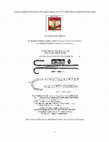
Cluster Analysis of the Silver Pin, Mavro Spelio KN Zf 31 in Anatolian Proto-Greek, 2022
This decipherment of the the Silver Pin, Mavro Spelio KN Zf 31 (HM 540),
is subject to the hypoth... more This decipherment of the the Silver Pin, Mavro Spelio KN Zf 31 (HM 540),
is subject to the hypothesis that Minoan Linear A is Anatolian proto-Greek,
the synchronous adstrate of cuneiform Hittite and Luwian. These findings are in line with those of our first publication, The influence of Hittite and
digraphia on Minoan Linear A proto-Greek libation invocations, Preliminary
Findings, previously published on this platform. Since then, we have revised our theory to encompass Anatolian Hittite and Luwian. Furthermore, our decipherment of this inscription is subject to computer generated cluster analysis, which runs scores of lexicons of various ancient languages through a computer program that strips vowels from words to extract consonant clusters alone. Our research teamʾs entirely novel approach is under the auspices of Francesco Perono Cacciafoco and Manoj Pratham, Editorial Consultants. This technique may very well prove to be a ground-breaking game changer in the eventual decipherment of ancient languages which have long since defied multiple attempts at deciphering them.

Cluster Analysis of the Silver Pin, Mavro Spelio KN Zf 31 in Anatolian Proto-Greek, 2022
ABSTRACT
This decipherment of the the Silver Pin, Mavro Spelio KN Zf 31 (HM 540),
is subject to ... more ABSTRACT
This decipherment of the the Silver Pin, Mavro Spelio KN Zf 31 (HM 540),
is subject to the hypothesis that Minoan Linear A is Anatolian proto-Greek,
the synchronous adstrate of cuneiform Hittite and Luwian. These findings are in line with those of our first publication, The influence of Hittite and
digraphia on Minoan Linear A proto-Greek libation invocations, Preliminary
Findings, previously published on this platform. Since then, we have revised our theory to encompass Anatolian Hittite and Luwian. Furthermore, our decipherment of this inscription is subject to computer generated cluster analysis, which runs scores of lexicons of various ancient languages through a computer program that strips vowels from words to extract consonant clusters alone. Our research teamʾs entirely novel approach is under the auspices of Francesco Perono Cacciafoco and Manoj Pratham, Editorial Consultants. This technique may very well prove to be a ground-breaking game changer in the eventual decipherment of ancient languages which have long since defied multiple attempts at deciphering them.
This monograph, High Correlation Linear A-Linear B vocabulary, grammar and orthography in Linear ... more This monograph, High Correlation Linear A-Linear B vocabulary, grammar and orthography in Linear A, by Richard Vallance Janke and Alexandre Solcà, is the largest study into the genesis of a Mycenaean-derived superstrate in Linear A ever undertaken by these authors. This is merely the draft paper, and as such it has yet to be approved for final publication by the editorial board of Les Éditions KONOSO Press. Since this is a draft paper only, we urgently request that any and all visitors to View Comments apprise us of any and all errors, whether orthographic, grammatical or syntactical. We have already proof-read this monograph at least 150 times, but before it can be approved or is approved for final publication by Les Éditions KONOSO Press, it must be absolutely free of errors of any kind. So if you spot any errors whatsoever, please let us know at once. We of course welcome any and all comments, observations and criticisms on this major new and entirely revolutionary study into the possible/probable existence of a Mycenaean-derived superstrate in Linear A. We realize that a great many critics will object to our hypothesis, some of them vociferously. But all we ask is that you keep an open mind, whoever you may be, with our thanks in advance.
Thank you
Richard Vallance Janke and Alexandre Solcà
Linear A by Richard V Vallance Janke
This is an Old Minoan lexicon and geographical researches for Cretan sites other than Haghia Tria... more This is an Old Minoan lexicon and geographical researches for Cretan sites other than Haghia Triada. We encourage comments, critiques and suggestions.

KONOSO, the Journal of Aegean Bronze Age Studies, 2019
Minoan Linear A tablets appear to be classed in two primary areas of interest (a) agriculture, an... more Minoan Linear A tablets appear to be classed in two primary areas of interest (a) agriculture, and more specifically, crops and grains and (b) religious and sacerdotal. It is to the former that we turn our attention in this study. Focusing on certain Linear A tablets which deal primarily or almost exclusively with grains, we find that these three tablets yield the most promising results, Haghia Triada tablets HT 86 & 95 and Zakros tablet ZA 20. While HT 86 and HT 95 are intact, ZA 20 is not. Other Linear A tablets from Haghia Triada also contribute to our findings.
Is it possible to envision an intact version of the original ZA 20 tablet from Zakros? We believe so, and with that firmly in mind we have attempted the first ever restoration of the top of ZA 20, resulting in what amounts to a plausible intact version, however hypothetical, of the original.

The parallel between the French superstrate in English and the Mycenaean-derived superstrate in t... more The parallel between the French superstrate in English and the Mycenaean-derived superstrate in the Minoan language in Linear A:
To date, no linguists exploring this phenomenon have ever properly taken this fundamental criterion into consideration, namely, that any superstrate word introduced into a substrate language must conform to the standard orthographic and syntactical conventions of the substrate language, and that is why all of their efforts at decipherment of so-called “Greek-like” vocabulary have utterly failed. It must be understood from the outset that all researchers and decipherers of Linear A, including Gregory Nagi and Iurii Mosenkis, who have ever attempted to assign “Greek-like” lexicographical values to the decipherment of Linear A have made the fundamental and critical error of retrospectively extrapolating Greek words from much later classical Greek. This issue can be summarized in a nutshell: the so-called Greek-like words imported into the Minoan language can only be early (ca. 1600 BCE) or later (ca. 1500-1450 BCE) Mycenaean-derived and nothing else.
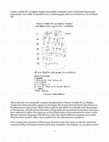
Linear A tablet HT 13 Haghia Triada successfully translated, with a substantial Mycenaean superst... more Linear A tablet HT 13 Haghia Triada successfully translated, with a substantial Mycenaean superstrate, wine stalks in (parallel) rows, crushed grapes and (a) sweeteners or (b) at Mount Ida: This is the first ever practically complete decipherment of Linear A tablet HT 13 (Haghia Triada) into what ostensibly appears to be largely Mycenaean-derived Greek (also known as the Mycenaean superstrate). Most of the words on this tablet are probably early Mycenaean or Mycenaean, with the caveat that their orthography and grammatical structure must have been adjusted to reflect the exigencies of the orthography and grammatical structure of the Minoan substrate language (Old Minoan, OM), the original Minoan language onto which they have been grafted. Allow me to explain how this phenomenon transpires. If we compare the incursion of Mycenaean-derived words into Linear A with the much later enormous influx of Norman French and French vocabulary into English, we can glean a much 1

Most of the words on Linear A tablet HT 88 Haghia Triada are probably early Mycenaean or Mycenaea... more Most of the words on Linear A tablet HT 88 Haghia Triada are probably early Mycenaean or Mycenaean, with the caveat that their orthography and grammatical structure must have been adjusted to reflect the exigencies of the orthography and grammatical structure of the Minoan substrate language (Old Minoan, OM), the original Minoan language onto which they have been grafted. Allow me to explain how this phenomenon transpires.
If we compare the incursion of Mycenaean-derived words into Linear A with the much later enormous influx of Norman French and French vocabulary into English, we can glean a much clearer picture of what is happening here. It is our belief that the introduction of Mycenaean-derived vocabulary into the Minoan substrate language, Old Minoan (OM) from around 1600 to 1450 BCE parallels to some extent the massive influx of Norman French and French vocabulary into English after the conquest of England by William the Conqueror in 1066 AD.
Aegean Bronze Age by Richard V Vallance Janke
Archaeology seems to support the idea of widespread Minoan trading contacts and a significant num... more Archaeology seems to support the idea of widespread Minoan trading contacts and a significant number of Minoan colonies. The distribution of the place name “Minoa” in the Aegean and in the eastern and central Mediterranean also appears to imply Minoan colonies. However, we must not forget that it was the famed archaeologist Arthur Evans who gave the Minoan civilization its name. It is possible that the Minoans went by a different name entirely. If the Bronze Age Cretan king was known as “Minos”, it is quite possible that the king’s colonies were named “Minoa” after him, but this is just speculation.
Books by Richard V Vallance Janke

Are the Minoan Linear A PK Za 4–PK Za 18 libation invocations in Anatolian proto-Greek?, 2025
Abstract:
Are the Minoan Linear A PK Za 4–PK Za 18 libation invocations in Anatolian proto-Greek... more Abstract:
Are the Minoan Linear A PK Za 4–PK Za 18 libation invocations in Anatolian proto-Greek? As the most intact of all the Minoan Linear A libation invocation tablets, PK Za 11 (HM 1341) fittingly serves as a suitable template for the decipherment of several other relatively intact Minoan Linear A libation invocations, notably, PK Za 8, PK Za 12, IO Za 2, KN Zc 7 and TL Za 1 (marble ladle, HM 1545), with relevant observations on multiple Minoan Linear A terms in other libation invocations, partially or mostly fragmented, notably PK Za 4, PK Za 14, PK Za 15, PR Za 1, PR Za 1, AR Zf 1, bronze axe, AR Zf 2, silver axe, KN Ze 16 and Sy Za 1. Cognate cuneiform Luwian terms and phrases, often embedded in Hittite texts, sometimes migrate in altered orthography adapted to the Minoan Linear A syllabary. Conclusion: the language of the Minoan Linear A libation invocations, whether largely or partially intact, or even in some instances, largely fragmented, is ostensibly none other than Anatolian proto-Greek (basilect), an aggregate of (a) its synchronous adstrate cousins, with cognate loanwords derived from cuneiform Anatolian Hittite (acrolect), and Luwian (mesolect), and (b) simultaneously an entirely distinctive, novel new language, proto-Greek, much of its vocabulary consisting of non-Anatolian neologisms, whereby qualifying it as the earliest de facto Greek dialect on record, appearing in Crete ca. 1700 – 1450 BCE, shortly before the advent of Mycenaean Linear B (1600 – 1450 BCE) in Crete, and at Mycenae and Pylos. 127 pages


Uploads
Papers by Richard V Vallance Janke
is subject to the hypothesis that Minoan Linear A is Anatolian proto-Greek,
the synchronous adstrate of cuneiform Hittite and Luwian. These findings are in line with those of our first publication, The influence of Hittite and
digraphia on Minoan Linear A proto-Greek libation invocations, Preliminary
Findings, previously published on this platform. Since then, we have revised our theory to encompass Anatolian Hittite and Luwian. Furthermore, our decipherment of this inscription is subject to computer generated cluster analysis, which runs scores of lexicons of various ancient languages through a computer program that strips vowels from words to extract consonant clusters alone. Our research teamʾs entirely novel approach is under the auspices of Francesco Perono Cacciafoco and Manoj Pratham, Editorial Consultants. This technique may very well prove to be a ground-breaking game changer in the eventual decipherment of ancient languages which have long since defied multiple attempts at deciphering them.
Poetry by Richard V Vallance Janke
Drafts by Richard V Vallance Janke
is subject to the hypothesis that Minoan Linear A is Anatolian proto-Greek,
the synchronous adstrate of cuneiform Hittite and Luwian. These findings are in line with those of our first publication, The influence of Hittite and
digraphia on Minoan Linear A proto-Greek libation invocations, Preliminary
Findings, previously published on this platform. Since then, we have revised our theory to encompass Anatolian Hittite and Luwian. Furthermore, our decipherment of this inscription is subject to computer generated cluster analysis, which runs scores of lexicons of various ancient languages through a computer program that strips vowels from words to extract consonant clusters alone. Our research teamʾs entirely novel approach is under the auspices of Francesco Perono Cacciafoco and Manoj Pratham, Editorial Consultants. This technique may very well prove to be a ground-breaking game changer in the eventual decipherment of ancient languages which have long since defied multiple attempts at deciphering them.
is subject to the hypothesis that Minoan Linear A is Anatolian proto-Greek,
the synchronous adstrate of cuneiform Hittite and Luwian. These findings are in line with those of our first publication, The influence of Hittite and
digraphia on Minoan Linear A proto-Greek libation invocations, Preliminary
Findings, previously published on this platform. Since then, we have revised our theory to encompass Anatolian Hittite and Luwian. Furthermore, our decipherment of this inscription is subject to computer generated cluster analysis, which runs scores of lexicons of various ancient languages through a computer program that strips vowels from words to extract consonant clusters alone. Our research teamʾs entirely novel approach is under the auspices of Francesco Perono Cacciafoco and Manoj Pratham, Editorial Consultants. This technique may very well prove to be a ground-breaking game changer in the eventual decipherment of ancient languages which have long since defied multiple attempts at deciphering them.
is subject to the hypothesis that Minoan Linear A is Anatolian proto-Greek,
the synchronous adstrate of cuneiform Hittite and Luwian. These findings are in line with those of our first publication, The influence of Hittite and
digraphia on Minoan Linear A proto-Greek libation invocations, Preliminary
Findings, previously published on this platform. Since then, we have revised our theory to encompass Anatolian Hittite and Luwian. Furthermore, our decipherment of this inscription is subject to computer generated cluster analysis, which runs scores of lexicons of various ancient languages through a computer program that strips vowels from words to extract consonant clusters alone. Our research teamʾs entirely novel approach is under the auspices of Francesco Perono Cacciafoco and Manoj Pratham, Editorial Consultants. This technique may very well prove to be a ground-breaking game changer in the eventual decipherment of ancient languages which have long since defied multiple attempts at deciphering them.
This decipherment of the the Silver Pin, Mavro Spelio KN Zf 31 (HM 540),
is subject to the hypothesis that Minoan Linear A is Anatolian proto-Greek,
the synchronous adstrate of cuneiform Hittite and Luwian. These findings are in line with those of our first publication, The influence of Hittite and
digraphia on Minoan Linear A proto-Greek libation invocations, Preliminary
Findings, previously published on this platform. Since then, we have revised our theory to encompass Anatolian Hittite and Luwian. Furthermore, our decipherment of this inscription is subject to computer generated cluster analysis, which runs scores of lexicons of various ancient languages through a computer program that strips vowels from words to extract consonant clusters alone. Our research teamʾs entirely novel approach is under the auspices of Francesco Perono Cacciafoco and Manoj Pratham, Editorial Consultants. This technique may very well prove to be a ground-breaking game changer in the eventual decipherment of ancient languages which have long since defied multiple attempts at deciphering them.
Thank you
Richard Vallance Janke and Alexandre Solcà
Linear A by Richard V Vallance Janke
Is it possible to envision an intact version of the original ZA 20 tablet from Zakros? We believe so, and with that firmly in mind we have attempted the first ever restoration of the top of ZA 20, resulting in what amounts to a plausible intact version, however hypothetical, of the original.
To date, no linguists exploring this phenomenon have ever properly taken this fundamental criterion into consideration, namely, that any superstrate word introduced into a substrate language must conform to the standard orthographic and syntactical conventions of the substrate language, and that is why all of their efforts at decipherment of so-called “Greek-like” vocabulary have utterly failed. It must be understood from the outset that all researchers and decipherers of Linear A, including Gregory Nagi and Iurii Mosenkis, who have ever attempted to assign “Greek-like” lexicographical values to the decipherment of Linear A have made the fundamental and critical error of retrospectively extrapolating Greek words from much later classical Greek. This issue can be summarized in a nutshell: the so-called Greek-like words imported into the Minoan language can only be early (ca. 1600 BCE) or later (ca. 1500-1450 BCE) Mycenaean-derived and nothing else.
If we compare the incursion of Mycenaean-derived words into Linear A with the much later enormous influx of Norman French and French vocabulary into English, we can glean a much clearer picture of what is happening here. It is our belief that the introduction of Mycenaean-derived vocabulary into the Minoan substrate language, Old Minoan (OM) from around 1600 to 1450 BCE parallels to some extent the massive influx of Norman French and French vocabulary into English after the conquest of England by William the Conqueror in 1066 AD.
Aegean Bronze Age by Richard V Vallance Janke
Books by Richard V Vallance Janke
Are the Minoan Linear A PK Za 4–PK Za 18 libation invocations in Anatolian proto-Greek? As the most intact of all the Minoan Linear A libation invocation tablets, PK Za 11 (HM 1341) fittingly serves as a suitable template for the decipherment of several other relatively intact Minoan Linear A libation invocations, notably, PK Za 8, PK Za 12, IO Za 2, KN Zc 7 and TL Za 1 (marble ladle, HM 1545), with relevant observations on multiple Minoan Linear A terms in other libation invocations, partially or mostly fragmented, notably PK Za 4, PK Za 14, PK Za 15, PR Za 1, PR Za 1, AR Zf 1, bronze axe, AR Zf 2, silver axe, KN Ze 16 and Sy Za 1. Cognate cuneiform Luwian terms and phrases, often embedded in Hittite texts, sometimes migrate in altered orthography adapted to the Minoan Linear A syllabary. Conclusion: the language of the Minoan Linear A libation invocations, whether largely or partially intact, or even in some instances, largely fragmented, is ostensibly none other than Anatolian proto-Greek (basilect), an aggregate of (a) its synchronous adstrate cousins, with cognate loanwords derived from cuneiform Anatolian Hittite (acrolect), and Luwian (mesolect), and (b) simultaneously an entirely distinctive, novel new language, proto-Greek, much of its vocabulary consisting of non-Anatolian neologisms, whereby qualifying it as the earliest de facto Greek dialect on record, appearing in Crete ca. 1700 – 1450 BCE, shortly before the advent of Mycenaean Linear B (1600 – 1450 BCE) in Crete, and at Mycenae and Pylos. 127 pages