This page provides summaries of past and present California State Geologists; more complete biographies (pre-2015) are available in Appendix B of Special Publication 126 - The California Geological Survey: A History of California’s State Geological Surveys, 1850-2015.
The California State Geologist provides technical information and advice to the Governor, State agencies, the professional community, and the public on all issues pertaining to California geology, geologic hazards, engineering geology, and the State's mineral resources. The State Geologist is the chief administrator of the California Geological Survey (CGS) within the Department of Conservation, ensuring that CGS maintains its partnership with the people of California in fulfilling its mission of providing the highest quality geological and engineering expertise and information for the betterment of the State's economy, environment, and its public’s safety. The California State Geologist must be registered in compliance with the Geologist and Geophysicist Act (refer to Section 677 of the California Public Resources Code).
John Boardman Trask
State Geologist, 1850–1856

Born in Roxbury, MA, Dr. Trask was also a physician. Trask was the president and founder of the California Academy of Sciences and also undertook the first survey of the state under orders from the Senate in 1853. The mineral Traskite was named in his honor as the first state geologist.
Josiah Dwight Whitney
State Geologist, 1860–1873

Josiah Whitney was born in North Hampton, MA. He studied at Yale before pursuing graduate work in Europe where he studied geology and chemistry. Before receiving an honorary master of laws (L.L.D.) degree from Yale in 1870, Whitney was a professor of geology at Harvard University in 1865. He served as a United States geologist conducting a survey of the Lake Superior copper region from 1847 to 1851. From 1860 to 1874 he served as the State Geologist of California and director of the first Geological Survey of California. While at the survey he organized a team of geologists and geographers to survey the entire state of California which included the first scientific survey of the Sierra Nevada. Whitney lead an expedition in 1864 to discover a peak, Mt. Whitney, later named in his honor. Read more about Whitney in this Wikipedia article.
Henry Garber Hanks
State Mineralogist, 1880–1886

On May 15, 1880, the Governor — under “An Act to provide for the establishment and maintenance of a Mining Bureau” — appointed Henry Hanks the State Mineralogist. Under this act, Hanks also reported directly to the Governor and as a result two new publications were created under his service, the Annual Report of the State Mineralogist series and Special Publication series. Prior to his appointment the State Legislature established the State Mining Bureau, which required the Bureau and the mineralogist to be located in San Francisco. Hanks started his own assaying company, Pacific Chemical Works, while in San Francisco.
William Irelan Jr.
State Mineralogist, 1886–1892
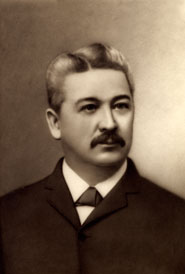
William Irelan Jr. was State Mineralogist in 1886 but also carried another title in 1890 when he was made State Engineer. He worked both positions until 1892.
In 1891, Irelan published the first geologic map of the state and although it did not cover the entire state it did show eight stratigraphic units in color. The scale was approximately 1:760,000 making it the largest geologic scale map at that time. Preparing geologic maps of the state was not only a popular service but an essential service of the Bureau and still is to date.
J.J. Crawford
State Mineralogist, 1892–1896

Crawford published bulletins on various topics such as, gold mill practices, gas yielding formations and others. He also published a bibliography of California geology and a catalog of California fossils.
Augustus S. Cooper
State Mineralogist, 1896–1901

During Cooper's service with the state, the Bureau moved into the newly built Ferry building at Market Street in San Francisco. These offices were occupied until August 1984, when the Division moved to Pleasant Hill in Contra Costa County.
Lewis E. Aubury
State Mineralogist, 1902–1911

William H. Storms
State Mineralogist, 1911–1913

William Storms was appointed State Mineralogist by Governor Johnson on November 25, 1911. Storms worked as a field assistant under William Irelan and J.J. Crawford. In 1900, Governor Henry gage appointed Storms to study the mines in the Mother Lode of California. The outcome of this work was issued by the Bureau as Bulletin Number 18.
Fletcher McNutt Hamilton
State Mineralogist, 1913–1923

In 1916, Hamilton published the second geologic map of the state that was complete and displayed 21 stratigraphic units along with an explanatory volume explaining the units.
Lloyd Root
State Mineralogist, 1923–1928

Walter W. Bradley
State Mineralogist, 1928–1946

Walter Wadsworth Bradley was a native of California and started working for the State Mining Bureau in 1912. He served the state for over 34 years and his last 18 years were as the State Mineralogist.
W. Burling Tucker
Interim State Mineralogist, 1946–1947

W. Tucker served the state for over 30 years and started with the division in 1923. He was a supervisor of the Los Angeles office since 1923. Tucker was unable to qualify for the promotional examination to the State Mineralogist position and to honor his service to the state, a temporary appointment was given to him for 5 months.
Olaf P. Jenkins
State Mineralogist, 1947–1958

Olaf Jenkins was the Chief of the Division for 11 years until he voluntarily retired in March 1, 1958 at age 69. Prior to that Jenkins served for 18 years as Chief Geologist.
Gordon B. Oakeshott
Interim State Mineralogist, 1958–1959

Dr. Gordon B. Oakeshott was serving as Deputy to the State Mineralogist Jenkins when he retired and was temporarily appointed as Chief of the Division of Mines for one year.
Ian Campbell
State Geologist, 1959–1969

Besides serving 10 years of state service as the State Geologist, Ian Campbell also served as president for the following four geological organizations; Geological Society of America (GSA), Association of American State Geologists (AASG), Mineralogical Society of America (MSA) and American Geological Institute (AGI). Mount Ian Campbell in the Sierra Nevada is also a reminder of Ian's service to California.

State Geologist when the 1971 San Fernando earthquake hit, Wes Bruer was influential in expanding the Survey’s role in monitoring earthquake strong motion and mapping earthquake hazards.
James E. Slosson
State Geologist, 1973–1975

Prior to serving as the State Geologist, James Slosson started his own company specializing in areas of geoscience. James also spent over 35 years teaching in various academic institutions.
Thomas E. Gay
Acting State Geologist, 1975–1978

James F. Davis
State Geologist, 1978–1987, 1989–2003

Jim Davis led implementation of California’s Surface Mining and Reclamation Act, creating methods for classifying mineral resources and setting reclamation standards and review processes. Davis oversaw the California Division of Mines and Geology’s seismic hazard programs, including implementation of the Alquist-Priolo Fault Zone Act, the Seismic Hazards Mapping Act, and reviews of seismic design parameters for critical facilities. Davis also directed geologic mapping and geohazards programs, and as chair of the Governor's Earthquake Hazards Committee introduced earthquake scenarios illustrating potential damage from future California earthquakes.
Brian E. Tucker
Acting State Geologist, 1987–1989

Brian Tucker served as Principal Geologist and Acting State Geologist for the California Division of Mines and Geology, during which the Division was authorized to assess the feasibility of an earthquake warning system. Before this role, he spent five years as Supervising Geologist for CDMG’s Geophysics Program, including the Strong Motion Instrumentation Program.
Michael S. Reichle
Acting State Geologist, 2003–2005

John G. Parrish
State Geologist, 2005–2018

John Parrish became State Geologist after more than a decade as Executive Officer of the State Mining and Geology Board, following earlier service with the Board of Registration for Geologists and Geophysicists. He previously spent twenty years in natural resources industries, managing international petroleum projects. Parrish holds geology degrees from the University of Wales, University of Houston, and University of Redlands, plus an MBA from the California State University. He is a Registered Geologist, Certified Petroleum Geologist, and active member in several professional and seismic hazard organizations, including CEPEC and COSMOS.
William “Bill” Short
Acting State Geologist, 2018–2019

Tim McCrink
Acting State Geologist, 2019–2020
Steven R. Bohlen
Acting State Geologist, 2020–2022

Steve Bohlen became Acting State Geologist in 2020, bringing experience from academia, the U.S. Geological Survey, Joint Oceanographic Institutions, and service as California’s Oil and Gas Supervisor. On loan from Lawrence Livermore National Laboratory, he strengthened CGS partnerships, advanced work on carbon sequestration and identifying sources of critical minerals, and connected CGS expertise to statewide climate and energy needs. He returned to LLNL in 2022.
Position Vacant
2022–2023
Jeremy Lancaster
State Geologist, 2023–Present

Jeremy Lancaster became State Geologist in October 2023, bringing over twenty years of experience to the post, most of it with CGS. A Licensed Professional Geologist and Certified Engineering Geologist, he joined the CGS in 2006 and worked across multiple programs, supporting land-use planning, habitat mapping, and wildfire-related flood and debris-flow mitigation projects.
