

 S. Mitsche
580 California St., Suite 400
San Francisco, CA, 94104
2006, Imaging & Microscopy
https://doi.org/10.1002/IMIC.200790013…
2 pages


AI
The study elucidates the quantitative metallography of polycrystalline materials, focusing on the effects of recrystallization on the mechanical properties of nickel base alloy 80 A. Utilizing Electron Backscatter Diffraction (EBSD), the research highlights the determination of recrystallized fractions and grain characteristics, demonstrating a correlation between specimen strain and recrystallized grain amount. Experimental results show that recrystallization predominantly occurs at normal grain boundaries, with significant implications for understanding material behavior under different deformation conditions.
AI



Textures and Microstructures, 1996
Measurements of the crystallographic orientation of individual grains provide information on the spatial arrangement and distribution of orientations in a crystalline solid, i.e. on the orientation topography, which can be utilized to establish a basis for a deeper understanding of the microstructural mechanisms during deformation and recrystallization of metallic materials. Techniques for the convenient measurement of single grain orientations with high accuracy by evaluation of Kikuchi diagrams in a TEM and SEM (EBSD) are introduced. The principles of Kikuchi pattern formation as well as the measuring and evaluation procedures are outlined. Particular attention is focused on the automation of pattern indexing in order to provide fully automated evaluation routines. The unique potential of these techniques is demonstrated by two examples pertaining to the microstructural evolution during the formation of recrystallization nuclei and their subsequent growth.
Journal of Microscopy, 2009
This paper presents a few examples of the application of electron back-scatter diffraction (EBSD) to solidification problems. For directionally solidified Al-Zn samples, this technique could reveal the change in dendrite growth directions from <100> to <110> as the composition of zinc increases from 5 to 90 wt%. The corresponding texture evolution and grain selection mechanisms were also examined. Twinned dendrites that form under certain solidification conditions in Al-X specimens (with X = Zn, Mg, Ni, Cu) were clearly identified as <110> dendrite trunks split in their centre by a (111) twin plane. In Zn-0.2 wt% Al hot-dip galvanized coatings on steel sheets, EBSD clearly revealed the preferential basal orientation distribution of the nuclei as well as the reinforcement of this distribution by the faster growth of <1010> dendrites. Moreover, in Al-Zn-Si coatings, misorientations as large as 10 • mm −1 have been measured within individual grains. Finally, the complex band and lamellae microstructures that form in the Cu-Sn peritectic system at low growth rate could be shown to constitute a continuous network initiated from a single nucleus. EBSD also showed that the α and β phases had a Kurdjumov-Sachs crystallographic relationship.
Materials Characterization, 2007
This work describes some techniques developed for focused ion beam (FIB) serial sectioning and electron backscatter diffraction (EBSD) mapping of partially and fully recrystallized metals. A DualBeam™ platform was used to sequentially mill submicron slices of a material by FIB with the crystallographic features of each newly created surface characterized by EBSD. Two promising milling procedures are described which involve: (i) the generation of a small (∼ 10-50 μm) diameter whisker for subsequent serial sectioning perpendicular to its long axis, and (ii) more extensive FIB milling of a larger sample to generate a protruding rectangular-shaped volume at the free surface. The latter was found to be the more powerful method of serial sectioning as the initial preparation is slightly less tedious. Using both techniques, serial sectioning was carried out on both recrystallized iron and partly recrystallized nickel samples. The serial sectioning technique revealed a number of features of the recrystallizing grains in nickel that are not clearly evident in 2-D EBSD micrographs.
Scripta Metallurgica et Materialia, 1992
In recent years, research on nanocrystalline metals has generated strong interest for demonstrating unusual mechanical behavior, characterized by yield strengths close to the theoretical shear strength 1. Strengthening is induced by the restriction of dislocation activity imposed by the small grain size. It has been shown 2,3 that yield behavior depends strongly on the mean and standard deviation of the grain size distributions. Hence an accurate assessment of the average grain size and shape of grain size distributions is critical for proper analysis of deformation behavior. The Xray diffraction (XRD) techniques developed for nanoscale grain size measurements include analysis of Bragg peaks using the Scherrer equation 4 , integral breadth 5 , the Warren-Averbach 6 and Williamson-Hall methods 7. Although the grain size is calculated from an analysis of broadening of XRD peaks, the accuracy
Texture Stress and Microstructure, 1993
Electron diffraction methods are briefly reviewed for the determination of individual grain orientations and for the measurement of SAD pole figures. The standard techniques of orientation determination grain by grain using a TEM are the interpretation of selected area electron spot and microbeam Kikuchi diffraction patterns. Electron-transparent thin samples are required. Specimen regions smaller than 500nm or 10nm in diameter, respectively, can be studied. Alternatively, quantitative pole figures can be measured using a TEM from selected areas down to 0.5 #m in diameter.
Journal of Structural Geology, 2000
The microstructure and crystallographic preferred orientation (texture) of a recrystallized quartzite from the Bergell Alps was quantitatively investigated using automated indexing of electron backscattered patterns (EBSP). The results are displayed in orientation maps of the microstructure and orientation as well as misorientation distribution functions. The orientation distribution function derived from EBSP compares excellently with texture data derived from independent neutron diraction experiments. The misorientation distribution function of next neighbors reveals strong maxima for small angle grain boundaries (subgrain boundaries) and the Dauphine twin correlation. The Dauphine twins, which are generally not detectable optically, are not correlated with speci®c maxima in the orientation distribution function. Their origin and their role during recrystallization is discussed. During recrystallization no other preferred high angle misorientations developed. The frequent occurrence of small angle grain boundaries indicates progressive subgrain rotation as a recrystallization mechanism.
Materials Characterization, 2006
A novel methodology is described in this paper which is a step towards three-dimensional representation of grain structures for microstructure characterization and processing microstructural data for subsequent computational analysis. It facilitates evaluation of stereological parameters of grain structures from a series of two-dimensional (2D) electron backscatter diffraction (EBSD) maps. Crystallographic orientation maps of consecutive serial sections of a micron-size specimen are collected in an automated manner using a dual-beam focused ion beam-scanning electron microscope (FIB-SEM) outfitted with an EBSD system. Analysis of the serial-sectioning data is accomplished using a special purpose software program called "Micro-Imager". Micro-Imager is able to output characterization parameters such as the distribution of grain size, number of neighboring grains, and grain orientation and misorientation for every 2D section. Some of these data can be compared with results from stereological exercises. Stacking the 2D statistical information obtained from the analysis of the serial-sectioning data provides a means to quantify the variability of grain structure in 3D.
2008
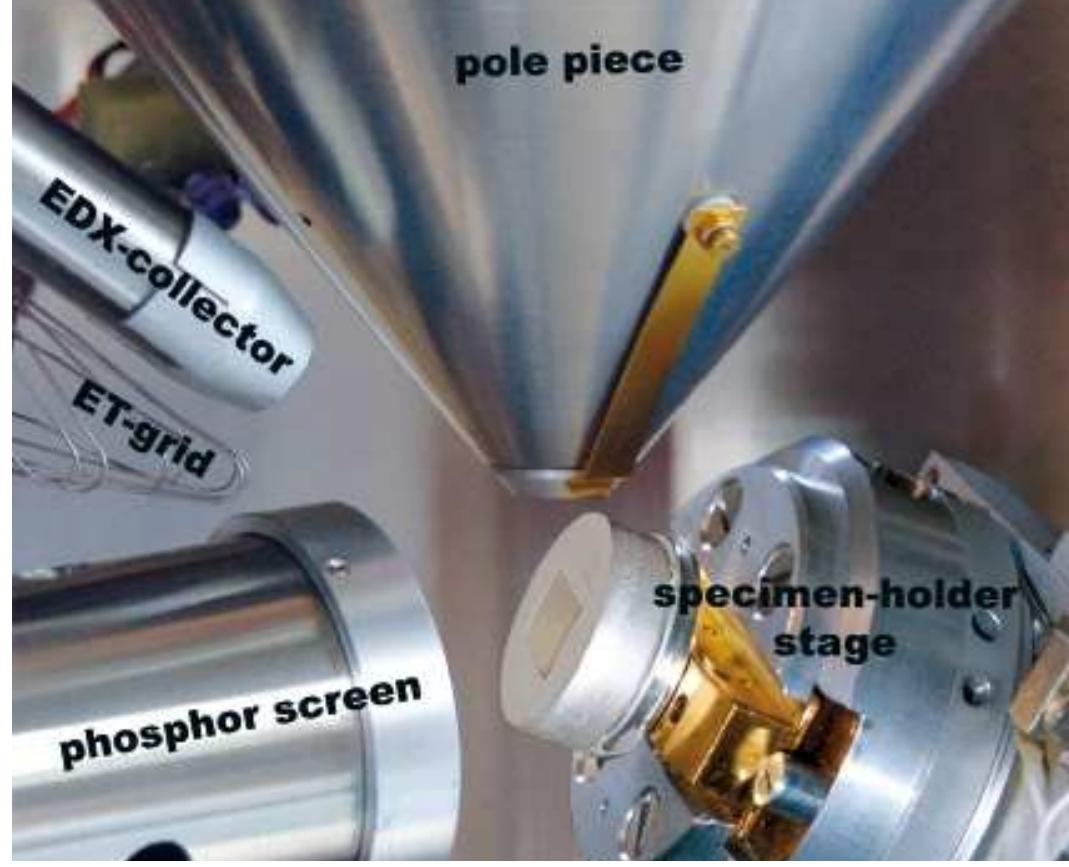
An electron backscatter diffraction (EBSD) pattern is formed when a focused electron beam is positioned on a grain within a highly inclined (typically 70 degrees) sample in a scanning electron microscope. As the incident electron beam interacts with the crystal lattice within a small volume, electrons are coherently diffracted out of the sample. If a phosphor screen is placed near the sample, then the pattern formed by the diffracted electrons can be imaged with a digital CCD camera (Fig. 1). The pattern is composed of a geometrical arrangement of bands that represent planes in the crystal. The imaged pattern can be transmitted to the computer and the pattern automatically indexed to show the corresponding orientation of the crystal lattice. Fully automated orientation measurements with angular resolutions better than half a degree can be achieved with modern EBSD systems. These systems control the position of the electron beam over the sample surface so that orientations can be mea...
AI
The research reveals a nearly linear correlation between the strain applied and the fraction of recrystallised grains, influencing mechanical properties significantly.
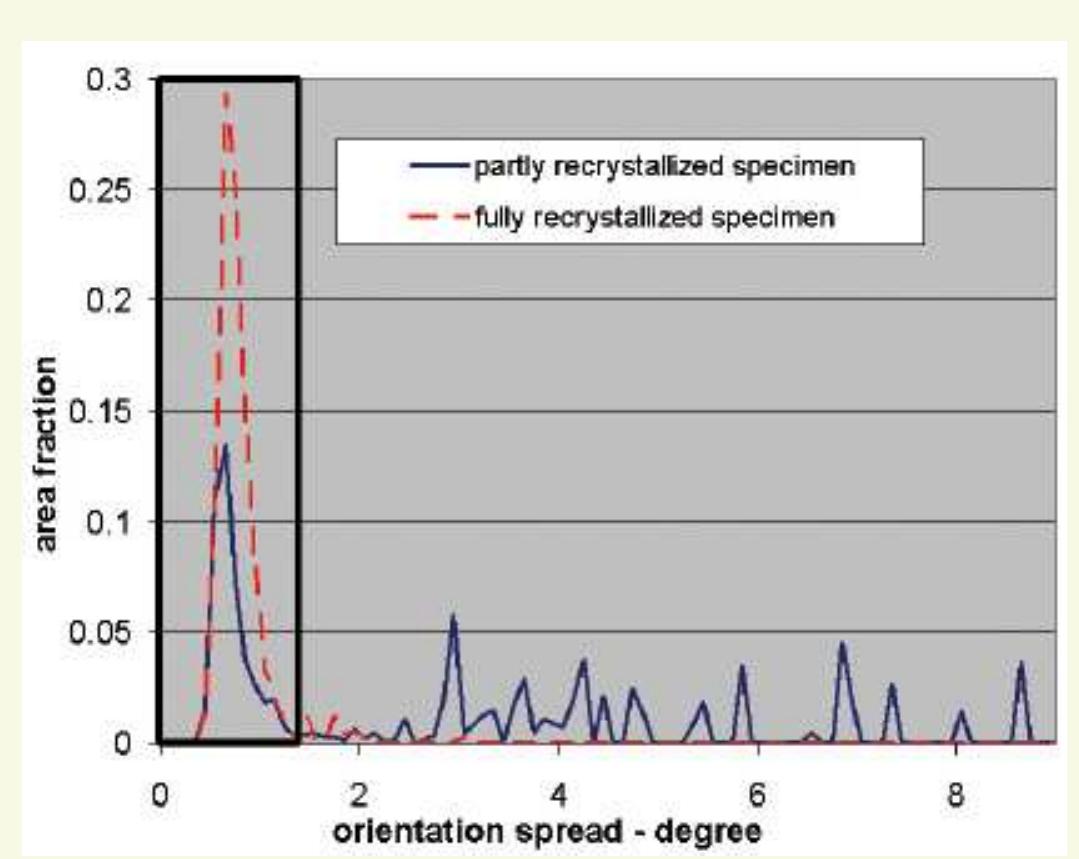
The study shows that using a grain orientation spread threshold of 1.5° effectively discriminates between deformed and recrystallised grains in nickel alloys.
The analysis determined the ferrite fraction of duplex steel 1.4462 to be 54%, highlighting EBSD's precision in phase identification.
The research indicates that recrystallised grains primarily originate at the edges of grains and at normal grain boundaries, not twin boundaries.
Challenges arise from their similar lattice structures, but EBSD overcomes this by leveraging small Bragg angles for effective differentiation.

Transactions of the Indian Institute of Metals, 2018
Automated electron backscatter diffraction (EBSD) technique in a dual-beam field emission gun scanning electron microscope has been successfully used to obtain three-dimensional (3D) orientation mapping of grains in modified 9Cr-1Mo after severe plastic deformation and recrystallization. In this technique, the microstructure and micro-texture across several sections of the material were studied by means of the state-of-the-art ''slice and view'' methodology using grazing incidence high-energy Ga ? focused ion beam for slicing and electron beam for viewing and EBSD analysis. By combining the data from each slice, a 3D texture map could be generated by means of image reconstruction technique. The orientation map thus generated provided volumetric microstructural and micro-textural information. The 3D EBSD studies on the heavily deformed mod-9Cr-1Mo steel (cold-rolled 88%) revealed that rolled grains were elongated like plates with thickness B 200 nm. Analysis of the fiber texture components in rolled specimen across the sections showed near equal preference for all fiber texture components with some enhancement of the a-fiber texture. However, by recrystallizing at 1023 K for 1 h, elongated grains along rolling direction with large diameters (* 40 to 100 lm) were observed together with finer (size * 0.5 to 2 lm) polygonal grains and c-fiber texture component dominated over other texture components.
Microscopy and Microanalysis, 2013
Band contrast (BC) is a qualitative measure of electron back-scattered diffraction (EBSD), which is derived from the intensity of the Kikuchi bands. The BC is dependent upon several factors including scanning electron microscope measurement parameters, EBSD camera setup, and the specimen itself (lattice defect and grain orientation). In this study, the effective factors for BC variations and the feasibility of using BC variations for the quantification of microstructure evolutions have been investigated. In addition, the effects of the lattice defect and the grain orientation on the BC variations are studied. Next, a shear-deformed microstructure of 316L stainless steel, which contains nanosized grains and a large portion of twin boundaries, is revealed by BC map and histogram. Recovery and recrystallization of shear-deformed 316L stainless steel are displayed by BC variations during isothermal annealing at 700 and 800°C, respectively. It is observed that the BC turns bright as the ...
Nondestructive Characterization for Composite Materials, Aerospace Engineering, Civil Infrastructure, and Homeland Security 2008, 2008
The quantitative measurement of crystallographic texture through determination of the Orientation Distribution Coefficients (ODCs) can provide critical information on a sample's suitability for being utilised in a particular manufacturing process or can be used to measure changes in the microstructure of components in service. Ultrasonic techniques have been developed by previous workers that measure three of the ODCs that describe the orientation probability distribution function for an aggregate of cubic crystallites. Electron Backscatter Diffraction (EBSD), a microscopic technique that measures the crystallographic orientations of individual crystals, has been utilised to offer an alternative method to measuring the complete range of ODCs. As a technique, EBSD provides a much more detailed measurement of texture than ultrasonic measurements ever could. Ultrasonic methods are however non-destructive, can be used on components in service and are quicker in use and are less expensive to implement that EBSD measurements. EBSD is a valuable method in validating ultrasonic measurements, and can help to guide us in determining the limitations of the ultrasonic measurements. Ultrasonic measurement of texture is and will continue to be a useful approach to measuring texture but it does have its limitations for application to real samples. Equally, one has to use EBSD properly if one is to obtain accurate and representative data for the entire sample.
The International Journal of Multiphysics, 2015
Crystallographic grains and defects play an important role in many fundamental processes, such as grain growth and recrystallization, damage, and plastic deformation. Due to the importance of these processes, there is considerable interest in characterizing the crystallographic orientation and grain boundary distribution of crystalline materials. In this study, crystallographic defects such as dislocation arrays and grain boundaries and their orientations were investigated in a commercial polycrystalline copper sample using electron backscatter diffraction (EBSD) mapping combined with scanning electron microscopy (SEM). EBSD was used to determine the local orientations at individual points of a regular grid on a planar surface of a specimen. From the orientation differences between neighboring points, the lattice curvature and dislocation density tensor were derived, and the dislocation density distribution accompanying the crystallographic defects was significantly dependent on the SEM/EBSD step size associated with the spatial resolution.
Textures and Microstructures
Dedicated to the memory of Professor Giinter Wassermann A short review is given on electron microscopical methods for the determination of local textures. Electron microscopy offers the unique facility of diffraction from well defined locations in the sample and high resolution imaging of the microstructure. Standard techniques of orientation determination are the evaluation of electron diffraction spot andmmore recentlymKikuchi patterns, which are applicable to electron transparent fine-grain materials. Specimen areas smaller than 500 nm or 50 nm in diameter, respectively, can be selected. Bulk samples with crystallite sizes greater than approximately 1/m or 5/m, respectively, can be studied with the SEM using electron backscattering or channelling patterns. For routine work a program has been developed to do on-line determination of orientation of cubic, orthorhombic or hexagonal crystals from Kikuchi, channelling and backscattering patterns. Applications of this technique on dual-phase steel are given. The orientation distribution functions (ODF) of the ferrite and martensite phases from individual grain measurements are compared with X-ray and neutron pole-figure measurements. Misorientation distribution functions (MODF) are discussed for contiguous ferrite-martensite and martensite-martensite grains.
JOM, 2002
The utilization of crystallographic texture is gaining acceptance as a commercially viable tool for characterizing the attributes and confirming the quality of engineering materials. Traditionally, x-ray diffraction (XRD) involving the measurement and subsequent analysis of normal-orientation pole figures is used to determine the preferred orientation in sheet metals. Unfortunately, most XRD techniques are incapable of providing quantifying texture information of wrought tantalum. This is because integrative texture measurement methods cannot detect the presence of texture gradients and bands known to be detrimental to the performance of tantalum for select applications. Instead, discrete orientation measurement techniques such as electron backscatter diffraction are required to resolve the microtexture of tantalum. Inverse pole figure maps generated using orientation imaging microscopy have been used to gain qualitative insight into the texture character of wrought tantalum. Recently, a numerical means for quantifying the texture uniformity of tantalum (as well as other materials) from discrete orientation data has been devised and demonstrated.
Materials Research-ibero-american Journal of Materials, 2001
The fundamental parameters approach is used to simulate the instrument contribution to the X-Ray diffraction profile. This procedure eliminates the need to experimentally prepare a reference sample of the studied crystalline material when using the Warren-Averbach method to investigate microstrutural parameters. The Warren-Averbach method is also compared to the Balzar and Enzo methods, two other popular methods of size-strain analysis. The analysis was carried out using bohmite powder having two different nominal average crystallite sizes, 80 Å and 200 Å. A 50%-50% mixture of these materials was used as a third sample. The proposed simulation procedure provides good results and is much faster to implement than the usual procedure that includes the preparation of a reference. For larger crystallite sizes, the results calculated from the Warren-Averbach method for the volume-weighted average crystallite size differs significantly from the ones obtained from the Balzar and Enzo methods. The limitations of the Balzar and Enzo methods are also discussed.
IOP Conference Series: Materials Science and Engineering, 2014
The onset of Severe Plastic Deformation (SPD) regime is quite instructive on the possible origins of the nano-microstructures developed in metals and alloys. It is known that grain fragmentation and dislocation accumulation, among other defects, proceed at different paces depending fundamentally on grain orientations and active deformation mechanisms. There have been many attempts to characterize nano-microstructure anisotropy, leading all of them to sometimes contradictory conclusions. Moreover, the characterizations rely on different measurements techniques and pos-processing approaches, which can be observing different manifestations of the same phenomena. On the current presentation we show a few experimental and computer pos-processing and simulation approaches, applied to some SPD/alloy systems. Williamson-Hall and Convolutional Multiple Whole Profile (CMWP) techniques will be applied to peak broadening analysis on experimental results stemming from laboratory Cu K X-rays, and synchrotron radiation from LNLS (Laboratório Nacional de Luz Síncrotron, Campinas, Brazil) and Petra III line (HEMS station, at DESY, Hamburg, Germany). Taking advantage of the EBSD capability of giving information on orientational and topological characteristics of grain boundaries, microstructures, grain sizes, etc., we also performed investigations on dislocation density and Geometrically Necessary Dislocation Boundaries (GNDB) and their correlation with texture components. Orientation dependent nano-microstructures and domain sizes are shown on the scheme of generalized pole figures and discussions provide some hints on nano-microstructure anisotropy.
