Academia.eduAcademia.edu

Greek History

description4,330 papers
group23,386 followers
lightbulbAbout this topic
Greek History is the study of the historical development of Greece from its prehistoric origins through classical antiquity, the Hellenistic period, and into the Roman conquest, focusing on political, cultural, social, and economic aspects that shaped Greek civilization and its influence on the Western world.
lightbulbAbout this topic
Greek History is the study of the historical development of Greece from its prehistoric origins through classical antiquity, the Hellenistic period, and into the Roman conquest, focusing on political, cultural, social, and economic aspects that shaped Greek civilization and its influence on the Western world.

Key research themes

1. How did Greek cultural expressions persist and transform within the context of Roman and Ottoman imperial dominance?

This theme investigates the survival, adaptation, and public presence of Greek cultural traditions, particularly theatrical and religious expressions, under the political dominion of powerful empires such as Rome and the Ottoman Empire. It highlights how Greek identity and heritage manifested in performative arts and archival legacies despite imperial pressures, providing crucial insights into cultural resilience and hybridization.

Key finding: Paillard's comprehensive study reveals that Greek drama performances in the Greek language continued to be publicly staged in Roman Italy from the Republic through the early Imperial period, maintaining their performative... Read more
Key finding: This work demonstrates that Ottoman archival documents preserved in Athonite monasteries, dating from the late 14th century to the early 20th century, serve not only as legal proof of monastic property rights but also as rich... Read more
Key finding: Through a case study of Simonopetra monastery’s Ottoman archival collection, this study affirms the critical role of modern digitisation and cataloguing methods in preserving endangered Greek Orthodox ecclesiastical heritage... Read more

2. What roles did political power and empire play in shaping Greek identity and social dynamics in various historical periods?

Research under this theme explores how political authority, from Roman emperors to early modern inquisitions and nation-state formations, directly affected Greek societal identities, religious affiliations, and inter-communal relations. It focuses on mechanisms of power such as dedications by emperors, legal persecution, urban governance, and conflict, illustrating Greek agency and negotiation within imperial and national contexts.

Key finding: This epigraphic study identifies a previously misattributed marble inscription as a rare direct dedication by Emperor Hadrian found near Tegea in Arcadia, rather than on the island of Andros. The analysis situates the... Read more
Key finding: This research details how Greeks in Italian states were subjected to inquisitorial scrutiny that targeted their Orthodox and Catholic identities under the post-Florence union framework. The study uncovers the nuanced... Read more
Key finding: The paper elucidates how the Anglo-French occupation of Piraeus in 1854 brought a devastating cholera outbreak that exposed the Greek state's limited administrative and infrastructural capacities. It reveals local perceptions... Read more
Key finding: This study details the systematic application of Nazi deportation policies against Greek Jews, emphasizing Athens’ complex urban setting that challenged the Final Solution’s implementation. It demonstrates how international... Read more

3. How do cultural memory, music, and collective practices reflect and influence Greek national identity and conflict?

This thematic cluster examines the role of cultural artifacts such as music, monuments, and diasporic narratives in shaping and expressing Greek national identity, memory, and political struggles. It encompasses analyses of public cultural debates, popular music as political expression, and the diasporic engagement with historical artefacts, revealing the interplay of culture and identity construction during periods of social upheaval and national contestation.

Key finding: Through ethno-musicological analysis of newspaper accounts and oral histories, this study establishes that popular music functioned as a tool for psychological warfare during Greece's National Schism of 1920. It documents how... Read more
Key finding: This essay investigates the enduring impact of the Parthenon marbles debate within Greek and diasporic communities, particularly in Britain and Australia, revealing the marbles as powerful symbols of imperialism and cultural... Read more
Key finding: Applying the ‘suspect community’ framework, this article reveals how Australian wartime authorities targeted Greek immigrants as politically suspect through attacks and a covert census, driven by fears of disloyalty amid... Read more

All papers in Greek History

Epameinondas the great Theban general and politician (c. 318/312-362 B.C.) deserves credit for crippling the might of Sparta, founding the independent polis of Messenia and advancing the Boeotian League to the foremost position of power... more
Recently, complex interpretations of socio-cultural change in the ancient Mediterranean world have emerged that challenge earlier models. Influenced by today's hyper-connected age, scholars no longer perceive the Mediterranean as a static... more
Community and subjectivity. Skarlatos Vyzantios’s Konstantinoupolis: Difference and Fusion. Stephanos Pesmazoglou. The ‘nation’ of the Rum sings of its Sultan: The many faces of Ottomanism. Sia Anagnostopoulou. Conversion and... more
This article publishes a deposit of ostraka uncovered during excavations in the Athenian Agora in the late 1990s. It includes more than 150 incised sherds, making it the third largest group of ostraka discovered in the history of the... more
I recenti scavi della Missione archeologica a Mozia della Sapienza nella Zona C hanno individuato il primo stanziamento fenicio, con una serie di pozzi e l'Edificio C8, i cui resti fotografano i momenti iniziali di vita della colonia... more
The empire that the Athenians established in the years after 478 BC was an entirely new phenomenon in the history of Greece, and the basis of much of the brilliant development of Athenian culture in the fifth century. Its growth and... more
Middle East in the History in Terms of Geography, Resources and People Geography: Middle East has many deserts, mountains and also fertile agricultural land. Resources: Resources are very rich in the Middle East especially when it... more
This paper investigates how collaborative translation practices were employed in the Greek translations of theoretical Marxist texts published by the Communist Party of Greece in the 1950s. The party’s efforts to dominate Marxist... more
Encyclopedia entries: “Roman Maniple Legion”; “Roman War with Pyrrhus of Epirus”; “Battle of Magnesia”; “Polybius”; “Roman Civil War of 193-197 CE”; “Arch of Septimius Severus”; “Constantius II”; “Julian the Apostate”; “Ammianus... more
Course Description: This is a student-driven seminar based on readings, presentations, and in-class discussions of military confrontations in the world of the Greeks and the Romans. The Classical world of the Mediterranean was a world of... more
My DNA test shows that as an ethnic Macedonian my forebears have been living in the Balkans for many thousands of years and that I am indigenous to the region. So what should I make of claims by the Greek Government and philhellene... more
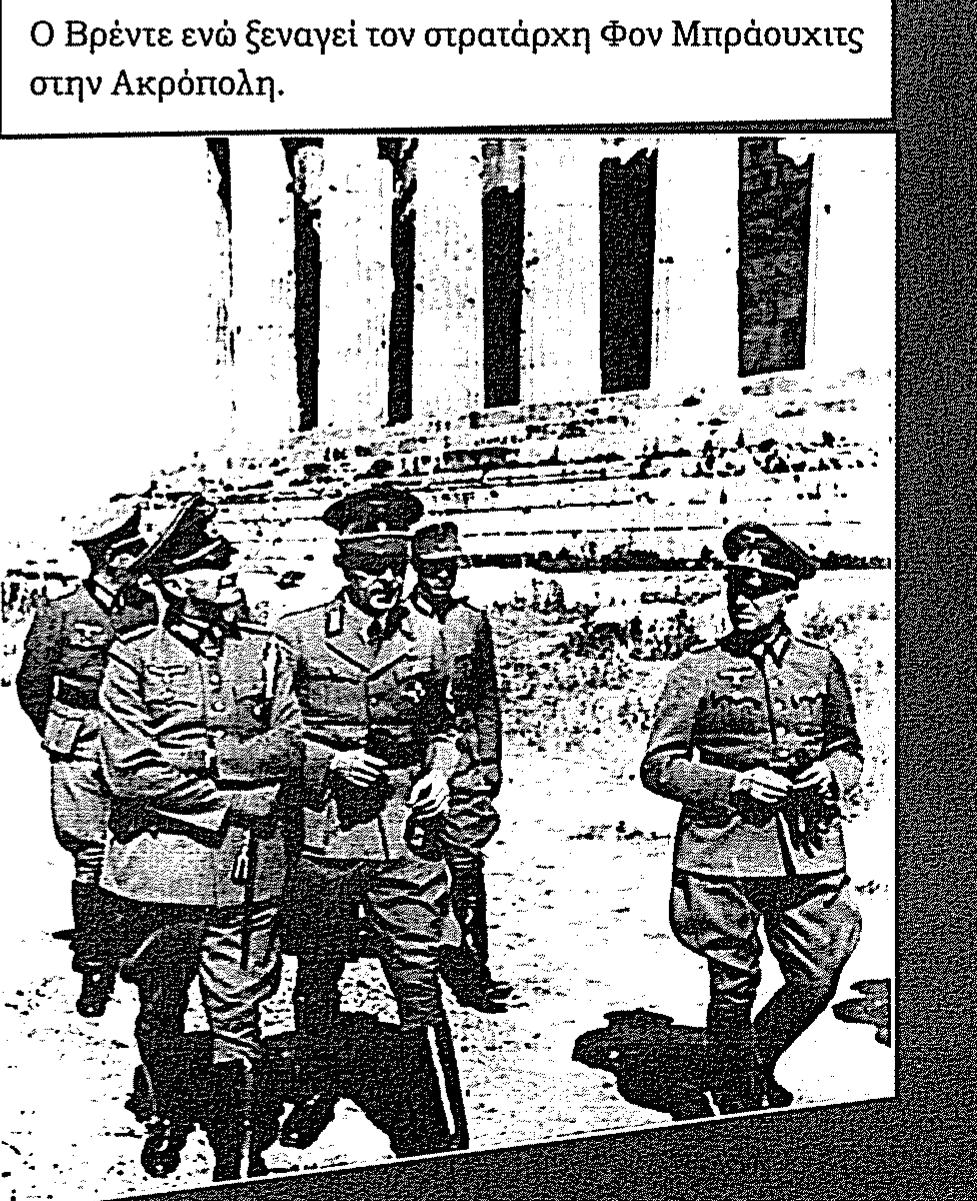
Walther Wrede was a well-known classical archaeologist in prewar Greece. However, he was also an ardent Nazi and, in fact, the clandestine leader of the Greek branch of the NSDAP since his assumption of the directorship of the German... more
Course Description: History 1001 covers the history of Western Civilization (European and related Near Eastern cultures) up to and including the European “Renaissance.” The primary focus of the course is on the social, cultural,... more
Propylea is the entry, vista of the temple complex of Acropolis. analysis of bit by bit from materials to its light and shade and application, help us to design a better living space
Images of ancient Sparta are irrepressible in Western thought. A powerful model of excellence in the middle ages and Renaissance, in the Enlightenment and French Revolution Sparta was invoked by radical thinkers as a model for the... more
A large-scale critical history of representations of Greeks in the U.S. media that aims to provide a comprehensive overview of mediated stereotypes over the last 60 years. This article also reflects on issues of immigration, diaspora,... more
Each year over seven billion people across the world are drawn to see the latest feature films at the cinema. This episode reveals how the most powerful storytelling medium ever created exploits visual techniques invented by artists in... more
Admiration of Classical Sparta, though prevalent in German nationalist discourse even before the twentieth century, was taken to altogether new heights during the Third Reich. Praised by Hitler himself as ‘the foremost racial state in... more
Philippe Charlier and colleagues describe how the Romans wiped their bottoms and speculate about the resulting health problems Philippe Charlier assistant professor in forensic medicine and anthropologist 1 2 , Luc Brun pathologist 3 ,... more
Heavenly gates existed in 'pagan' times long before Christians appropriated them for their purposes. Literary evidence links Macrobius back to Cicero, and then to Plato, whose Republic gives the earliest account of celestial portals in... more
By investigating the works of Polybius and Livy, we can discuss an important aspect of the impact of Alexander upon the reputation and image of Rome. Because of the subject of their histories and the political atmosphere in which they... more
New Approaches to Greek and Roman Warfare brings together essays from specialists in ancient history who employ contemporary tools and approaches to reveal new evidence and increase knowledge of ancient militaries and warfare. In-depth... more
İkinci Meşrutiyet’in ilanıyla beraber Osmanlı siyasal alanında boykot ve sokak gösterileri, erken dönem Müslüman/Türk milliyetçiliğinin repertuvarındaki en tipik araçlar olarak temayüz edecekti. Bu tarihten sonra ne zaman bir diplomatik... more
Zaretsky sat down at their computers recently to have a conversation about George Steiner's "The Idea of Europe," a lecture delivered in 2003 and published this year by Overlook Press. Although they both teach in Texas, Zaretsky at the... more
A Companion that examines together two pivotal periods of Greek archaeology and offers a rich analysis of early Greek culture A Companion to the Archaeology of Early Greece and the Mediterranean offers an original and inclusive review of... more
There is no greater sorrow on earth than the loss of one's native land.
Sexuality-the subject matter seems so obvious that it hardly appears to need comment. An immense and ever-increasing number of "discourses" has been devoted to its exploration and control during the last few centuries, and their very... more
Both in antiquity and in modern scholarship, classical Sparta has typically been viewed as an exceptional society, different in many respects from other Greek city-states. This view has recently come under challenge from revisionist... more
This book is the first comprehensive examination of the lists of Olympic victors that were assiduously maintained by ancient Greeks for more than a 1,000 years. The origins, development, content, and structure of Olympic victor lists are... more
The Late Bronze Age ended with a bang in the Aegean and Eastern Mediterranean: palaces and empires collapsed, from Greece to Egypt; coastal territories were beset by pirates and marauders; migratory peoples were on the move across land... more
In this review the oldest known advanced astronomical instrument and dedicated analogue computer is presented, in context. The Antikythera Mechanism a mysterious device, assumed to be ahead of its time, probably made around 150 to 100... more
The main reference study on the history of Ophis Valley (Of, Trabzon) by the Turkish scholar Hasan Umur (1880-1977) documenting the gradual Islamisation of the region throughout the 16th century CE.
Download research papers for free!