Academia.eduAcademia.edu

Livelihood Security

description115 papers
group148 followers
lightbulbAbout this topic
Livelihood security refers to the capacity of individuals or communities to secure a sustainable means of living, encompassing access to resources, income, and social support systems that enable them to meet their basic needs and withstand economic, environmental, and social shocks.
lightbulbAbout this topic
Livelihood security refers to the capacity of individuals or communities to secure a sustainable means of living, encompassing access to resources, income, and social support systems that enable them to meet their basic needs and withstand economic, environmental, and social shocks.

Key research themes

1. How does livelihood diversification serve as a strategy to enhance rural livelihood security amidst environmental and economic shocks?

This research area focuses on livelihood diversification as a critical strategy enabling rural households to mitigate risks from environmental hazards such as floods, droughts, and climate change, as well as economic uncertainties. Understanding the determinants, patterns, and benefits of diversification provides actionable insights into improving resilience, income stability, and sustainable rural livelihoods.

Key finding: The study identified multiple factors—household head's age and education, dependency ratio, land holdings, assets, access to credit, income level, and proximity to infrastructure—that significantly influence the adoption of... Read more
Key finding: Utilizing the positive deviance approach, the research discovered multifunctional household assets—fishpond, home garden, large livestock, and stocked paddy—that are flexibly utilized under varying conditions including... Read more
Key finding: FSR promotes integrated farming systems approach combining crops, livestock, and agroforestry to improve resource use efficiency, income diversification, and resilience to climate change impacts. It emphasizes scientific and... Read more

2. What role do natural and social capital assets play in securing livelihoods of the poor and marginalized communities?

This theme examines the distribution, access, and importance of various forms of capital (natural, human, physical, social, political) in underpinning sustainable livelihoods, particularly among hardcore poor, tribal, and marginalized populations. Disparities in asset ownership affect vulnerability and capacity to secure livelihoods, revealing critical intervention points for poverty alleviation and livelihood security enhancement.

Key finding: The study found that among the five livelihood assets, natural assets were the most deficient among hardcore poor households, followed by suboptimal human and social assets. This indicates that reliance on financial... Read more
Key finding: Adaptation of the DFID Sustainable Livelihood Framework to Somaliland highlighted the critical influence of vulnerability context and transforming structures on access to capital assets and livelihood strategies. The study... Read more
Key finding: Empirical analysis demonstrated significantly higher livelihood security indices among households in forest fringe zones compared to non-forest zones. Forests contributed substantially to rural livelihoods by providing direct... Read more

3. How do crises, such as conflict and pandemics, impact livelihood security, and what strategies can mitigate these vulnerabilities?

This theme investigates the impacts of large-scale shocks like armed conflict and COVID-19 on livelihood security among vulnerable populations, including migrants, displaced persons, and rural households. It explores the socio-economic factors that influence resilience, the challenges faced in securing livelihoods during post-conflict recovery and health crises, and the efficacy of institutional and community-based interventions aimed at livelihood protection and recovery.

Key finding: The study highlights that prolonged post-conflict transition in Nepal undermines livelihood security for poor and marginalized groups due to weak policy implementation, ineffective institutions, political instability, and... Read more
by Pooja Kori and 
1 more
Key finding: Using logistic regression analysis, the study identified key socio-economic factors influencing livelihood security among returned migrant farm labourers during COVID-19 lockdown, notably family size, household income,... Read more
Key finding: The paper emphasizes the unique challenges COVID-19 poses for pastoralist livelihoods due to inherent mobility and limited health infrastructure. It argues that conventional pandemic control measures threaten pastoral... Read more
Key finding: The research evidences a strong interconnection between protection risks and livelihood threats faced by conflict-affected populations. It identifies four modalities to integrate livelihoods and protection efforts: targeting... Read more

All papers in Livelihood Security

Increasing variability in rainfall and temperature has become a major challenge for agricultural communities, particularly in regions where farming depends heavily on monsoon rainfall. In India, smallholder farmers constitute a major... more
Education in Emergencies (EiE) has emerged as a critical field to ensure the continuity of education during crises. In Colombia, repeated natural disasters, armed conflict, and public health emergencies have threatened the right to... more
This study was undertaken in Kidea village of Kigoma Rural District, Tanzania. The study intended to assess the status of peasant migration to Kidea village. Household questionnaire, focus group discussion and key informant interviews... more
Cereal Banks, though important, have failed to become sustainable. The banks have always been requiring close monitoring support or subsidies from an outside agency, but collapse when outside monitoring and subsidies end. Such trend has... more
This paper aims to evaluate the knowledge, practices, and production levels of rice farmers and identify their significant factors using statistical models. The study involved 84 rice farmers in Barangay Barobaybay, Calbiga, Samar,... more
With expenditure of USD8 billion per annum, the Mahatma Gandhi National Rural Employment Guarantee Schemes (MGNREGS) of India is one of the largest Social Safety Nets (SSN) programs in the developing world. The program aims to improve... more
For the last two decades, land and land-related problems are more complicated ever before. Especially the proliferation of large-scale rural land investments and the vulnerability of the local communities in land abundant developing... more
The dryland vegetation and particularly the Acacia-Commiphora woodlands support the livelihoods of approximately 52 million rural households in the Horn of Africa. Aromatic resins are valuable non-wood forest products (NWFPs) derived from... more
Rural women play a crucial role in societal and economic development, yet their lives are shaped by various socio-personal, socioeconomic , communicational and psychological factors. Sociopersonally, they exhibit resilience, adaptability... more
In December 2004, the Inter-Agency Network for Education in Emergencies (INEE) launched the first global tool to define a minimum level of educational quality and help ensure the right to education for people affected by crises...
The main aim of this research article is to evaluate the forage management practices of ruminant raisers in the Municipality of Jaro, Leyte, Philippines. The study also predicted the statistically significant factors of forage management... more
The case study outlined in the paper focuses on addressing rural development challenges in typical specific locations of Bangladesh, namely Gangachara and Kaonia in the Rangpur district, situated northern part of the country. It emphasis... more
The positive deviant households in a drough-tprone village have developed such household assets, namely, i) fishpond, ii) home garden, iii) large livestock, and iv) stocked paddy, and flexibly utilized each of them in different ways in... more
Farming Systems Research (FSR) plays a crucial role in enhancing agricultural productivity, sustainability, and livelihoods in Nepal. This article provides a comprehensive review of FSR in Nepal, focusing on concepts, design, and... more
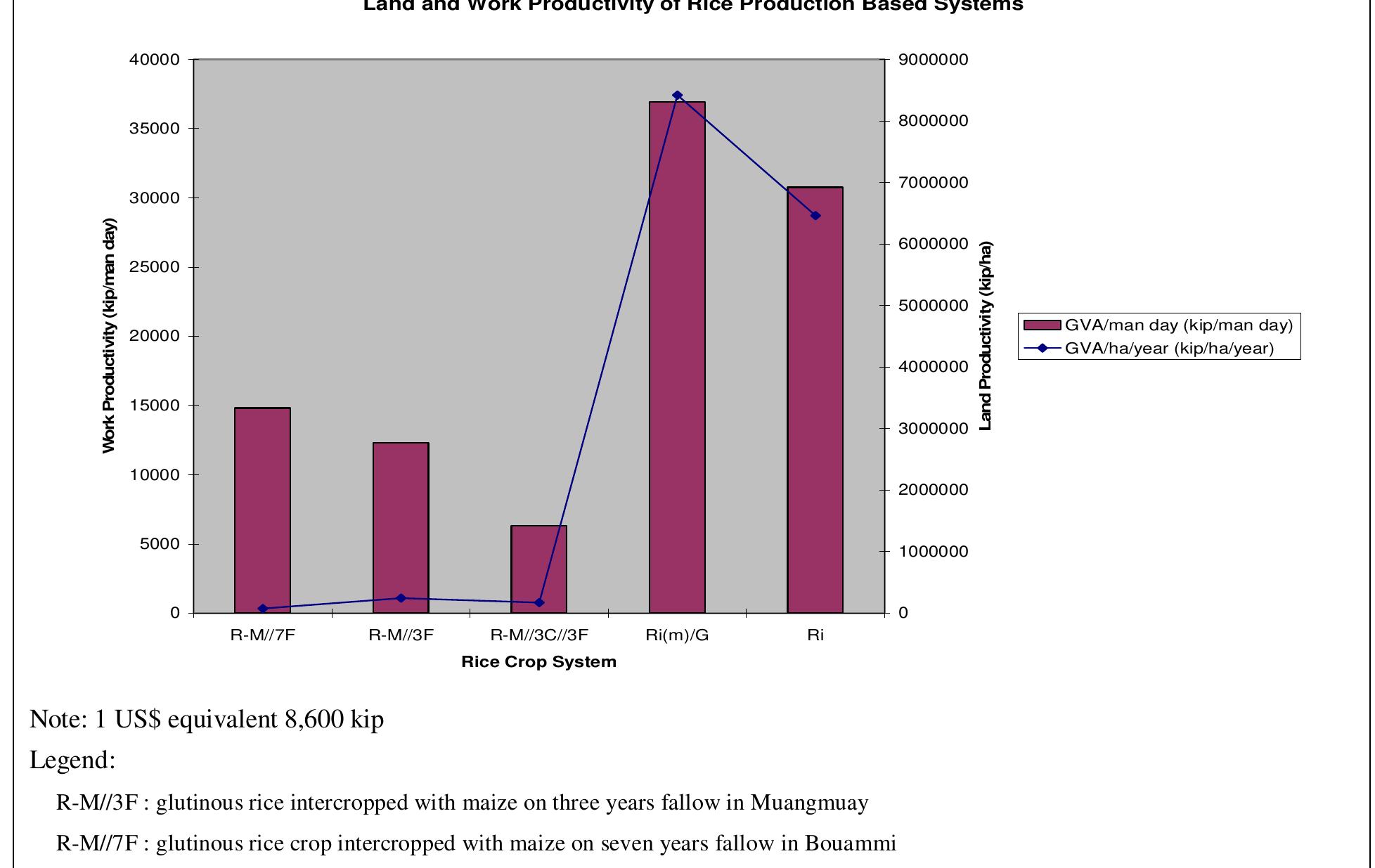
This thesis research would not have been possible without the generous conceptual and technical contribution of my supervisor, Jean Christophe CASTELLA. I would like to thank also to my thesis advisor, Elisabeth RASSE-MERCAT for her... more
Sustainability of organic farming depends on the organic inputs. As such, other than a few fertilizers and plant protection measures, there have been scanty resources available to farmers for continuing organic farming. Some farmers in... more
This paper is part of ICRISAT Economics Discussion paper series. This series disseminates the findings of work in progress to encourage the exchange of ideas about a wide array of issues in the area of agriculture for development. An... more
Since the mid-1970s, modern farming has endangered the indigenous production and food system among the Macha Oromo of western Ethiopia. Modern cultivation sought to secure food to the growing population and market that negatively affected... more
Tribal people are considered as the original inhabitants or Adivasis. In Kerala, they constitute nearly 1.5 percent of the total population of the state. There are 37 Scheduled tribal communities living in the state with greater... more
Farming Systems Research (FSR) plays a crucial role in enhancing agricultural productivity, sustainability, and livelihoods in Nepal. This article provides a comprehensive review of FSR in Nepal, focusing on concepts, design, and... more
and Nepal. With poverty reduction and sustainable forest management both firmly in view, the central aim of Forest Connect is to better link Small and Medium Forest Enterprises (SMFEs) to: t each other (by facilitating the formation of... more
In this study, an attempt was made to study the socioeconomic status of the workers engaged in organic farming. The various healthy practices under organic farming like compost production, use of bio-pesticides, crop rotations, etc.... more
Vulnerability has been defined as the characteristics of a person or a group of persons i.e. in terms of their capacity to cope with, anticipate, resist and recover from the impacts of natural or man-made hazards or any external event.... more